The Top 25 Films of 2025

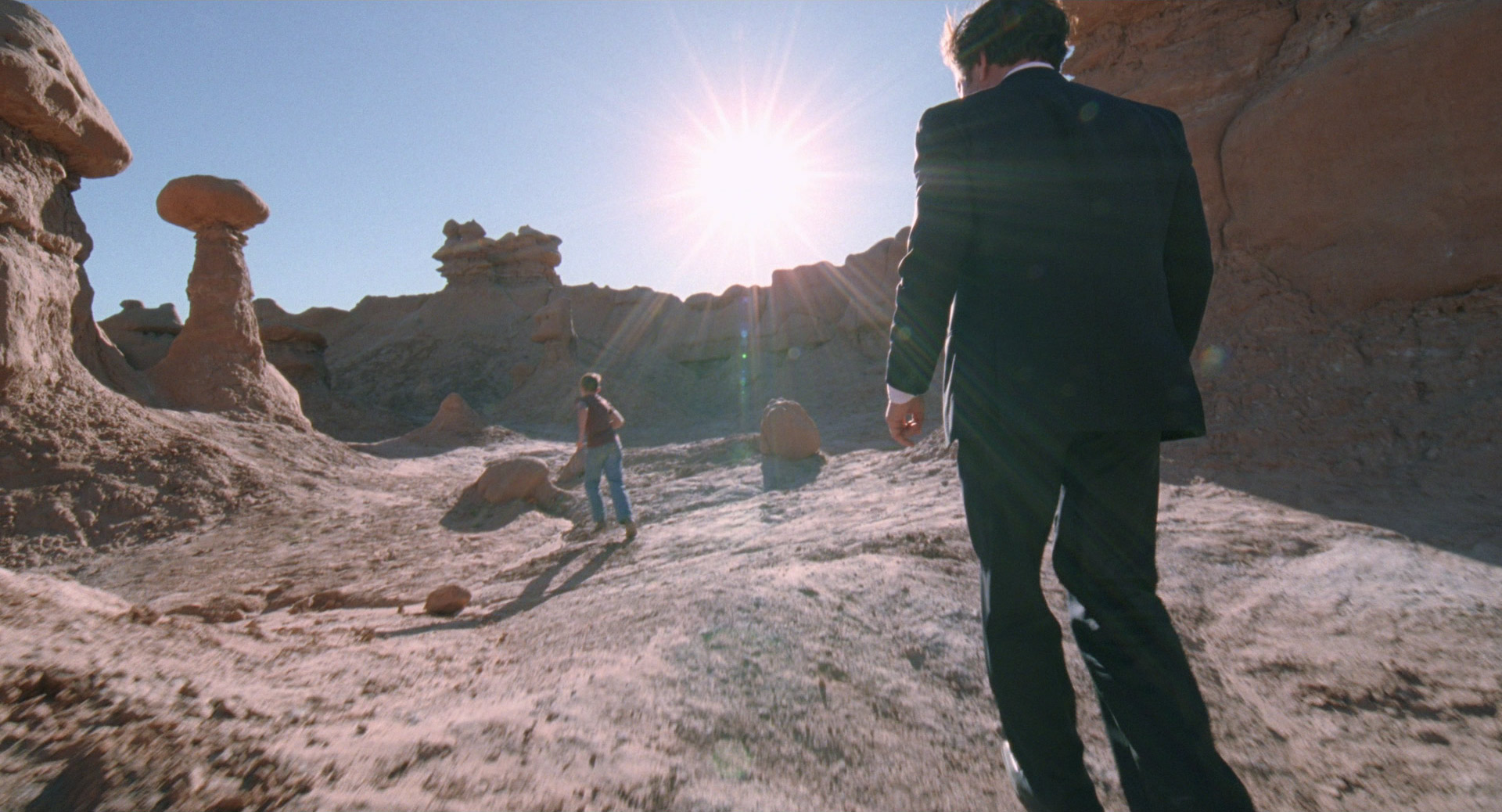
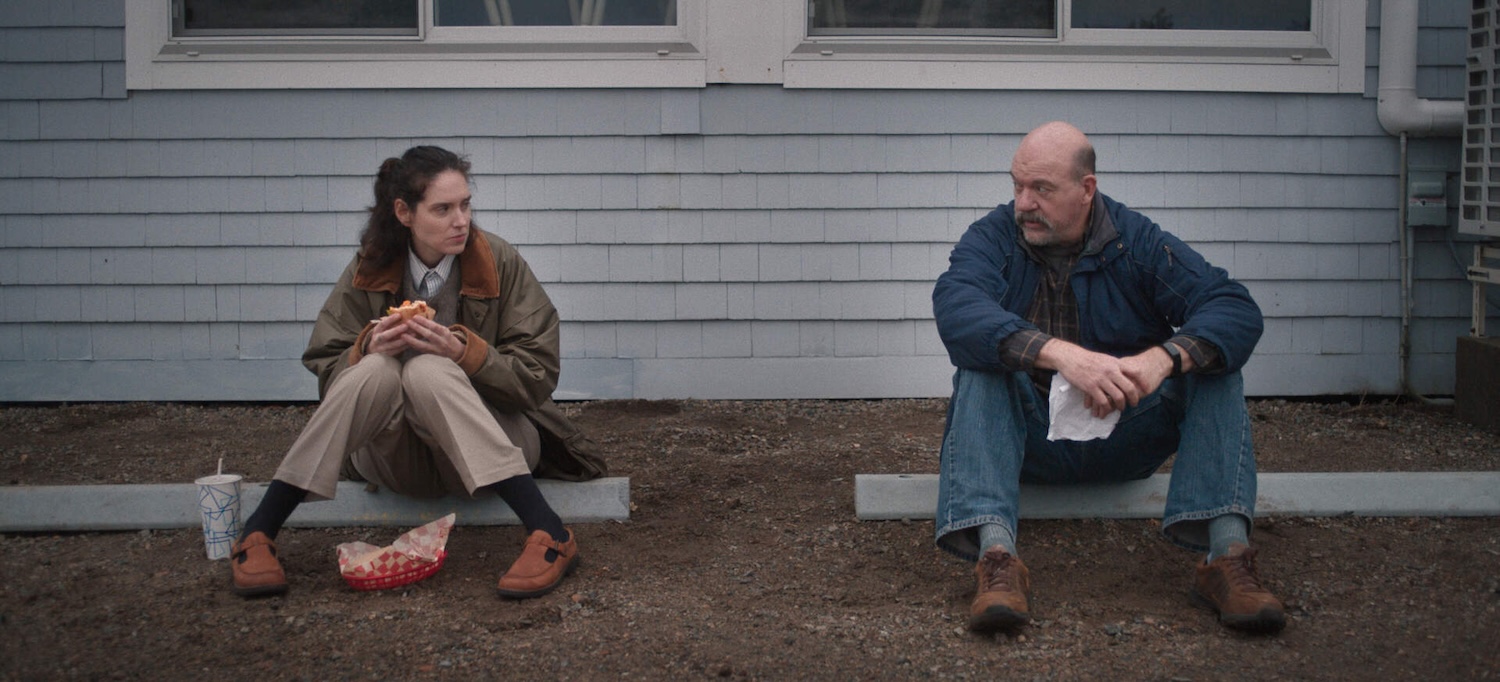
Sorry, Baby (2025)

2025 changed my relationship to film culture, hopefully for good. I’ve started my Horizon Line newsletter, which means I’m now writing something people read every week. Thank you to everyone who’s decided to follow along! I am interested in finding a way to expand that weekly writing to include more criticism throughout the year, especially at a time when it feels like we’re peeling a little further away from endless franchises and more toward storytellers. While everything else is insane, and the film industry itself seems to be consolidating, there are as much now as ever too many more movies to see.

I’ve been expanding my top “ten” of the year every year to match the calendar year, and when I first did so in 2015, it was fifteen films I truly loved. In the past few years, the list has grown longer but has also included some films I merely think are “pretty good.” This year, I feel quite strongly about my top twenty films, which is probably the most I’ve ever hit that are Fully Great, and my top ten are movies I really love and have to order somewhat arbitrarily. The five that start this list would probably have landed around 16-20 on last year’s list, as well.

I’ve joined many fellow film nerds in keeping my own “what if I gave out the Oscars” spreadsheets over the years, and rarely have I had to cut even honorable mentions that might have won in a previous year. No commitment to doing this every year, but I’m going to memorialize nominations and wins as they stand today in this piece, though I’m not going to do a round-up of everybody who wasn’t in these 25 movies. FYI – I do acting nominations as three ungendered categories – Lead, Featured, and Supporting. Hopefully, that middle category should capture all the “edge cases” Oscar voters love to debate all the time.

A “see you later” to 28 Years Later, A Poet, A Traveler’s Needs, After the Hunt, Afternoons of Solitude, Blue Sun Palace, Boys Go to Jupiter, Castration Movie, Cover-Up, Endless Cookie, Familiar Touch, Hedda, Hot Milk, It Was Just An Accident, Lurker, Misericordia, Mr. Scorsese, My Father’s Shadow, One of Them Days, Pavements, Pillion, Predator: Badlands, Scorigami, Seven Veils, Sirat, Souleymane’s Story, Sound of Falling, Splitsville, The Chronology of Water. The Long Walk. The Plague, Twinless, and Two Strangers Trying Not to Kill Each Other.

25. Bugonia

Dir. Yorgos Lanthimos
Nom: Aidan Delbis, Featured Acting
Peacock, VOD

Of this year’s “we are all on different political internets and they are making us crazy” movies, Bugonia was the one that most maintained its eye on drama and thrills in its billionaire abduction story. Teddy (Jesse Plemons) kidnaps pharmaceutical billionaire Michelle (Emma Stone) under the presumption she’s an alien invader undermining mankind’s development in this remake of the Korean film Save The Green Planet. I am not convinced there is a lot more going on past the surface level ties between Teddy’s conspiracies and real world hyper-online radicalization, but it’s just such a pleasure to watch Teddy and Michelle duke it out. Will Tracy’s screenplay instead focuses on character study and verbal maneuvering, and it ends up a lot more fun to watch than the versions more focused on “How We Live Now” (like Tracy’s own screenplay for The Menu, co-written with A Big Bold Beautiful Journey writer Seith Reiss.) It’s frankly wild that I don’t have room to nominate Plemons and Stone, who are given two of the best showcases of their entire careers. Instead, the runaway performance is Aidan Delbis as autistic cousin Don, whose loneliness and conflict about the kidnapping are anchored and subdued in Delbis’s work.

24. Being John Smith

Dir. John Smith
Award: Best Documentary, Best Short Film
MUBI

Thank god this great film is finally on Mubi, because I’ve wanted to shout its praises for almost a year since seeing it at the Wisconsin Film Festival. The short summary of Being John Smith is that museum film artist John Smith reflex on his life, career, and the frustration with being named John Smith in a world full of John Smiths with his droll sense of humor. But Smith injects this funny, mundane, existential pain with commentary on more serious pain, both personal and political, and he finds a way to situate his conflict about this film with some of the smartest editing in any film this year. Because this is a short, and one I know is quite underseen, I won’t go too long on how he sets up his argument, but it’s some of the most effective self-effacement I’ve seen in film.

23. Universal Language

Dir. Matthew Rankin
Nom: Louisa Schabas – Production Design
Kanopy, VOD

I saw Universal Language as a UW Cinematheque premiere the very day after I published my Top 24 of 2024, so while the film was submitted as part of last year’s Oscars as the Canadian entry for Best International Film, I am counting it as a 2025 release in Madison, WI. Two young girls find a wad of cash frozen under the ice – meanwhile, a middle aged man leaves a bureaucracy to visit his estranged mother. The above clip represents well the film’s primary mode, a sweet, comedic mixture of films like Where is the Friend’s House? and the dollhouse camera work of Wes Anderson, creating an absurd community of endearing characters. But this film’s greatest strengths are in the most sentimental scenes, scenes which often break this clip’s medium wide and wide shots and intimate the viewer in moments of nostalgia, friendship, and grief. It slightly broke my heart to cut the film’s score from my nominations, as I do think it’s one of the year’s best, a collaboration between santur player Amir Amiri and indie rocker Christophe Lemarche-Ledoux which invokes musical vocabulary both containing the Persian classical and Canadian experimental. 

22. Nouvelle Vague

Dir. Richard Linklater
Netflix

Richard Linklater is too sentimental to capture the anarchic anger of a Jean-Luc Godard film, and the latter would likely have despised this fictionalized making-of story about Godard’s debut, Breathless. Thankfully, Godard and I have very different taste, and I’m able to appreciate Nouvelle Vague using Godard as an example of an exhausting if inspirational artist, proof that “just trusting the lack of a plan” still leaves people bruised, proof that great artistic choices can come from pushback. It’s a hangout movie, and a very sweet one. What Linklater does impossibly well is assemble an incredible cast for the French New Wave, some of whom are not even professional actors, to create a coherent and deep bench of emotionally intelligent, sarcastic, melancholy people who love art so much they adopt disaffection to believe it can grow. Marbeck as Godard, in particular, is such a thoughtful and engaging performance – this little snake ends up earning both sympathy and contempt without ever becoming a chore to watch. The aesthetics lean a little too often into pastiche of images and rhythms taken from early New Wave films, but the real magic trick is finding this cast.

21. Caught Stealing

Dir. Darren Aronofsky
Netflix, VOD

I don’t necessarily blame people for holding a beloved actress’s early exit in this crime caper as an unforgivable sin. But, I’m telling you, Austin Butler in Caught Stealing is likely the single best performer of addiction in Aronofsky’s running history with the subject. Butler is so capable of playing the wins, the refusal of the call, as pathetic losses – lingering too long at the mention of a drink, the disposal of the alcohol as a manic episode rather than a moral stand. It probably helps that Hank’s alcoholism is a side story to getting caught in a “who stole the cookies” fiasco, one where Bad Bunny and Vincent D’Onofrio get to be looming, terrible heavies, one where most of the action scenes refrain from going huge until we’re ready to explode. This is not a flawless film, and I wish Mathieu Libatique’s cinematography were a little more geared toward interesting images rather than fluid motion, but as far as scum-bum New York crime movies go, I’d watch this one again anytime.

20. Materialists
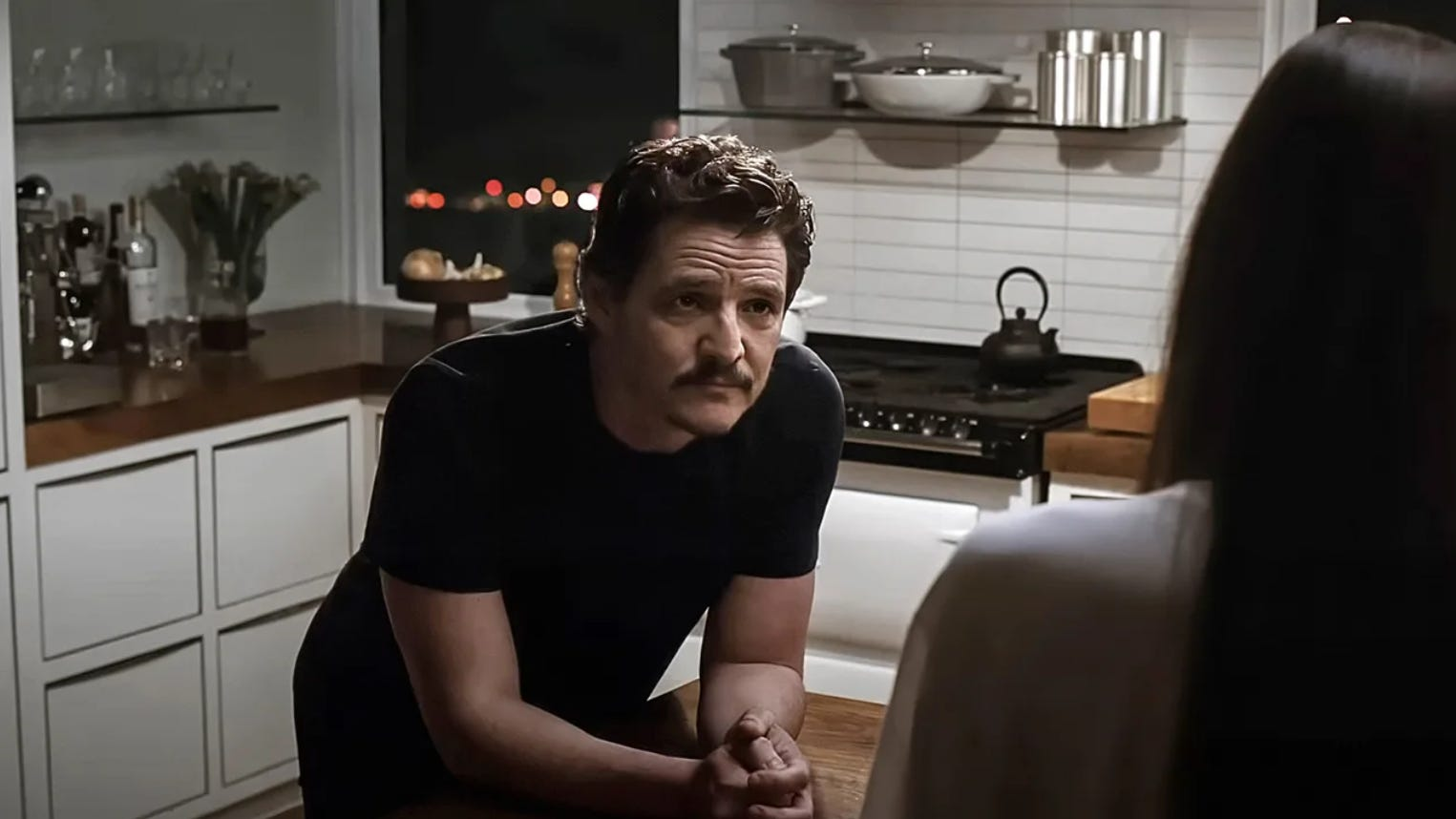
The kitchen scene, which will not embed.
Dir. Celine Song
HBO Max, VOD

The single worst element in any film on this list is the sexual assault subplot in Materialists, in which Dakota Johnson’s Lucy, a professional matchmaker, sets up one of her clients (Zoe Winters, who is quite good in this movie!) on a blind date gone very wrong. The subplot is an insipid failure which treats the middle-aged Lucy like a 20-year-old who never considered these things could happen in the real world. The film is inspired by Song’s own experiences as a matchmaker for six months in her 20s. I think transposing this storyline onto a 35-year-old Dakota Johnson just creates an almost absurd disconnect from reality, and a scene where she tries to dress incognito to stalk the victim and apologize is so ridiculous it earns whatever mockery the film has received.

But – I say, knowing how people feel about this film – I still found this to be a triumph otherwise. It’s not so much that the love triangle is particularly sexy or one I root for especially hard, either. The emotional range of this film is so much more compelling to me than the locked-down smoulder of Past Lives, and while I complain about her age in relation to the above subplot, I think Johnson is uncommonly great in the movie. She is a great match for Song’s rhythm for dialogue, which is at its best when a character is either saying something insipid they believe is profound or when that false thesis crashes down around them. The above clip is my favorite scene in the movie, and I think it works so well as a moment of two people who have imprisoned themselves in therapy-speak and had not previously confronted emotional reality’s mess. Johnson’s doing this rhythm where Pascal says something incredibly vulnerable, really for the first time in their relationship, and she has this micro-expression before the real processing begins – it’s so moving to me.

19. Weapons

Dir. Zach Cregger
Nom: James Peerson, Felipe Messeder – Sound
HBO Max, VOD

“Last night at 2:17 AM, every child from Mrs. Gandy’s class woke up, got out of bed, went downstairs, opened the front door, walked into the dark …and they never came back.” – This is a perfect tagline, and if you still haven’t seen Weapons, that’s all you need!

I haven’t seen Frank Darabont’s The Mist, so take the hyperbole with a grain of salt, but even if this isn’t “based on the novel by Stephen King,” Weapons is the best Stephen King movie since, I dunno, at least Misery? A rip-roaring good time, so funny, so gross, with some genuine scares mixed in. That clip above is one of the most disturbing monster make-up jobs I’ve seen in a long time, and I’m so glad Benedict Wong is so good in this movie. Everyone’s so good in this movie – in my opinion, the best performance is Cary Christopher as Alex, the only student in Mrs. Gandy’s class who didn’t disappear into the night. The ensemble, chaptered nature of the film I think mostly works, though unfortunately Ehrenreich’s chapter as Paul teaches us the least about our setting or our characters. Cregger’s mastered his gags, though, and the ending is one of the most satisfying of the year.

On Madigan – I struggle a little with the way horror fans bemoan their treatment at awards shows, constantly declaring that any perceived snub is a genre bias despite having nominees at the table. It’s not like beloved sci-fi performances, like Amy Adams in Arrival or Tommy Lee Jones in Ad Astra, are constantly getting nominated, let alone winning. You don’t see a public panic attack about hating sci-fi every year resulting in a chaotic push for Elizabeth Olsen to get nominated for The Assessment. Madigan remains great as Aunt Gladys in Weapons – she’s such a surprise, and she gets to play three very different in-character “performances” as well. However, if Madigan does win Best Supporting Actress this Sunday, Bill Skarsgard and Lily-Rose Depp should get to pick an Oscar voter and pelt them with water balloons or something. Madigan is my fifth in this year’s five, but she will still be one of the best winners in the category this century if she wins – they chose a great five!

18. Caught by the Tides
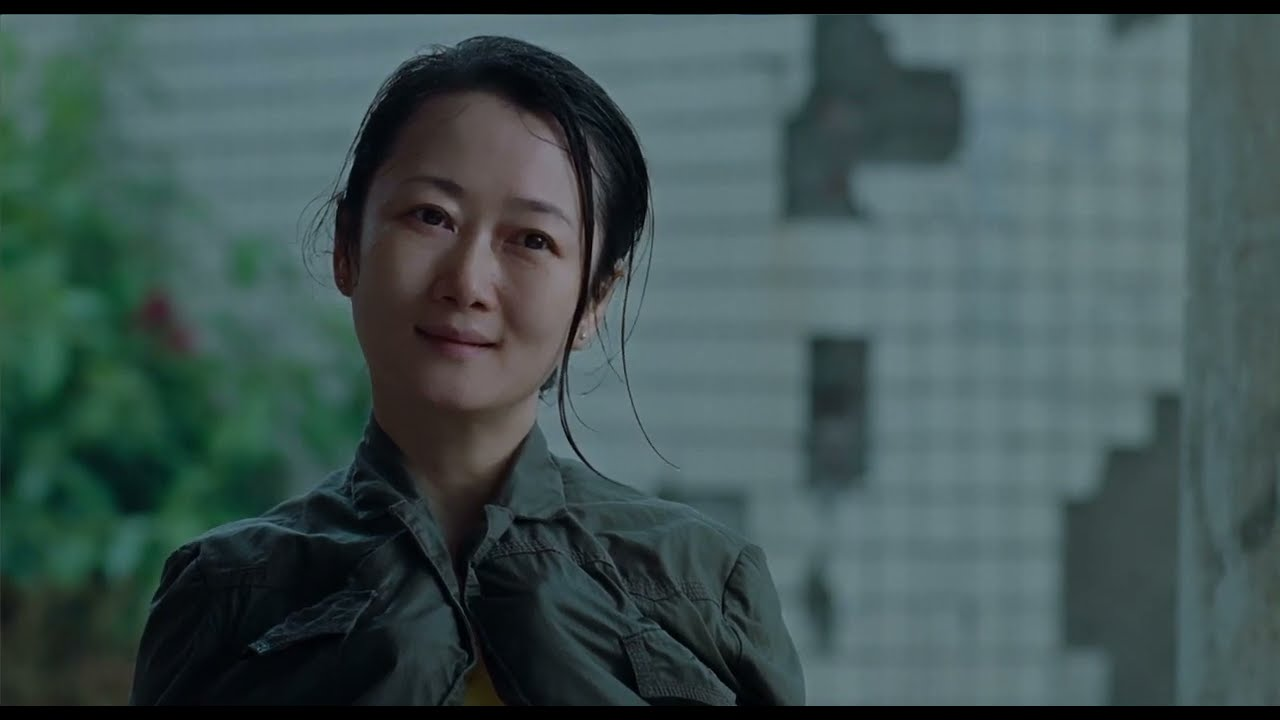
Meeting in the Rain, which will not embed.
Dir. Jia Zhangke
Nom: Jia Zhangke – Best Director, Li Xudong, Matthieu Laclau, & Yang Chao – Best Editing
Criterion Channel

When the university film program started again this semester, the first three films I saw were Nirvanna The Band The Show The Movie (which, by the way, I’m counting for 2026,) Yi Yi, and Resurrection. I gave each 5 stars. Caught by the Tides shares DNA with all three??

Caught by the Tides re-edits outtakes, b-roll, and home movies into a compelling, linear narrative. Much of the footage is recontextualized work from the films Unknown Pleasures, Still Life, and Ash is Purest White. It relies on decades of collaboration behind and in front of the camera, allowing us to see time pass and formal technique to evolve. No, it doesn’t ever have the same “genuinely, how the fuck did they do this” level of actors speaking across time as Nirvanna, but it is no less a magic trick to see actors age over 22 years.

Unlike Richard Linklater’s more famous Boyhood, it does so without really making “aging” the central plot of the film. We see a romance at the film’s start and watch it flame out – four years later, out of concern for safety, one of our leads (Zhao Tao, Jia Zhangke’s longstanding lead actor, who can say so much with so little) seeks the other without response. This ends up being a film about how sudden endings can be and how it feels to not speak up, and that passage of time allows the absences to be jarring and painful. Yi Yi’s central plot is about grieving a coma, about running out of things to say when someone cannot respond, and its two most developed subplots are about lovers who could not say the things they needed to say to one another.

Yi Yi released in the year 2000 – this turn of the century is the same handoff between Resurrection and Caught by the Tides, with one pop culture handoff that makes the exchange shocking. Resurrection looks back at a century of Chinese politics and cinema, and Caught by the Tides picks up exactly where that story leaves off and progresses into the modern day. Perhaps unsurprisingly, the younger, more existential Bi Gan, looking back at the 20th century, ends up taking a very different approach to the older, more openly political Jia and his frustrations with modern life. But that friction ends up making the conversation between these two films even more fruitful, not less.

If I read back what I wrote here, I ask myself, “why isn’t this even higher?” The easy answer is maybe the least satisfying – I haven’t seen Still Life or Ash is Purest White, among many other Jia films, so I was less equipped to ask “how on earth did he do this?,” to engage with all the recontextualized footage. But, on a first viewing, I also just found myself more emotionally adrift in this film’s quiet second chapter, one which seems arguably the richest in social commentary but the lightest on dramatic narrative. Among the films on this list, this is one of two I can most see myself reading back and saying, “you left that way too low.”

17. No Other Choice

Dir. Park Chan-Wook
Nom: Park Chan-Wook, et. al – Adapted Screenplay
VOD

An out of work paper foreman decides to eliminate the competition by any means necessary in Park Chan-Wook’s very Park Chan-Wook crime thriller, one that leans more into his later comedic sensibilities rather than the arch grimness of the Vengeance Trilogy that made his name. The first critical review I saw of the film was Adam Nayman’s, in which he declared it all of Park’s trademark perfection for an underwhelming thesis – suffice it to say, I surprised myself by almost having the opposite reaction.

It’s not that trademark Park brilliance isn’t here – the above clip is up there with all his best fights, an insane stacking of gag on gag, the choreography absurd and yet natural. There are some gorgeous and memorable images, delightful and surprising transitions, and the use of architecture to communicate class and character here is really something else. But when I contrast it to his fireworks factories like Thirst, The Handmaiden, and Decision to Leave, I actually think Park largely reigns himself in with No Other Choice, instead focusing on character and theme.

This is a pretty devastatingly cynical film about the way the working class has been set up to eat itself alive. The investors and executives only show up briefly, politely, mandating decorum in the face of inhumanity – they escape notice to leave Lee Byung-Hun’s Yoo Man-su casting his eye on those who have exactly what he wants and not what he ought to dream toward. It’s also one that casts a surprising amount of texture and humanity on all its characters, one that extends its judgment and sympathy in ways that go for laughs and promote thought after the fact. There are so many small details in this story that reward pulling them apart, but perhaps the most impressive detail is the way the Yoo family’s arcs play out without ever drawing fine points onto character turns.

16. Hamnet

Dir. Chloe Zhao
Nom: Jessie Buckley – Lead Acting, Paul Mescal – Featured Acting, Chloe Zhao, Maggie O’Farrell – Adapted Screenplay
Peacock, VOD

One of the big fights about Hamnet is whether or not it’s “about Shakespeare.” Hamnet dramatizes the courtship of Anne/Agnes Hathaway and Shakespeare and the young death of their son Hamnet, culminating in the writing and performance of Hamlet. Hamnet is portrayed as a would-be actor, excited by learning swordplay, wanting to follow his father in that world rather than the simultaneously more grounded and more mystical world of Agnes, a woods witch and homemaker. When Hamnet dies, the text elides several years (and multiple plays) to connect the death of Hamnet and the staging of Hamlet, and when Agnes attends the performance, she finds it at first offensive and then very moving. The actor playing Hamlet is styled to evoke Hamnet’s appearance – in real life, the two are played by brothers Noah and Jacobi Jupe – and Will plays the ghost of Hamlet’s father.

It’s about the relationship between Shakespeare’s life and Hamlet in the way Titanic is about a cruise ship that sank. It’s obviously relevant, but I don’t think Cameron is trying to change how people historically interpret that event, and I don’t think Zhao is pretending having Hamnet in mind will help you read Hamlet. Zhao is using the death of Hamnet and writing of Hamlet to study how great works of art can abstractly be informed by the author’s nonverbal motivations, i.e. “Hamlet is not Hamnet or Shakespeare, Hamlet is the ideal role young swordfighter/actor Hamnet could have played.”  It’s basically an expansion on The Fabelmans thesis, saying “this also applies to the works where you don’t literally recreate the trauma,” whereas it can be hard not to watch Spielberg movies and see where he’s recreating elements of the trauma in-fiction.

But, to be honest, this reading is not really what I love about Hamnet. What I found most compelling was not Hamnet’s death, but Agnes and Will’s life. Buckley and Mescal are so wonderful in their happy and sedate moments in the early run of the film. In real life, I’d find Buckley’s near-constant soothsaying a little enervating, but it clearly enraptures Will, who sees life in such a different way. While I do think the final scene at the Globe is excellent, it’s the early hours of these characters falling in love and teaching their children that I found to be the movie’s real magic trick. (Though the snottiest, screamingest, saddest scenes of medical trauma, childbirth and death are certainly showstoppers in their own right.)

15. Highest 2 Lowest

Dir. Spike Lee
Nom: Denzel Washington – Lead Acting, William Alan Fox – Adapted Screenplay, “Trunks” and “Both Eyes Closed” for Best Original Song
Apple TV+ 

One of three films I’ve already written about this year – yes, the other two are obviously still coming – and I dug deep into the Highest 2 Lowest’s second half in that piece, a reading I still very much stand by. I didn’t so much talk about the film’s first half, which has been the more divisive portion. Denzel’s David King responds to the king’s ransom that defines this remake of High & Low with one of my very favorite performances of the year, charismatic, funny, sullen, and betraying his own best interest like only our greatest talent can. But, aside from Jeffrey Wright as assistant Paul Christopher, the performances are decidedly less surefooted. It’s a combination of writing, direction, and performance that creates an affected, very TV tone in the supporting cast, and poor Aubrey Joseph as David’s son Trey gets some of the hammiest lines of the year not contained in Guillermo del Toro’s Frankenstein screenplay. Watching David try to decide whether or not to do business or compromise his morals is compelling because it’s Denzel Washington, but I can’t help but wish he had more to work with in the early going.

This film’s slow introduction is a lot less deftly handled than High & Low – if anything, I might argue the ransom negotiation portion of High & Low is its highlight, and it’s the second half that becomes a more familiar (brilliant) police investigation film. But, when it’s time to set up the handoff, a ride into the city during the Puerto Rican Day Parade goes off like crazy. It creates a rocket launch effect when the film kicks into its second gear, and then from James Brown’s “The Payback” forward, this is as exciting a film as Spike Lee has ever made. The back half also digs deeper into the financial implications of the ransom than Kurosawa’s film, and I think it deftly identifies the push and pull between heroism and pragmatism.

14. Sentimental Value
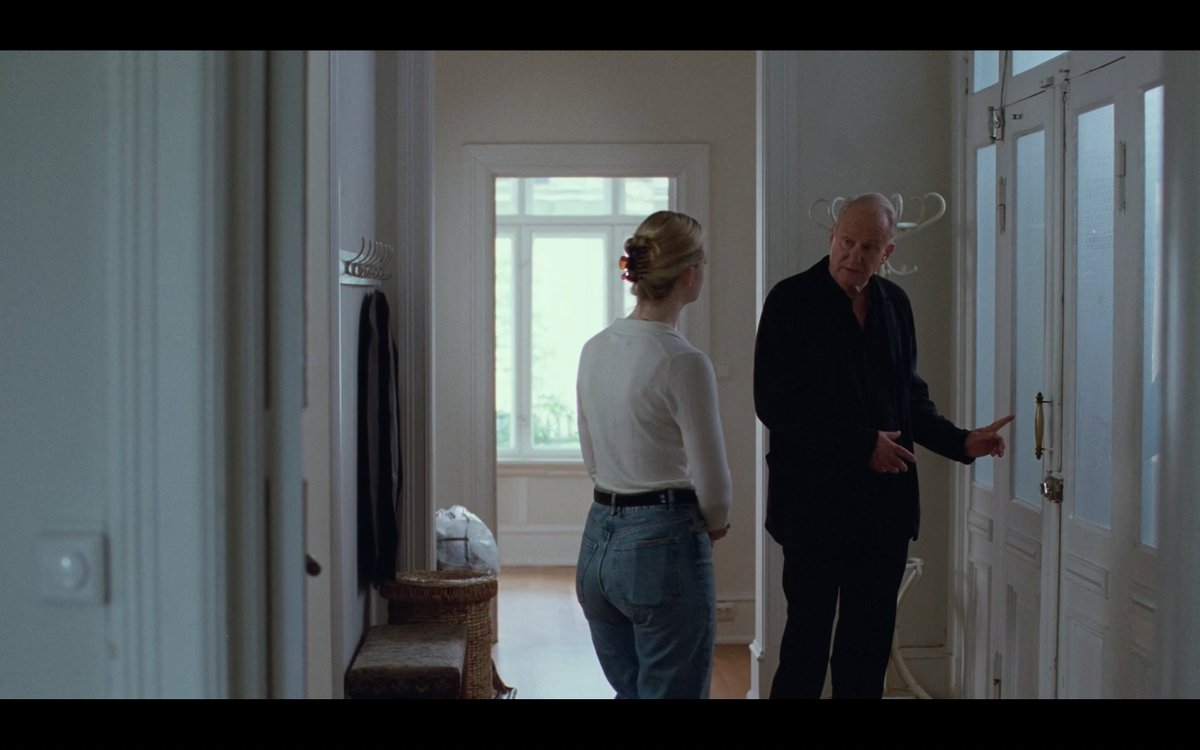
Gustav Explains the Scene to Rachel, which will not embed.
Dir. Joachim Trier
Nom: Elle Fanning, Supporting Acting
VOD

An honorable mention in many, many categories, including all the other nominated Oscar performances, international feature, screenplay, and editing – yes, somehow it’s Fanning that broke through as my favorite performance. The story of Gustav Borg (Stellan Skarsgard) attempting to reconcile with his daughters and make a film he envisions as the ideal lead role for his actress daughter Nora (Renate Reinsve) is given fewer of the surreal flourishes of director Joachim Trier’s The Worst Person in the World. That’s not to say none – there’s a wonderful introduction narrated by the family home itself, and the film’s worst moment involving a face-melting technique.  But I would still probably argue the film is more cohesive and consistently great than his previous hit – all four of the primary storylines in Sentimental Value get strong emotional weight, and the way they interweave is so wonderfully constructive.

We’re given few concrete details of family history in the scenes between Gustav and Nora – rather, that texture makes itself clearer in the scenes with Nora’s sister Agnes (Inga Ibsdotter Lilleaas) and American actress Rachel Kemp (Elle Fanning,) who is cast in the role originally intended for Nora. Rachel is cast as a fictionalized version of Gustav’s mother, who she’s repeatedly told not to ask about because “it’s not really about her.” Fanning plays Kemp with a real earnestness, not quite emotionally intelligent enough to surpass Gustav’s criticisms but deeply invested in trying to connect to what she perceives will be a great project. Their last scene together is well realized, feeling emotionally vulnerable without crashing into melodrama. I find Rachel Kemp a hard role to play, one given every opportunity to be played as too naive or too abrasive, a movie where the wrong choices would have made her villainous, but I feel so much empathy for her being pulled into this battle she’s not being let inside.

13. By the Stream

Dir. Hong Sang-soo
Nom: International Feature
Not available at home – yet.

A university holds an annual theater festival where other arts departments are asked to perform a short play. Unfortunately, the textile arts department’s student director turns out to be sleeping with all three of the girls in his class – the textile lecturer, Jeonim (Kim Min-Hee,) asks her famous actor uncle Chu Sieon (Kwon Hae-hyo) to step in. Hong’s film plays out in generally light conversations, probing at vulnerability indirectly, as these characters seek new ways to trust one another. I think the translation of its dialogue might be somewhat miscalibrated, as the film sometimes takes on this intense tension that the stakes are quite severe. By the Stream never places its characters in danger, more staying in the lane of awkward, painful, cringe-inducing exchanges between its intellectuals finding common ground.

Every time a character has an emotional breakthrough in this film, it’s a remarkable, profound, and unique feeling of sadness. Well, except in one case, where it’s precisely that the sadness is so cliche that it becomes the new focus of the complaint. I’m not familiar with most of these actors, but I’m thrilled several are recurring in Hong’s next film, What Does That Nature Say to You, which is playing in this year’s Wisconsin Film Festival. This is about the gap between how we talk about someone and how they actually live, and the repression that leads to in conversation. I can’t recommend this to someone who hasn’t passed Ozu 101, but if you’re into slow, tender conversations on screen like I am, I think you’ll probably go gaga for this too.

12. Blue Moon

Dir. Richard Linklater
Nom: Ethan Hawke – Lead Acting, Andrew Scott – Supporting Acting
Netflix, VOD 

This very stage play style film, in which songwriter Lorenz Hart (Ethan Hawke) mourns the night his writing partner Richard Rodgers (Andrew Scott) debuts “Oklahoma!” with Rodgers’ now much-more-famous writing partner Oscar Hammerstein III (Simon Delaney,) reflects its origins as a first screenplay by novelist Robert Kaplow. It is full of gorgeously written, crackling dialogue, layered with great jokes, maddening awkwardness, and deeply felt sadness. It is also convinced it should allow Hart to inspire E.B. White (in a great performance by Patrick Kennedy) to write Stuart Little six years after White had written most of Stuart Little in real life.

Blue Moon is a film that occasionally gets far too precious with its content, but it absolutely nails its delivery. There is an endless tide of gorgeous monologues, and then whip-crack snappy dialogue to interrupt them. Hawke and Scott are absolutely fantastic here, and their work together is emotionally complicated and deftly written. There’s an extended ten or fifteen minute scene with Margaret Qualley in a coat closet that reminds me why I still hold such high hopes for her as an actress. But this is Hawke’s show, really, and it’s electric work. Also, I love hearing the versions of the Lorenz and Hart songs in this movie! What a good vibe!

11. One Battle After Another

Dir. Paul Thomas Anderson
Award: Benicio Del Toro – Supporting Acting/Supporting Actor, Paul Thomas Anderson – Adapted Screenplay
Nom: Chase Infiniti – Lead Acting, Teyana Taylor – Supporting Acting, Colleen Atwood – Costume Design, Christopher Scarabosio et. al. – Best Sound, Cassandra Kulukundis – Best Casting, Brian Machleit – Best Stunt Design
HBO Max, VOD

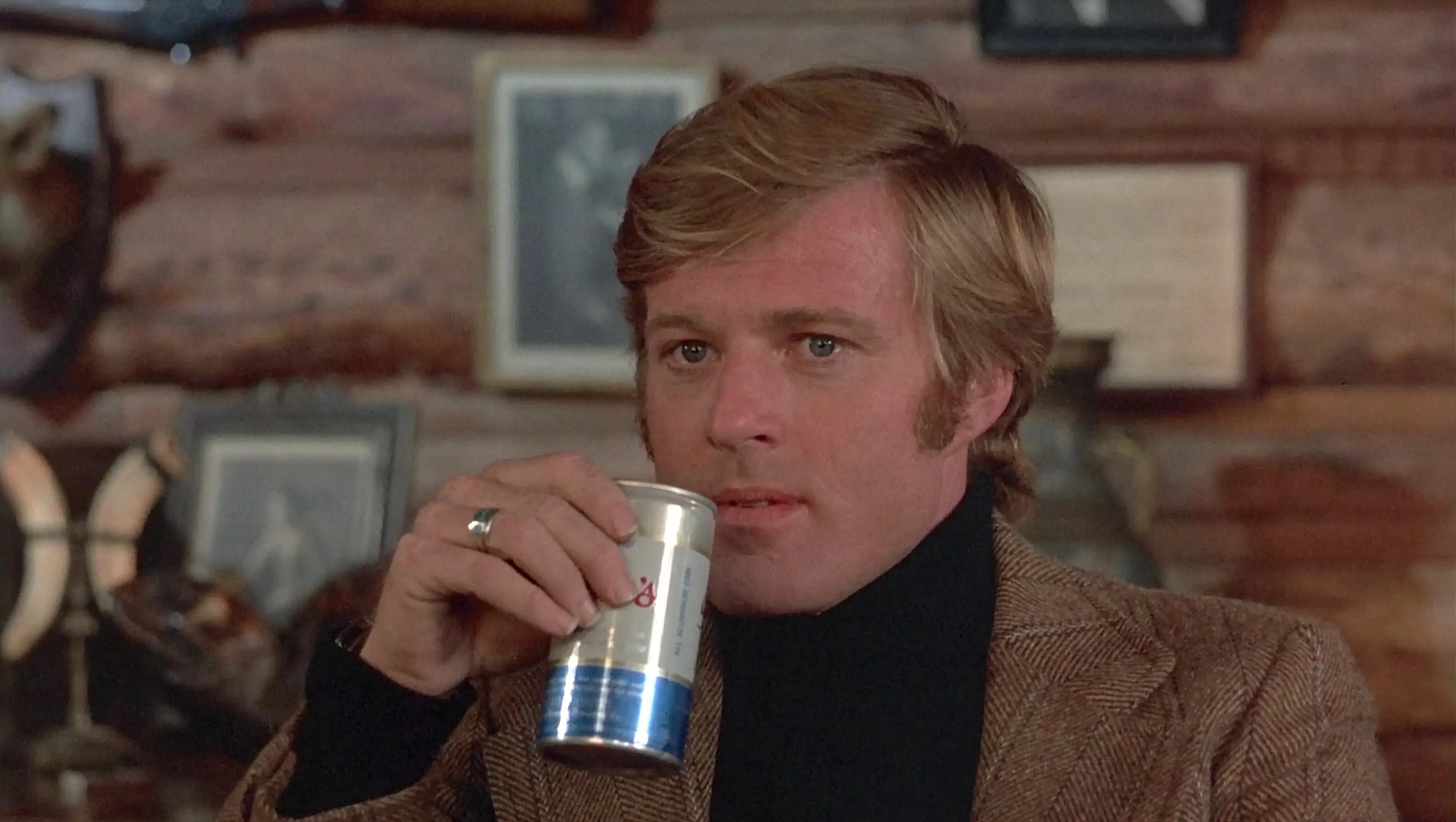
The first minute of the above clip – which inspired the title of my previous piece on One Battle After Another, “Dirty Work” –  is, in my mind, the single greatest act of filmmaking all year. I cannot watch it without crying. I can’t really hear “Dirty Work” anymore without crying. This is the most inspirational, loving work in Anderson’s career. In just eight words – “Heian nidan./You’re not breathing. Again./Heian nidan.” – Infiniti and Del Toro communicate absolutely everything we need to know to fall in love with these characters. The quiet warmth on Del Toro’s face and in his delivery is our introduction to maybe this year’s single greatest character, Sensei Sergio, an inspirational mystic figure whose short mantras have become a part of my own meditation. The way the camera breathes with Infiniti and moves with her throughout the demonstration is hypnotic. A director I have called “The Master” more than once has done it again.

If I focus on only the parts of One Battle After Another which I love, which have had their praises sung many places, I might easily rank this in my top 5. But I’m largely still struggling with the very Pynchonian first act, in which Perfidia Beverly Hills (Teyana Taylor, who is incredible) and Steven Lockjaw (Sean Penn, who is good?) are in a fully blaxploitation sex-fetish version of The Gonzo that feels a lot more in tune with Inherent Vice’s hypersexual fantasia than the remainder of One Battle After Another. The thing is, I vastly prefer the Gonzo Hypersex of Inherent Vice and this first act to what comes after in concept – but it just never goes anywhere in that latter film! It feels at best like a repressed memory of Lockjaw’s, but his character (in writing or performance or both) lacks the continuity to really make me feel that weight. It just feels like a gap between two different versions of the screenplay, one more overtly comedic and insane (where Martin Short might play the craziest cartoon dentist of all time) and one more explicit political thriller.

But, again, if I praise what I think is great in this film, I can keep my eyes on the fact that it’s great. I love just about everything Sergio and Bob get up to in their storyline. I love Chase Infiniti as Willa, a really impressive performance when you’re acting against veterans like DiCaprio, Penn, and Regina Hall before pulling off your own action movie climax solo. I love the needledrops. The bit where Bob falls off the roof is one of the funniest stunts of the year. My least favorite Paul Thomas Anderson movie since Magnolia is still a great movie.

10. Dreams

Dir. Dag Johan Hauerland
Nom: Anne Marit Jacobsen – Featured Acting, Dag Johan Hauerland – Original Screenplay, International Feature
Criterion Channel, VOD

Dreams is the second of two Norwegian dramas in which a writer pens a confessional manuscript and the family members reading it in a pivotal scene. Where Sentimental Value explores all the roadblocks to getting family to read it in the first place, Dreams uses the reading of the manuscript as its central premise. The decision isn’t whether to accept its author, the teenage Johanne (Ella Overbye,) for perceived slights. Rather, its concern is whether what she’s documented – an emotional, romantic affair with her teacher – is strictly true and should be investigated, and, more importantly, is it so well-written that it should be published as a novel?

I find his film’s messy, emotionally complicated positivity so compelling. In a time where it feels like American art often struggles to look at complicated people with warmth rather than disdain, this movie manages to maintain a careful tonal balance. Anne Marit-Jacobsen as Johanne’s grandmother Karin maybe best carries that balance. She is worried about her granddaughter, but is more surprised by the emotions her manuscript stirs in her, and she plays a balance between nurturing and honoring her own feelings in a way that is funny, illuminating, and pretty special. 

9. The Mastermind

Dir. Kelly Reichardt
Nom: Kelly Reichardt – Best Editing, Rob Mazurek – Original Score
MUBI

I honestly can’t believe I don’t have room for Josh O’Connor in Best Lead Acting. This guy has become a remarkable leading man so quickly, and is capable of delivering across so many films, that I’m basically writing the seat card in advance. And he is wonderful in Kelly Reichardt’s The Mastermind, a film about a small-town art heist that catches more heat than O’Connor’s James Mooney expected. But it’s a deliberately understated role, one that relies on his natural charm and amps up his talent for insincerity without fully deploying him as a movie star, allowing Mooney himself to be a little dull.

Where this movie soars is in its control of pace and tension. There are undeniably moments where the film slows to a crawl. A scene where O’Connor is in a barn stowing something away is so belabored in its process that it starts to feel like The Wages of Fear, where one very small motion is going to make something spill horribly wrong. The film still feels thrilling, and it honestly flies through its second and third acts. That owes to Reichardt’s confidence as an editor, knowing just when to slow down and when to ramp up, and it owes to Rob Mazurek’s gorgeous jazz score for the film, filling those slower moments in ways that hardly feel quiet.

The Mastermind is a movie about the complacent frustrations of the 70s, about beautiful sweaters and gauzy photography. It’s a movie about how under capitalism, falling out of the conservative status quo is a spiral into misery – a modern movie. And it’s a movie about how sometimes others don’t understand your master plan and then the fuckups outside your control destroy everyone’s lives – a movie about filmmaking. We’re fully at the point in the list where all these films only have room to grow even larger in my heart.

8. The Secret Agent
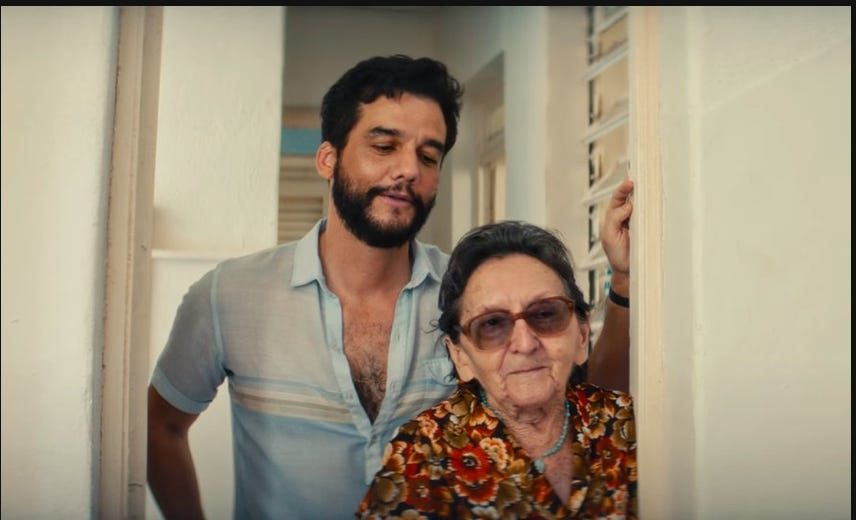

Marcelo Meets Dona Sebastiana, which will not embed.
Dir. Kleber Mendonca Filho
Award: Eduardo Serrano, Matheus Farias – Editing
Nom : Wagner Moura – Lead Acting, Tania Maria – Supporting Acting, International Feature Film, Rita Azevedo – Costume Design, Thales Junqueira – Production Design, Gabriel Domingues – Casting
Hulu, VOD

I saw The Secret Agent on New Year’s Day and I’m already ready to watch it again, even with its near three-hour runtime. This film’s pacing and plotting seems to be throwing some people, and I don’t blame them – it’s certainly deliberate, sometimes intentionally slow (as in the clip above) as it focuses on uneasy kindness rather than the film’s darker stakes. The Secret Agent follows Marcelo, living under the name Armando, as he becomes a refugee attempting to escape Brazil’s oppressive regime. It’s at least a full hour into the film that we learn why he’s running, who he’s running from, and what kind of man he really is.

But we know from watching him already that he is a kind, if reserved man, one living with grief and fear. Moura plays Marcelo with a guarded affability, for much of the film hypervigilant to his own disclosures, and when he does later loosen up, it’s a thrilling scene to watch. Meanwhile, he’s surrounded by characters who are more emotionally open, whether it’s his host Dona Sebastiana (Tania Maria, who is such a great energy for the film) or his family or his found community. He’s positioned opposite two hitmen and corrupt police officers, who talk around crimes involving a decaying severed leg and a missing student.

It’s a film with a massive, novelistic scope, one where several threads are left not fully explored simply to add texture to the film’s central mystery. I think, as a result, the fact that it’s able to maintain its narrative across several intertwining plotlines (and, eventually, timelines) while maintaining a tense and yet warm tone is the greatest editing achievement of the year. It’s so dense with great stuff that I may someday choose to expand on this piece, to dig into this great final appearance of Udo Kier, or the way the film intermingles nostalgia and terror into its story in “a time of great mischief,” or the way the film’s finale breaks my heart.

7. Die My Love

Dir. Lynne Ramsay
Award: Jennifer Lawrence – Lead Acting/Lead Actress, Seamus McGarvey – Best Cinematography
Nom: Robert Pattinson –  Featured Acting, Nick Nolte – Supporting Acting, Sissy Spacek – Supporting Acting, Lynne Ramsay – Best Director, Lynne Ramsay et. al – Best Adapted Screenplay
MUBI, VOD

Post-partum depression gone terribly wrong, while Die My Love sold itself on the mania and fighting between Grace (Jennifer Lawrence) and Jackson (Robert Pattinson,) I would push that it’s just as great at the funny, sexy, joyful moments, too. Left alone with her baby while Jackson works as a trucker and cheats, Grace is bored out of her mind. She does a lot of dancing and day drinking and mess making. There’s a scene with a children’s song that made me giggle. There’s another where she reads an Amelia Earhart children’s book that made me cackle.

That’s ultimately what made me fall in love with this movie – never letting up on the insane depiction of socialized “motherhood” but also celebrating moments of absurdity and escape. I think Ramsay identifies that the central premise of “isn’t it insane how we treat and talk to women who are not doing well at this most pivotal point in childhood development” is familiar enough to anyone in her audience that she can focus instead on all the details and diversions. That includes fantastic supporting performances for Grace’s family – Nolte, in particular, is so affecting as a man at the end of his faculties. I still haven’t caught up with Marielle Heller’s Nightbitch adaptation, but I suspect this might be the better staging of the novel’s energy.

I also think Jennifer Lawrence gives the performance of the year as Grace. Yes, there are scenes where she’s asked to go big, though never quite as over-the-top as Darren Aronofsky’s mother!. And, yeah, there’s a lot of prowling and dancing. But I’m at least equally delighted with her more deadpan exhaustion, her drunk bliss, her holier-than-thou condescension. Also, credit to Ramsay and McGarvey – the way they photograph Lawrence is the best a movie star has looked in a movie since Pattinson himself starred in The Lighthouse. I found this film, despite its intense sadness and profound anger, to be gorgeous, funny, and, yes, fun.

6. The Testament of Ann Lee

Dir. Mona Fastvold
Award: Celia Rowlson-Hall – Best Stunt Design
Nom: Amanda Seyfried – Lead Acting, Mona Fastvold – Best Director, Malgorzata Karpiuk – Costume Design, Anna Torjek et. al – Makeup & Hairstyling, Daniel Blumberg – Original Score, “The Testament of Ann Lee” for Best Original Song, Sam Bader – Production Design
VOD

Seyfried is so outrageously good in this movie – her and Lawrence are about as close to a tie in my heart as it gets. The Testament of Ann Lee is a historical musical telling the foundations of The Shakers as a gospel (miracles included!) with new arrangements by Yuck’s Daniel Blumberg. I have been jokingly calling the film “what white people mean when they say Sinners would be better without the vampires,” which is obviously a joke reductive to both films. But I think they share plenty, as well, films heavily concerned with folk musical traditions, the violence America inflicts on those who dare to dream of independence within America’s white Protestant hegemony, and the power of community despite that violence.

This is also a beautiful film, and the dancing is so engaging. I could have watched it for another hour. It’s an impressive feat to pull off, because I find myself very much empathetic with all of Ann Lee’s pain while also finding her ultimate tenet, the absolute celibacy of man in the goal to reunite with God, to be the foundation of a death cult. I understand absolutely why she would come to the conclusions she does, but I mostly find myself sad she does not have more modern resources to the way we discuss womanhood, sexuality and asexuality, and grief. But that sadness, for me, is never overwhelmed by the movement, the community, the music.

What Seyfried’s capable of doing in this that is so electric is marrying the zealotry and the individuality. In every scene, you can see both why her companions are obsessed with her and also why her husband is so frustrated that the woman he loves (possessively, wrongly) has removed herself from his side. There are great scenes away from Seyfried, too – Lewis Pullman gets some great scenes as a traveling proselytizer, and there’s a delightful scene where a party of explorers find the land that will be their home. I do understand why this movie lost some people, but it certainly held me.

5. Sinners

Dir. Ryan Coogler
Award: Miles Caton – Best Featured Acting, Ken Diaz et. al – Best Makeup & Hairstyling, Ludwig Goransson – Best Original Score, “Travelin’” – Best Original Song, Andrew Bock et. al – Best Sound, Francine Maisler – Best Casting
Nom: Michael B. Jordan – Lead Acting, Wunmi Mosaku – Supporting Acting, Ryan Coogler – Best Director, Ryan Coogler – Original Screenplay, Autumn Durald Arkapaw – Cinematography, Ruth. E Carter – Costume Design, “I Lied To You” – Best Original Song, Andy Gill – Stunt Design
HBO Max, VOD

A film that, at this point, I hope needs no introduction. Sinners has held on for almost a year now as the people’s choice for Best Picture, and I would love to see it win on Sunday – though, I have to admit, I think it’s rather unlikely against One Battle After Another. The season has gone on long enough that prognosticators are openly overturning their predictions on personal desire and “what would be a better narrative for Hollywood” rather than an assessment of the polls. And I get the desire to hope Sinners will pull out an upset. No film this year marries an equal volume of ideas with crowdpleasing thrills. The cast is full to bursting with great performances, both in acting and singing, and the way the film moves from its Howard Hawks-y set-up into its full blown Carpenter invasion act is a meaningful pleasure.

This is a film with three lead characters in Smoke, Stack, and Sammie “Preacher Boy” – the two twins played by a surprisingly controlled Michael B. Jordan. He differentiates them in physical posture and willingness to smile more than in voice or obvious tics – it’s that subtlety that calls to mind Jeremy Irons’s great work in Dead Ringers rather than Robert Pattinson’s much sillier (still fun!) work in Mickey17 this year. But my favorite discovery of the year is this first-ever performance from Miles Caton, who had a brief stint as a teen singer and has yet to release an album. His voice, of course, is one of the movie’s magic tricks, and it makes Stack shout with joy when he first hears it (in the film’s best blues song, “Travelin,’” which I still can hardly believe is not a traditional!) But it’s the sensitivity and frustration with which he plays his youth and his excitement at a world of “sin” that makes me wish, as much as I love Delroy Lindo, that Caton was up for that award on Sunday.

I’m so happy Wunmi Mosaku made it after all – her performance as Annie is so captivating, hat wonderful sort of “taking control of the movie with rationality” that makes for so many great supporting wins. And she’s amazing in that introductory scene with Smoke, which is so sad but also so loving. While I wouldn’t prefer they be nominated than Lindo or Mosaku, shout outs to the great work from Hailee Steinfeld and Jack O’Connell as well, bringing to life characters that should be easy to write off and making them funny, sexy, and still meeting their emotional complexity. Though maybe the real credit there is to Coogler and his team for writing great roles.

The music is, ultimately, my most beloved part of the film, and I was so driven by the non-performance scenes and the way they maintain their instrumental blues. When the camera pans up to the roof ablaze in “I Lied To You,” for me, that’s where the truly ecstatic takes hold. Since his debut Fruitvale Station, Coogler has been capable of quiet magic in the way he chooses to frame and block. Maybe no moment hits that as cleanly as the aspect ratio shift at the barn door, when I realized just how horrific the scene was about to get. It’s that expert management of tone that sets Coogler as my ideal winner for Sunday’s Oscars – but I’m setting myself up to only hope it wins, like, six, lol.

4. Cloud

Dir. Kiyoshi Kurosawa
Nom: International Feature, Shinji Watanabe – Sound, Tatsuko Koike – Stunt Design
Criterion Channel, VOD

I don’t think I had more fun at a film than Kiyoshi Kurosawa’s story of an online reseller scalping product at such a volume that it seems the entire world decides he must be destroyed. Cloud is a tech thriller that really captures the way being online can mentally dissociate action from emotional processing, we watch as “Ratel” (Masaki Suda) watches his sales page of marked up goods goes from 0% sold to sold out with an almost shark-like lust. Suda’s great at playing the superficiality and emotional simplicity of this guy, and when he asks in a violent encounter, “Am I really so bad?,” you realize he’s never really considered it before.

He’s surrounded by a really fun cast, too. Kotone Furukawa plays his girlfriend, seemingly really naive about the way he makes his money, openly dreaming about having lots of money and the comforts that come with it – but when he fails to be as present and the money stalls, we immediately take her side because he’s a disaster. Then there’s his assistant, Sano, who at first appears to be a gentle doofus and eventually reveals himself to be something a lot more complicated. Between his allies and his growing opposition, Ratel’s world quickly becomes a paranoid nightmare.

Like Ari Aster’s Eddington, this online paranoia parable explodes into action in the back third, and it is thrilling to watch. Allegiances get fried, glass gets shattered, guns go off. The gunfights in this film’s back half are both believably hard-scrabble for the characters involved and also incredibly well choreographed and shot. Where I’d kind of expected this to be Kurosawa riffing on Fargo, it spills more into the dark Coens vibes of Barton Fink and No Country for Old Men. It’s an interesting film, because while certainly less ambitious than the films I have directly below it on the list and maybe lacking any one specific exceptional quality, the entire package is just so deeply satisfying that, try as I might, I could not bring myself to place it any lower.

3. Marty Supreme


Dir. Josh Safdie
Nom: Timothee Chalamet – Lead Acting/Lead Actor, Gwyneth Paltrow – Supporting Acting/Supporting Actress, Josh Safdie – Original Screenplay, Darius Khondji – Cinematography, Ronald Bronstein, Josh Safdie – Editing, Daniel Lopatin – Original Score, Jennifer Venditti – Casting
VOD

I laughed so hard my head hurt. In terms of sheer entertainment value, Marty Supreme would go to #1 on this list. The story of Marty Mauser ratfucking literally every person he comes into contact with, often to his own detriment because his monomaniacal egomania is so ridiculously out of tune with reality, is a movie that instantly swept me away. Marty Supreme stays more fun than the previous Safdies films Uncut Gems and Good Time by warping every character in the film towards Marty’s immoral center, shaking up the timeline, and dialing up the insanity. It’s not as painful to watch him be a piece of shit to Kevin O’Leary’s Milton Rockwell because Rockwell is a self-proclaimed monster. We have some more sympathy for Rachel (Odessa A’zion) and Kay (Gwyneth Paltrow,) but they’re still both terrible decision engines of their own making.

I still don’t know who to root for on Sunday in Lead Actor, as I think all five performances nominated at the Oscars are genuinely great. But I’ll be thrilled if Marty Supreme is the role Chalamet can win for, as it’s truly electric work. The unstoppable locomotive Marty Mauser is such a nasty rat of a man, and watching him barrel past any attempt at reason or accountability is just electric. The way this movie never stops moving is the Safdie signature, but this finds new explosive (pun acknowledged) heights for the viral movement throughout this film’s world.

Perhaps most impressively, the ping pong in this movie is, like, delightful? It never goes quite as expressionistic as Challengers, but the intensity of the matches and the arcs of the play are as close as anyone’s come. The film’s diversion into circus acts does a great job highlighting the way this sport is unquestionably silly and yet also so athletically demanding. The film’s subtheme about the way those who celebrate performance find themselves adrift in a world of capital is complicated by how we feel about Marty as a person, but Paltrow is able to fill Kay with an earnest sadness no other actor could have captured.

“But what about the rest of it?” It is certainly hard for me to argue Marty Supreme is as thematically dense or ambitious as some other films on this list. The intense disagreement people have about how to read the film’s ending is evidence there is something to plumb here. I’m of the opinion that Marty has let something new into his life, and that alone is some growth for him. Complicated feelings about what that growth means, and whether it has to be a radical change in his character or just one step in the right direction – there is a lot of allegorical stuff you can attach to that with Marty’s identification with being an embodiment of American exceptionalism, and then also the ways that ties into Marty’s blase discussion of Jewish identity. Incrementalism likely cannot save us, but I will still take my wins where I can get them.

2. The Phoenician Scheme

Dir. Wes Anderson
Award: Wes Anderson – Best Original Screenplay, Milena Canonero – Best Costume Design, Adam Stockhausen – Production Design
Nom: Mia Threapleton – Featured Acting, Michael Cera – Featured Acting, Bruce Delbonnel – Cinematography, Heike Murker – Make-up & Hairstyling, Douglas Aibel, et. al – Casting
VOD

For a long, long time after my piece this past June, The Phoenician Scheme remained my #1 film of the year. I went long on that film’s triumphs in a way that dodged spoilers back then, so if you still haven’t caught up with it, click above or scroll on. Since it was released, I’ve seen a Benicio Del Toro performance I loved even more in Sensei Sergio, though cutting Zsa Zsa Korda in lead was a painful choice for me. I have not seen a film I thought looked better – hell, I’m not sure Wes has ever made a film that actually looked better, its blocking and control of color (or lack thereof) as powerful as anything he’s ever done.

First, the gag reel. That first explosion had me scream in the theater. The above clip, the basketball gambit, is the most joyful use of Tom Hanks in a decade. Yet another brilliant dual role is Michael Cera as entomologist and secret agent Bjorn, with his transformation into the secret agent one of the year’s funniest and most impressive physical acting choices. But he’s also so funny already as the tutor, so many insane line deliveries, that the change is magic. In the scene where Liesl (Mia Threapleton) is reunited with her Mother Superior, the way the light dims to highlight only Mother Superior and Liesl is both a great character choice and a deeply funny sight gag. “Myself, I feel very safe” and “Help yourself to a hand grenade” are two lines I have been repeating in that very Fantastic Mr. Fox way. There are lots of Fox-y gags, little shrugs and looks that recapture elements of one of his most beloved, least echoed films.

 I’ve also rewatched and fallen back in love with Rushmore, a film which shares this film’s ending with a desire for a new normal. It’s that ending which has, against many worthy films, held The Phoenician Scheme in such high esteem for me. Because, yes, like many Wes Anderson films, this is a gorgeous, funny, brilliantly acted film. But the profound comes in the way Zsa Zsa and Liesl are able to change one another and abandon lives of depressed ideology (capitalism and puritanism, which are it turns out serving neither of them) to pursue a simpler, kinder life.

In the final scene, where Zsa Zsa and Liesl run a cute, small family restaurant, count the day’s cash, and play cards together, the new environment is given the same lush attention to detail as the opening credits with Zsa Zsa in his bath. I have a real sense that this new life will carry on past a moment in time, rather than Anderson’s usual talent being a kiss-off final joke where the characters reconcile or a reflection back on a moment in time now gone. While Wes has long proven himself as a great fantasist, I love that he now pursues a more mundane, achievable joy. I think it’s a perfect coda for the film’s fantastical redemption of the soul, one which takes on faith a Judeo Christian afterlife to truly understand these characters. If God is not dead, then we are not beyond salvation, and facing Zsa Zsa Korda’s redemption is a story I understand some could not attend.

1. Resurrection

Dir. Bi Gan
Award: Bi Gan- Best Director, International Feature
Nom: Jackson Yee – Lead Acting/Lead Actor, Guo Mucheng – Supporting Acting, Bi Gan – Original Screenplay, Dong Jinsong – Cinematography, Xue Bai, Bi Gan – Editing, [not credited online] – Makeup & Hairstyling, M83 – Original Score, Liu Qiang, Tu Nan – Production Design, Strilen Liu, et. al – Visual Effects
Coming to Criterion Channel 3/24, VOD

In a distant future, humanity has stopped dreaming and has achieved immortality – the dreamers are considered enemies of the state to be studied and eliminated. The dreams, as portrayed here, are through the technology of cinema. We follow an agent of the state called a “Big Other” (Shu Qi) to one of these “Deleriants,” who we see first as a silent film monster akin to Nosferatu’s Count Orlok. Resurrection takes the form of an anthology across 20th century China, capturing elements of both film and cultural history across that time.’

Our Deliriant, played by Jackson Yee, is a chameleonic figure who places himself in incredibly realized stories each centered on our senses. My favorites are the last two, centered on a con artist who uses “smell” to achieve a relationship with a wonderful child (Guo Mucheng, in the single best child performance of the year) and New Year’s Y2K. I’ve read the Y2K sequence is emblematic of Bi Gan’s signature technique, extreme long takes. This is my first Bi Gan film and I’ll be honest, I didn’t even notice beyond being enamored with the way the camera moved. Many find this film slow – I find it rich and delicious.

The majority of writing about Resurrection is focused on its invocation of cinema. Film critics, myself included, are especially attuned to reading the ways films are about films because film critics generally only pursue the vocation because they adore the hobby. They are uniquely predisposed to love when film is about itself because they’re especially equipped to talk about it – and, sometimes, they will distort  The English language writing about this film is also less likely to be familiar with its very intentional invocation of Buddhist samsara or its understanding of Chinese political history as depicted across different time periods. I won’t profess to be a scholar of either – I’ll keep an eye out for someone who can dig into it. But while this film uses cinema history as a model to structure itself, it is about much more.

What we’re seeing is also a pretty blatant dissolution of first transcendentalism in the Big Other seeing the beauty of the dream attachment and feeling empathy for the Deleriant. Then, nationalism, where espionage agents all realize they’re in it for themselves and their art. Then the death drive of spiritualism, the decision that accepting your sin is also suicide. Then self-oriented profiteer capitalism, which ends up dividing two good friends due to a momentary lapse of selfishness. And then a rejection of the nihilism that all invites, a screaming delight at falling in love and choosing the pain of life over immortality. In the final chapter, two people can share a fart, and in doing so discover why life is worth living.

That’s not to say this film isn’t speaking to cinematic history, of course, and I think the ending where it understands that these dreams all work as ways to communicate a hundred years of life in three hours is beautiful. I just find myself very enamored with this, as a study of the joy and the suffering in life as well as a study of the world’s forces. I think pulling off the joy of the individual stories, the overall gambit pulling off so many different milieu, and doing so with such beauty makes it hard to imagine a more deserving film as the best of the year.
Dirty Work

This is kind of a sprawling piece, reacting to about a month’s worth of popular music and film. Unfortunately, to finish the piece, I’ll need to discuss the films Highest 2 Lowest (now available on VOD) and One Battle After Another (now in theaters) in-depth – if you’re cautious about spoilers, I recommend both films highly and to come back later.

Last month, my wife convinced me to attend Japanese pop artist Haru Nemuri’s concert at the Chop Shop in Chicago, one of few U.S. tour dates celebrating her new album, ekkolaptómenos. Nemuri’s music defies easy genre description, but “noise pop” with influence from riot grrl and nu-metal song structure would summarize it quickly. Her show was energizing, built on creating the crowd she wanted by encouraging a lot of audience participation and coming down from the stage to sing with us. Nemuri thanked us for being a safe audience for anarchism against fascism and bigotry, a place where the audience celebrated vulnerability, calls to free Palestine, with knowledge that touring in the U.S. under Trump is, to say the least, difficult.

We are past the phase of “interesting times” and find ourselves in violent times, with the United States government escalating violence domestically, at our borders, across the ocean in places like Gaza, even (cw: political violence) online. Like the violence of school shootings or civilian violence against public figures, these are largely not new campaigns, but they are escalating under current leadership. Not all art, or even good art, must respond to this moment – though if a film like Paul Thomas Anderson’s One Battle After Another or an album like Geese’s Getting Killed can do so, it does feel like a lightning bolt, doesn’t it?

While Getting Killed lacks One Battle After Another’s outwardly political theming, its wigged-out bombast is very much a companion. Life feels surreal, apocalyptic, absurd, and Cameron Winter’s wild vocals and abstract, absurd lyrics feel apropos as the soundtrack to painful nonsense. The arrangements themselves are upbeat, textured rock songs, sort of in that New York art rock T. Rex/Television space (you can find drummer Max Bassin citing both bands here) that stand out against the more patio-friendly rock of bands like Cindy Lee and Wednesday (both of whom I like a lot!)

Getting Killed manages to catch the zeitgeist of a freaked out world by giving it an escapism that isn’t so clean that it’s a processed, predigested foodstuff. I found Cameron Winter by accident four days before its release – I drove home from Chicago from that Haru Nemuri concert listening to new releases, and Winter’s (also great, more acoustic) solo album Heavy Metal happened to be the twelfth or thirteenth album in the lineup. After ten or so disappointments in a row, Heavy Metal shocked the system by being something new, a casual, intimate songwriting with an astonishing vibrato and voice. Getting into Geese a few days later only to see “they have an album releasing tomorrow” was a funny surprise, and it’s been a rush to get into them alongside so many other people.

In contrast, Taylor Swift’s The Life of a Showgirl has failed to meet the moment and displays that she does not have the quality control she once had. I did try to listen to The Life of a Showgirl – I have to agree that it’s flat out bad, the low whisper-singing on the verses and the octave jumps into the choruses more often actively annoying than they are familiar vehicles for verses, even on supposed highlights “The Life of Ophelia” and “Opalite.” And, yeah, I think “Eldest Daughter,” “Actually Romantic,” “Wood,” and “CANCELLED!” are embarrassing songs for a woman my age to release. But I say “tried” to listen to this album because so often, it’s just flat out boring music, and any distraction from the dog asking to go out and pee to a Discord ping is easy to pursue to escape listening carefully. Unlike many Swift agnostics, I think she’s had quality control issues as far back as 1989 – I’d happily drop the back half of that album. This is the first time where I can’t find anything as good as “The Tortured Poet’s Department” or “I Can Do It With A Broken Heart” to highlight*. She only hit this new Drake-like insistence on releasing absolutely every scrap with Lover and the Taylor’s Version saga.

*i can at least be nice enough to say “ruin the friendship” caught my ear, but i can’t say i remember it after listening two or three times either

Someone asked for what reason Swift decided to write The Life of a Showgirl’s songs about fame, sex, high school, and mean girl shit when she frankly sounds so bored by it. There is, as made evident by her contemporary artists, more than enough to write songs about. I actually tend more toward Grace Spelman’s take, which is that writing about the peak of fame, exhaustion at touring, and being alienated from reality is a great subject for songs, but Swift’s approach lacks that personal touch. Instead, people are forced to project onto these vapid, self-annihilating songs as a derailment. Swift has been the subject of a lot of projection about her politics for years now, with her fairly limited political statements and her billionaire status. Suffice it to say I find it somewhat unproductive to care about what someone who doesn’t share their politics believes in private when they’re flying their private jet to go to the 7-11 or writing odes to reviling cancel culture.

The “bigger issue” I’ve seen proposed most consistently is that these songs lack any creative energy or mission – they feel like they were released to propagate the Taylor Swift machine. Swift continues to chase craven marketing stunts and alternate editions with exclusive tracks (the most recent count I saw put it at 32?) to up the price of participation in her album cycle from your monthly streaming subscription. Promotional materials for the album utilize AI generated imagery, and I complained enough on The Horizon Line about the way The Release Party of a Showgirl screwed up the theatrical rollout of new films. A recent Defector slam, Kelsey McKinney’s “No Good Art Comes From Greed,” quotes Dostoevesky to justify linking all of The Life of a Showgirl’s poor lyrics to her mercantile assembly line approach to releasing new music. McKinney declares “To create something, anything, good, takes time and desire,” that making art fast and for survival is going to lead to bad art.

This same idea is espoused in Spike Lee’s newest joint Highest 2 Lowest by Denzel Washington’s protagonist David King. A remake of Akira Kurosawa’s High and Low, Lee transposes the story to the record industry, David King replacing Toshiro Mifune’s shoe magnate with a mega-producer executive, Quincy Jones meets Jay-Z, mogul with an ear for hits. His wife (Ilfenesh Hadera) laments that King no longer seems enthusiastic about the music business, saying that when he listened to something good, he used to grin ear to ear while explaining why his was late to their dates. King seeks to buy back his record label Stackin’ Hits before it can be sold off to conglomerate ownership. He does this through a gambit of debt and promises,which are put in peril when he gets a ransom call from a kidnapper who claims to have his teenage (?) son. The film’s teaser trailer largely consists of a monologue King gives about the pressures that stack on star musicians before concluding on the sentence “All money ain’t good money.”

While many of the broad beats are the same as the Kurosawa film, Lee has altered the story, especially in the second half. If you haven’t, it’s worth seeing Highest 2 Lowest for yourself. The film is not perfect, certainly not as great as Kurosawa’s masterpiece, but it’s an exciting ride with an electric Denzel Washington performance, maybe my favorite performance of the year so far. In order to continue this piece, I need to discuss the film’s ending in depth – spoilers after the jump here until after the embed of “Trunks.”

I’m going to run down a synopsis of the back half, not because I assume you haven’t seen it if you’re reading this, but because I’ve interpreted the ending somewhat differently from other audience members. When King goes on a walk after the rescue of his chauffeur Paul’s (Jeffrey Wright) son (mistaken for King’s) and the loss of the ransom money, he puts on a playlist of songs by artists who’ve approached him for a record deal. He hears “Trunks” by an artist named Yung Felon (A$AP Rocky), and grooves smiling to it for about twenty seconds before remembering lyrics from the song Wright’s son overheard while captured, and believes he recognizes Felon as the kidnapper’s voice. He and Paul decide to take things into their own hands. King finds Yung Felon recording another song, “Both Eyes Closed,” and gives him advice on how to improve the track with some adlibs and stronger lyrics – after a back-and-forth about how it’s too late to give artistic feedback now, King and Paul apprehend Yung Felon, though Paul is blinded in one eye.

Yung Felon puts in a guilty plea deal, conditional on a conversation with King – this is a mirror to the end of High and Low, a last request as the kidnapper has received a death sentence after multiple murders. Before this conversation, we see a music video for “Trunks,” Yung Felon still in his orange jumpsuit, women twerking around him, and cuts to David King grinning and dancing joyfully. It cuts hard into the conversation – Felon proposes a record deal at Stackin’ Hits, saying that a collaboration between the now-valorized King and the man who took his ransom would be the biggest hit in the world. King informs him he’s no longer at Stackin’ Hits, looking to start something new – Felon insults him and asks why on earth he’d pursue “focusing on the music, when what’s more important than the money?” King rejects him, saying “All money ain’t good money.” He then goes to watch an audition by a young woman his son has recommended to him, a Best Original Song Nominee type ballad titled (for no clear fictional reason) “Highest 2 Lowest,” and King mugs his way through really listening to it before giving the monologue from the teaser.

Unlike some other viewers, I take this ending to be at least somewhat morally complicated. The fact remains that King relishes enjoying Yung Felon for nobody, and he is effectively in the spotlight for his family at the presentation of “Highest 2 Lowest.” For my reading, the part of him that is reveling in the power of music is lit on fire by “Trunks” and Yung Felon in a way that isn’t performative, isn’t aspiring to respectability or a better nature, and the performance of listening to “Highest 2 Lowest” (including being kind to the sort of performative, corny joke like “My father was a rolling stone – pun intended!” that nobody her age can honestly find funny, no?) is with lips pursed and head tilted, shouting “come on!,” never showing that beautiful Denzel smile until the song has hit its enormous conclusion and certainly never showing that same, dazzling grin.

Biased, I know, I’m biased – I’m bumping “Trunks” and “Both Eyes Closed” in the car, two of Rocky’s best tracks in years, and I would probably just as soon never hear “Highest 2 Lowest” again. But this is a film that, if not intentionally, can be read to admit that sometimes, great art comes from bad people with cheap motivations. King can never, realistically, take Felon’s proposal seriously – it would destroy his family, his relationships, and in reality, even 2-4 year prison terms can end a rapper’s career with an inability to tour or stay in the zeitgeist, let alone the twenty five Felon’s staring down. To make art with his family, who act like characters from a Lifetime original movie (and, arguably, have the actors to match,) he will have to settle for ballads Obama would forgo putting on his summer playlist to make room for charli xcx’s 365.

I understand the impulse to defend the production of art as a sacred, virtuous act, that the tainting of the grove with impure motives or methods will somehow lead to a decayed work. Even beyond the usual “is this TV show my friend” conflation of consumption as activism, artists and critics alike are broke, with fewer jobs, less revenue, fewer investments, and near-zero support from the state to produce work. The fact is that for most of us, there is no real financial motivation to create, and we do it purely for the love of the process itself. Even without getting into anticonsumerism and full political stances, the rejection of selling out often comes from a self-enforced acceptance that the sky is only the limit for those who start with the silver spoon, and the rest of us are really in it for the practice of making itself.

That desire also ends up being a double-edged sword. Returning to One Battle After Another, its focus on left-wing revolutionaries has led to many championing it as an invigorating call to action, a Truly Revolutionary Movie for our times. Backlash followed, not just from right wing commentariat sensationalizing hypothetical violence, but from farther-left radicals describing the film as both antirevolutionary and full blown COINTELPRO infiltration of leftist movements. I would describe it as none of the above. While I do think it has valuable thoughts about how we treat our allies and the people we aim to serve, as well as a willingness to believe in the titular battle after another, it’s less about What We Should Do and more what we choose to do in violent times. (The next paragraphs, through to the Twitter embed, contain light spoilers for the first two acts of One Battle After Another.)

I’ll save more on the film for another time, as I don’t care to double the length of this piece, but there’s a continuity between One Battle After Another and Paul Thomas Anderson’s previous Thomas Pynchon adaptation Inherent Vice. Both films follow stoned post-radicals trying to navigate fascists and reunite with their loved ones. Unlike Inherent Vice, One Battle After Another’s Bob Ferguson (Leonardo DiCaprio) was not just a hippie but an active revolutionary in his past life as Ghetto Pat, explosives expert for the French 75. But after the movement is compromised by Steven Lockjaw (Sean Penn,) he’s effectively in exile raising his daughter Willa (Chase Infiniti) while others have continued the work without him.

Bob’s infirmed himself with copious substance use, social isolation, and a likely failure to get therapy after the departure of Willa’s mother, the revolutionary-turned-rat Perfidia Beverly Hills. When Lockjaw comes back, Bob’s utterly unprepared for the moment, though he at least trained Willa enough to get her to go along with one of his ex-75 compatriots. We see him link up with his daughter’s karate Sensei Sergio St. Carlos (Benicio Del Toro,) one of the year’s best characters. He’s the semi-mystical leader of his own subversive movement protecting illegal immigrants from immigration enforcement, and his movement stands in contrast to the password-keeping, scrambling, seemingly unhelpful remnants of the French 75. Even Bob has to rely on a personal relationship to get any assistance – the 75 doesn’t even seem to offer general advice over the phone.

This dynamic, along with the portrayal of Perfidia, has led to some of the better conversation I’ve had about a “political” film in some time, with productive conversations about “opsec” and providing community care, about the film’s out-of-time timeliness, about how this film depicts and looks at black women, and thankfully quite a bit about the filmmaking itself. I’ve managed to dodge a lot of the worst bad faith criticism of the film in my personal interactions – people are pretty thoughtful in their praise and frustration! I think the film is still my least favorite of Anderson’s films since Magnolia, but it’s a Real Movie, one that rewards analysis without becoming a monolith of praise, one that is enriching and is enriched by thoughtfulness.

ocean waves, bob. ocean waves.

But I have watched some of the hyperbole about the film from the roadside, both positive and negative. It’s this same puritanical desire to have every work that is Genuine and About Something to be itself Pure and All-Good, and either defend the film from any criticism or diminish its very praiseworthy elements. I have a harder time begrudging this for One Battle After Another, which I consider a great and also enriching film, as compared to some objects of hyperbole from the past couple years. Still, this hyperbole helps no one – it, in fact, obscures what the film is doing.

I hate to drag a specific film, but Brady Corbet’s The Brutalist got halfway there before derailing itself, and it merited this same sort of hyperbole and mission-like theater attendance. Sam Bodrojan’s “Don’t You Want Some Good Fucking Food?: On The Brutalist”  actually dislikes the film more than I do, but is instructive for how it collapses in on itself, especially in the back half. I laugh reading her describe the way the film hides from looking at architecture despite its subject, focused more on the creative process and the compromises of its characters than the beauty of what they make. I cherish the way she deconstructs the film’s non-statement on Israel, summoned in the second act and film’s finale but ultimately not coherent. But The Brutalist is a film I like more for having read Bodrojan’s words on the subject, not less. It got me to engage with the film’s themes and details in a way that I received in the theater but hadn’t fully interpreted – that processing with someone else’s ideas is one of art’s magic tricks.

Someday, my great paean to criticism itself as essential to enriching art, my argument that “critic-proof cinema” is hermetic and eventually lifeless compared to that which you can stick your hands in and muck about with and Elevate To Greatness, will be laid out for you to read. In the meantime, I’d like to argue that timeliness and political correctness can be great assets in art, but are not the sole purpose of art. Art exists to speak to our times – art exists to make us dance – art exists because someone very good at something wanted to make money on it. Even Taylor Swift has successfully done the latter, in my book – “Anti-Hero” is pure commercial pop drivel, sexy babies and monsters on the hill, and it also has an unforgettable, glossy, delightful chorus. Political, ideological, and motivational purity are not at the heart of “what makes good art.” Find whatever drives you to make something – just make a point of making it well.

P.S. Shortly after hitting publish on this piece, I read Madison area writer and film programmer James Kreul’s piece on One Battle After Another – it’s exactly the kind of criticism I’m praising at the end of this piece, and I think you should read it!

R.I.P. D’Angelo

Three of the most perfect albums ever recorded. D’Angelo’s voice and instrumentation are so precise, so delectable, ethereal. He could croon like Al Green, float like Marvin Gaye, scream like James Brown. His harmonies tower like columns. But then that Native Tongues influence keeps his beats contemporary, hip-hop, not just stuck in the past but still somehow looking to the future. His songs are time travelers, back to the future, blasts from another history. Even the other neo-soul greats, Badu, Hill, The Roots, even the alt hip-hop D’Angelo claimed as inspiration, none of them could replicate the ease of his grooves or the stratospheric height of the call and response between his vocals.

Debut albums are often honed and distilled versions of years of previous work, a collection of years of songs that represent the artist coming into their identity and really solidifying their sound. But they rarely show the confidence D’Angelo’s Brown Sugar displays, the comfort in extended jams by a solo musician, the willingness to luxuriate in a sound rather than deliver every great idea in three minutes or less. D’Angelo cited Prince as a direct influence on his choice to sing and record all the instrumentation himself – I would argue Prince wasn’t this comfortable drifting off of pop for more than a song or two until much later in his career, saving most of his extended jams for his most uptempo songs.

Brown Sugar had hits and acclaim, and then writer’s block hit until D’Angelo’s first son was born in 1998. Voodoo makes its home in the same sort of extended jams as Brown Sugar, but the lyrics are more explicit, more about black life, more about sex. When we did Maintained Madness’s original Songs of the Decades tournament, it was “Untitled (How Does It Feel)” that we picked to represent D’Angelo’s work, a song with releases that cusp Y2K with a video too hot for polite company. The soul music had been honed into a mission, representing a celebration of life and an argument for R&B outside pop music, unvarnished and clear-eyed, music for adults. 

Usually, I put the limit around “working artists” around ten years between works. But someone like D’Angelo is the rare champion who you never count out. His struggles with addiction, fame, and hypersexualization extended the development of Black Messiah to nearly fifteen years after Voodoo solidified him as one of the most essential musicians alive. Songs from Black Messiah have existed in different forms since 2002, and they started leaking as early as 2007. Questlove joked in December 2011 that the album had become the “black version of Smile,” for which the (incredible) The Smile Sessions archival collection had released a couple months earlier.

When D’Angelo released Black Messiah in December 2014, it was in direct response to the Eric Garner and Michael Brown rulings, moved forward from a spring 2015 date out of political urgency. When the lyrics are social critique, they focus more on systemic oppression and the way cycles of activism and protest are controlled for and diminished – songs like “1000 Deaths” and “Charade” are written from a wider lens than the personal struggle of something like Voodoo’s “The Line.” But, just as essentially, D’Angelo never stops celebrating life and music, never reduces worth solely to contribution. A song like “Sugah Daddy” or “Betray My Heart” is nourishment. And then, that conclusion, “Another Life,” is earth-shattering stuff, a whole universe of sounds in one last jam session.

It’s been a little over ten years since Black Messiah, and I’d say there’s been no better album since. Raphael Saadiq claimed D’Angelo was working on a fourth – I’m sure whatever does exist will be released, maybe completed by collaborators like Questlove and Q-Tip. Two of his three children are adults – he never married. His privacy was essential to his process, and I’m unsurprised he didn’t share his illness, but the sudden nature of this loss is a deep wound. I loved imagining him tooling around surprise club appearances, seeing friends with new ideas, an eternal tinkerer who’d share another masterpiece when it was ready to see. The way people describe Bowie, Lynch and Prince as people they imagined were eternal, D’Angelo is a man out of time – I cannot be grateful enough for his gifts.

R.I.P. Robert Redford

The Candidate (1972)

I’m nowhere near a Robert Redford completionist. Of his acting credits, I’ve seen thirteen – of the films he directed, only Quiz Show, a very good movie. My favorite is handily All The President’s Men, which he grants an intense control. Films ripped from the headlines often work in melodramatic performances that emphasize just how important, how monumental this story is, that it couldn’t possibly wait to be told, that This Is Not Normal. Redford is the antithesis of that approach – not that his Woodward doesn’t seem invested in uncovering the Watergate scandal, but in that he handles it thoughtfully, professionally, like it’s surgery.

The Candidate is probably my other favorite performance, especially poignant in this modern moment where our best and brightest Democratic nominees are effectively unsupported by their party establishment unless they’re willing to “moderate” their messaging. Redford is the ideal actor for the role – he simultaneously is charismatic and sincere enough to make the more poignant lefty political messaging feel earned and also beautiful and aloof enough to sell that he’s comfortable losing, his skin not really in the game until it is, that he hasn’t really thought through what will happen if he wins. And, though I have less to say about them, I love his Newman collaborations, The Sting and Butch Cassidy and the Sundance Kid.

Sundance, the film festival, is Redford’s ultimate legacy, and his ultimate contribution to film art. Redford’s Wildwood Enterprises founded the Utah/US Film Festival that would become Sundance in 1978, and his stewardship resulted in the largest annual film festival in America to this day. By the 90s, it had become the definitive home for independent cinema in the United States. Then, its discoveries included Richard Linklater, Steven Soderbergh, Quentin Tarantino, Paul Thomas Anderson, Jim Jarmusch – to this day, they include Lee Isaac Chung, Jane Schoenbrun, Bo Burnham, Boots Riley, Eliza Hittman, and The Daniels. At a time when Hollywood was getting bigger, glossier, and more blockbuster-oriented, Redford was instrumental in creating a new lane for emerging filmmakers, smaller budgets, more human stakes.

You can count the number of times Redford cashed in across his career on one hand. His filmography, both behind and in front of the camera, is close to the ideal for a movie star of his caliber, with more paranoia thrillers, sports movies, historical epics, westerns, and oddball dramas than almost any actor of his generation. Even towards the end, he continued to make Real Choices, like the harrowing ocean survival film All Is Lost or the romantic nostalgia of The Old Man and the Gun. Redford is representative of the ideal of American cinema, everything it can do and every way someone passionate can contribute. I pray we see another as good as him soon.

THE TREE OF LIFE

THE TREE OF LIFE
Dir. Terrence Malick
2011

I vaguely referenced The Tree of Life’s ending in my piece on Malick’s Days of Heaven, noting that extended denouement is how Malick allows the film’s story to end without closing off its emotional impact. I’d forgotten, then, that after the beach scene, that this film ends as it begins – in the dark, looking at unknown divine light. Loving The Tree of Life requires patience, as it is a film that repeats itself often, reflects on a single idea many times, and does so in poetic language and straightforward symbols. These work for me because they are real – both in that they are personal, often reflecting elements of Malick’s own life, but also because they are the kind of symbols people attach to in real life, a little pat and in a way that feels like they handwave specificity, but then in refinement the specificity emerges once again.

Look – it’s that kind of movie, it’s gonna be that kind of write-up. Some critic, I can’t place where I read it, wrote a story about meeting a truck driver who watched Yasujiro Ozu movies with his mother every Sunday. The story served as a warning against condescending to audiences, assuming “art films” were inaccessible to the masses and aren’t based in relatable everyday struggles. The Tree of Life is certainly relatable – it’s a story about fundamental questions about the Christian problems of evil, about class, about wrestling between your parents’ ideologies, about grief, and about coming of age. It’s not Godard’s abstraction, which demands familiarity with Brecht and Derrida and Marx in an essay film.

Any viewer is smart enough to get The Tree of Life. But that doesn’t mean it’s going to land with everyone. This nonlinear story about a boy named Jack O’Brien (Hunter McCracken, also Sean Penn) and his family, the later untimely death of his brother R.L. (Laramie Eppler), and Jack’s later adulthood malaise is interspersed with landscape photography and a CGI telling of the origin of life. It is, to say the least, light on action. Most of the story is based in Jack’s coming of age, which involves him reckoning with an increased assignment of duty by his hot tempered father (Brad Pitt,) concern for the temptation of evil, and burgeoning sexual desire. Malick warns against considering it autobiographical, but if the film is not filled with events from his own childhood, it is based in a lived reality of this community. A scene only in the extended edition takes place at Malick’s childhood boarding school.

Mother (Jessica Chastain) through a doorway.

Most of the internal emotion is told in soft spoken monologues. Many of these monologues are very blunt – the film’s most famous line of dialogue is Jack opining, “Father. Mother. Always you wrestle inside me. Always you will.” The characters are almost overly expressive with one another, with Chastain’s face of disappointment or concern as Jack slams doors or stomps around a mask of performative distress – it’s hard to tell if she’s really so wounded by his turmoil or if she’s affecting a silent reproach until he’s willing to soften. McCracken holds his own in these monologues against Pitt and Chastain – it never quite has the lived in reality of Linda Manz in Days of Heaven, but this is a more heightened film anyway.

I previously thought Pitt’s turn as Jack’s father was Pitt’s career best performance, full of locked down rage and resentment that erupts violently and only settled upon working with music or machines. I still think it’s great work. Father over the course of the film is shown to have such a limited emotional range that it’s hard to compare it against his charisma nukes in films like Fight Club or Moneyball. He continuously states that being too soft, too virtuous is liable to get you walked over in this world – he characterizes his demanding expectations and swift physical reprimand as making sure his sons know how to be independent and get what they’re owed. He offers this wisdom as the law of nature, tough but rewarding. It’s challenging to watch him become the holy terror of this household, the children openly celebrating when he goes away on a trip, knowing what Pitt is like with his own children.

Meanwhile, Mother is stationed as serene grace, the vision of tolerance and gratitude, and represents the argument that the virtuous and generous lack for nothing. The film complicates this in a few ways – first, the death of R.L. exposes her naïveté in believing virtue is the shield of God. Secondly, her tolerance of Father’s abuse and failure to equip her kids to protect themselves from him lends credence to his argument, that you do have to be able to fight back to protect virtue to begin with. This is ultimately the spiritual debate this film is engaged in – crusade vs. tolerance, Nature and Grace. My wife framed it as understanding the two sides of Christ, the cleansing of the temple vs the forgiveness of the cross. Sometimes, I feel the depiction of the parents goes a little broad to suit this paradigm – while it’s aesthetically beautiful, I forgive anyone who rolls their eyes at the dream of Chastain flying among the wildlife like a Disney princess.

Dinosaurs.

Nature and Grace are each given monologues. Nature’s is actually given by Chastain, shortly after wondering “Why did my son die?” She delivers this monologue while we watch a scientific depiction of the birth of the universe, the beginning of life, and the age of the dinosaurs. For a film this explicitly about religion, this non-creationist genesis takes on the argument for intelligent design. We see two dinosaurs fight, as Jack and R.L. will, and see one of them spare the other after stepping on its neck, assured it is not a threat. Soon after, the asteroid strikes and the age of man will begin. 

Jack’s coming of age also includes the arrival of his sexuality, and the transference of an Oedipal awakening onto a neighbor. We follow Jack on voyeuristic trips to peep through windows, and when the house is empty, he goes a step further. While it often can feel that sexual awakening stories are incidental in a greater neighborhood, this one feels instructive both thematically and aesthetically. It personalizes and isolates Jack’s grappling with sin – he can tell his Mother about vandalism or a scary encounter with other boys blowing up a frog with fireworks, but he can’t tell her about these feelings.

Lubezki and Malick’s camera is constantly in motion, and the blocking of actors and composition of shots is constantly creating interesting lines of motion. The moment one aspect of a space is obscured by a wall, a tree, or a camera movement, another detail opens up. It is inventing new beautiful images so frequently that it can be overwhelming. I would describe their work as aiming to give the viewer the eyes of a child, awestruck by every new thing in sight, teaching them ways to look for a divine, aesthetic beauty in every day situations. This is the purpose of the film’s approach to landscape photography, with canyon walls curling to reveal the beauty of natural law, mathematical reality creating beautiful, astonishing shapes and patterns. It uses this same eye on factories, churches, and houses, revealing the way mankind has imitated this mathematical vision. In Lubezki’s cinematography and Malick’s direction, I can see God.

But the pleasure of looking past the trees to see the sun behind, even more beautiful, is framed by Jack’s sexual awakening as the same pleasure one gets looking through a window at an undressing neighbor. Malick seemingly indicts the same divine vision he’s offered us, perhaps a warning against the overtuned eye. I don’t think so, though – I think he is more just acknowledging the reality of receiving this gift of sight, that it will bring great joy but also tempt the voyeur. It is an aesthetic battle between the appreciation of the world and the aggregation of its spoils.

To put it bluntly, while I think this is a valuable spiritual conversation, I also think this is one hell of a Boy Movie. It does not really make much effort to fully take Mother’s perspective, and it offers us no other women’s interiority barring one barbed conversation between Chastain and Fiona Shaw, the boys’ grandmother. Like a lot of texts grappling with Christianity, it depicts women only in maternity and lust. Its understanding of gender is based in a version of complementarianism, and it is about as rigid a binary as imaginable.

Jack and Jack, in Jack’s vision of death and reconciliation.

It’s not like I expect a 68 year old Malick to be busting the binary back in 2011, and I don’t consider it a “flaw” of the movie. Rather, the film’s somewhat limited masculine perspective is instructive, a modern contextualization of spiritual debates that began when women were, as far as the Catholic church was concerned, dehumanized. It uses gender largely as a representation of a spiritual debate – and yet, internal struggle about that debate is more largely offered to men.

If you were not engaged in this film’s spiritual debate, and were not as aesthetically awestruck as I am throughout its generous runtime, I’d hardly fail you for not relishing the film’s climax, a vision by Penn’s older Jack at Revelation, the dead returning to life at the shallow sea. Jack reads to us the argument for Grace here, Penn bringing us to a culmination. At the end of the world, we will be reunited with everyone we ever loved, whether that is our dead brother or the boy who was burned in a house fire that one special summer. We will embrace and we will give ourselves to God. I find it a simple ending – I find it a profound ending.

I do not have the entire film codexed. Hell, my non-religious ass is missing major context and references to scripture. The nuances of the film’s uses of classical music are largely lost on me, too. It’s a film I expect to get more from every five or ten years. But if nothing else, I’ll always be entranced by that gliding camera, whether moving through Penn’s modern apartment or up the titular Tree of Life itself.

THE PHOENICIAN SCHEME

THE PHOENICIAN SCHEME
Dir. Wes Anderson
2025

I have now said for years that I would happily go to a theater simply to see a montage of Wes Anderson costumes and production design ideas, and that the movies are good just happens to be a nice bonus. I advance the argument that Anderson should be considered among the most iconic and influential visual artists of the 21st century, alongside figures like Richter, Murakami, or (ugh) Koons. We see a version of his aesthetic, set in amber by The Royal Tenenbaums and Moonrise Kingdom, permeating public spaces and being cyclically imitated on social media. The infamous signifiers, the collections of kitsch arranged as storytelling, the orderly, clean lines throughout a space framed as a symmetrical image, and the emphasis on uniforms and dress tweed are more widely recognized than the visual iconography of any other live action filmmaker.

The Phoenician Scheme marks some noticeable changes in this aesthetic toolbox. Alexandre Desplat’s original music is largely variations on one moody, portentous theme, and the needle-drops trade Serge Gainsbourg and The Kinks for Stravinsky and Beethoven. Longtime cinematographer Robert Yeoman (who has shot every prior live action Wes feature, and many of the shorts too) takes this movie off and is replaced by Bruno Delbonnel, whose signatures often include strong green tones and more muted colors. These are never more feature-forward than in one of the film’s opening scenes, in which our lead Zsa Zsa Korda (Benicio Del Toro) meets his soon-to-be-cloistered daughter Liesl (Mia Threapleton) in the great foyer of their palazzo. It is an enormous, cold room, with nothing but a few paintings breaking up the slabs of gray-green, and more paintings sitting on the floor. Delbonnel gives the majority of The Phoenician Scheme this more muted palette, though later scenes are still sometimes flush with color.

Symmetry is broken at the start of The Phoenician Scheme rather than at the midpoint, when Zsa Zsa’s plane is blown open (with a blood splatter that made most of my audience immediately start cackling) and he’s forced to make a crash landing. Zsa Zsa is an unkillable cat and an unbeatable cad, the most ruthless and callous ultra-rich arms dealer in the world, and a combination of private and government interests will stop at nothing to see him either penniless, jailed, or dead. But even from the start of this film, he’s no longer capable of maintaining the rigid order that’s put him on top of this world, too physically beaten up and personally shaken down to keep the train on track. That’s reflected in his face, too, like in Bottle Rocket and so many Wes films before, cut up and bruised throughout the film.

Zsa Zsa Korda in the film’s opening credit sequence.

So, what is The Phoenician Scheme? Loosely, it’s a corporate “public works” investment built on exploitation and swindling (the film is unafraid to confront Zsa Zsa’s intent to use slave labor) that will, in 150 years, provide a resource-rich base of operations for Korda’s military-industrial empire. Unfortunately, Zsa Zsa’s enemies have successfully created an unstable market for investment, and the film is spent watching Zsa Zsa, Liesl, and oddball assistant Bjorn (Michael Cera) travel from investor to investor and solicit the funds necessary to cover “The Gap.” It sets up a satisfying episodic structure for the film, though maybe none of the episodes delighted me so much as the first featuring Riz Ahmed, Tom Hanks and Bryan Cranston. This episode in particular is so delightfully well-done, with so many perfectly timed jokes and such a strong commitment to not overstating any punchline, that I think it’s worth the price of admission on its own.

Anderson borrows a lot from the comedic language of his animated film Fantastic Mr. Fox here. There are deadpan repeated lines, a silent cartoon shrug repeated by multiple characters, and when action does arrive, the straight on close-ups and movement are so similar to the fight between Mr. Fox and The Rat that I immediately felt at home. Fans of the film are going to be repeating “Help yourself to a hand grenade./You’re very kind,” “Myself, I feel very safe,” and “Damnable! To hell!” in much the same way Fox encouraged “Take this bandit hat” and “Are you cussin’ with me?” to worm their way into your phrase book.

Like Fantastic Mr. Fox, I think that aesthetic sensibility supports the film’s emotional core. The relationship between Zsa Zsa and Liesl, and Zsa Zsa with his own peace, is a rich one, forcing them both to accept parts of themselves they’d rather push away without ever turning blame or judgment on Liesl for her reticence. Zsa Zsa’s been a poor father – hardly Wes Anderson’s first – but he’s also been a horrible person. Liesl, from the beginning, confronts Zsa Zsa with suspicion that he killed her mother, one of many women he’s reared children with (he has a horde of ten or so misbehaving, unwanted sons, some wanted and some not, a throng raised down the street except on Saturdays) and he furiously denies it. Over time, he comes to grips with his role in her demise, while also facing near-death visions of an afterlife where his soul is not measuring up to heavenly standards. Many have made comparisons to Powell & Pressburger – I don’t disagree.

Zsa Zsa, Liesl and Bjorn meet with two of the investors in The Phoenician Scheme.

There’s also the question of the film’s political angle. While many describe Wes Anderson movies as “not really about anything” except for being beautiful or funny, his last five or so films are quite political. The Phoenician Scheme is less about “politics” rather than the realpolitik of hypercapitalism, and Anderson uses securing funding as his mechanism for exploring that. I’m sure it’s quite relatable to Anderson, whose films manage to be made with incredibly star-studded casts for fairly low budgets and filmed where he can catch tax breaks for the arts. He portrays this world as being built almost entirely on interpersonal values and the merit of one’s word – Zsa Zsa doesn’t ever successfully find a contribution to The Gap by sweetening the pot or finding a mutually beneficial deal, he does so through emotional, interpersonal appeals. It’s unclear whether or not the near-death experiences and confrontations of his soul have changed his tactics, his execution, or his follow-through, or if the money’s always been this fake.

This review is built on examining the film in this more serious way because, well, I want to push back on the idea that this is a Minor Wes Anderson film, or that Wes Anderson films are all fluff. It’s a supremely funny film, and most people will come out of it laughing about Michael Cera’s incredibly funny character performance as Bjorn the assistant/insect tutor, Ivy League sweats, or the deadpan of Del Toro and Threapleton’s mile-a-minute dialogue. From the opening credits set to Apotheosis from Stravinsky’s Apollo, It’s a real treat of a movie, and I don’t mean to diminish that. I just have spent the last three days thinking about it on more than just those terms, and look forward to doing so for quite some time – and I wanted to put a rave out into the world before it leaves theaters.

BLUE PRINCE

BLUE PRINCE
2025
Dogubomb
PC, XSX, PS5

Based on seeking and giving hints to navigate the twisting halls of Mount Holly, I believe I am roughly halfway through Blue Prince, this year’s most resonant independent game. The game offered an off-ramp about twenty hours ago, after rolling credits and reaching Mount Holly’s mysterious Room 46. It was already immediately apparent there was far, far more to do.

The game’s setup is succinct. Your character, Simon P. Jones, is the named heir of his recently deceased great uncle Herbert S. Sinclair, Baron of Mount Holly. Sinclair was also known as a fiend for puzzles, and his will contains a conditional statement. “”I, Herbert S. Sinclair, of the Mount Holly Estate at Reddington, do publish and declare this instrument my last will and testament, and hereby revoke all wills and codicils heretofore made by me. I give and bequeath to my grandnephew, Simon P. Jones, son of my dear niece Mary Matthew, all of my right, title, and interest in and to the house and land which I own near Mount Holly. The above provision and bequest is contingent on my aforementioned grandnephew discovering the location of the 46th room of my forty-five-room estate. The location of the room has been kept a secret from all the staff and servants of the manor, but I am confident that any heir worthy of the Sinclair legacy should have no trouble uncovering its whereabouts in a timely manner. Should my grandnephew fail to uncover this room or provide proof of his discovery to the executors of my will, then this gift shall lapse. In witness whereof, I have hereunto set my hand this 18th day of March, 1993.”

The game’s core gameplay conceit is that when Simon opens a door in Mount Holly, he draws three room cards from a drafting pool and selects one. Each room has different properties, such as a security room which controls electronic doors in the house or a bedroom which offers Simon extra energy to navigate the house, and a different number of additional doors to continue exploring. A run involves managing Simon’s energy and resources to explore as much of Mount Holly as possible until you hit too many dead ends and need to “call it a day.” When Simon wakes up the next morning, the house has been cleared of all its drafted rooms, allowing Simon to start fresh and make another effort.

The primary gameplay loop is more centered on gathering information than immediately solving puzzles. From the start, the game points you toward one permanent antechamber, at the top of Mount Holly’s 9×5 grid, as an essential goal toward Room 46. Forgive this mild spoiler, but even though getting to the antichamber will be the game’s first challenge, that’s ultimately nothing compared to actually “entering” said antechamber, let alone finding Room 46 once you’ve gained access.

Blue Prince’s library, which offers the player the ability to borrow books and draft rarer rooms off its one door.

While there are permanent upgrades and new rooms to draw, progress in Blue Prince is never linear. Any given day of Blue Prince may offer bad luck in room draws, a lack of resources like keys and gems required to keep advancing, and yet still contain vital clues to succeed on your next day. The house is full of paintings, sculptures, notes and books to read (and inspect more closely if you find a magnifying glass.) These clues often do not have a clear meaning until hours after you first spot them, but generally speaking, most puzzles eventually have a direct hint toward their solution. Thus far, I’ve really been satisfied with almost every puzzle solution in the game – there’s a good chance they’re just going to take you more time rather than require a degree of intellect or lateral thinking you’re not capable of achieving. I’ve been anticipating an eventual skill gap – somewhere that the puzzle is still fair but is simply beyond my capability to comprehend. At 51 hours, I still have not hit that gap, and I continue to be shocked at the game’s ability to open new puzzles under my feet that I am capable of solving and just hadn’t observed were being clued yet.

Annie and I play Blue Prince like we played Lorelei and the Laser Eyes last year, me holding the controller and her holding our notebook – she’s often more responsible for solving any given puzzle than I am. The initial gameplay requires developing your skills as a deckbuilder, managing randomness and resources to successfully get access to information. It also rewards your skills as a strategist, recognizing your identified goals and effectively prioritizing them. But, ultimately, Blue Prince is a game about observation and reading comprehension, a puzzle game akin to Myst or Fez or Outer Wilds. And like those games, the information density is really intense in Blue Prince, and figuring out what degree of info is “relevant” can be very challenging.

Fans of that kind of game have sometimes bounced off Blue Prince’s randomness, complaining that nothing feels worse than picking up a hunch and having to wait several in-game days to try to implement your gambit. I believe strongly that patience demand is at the heart of Blue Prince’s design. This is a lonely, low-key game, one telling stories of years-long investigations and years-long declines, of historical intrigue and mysterious death and disappearance, and of determining how much work you want to put into your day to day life. Blue Prince demands players keep their eye on the bigger picture, savor whatever morsel of productivity they’re able to derive from each day, to play to their outs and be ready to adapt when a door closes or another opens. If you begin each in-game day with three or more open threads you’re ready to pull, it’s hard to come up shy.

A couple pages from a drafting magazine.

That loneliness extends to the game’s aesthetic, too. There is a heavy emphasis on portentous piano dirges in the game’s score, and when the pace or tone lighten up, it’s an immediate uplift. (A favorite track of mine is the theme “Westwardly Winds”, a wistful sunset tune with a lovely bass clarinet solo.) When you see a cutscene with character animation, it is incredibly limited in expressivity, and no human life is ever sen during gameplay. The game’s premise promoted comparisons to House of Leaves, but Mount Holly’s emptiness isn’t sinister so much as bereft. This is a time of mourning, of people dead or otherwise gone. This is a game about the messages they left behind for Simon before he takes charge of his own life.

I think, thematically, this is a game trying to teach us something about plans measured in years. It is about learning to tolerate momentary frustration and keep your eye on the bigger picture. It’s also a game about honoring your personal feelings, your setbacks and discomforts, your joy and your greed. Blue Prince doesn’t have a lot of characters, but the ones they choose to give additional depth (including Mount Holly’s disgruntled gardener) are often surprising, funny, thoughtful. I will inevitably return to write about this game in more detail and with more spoilers at the end of the year – whatever “best games of 2025 list” I write, this will make the cut. Having as much game remaining as I currently do, I have a lot of questions about the game’s story, where we finally wind up with its conclusion, and how some of these larger puzzles are actually resolved. For now, I encourage you to start the journey early, as if you’re willing to chase the rabbit down the hole, Wonderland is a vast place. 

GOOD KID MAAD CITY

good kid, m.A.A.d. City
Kendrick Lamar
2012

I wrote about good kid, m.A.A.d. city back in 2013 on my old blogspot – I gave it a 4/5, and the details beyond that are lost to time. Instead, what I remember is the first time my brother put Kendrick Lamar on in the car, playing “m.A.A.d. city” and “Swimming Pools (Drank)” for me, to which I said, “Jesus Christ, this guy has the worst voice I’ve ever heard, turn this shit off!” In the twelve years since, Kendrick hasn’t stopped doing voices and making silly noises – if anything, he became one of the first to break out of the very 00s conception of “great rap” as smooth, clean, always sounding cool and in-character with his willingness to scream, gasp, try on accents, use voice filters, and so on. I still think it was probably a bad first impression.

Kendrick’s rapping over a collection of great beats, largely by producers who hadn’t yet released a more iconic beat than the one which shows up on GKMC. He veers between beats which emphasize a jazzy, soulful vibe (like on “Sherane” or “Sing About Me, I’m Dying of Thirst”), beats which capture the more recent trap-adjacent gang beats (like “Backseat Freestyle” or “m.A.A.d. city,”) and beats which lean into pop production (like “Bitch Don’t Kill My Vibe” and “Swimming Pools (Drank).” He’s synthesizing twenty years of history in an album and only introducing explicit nostalgia once or twice – nothing hits harder than the almost parodic beat switch on “m.A.A.d. city,” a full-blown g-funk pastiche that highlights how much he’s avoided that exact sound while telling this Compton gang story.

GKMC occupies an interesting space in Kendrick’s discography – it’s his first unquestioned masterpiece, an album that has only grown in esteem since its release, and yet it’s also been overshadowed by his follow-up To Pimp A Butterfly, pretty inarguably the most acclaimed rap album of the 2010s. That album is Kendrick’s great poetic project, centered on a spoken word poem eventually placed in conversation with archival recordings of Tupac. He’d win the Pulitzer for the next album, DAMN., which balances ambitious structural poetry and intense political commentary with radio friendly pop.

By contrast, GKMC is much more cinematic in its structure. It relies heavily on skits which tell a pretty clear narrative story, albeit a nonlinear one, about a young Kendrick going out with gang-affiliated friends and getting involved in gang violence. After the narrative concludes on “Sing About Me, I’m Dying of Thirst,” there’s a coda in “Real” and a sort of pop credits song in “Compton.” The album has a few explicit story songs – two of the first are “Sherane A.K.A. Master Splinter’s Daughter” and “The Art of Peer Pressure,” which highlight the album’s ability to use specificity rather than the abstract to bring forward thematic depth. This is hardly new, but there are times the album is trying to gesture at the universal or existential, and these moments often grab less than just the story of Kendrick meeting a girl.

Almost nobody in rap has a more detailed collection of Genius pages than Kendrick Lamar, so I won’t do the work of dissecting the thematic range of this album. To be honest, that also isn’t a huge part of the album’s appeal to me. Kendrick has ascended to a top shelf rapper with GKMC, but compared to where he’s heading, he still too often gets caught up in showing off, making refrains of wordy, somewhat obvious images. The criticisms of Kendrick as self-appointed martyr have to start here, at least by the verse ending line “I was straight tweakin’, the next weekend we broke even/I made allegiance that made a promise to see you bleedin’/You know the reasons, but still I’ll never know my life/Kendrick a.k.a. “Compton’s Human Sacrifice,” on “m.A.A.d. City” – but they should probably start earlier, too. At some level, Kendrick doesn’t have his balance of subtext down yet, and focusing too much on this album’s thematic depth has always set it at odds with how I think it’s best enjoyed.

Kendrick Lamar at Bonnaroo, 2013

The fact is that no matter how wordy the choruses get to be, he has already mastered the sonics of lyricism. His choice of words on paper is occasionally precocious – but in the ear, it flows so smoothly. He creates rhythms and grooves in the flow other rappers can’t come close to matching. This is the masterstroke of fan favorite “Money Trees,” which is simultaneously a recap of the four previous tracks, a song which skates through all their thematic concerns with confidence, and yet never feels redundant or overstuffed because it’s just pure pleasure. He’s playful on this song without having to lean into a stunt or high concept, and while the high concept of a song like “Sing About Me, I’m Dying of Thirst” obviously captures the critical opinion, there’s a reason a song like this became such a fan favorite.

Now. That’s not to say I don’t love “Sing About Me, I’m Dying of Thirst.” This song combines every strength Kendrick’s taken advantage of throughout the album. The first half of the song uses the specificity of story songs to bring out an incredibly well-observed series of grievances and reflections. Three verses from three perspectives reflect on the battle between wanting to be taken seriously and remembered vs. the insecurity and threat being captured offers. Maybe none are better than Keisha’s sister’s verse, where she lays into Kendrick for the judgmental, inexperienced verses of his mixtape/studio debut section.80, frustrated with Kendrick trying to profit off her late sister’s life and projecting his own judgments on her. Kendrick reuses that structure on “Reincarnated” on GNX, Kendrick’s newest album and maybe his most purely pleasurable album thus far. “Sing About Me, I’m Dying of Thirst” has two beats that are as strong as any on the album, and these stories continue to offer the same control of voice that keeps Kendrick’s verses sonically textured and rhythmically complex. It is, without much contest, the most ambitious song on the album, and it shines.

Kendrick has remained rap’s greatest storyteller, both on and off the mic. His victory in the war on Drake came from his ability to control the narrative, even as people rightfully question his willingness to continue to work with abusive men as credibly dangerous. He’s walked this narrative of the rap poet laureate along the way, but for many people, what he lost after good kid maad city was his ability to just also make fun, accessible music, writing more for critics and intellectuals than for the streets he purports to write about. I feel like GNX is a full circle moment for that reason, eschewing the cinematic storytelling of good kid maad city and focusing fully on delivering great songs, some of them just silly and fun, some of them more emotionally resonant. I love Pulitzer Prize Winner Kendrick Lamar, but I can’t imagine fans of this album aren’t glad it finally feels like he’s home again.

KEY TRACKS: “Money Trees,” “m.A.A.d. city,” “Sing About Me, I’m Dying of Thirst”
CATALOG CHOICE: To Pimp a Butterfly, GNX
NEXT STOP: Alligator Bites Never Heal, Doechii
AFTER THAT: The ArchAndroid, Janelle Monae

WORLD OF HORROR

World of Horror
Panstasz, LLC
2023
PC, Switch, PS4

Dark gods unleash eldritch horrors on Shiokawa, a small Japanese coastal town, and your survivor is one of several young people who feel responsible in some way to stop the horror before it’s too late. There’s Haru, a young criminal who robbed a haunted mansion and now seeks to defeat the evil that killed his accomplices. Kouji’s a young photojournalist who’s trying to stop a government cover-up. My favorite is Mimi, the nursing student (?) whose obsession with the macabre makes her think battling these monsters is a great opportunity to put her “medical skills” to use. Most of these characters have a featured “challenge” run, which amps up their characterization while also amping up their weaknesses – “Mimi’s Little Project” features her experimenting on her own body to try to, uh…well, it’s not always clear, but the results are never wholly good for the player.

World of Horror plays out as an adventure game combined with a turn-based RPG. Upon starting each playthrough, you receive 5 of the game’s 22 mysteries, short adventures you’ll play through in Shiokawa and the surrounding area. You move from location to location, checking out shops or seeking resources, before hitting the explore button. Explore draws a “card” from the event deck – these can be a fight, a skill check, a choice, or sometimes just sheer bad luck. Collecting items, spells, and allies will help you battle the game’s greatest foes or survive the game’s numerous challenges. Combat is a little confusing, with weapons being defined by their lead stat and certain moves being defined by their own, but after some trial and error it becomes simple enough.

Not every mystery ends with a boss – learning the mysteries offered can result in smart play. “Eerie Episode of Evolving Eels,” in which you and your neighbor Kana investigate a third weird neighbor’s apartment, ends up being a major boon to take early, as Kana can become a permanent ally reducing all combat damage by -1. “Perilous Parable of the Peculiar Painting” can either be one of the game’s most dangerous mysteries, ending with an extremely challenging boss fight, or it can be very safe and earn you one of the game’s best weapons.

Aiko battles against an ANIMATED HEAD in “Vicious Verses of a Violent Vigil.”

The danger of these mysteries pairs perfectly with the horror of the game’s art. Drawn entirely in MS Paint in designs that are legible in 1-bit monochrome (the game also offers two-tone color palettes), World of Horror is full of great 80s fashion and horrible scissor-beasts. It’s among the best works of pixel art I’ve ever seen. There’s very little animation, which is why I can’t nominate it in that category, but when it does appear, it’s striking. The game’s soundtrack has been haunting me since release – when I read Junji Ito’s Uzumaki last year, I put on this game’s soundtrack as my background music.

It’s hard for me to pick a favorite mystery, but “Vicious Verses of a Violent Vigil” is a break in form that’s really successful. The intro reads: “You’ve received an official-looking letter. What does a law firm from Tokyo want from you?… ‘We regret to inform you of the passing of our client and your grand-uncle. His funeral will be preceded by an overnight vigil as per the client’s request.’ There’s an address and a list of people expected to arrive. You don’t recognize any of the names… Intrigued, you decide to check it out, what’s the worst thing that could happen?” Shortly after beginning to explore, you receive a pamphlet containing the rituals of this funeral. Following them serves someone – not following them someone else. Midnight rolls around, and (shock and awe) things get dark!

World of Horror takes the basic structure of Fantasy Flight’s Arkham Horror card game, smartly simplifies its rather archaic structure, and colors the core with aesthetic and narrative inspirations from Junji Ito’s Uzumaki to Sion Sono’s Suicide Club. It is perhaps the definitive J-Horror anthology video game, combining the popular rumor-based ghost stories of early internet BBSes with the bizarre and powerful monster designs of horror mangaka. It’s a remarkable, weird game, one that still has unimplemented storylines waiting for developer Panstasz to return and expand on. My understanding is that he now works at a dentist’s office, occasionally plugging away at this game privately, updating us when he has something new to share. If he never does, hopefully someone else can take the lessons of this game and make something just as strange and tense.

THE BLACK PARADE

THE BLACK PARADE
My Chemical Romance
2006

Maybe the second “new” album I actually listened to by my own choice (after Green Day’s American Idiot a couple years prior,) The Black Parade appealed directly to my classic rock-ist sensibilities, to my nerdy teenage angst, and to my taste in the women who also liked the album. At the time of release, critics quickly compared it to the bombast and pop art classicism of The Beatles’ Sgt. Pepper’s Lonely Hearts Club Band and Queen’s “Bohemian Rhapsody.” I liked that as a dork who thought The Beatles were the greatest band in the world and who kept Queen’s Greatest Hits compilation in the rotation for four straight years of high school.

But, to be honest, I’m not sure that comparison actually means anything other than “Welcome to the Black Parade” being anthemic and dramatizing the parade. It’s not that these bands aren’t part of My Chemical Romance’s DNA – if anything, their most Beatles-y song is “I’m Not Okay (I Promise,)” a mall goth perversion of “She Loves You” that steals the “Yeah, yeah, yeahs” for its own chorus. The melodic guitar solos of Ray Toro certainly sometimes bear comparison to Brian May’s for Queen, especially on songs like “I Don’t Love You” and “Dead!” Anyone who was claiming “rock was dead” in the 2000s just didn’t like the aesthetics, because the musicianship was obviously still carried forward.

But those comparisons are, based on my own teen self, an attempt to separate My Chemical Romance out of the pop emo they came from, to elevate them out of their subculture. The Black Parade album is, for the most part, a sibling to Fueled by Ramen’s roster, just as glossy and carefully written, just as poppy and pleasant. A song like “This Is How I Disappear” is just a perfect pop song, harmonic and huge, danceable and soaring in the chorus. These songs musically slip perfectly into emo night alongside Paramore, Fall Out Boy, and Panic! At The Disco songs of this era.

But unlike those songs, Gerard Way has a project, and that project is grief. This album’s lyrical content and vocal delivery are what separate the ambition of The Black Parade, generally understood as a rock opera (complete with two almost-showtunes in “The End” and “Mama”) about a dying man looking at his life and disease. But it’s a messy one, not nearly as plotty as rock operas like Tommy or The Wall, and the songs are allowed to operate mostly independently. Again, this feels like an overemphasis on appeals to classic rock authority rather than allowing it to exist as a more modern concept album, just a collection of meditations on a theme. The teen fans of message boards and Tumblr accelerate this from another direction, the desire for lore and OCs as sources for fanart. To be fair, “The Patient” as a character wasn’t invented by critics or fans, but by Way himself, who before My Chem was a comics writer. I think it’s telling, though, that his narrative structure here is so different from his comics work, not even so much episodic as epigraphic. 

Coming back to it as an adult, though, I’m just so taken with the musicianship. The band identified their time at the Paramour Mansion composing and recording the album as a troubled one both creatively and mentally, but you wouldn’t know it from the harmonic interplay throughout the album. A song like “House of Wolves” really highlights how the moment Bob Bryer’s drumming needs to be showier, everyone else is happy to pull back and serve the rhythm. A song like “The Sharpest Lives” feels like the entire band is one instrument, a sonic wall behind Way’s vocal. When Toro and Iero come together for the “Dead!” solo, it’s a firestarter, and over just as soon as it starts. This is a band that has come together to serve Way’s great songs, and everybody gets a chance to shine. While Danger Days was always a perfectly fun follow-up, this remains their peak of consistency and ambition. I’m glad they’re back touring again, but I almost would rather remember them here.

KEY TRACKS: “Welcome to the Black Parade,” “Sleep,” “Famous Last Words”
CATALOG CHOICE: Three Cheers for Sweet Revenge
NEXT STOP: From Under The Cork Tree, Fall Out Boy
AFTER THAT: Sam’s Town, The Killers