Drug Wars John Dell 1984 PC/DOS, ripped off as Dope Wars
Animal Crossing players are likely familiar with the turnip stalk market. Each Sunday morning, a traveler named Sow Joan (or her also-punned granddaughter, Daisy Mae) comes to your little Animal Crossing town selling turnips. You’re expected to buy them in bulk for roughly 100 bells (the standard currency of Animal Crossing.) Over the course of the next week, your local shop will buy turnips for anywhere from 30 bells to 600. Should you fail to sell them over the course of the week, they will rot.
It’s a fairly basic market speculation simulator, and the way to “game” the system is to have enough friends playing the game that one of them can call everyone over to their market when their turnip prices are favorable. Successfully taking advantage of the market is what allows Animal Crossing players to go from struggling to maintain a balance of $60k to swimming in billions over the course of a year. Because you’re not paying rent or buying groceries, failed investments rarely ruin lives.
This basic concept – buy low and shop around till you can sell high – is the core of 1984’s Drug Wars, programmed by a solo developer named John E. Dell. You have 30 days to make as much money as possible – you start with $2000 and a debt of $5500 owed to loan sharks. You buy and sell cocaine, heroin, acid, weed, speed, and ludes. You can also buy guns for fighting off Officer Hardass and his fellow cops, or trenchcoats for holding more drugs. The interest on your debt to the loan sharks grows quickly and can end your game entirely, but taking out a bigger loan is the only way to get a decent score.
The original DOS Drug Wars.
That arcade infrastructure of the “high score” is an interesting one for a PC game released during the video game crash of ‘83-’86. PC games held strong during this time, but arcades and consoles were on the way out, meaning it was not especially likely people would see that high score. But Drug Wars offers no other ways to celebrate your success – there’s no nominal “buy a nice car” or “buy a Scarface mansion” money goal you’re meant to reach. It’s all measured by that score. Shut out all conception of material reward, material harm, material wealth. You grind drugs and kill cops to be the best drug dealer you can be.
There are other multiplayer games that evolved around the buying and trading of materials to establish market values around this time – Taipan! and StarTrader were cited as direct inspirations for Dell. Like StarTrader, M.U.L.E. uses a similar space colonization theme and multiplayer competitive concept. The difference that leads to Dell’s choice in subject matter and eschewing multiplayer is that Dell was an edgy sophomore in high school. Drug Wars was an assignment for his computer lab. As the story goes, the game was later rewritten and rereleased so many times that even the shareware retitling “Dope Wars” has its own classic nostalgia.
Drug Wars on a TI-83 graphing calculator.
The simplicity of Drug Wars is an accident shaped by its creator trying to get a decent grade. That simplicity is what makes it endure. Games go through cycles of simplicity and hypercomplexity. Right now, I think we’re on a wane, coming down from a peak of percentile modifiers to subsurface microstats and arcane board games and RPGs that seek to simulate the walking balance of a mech’s hydraulic limb system. There is a desire to just get back to skill being built around risk management, with any math being relatively basic.
In that sense, Drug Wars is important to me as a central reminder of how a small game you made in a couple weeks can endure forty full years. Of course, John E. Dell never made a dime off Drug Wars, and according to him, he rarely gets work off its reputation either. Ideas are just as easy to find cheap and sell high. If you’re clever, mechanics can be reshaped from colonial exploration to sophomoric crime cartoons by a literal sophomore – and then back into cute animal cottagecore by the biggest game developer in the world.
If you’ve never seen it before, watch the embedded clip.
Street Fighter III: Third Strike is partly notable for its parry system. By flipping the control stick toward your opponent at the right moment, you can deflect all damage from an attack. This is a little risky, because hitting the opposite direction will block the attack whether you’re too early or not, more safely allowing you to defend 75% of the damage. Parrying also allows you to much more quickly launch your own counterattack, preventing your opponent from having time to guard themselves. In the above clip, Daigo Umehara as Ken at the very bottom of his health bar parries every hit in Chun-Li’s fifteen hit super combo, with each parry offsetting the timing for the next hit, before launching his own surprise super and winning the fight against Justin Wong. Daigo went on to win the tournament (a Street Fighter fan corrected this failed memory – he made Grand Finals, but lost to Kenji Obata!) and become known as the greatest fighting player in the world for the next decade.
One of the complaints that comes up around learning some Street Fighter games is that they’re too simple, your responses to your opponent’s strategy too programmable, and that leads to a game that can feel kind of stale. This is part of why it’s become a popular learner’s game – one of the best intro to fighting games primers I’ve read centers first on the most basic match, Ryu vs Ryu, and argues that this mirror match basically makes up all variations on the game’s strategy questions. A lot of Street Fighter’s core design is a triangle of decisions – you can guard to try to mitigate damage, you can attack and risk getting hit, or you can move and try to improve your position. Within each miniature situation, variations on this triangle will play out – attacking high, low, or from the air – attacking with projectiles, punches, or grappling through guards – blocking high, low, or jumping to dodge. Those nested triangles break apart what otherwise might play out as a rock-paper-scissors game, like the Mushi-King arcade cabinets in Japan.
The parry breaks apart these triangles by offering a new gamble. Because you can take that risk to avoid all damage and counter more quickly, all courses of action become a little more dangerous, leading to a series of choices that open up that triangle (into more than just a square!) Where your opponent across the screen might have felt safe throwing fireball after fireball because the only way for you to approach him would be to safely jump over each one, opening you up to a big uppercut, now you can walk forward, parrying each projectile, advancing while maintaining your own momentum – provided your skill at parrying is high enough to not open yourself up to punishment.
I knew I wanted to get a fighting game in here, mostly because I love them but rarely play them these days. When I was in college, my roommate Jake and I could sit for hours getting one more match in of Super Street Fighter IV, Marvel vs. Capcom 3, or Third Strike, learning more against one another than against any other opponent. Jake would drill combos, watch videos, read strategies, learn advanced techniques in the lab. I rested on my fundamentals, learned my handful of characters, got as in-tune with their capabilities as possible.
Coming back to Third Strike a decade later, the only two characters I even remotely remember are Ryu (who I play in every Street Fighter game, including the quite excellent Street Fighter 6) and Elena. Elena represents what I love most about Third Strike – she’s a lanky capoeira fighter whose moves flow comfortably into one another without becoming long dial-a-combos I had to master in hours of practice. While she’s unpredictable and difficult to manage for new players, she’s actually one of the weaker characters in Third Strike – her moves require very perfect timing or else trap the player in relatively lengthy animations that are easy to defend against. But her unique fighting style, bubbly personality, and shock white hair make her a memorable part of the Third Strike ensemble.
Street Fighter III famously brings back almost none of the iconic Street Fighter II cast – Third Strike’s nineteen character cast makes a concession by bringing back Chun-Li alongside Ryu, Ken and Akuma. Only a few members of that cast have come back in future entries and only in re-releases or DLC expansions, meaning most of them are best learned in Third Strike itself. The new cast is a little less superhero-comics oriented than Street Fighter II’s – whether that comes in the form of cool, hip designs like Sean or Yang or the horrific oddity of characters like Oro or Necro.
All this is realized in a pixel art aesthetic that remains unmatched. The animation on character movement is so fluid and expressive without requiring the outsized toon faces of something like Metal Slug. The backgrounds include empty streets, rainy rooftops, and grimy subway stations, giving the game a real backstreets, underground spirit. The soundtrack combines breakbeat and instrumental hip-hop better than almost any game since, a dealer’s choice of cool sonics that also lay a foundation for any number of melodic approaches on top, whether that’s needed to capture a runaway shinobi’s melancholy or to just launch into a perfect jungle breakdown. I couldn’t possibly tell you the story of Third Strike – Street Fighter lore is immensely detailed and requires playing hundreds of hours of mediocre single-player gameplay when it doesn’t also require reading addendum comics. But I can tell you this world feels a little dangerous, a little like the few heroes of its past that still walk its alleys get assailed by private detectives and snot-nosed kids with a mean right hook.
Most of my experience with fighting games these days is watching tournament and stream highlights. I’m in the iconic fighting game Hard Drive dead zone, and I have neither the free time nor the drive to get better. Tournament highlights from Third Strike are always enjoyable because the game’s unique cast is still complex enough to reward playing the vast majority of its characters and the game’s pace is not so fast that the combos are unreadable. The animation clarity is smart, too. The hits that deal the most damage look like the hits that do the most damage. The supers zoom in and let you know when something serious is about to happen without interrupting with a long canned animation. It’s just so many small, intelligent decisions like these being made to make a game that’s lasted twenty five years.
Daigo Umehara still plays regularly, but he’s fallen to the wayside over the past twenty years. Justin Wong actually has maintained a better overall win percentage across more games, his fundamentals allowing him to transfer his skills to games like King of Fighters,Marvel vs. Capcom, and Mortal Kombat, but Wong still finds himself streaming Third Strike regularly. It still gives me pleasure every time I see someone square up against Justin Wong’s iconic white Chun Li hoping to reclaim the greatest moment in fighting game history.
MINI METRO Dinosaur Polo Club 2015 PC, iOS/Android, Switch, PS4
Most games that get cited as “perfect” are either so purely gameplay that they can be modified to fit any aesthetic you want or require such a bizarre cocktail of ideas that they cannot be replicated in any other medium. Tetris is a beautiful game of mechanical perfection – the two best Tetris games of the 21st century, Tetris DS and Tetris Effect, transform the game in wildly different ways. The former, Tetris DS, is a celebration of Nintendo history with a Capsule Corporation menu aesthetic, borrowing sprites directly from NES classics including The Legend of Zelda and Metroid. The latter, Tetris Effect, sends Tetris into the new age stratosphere, with a sea of stars and a pulsing electronic soundtrack, a vibe somewhere between Burning Man and cult imagery. Alternatively, you can have the Super Mario franchise, where you have to cohere overall plumbers, giant turtles, extreme anime pop visuals, and ragtime or big band soundtracks – there is no dramatic “genre” or “mode” that this fantasy obviously fits, no game we play in real life that this matches beyond “pretend.”
Mini Metro illuminates the gap in this contrast by combining its pure gameplay with an immediately identifiable aesthetic that instantly teaches the player how to play it. The game takes place on a topographical railway map. Different shapes appear over time representing stations – each station starts receiving customers, represented by the station shape they’re trying to travel to. You draw rail lines between these stations (with just a drag and drop, easy as can be) and immediately trains start trafficking them along your drawn railway. Your goal is to keep the system running as long as possible before a station’s capacity overflows.
Drawing an effective railway is not simulated purely by distance, but also by the order you’ve drawn your stops – rerouting a line may result in a cleaner pathway that allows the train to take a turn smoothly rather than having to stop at a 180 and build speed again. Each in-game week, the city invests a little more funding – this can take the form of tunnels and bridges for crossing water features, additional trains to travel your rail lines, or additional lines of travel, each represented by their own bright color. The game comes down to drawing smart, efficient lines, and managing your choices in investment to protect yourself from accidentally hitting a dead end.
Designers could complicate this system and add currency for each rail line, add structural concerns for bridges about how long a carriage can cross safely, include “quality evaluations” along the way for earning extra bonuses from investment. But every decision in Mini Metro stems from the core concept of the aesthetically minimal topographical railway map. These ideas are not those represented visually on the map, and so they’re never introduced. Even the game’s soundtrack (by It Follows/Fez composer Disasterpeace) exists only in the forms of tones which play when passengers arrive or depart from a station.
A London run at its conclusion.
What separates Mini Metro from other “perfect” video games in my mind is the fact that it so directly looks at a real world concept and adapts it into a compelling and legible game. For comparison, Tetris began as an imitation of a pentomino puzzle game – in a sense, that relates back to Tetris, but the game is also an imitation of other box filling games, not a real world phenomenon. It’s a signifier of a signifier, never quite reaching back to whatever the original meaning was. Shigeru Miyamoto came up with the concept of the Pikmin series because he’d gotten into the habit of gardening and liked imagining a little world in his garden – but the experience of commanding Pikmin as a small military and using them to perform a long-term scavenger hunt has almost nothing to do with gardening.
Development on this game started after a trip on London’s Underground – even if it hadn’t been London, it’s hard to imagine this game starting any other way. I’ve only encountered city train systems while traveling, and I still can so quickly understand what’s happening in the game because the gameplay is so well communicated by the iconic aesthetic. The railway map design allows the game to abstract more literal simulation without losing focus on the game’s actual intent, which is managing and designing an effective transit system. It’s a motivating game design philosophy, a reminder that play can be right in front of our noses rather than requiring the imagination to create a funny little plumber who shoots fireballs at kappa. Mini Metro is ingenious in the same way the George Dow and Harry Beck transit map model itself is ingenious, communicating where the trains go without literal geography, using easily recognized symbols to communicate importance, and using attractive bright colors that catch the eye and linger in memory.
CELESTE Maddy Makes Games PC, Switch, Playstation, Xbox
I Was Born For This.
“It was her dying wish.”
“I have to do this.”
The mountain is joining the pantheon of quests in games, alongside a princess in another castle, an alien outsider threatening planetary destruction, and, yes, revenge. There is a mountain; we go to the mountain to climb it. In Journey and God of War, much of that journey is just in getting to the mountain. It is always visible in the horizon; sweeping vistas after long climbs show us that we have “gotten closer,” but not close enough to tell how far the mountain really sits. After a time underground, both games find the base entry point, the snow falling to our character’s face, tassels and scarves flowing in wind.
Celestetoo is a game about a mountain. Like the prior year’s Getting Over It with Bennett Foddy, it is a game that starts at the bottom of that mountain from the beginning, teaches you the base mechanics of its precision platforming, and sends you on your merry way. And I think Celeste uses that mountain as a similar concept to Foddy’s as a reflection of the player’s own potential depression, insecurity, and need for a hard fought victory. These are, I think, perhaps the two best platformers of the decade in that they introduce new platforming mechanics while using expert intentional level geometry to communicate themes and an idea.
“Introduce” is, in some ways, a tough verb for Celeste, which to an outsider familiar with Matt Thorson’s prior game Towerfall might look like an actual ROM hack of that game. Its movement and airdash were immediately familiar to me, as I’d spent hundreds of hours playing what I’ve (obnoxiously) called “the Best Smash game, bro.” (Towerfall will get one of these columns someday soon, too, when I have a chance to get everyone together and play it for an afternoon.)
Celeste then does something better, that thing our favorite platformers do. Each chapter of Madeline’s story introduces new mechanics. Elevators that move on touch, blocks of starstuff that shoot Madeline forth like she’s cutting through jelly, feathers for Dragon Ball’s nimbus flight; each is quickly explained, quickly understood, and a project to master. These mechanics are then still remixed into later stages, but carefully and thoughtfully and not “because we were afraid it would be disappointing if we left it behind.”
And then it does something even better. It tells Madeline’s story of depression and isolation, and of her willfulness to climb this mountain. It meets Theo, who is kind, aloof, and feels like a real friend, whose musical theme is cozy as James Taylor. It introduces Madeline directly to her other self, who injects the game with as much humor as she does pain. And it does this all with the lightest of touches…except for the brilliant score by Lena Raine (plus credited remixers for the truly difficult B-Sides) which is a natural, exhilarating fit for the game.
Celeste also has no trouble breaking out of its “mountain” theme to play with color.
Lastly – Celeste’s Assist Mode is a hallmark for accessibility in games. That a game so openly confident in its difficulty, so inviting to be compared to “masocore” games and ripe for speedrunning, also is so kind to its player and wants to avail itself to disabled gamers who might gain something from Madeline’s story? It’s just the whole package. They made what they wanted, and made everything they wanted.
Celeste is maybe most iconic for its creator, Maddy Thorson, using the game to come out and transition, to mild outrage from anti-woke chuds and celebration among queer gamers desperate for icons in a dude-heavy landscape. It is not the first queer game by a trans developer, nor is it the most outwardly queer game. However, prior landmark queer games are largely dialogue-heavy adventure games or visual novels, or the comedy short-form experiments of developers like Robert Yang or Nina Freeman. Celeste takes advantage of a gap in the market – a game aimed directly at the heart of the speedrunning hardcore gamer community. Anyone who’s ever watched Games Done Quick knows just how overwhelmingly queer the speedrunner demographic seems to be – Celeste manages to combine queer aesthetics with a gameplay-first design, executing a precise shot at a previously unfulfilled niche. It’s become a landmark “most important” game for that reason – thankfully, it’s a great example of where “most important” and “most fun” meet.
PENTIMENT Obsidian Entertainment PC, Xbox, Nintendo Switch
Describing the process of pitching Pentiment to the executives at Obsidian Entertainment, Fallout: New Vegas director Josh Sawyer stated, “I never would have proposed Pentiment if it weren’t for Game Pass,” the Xbox subscription service which offers a Netflix-like model for playing new games. Indie game development creates brilliant games, but Pentiment is the sort of achievement that can only be made with the decades of expertise leveraged by its development team and the resources afforded by studio development. One look at its art in motion reveals the nature of this staggering accomplishment – they have married the medieval art of liturgical Dutch masters with a game Sawyer described in the linked interview above as “Night in the Woods meets The Name of the Rose.” The presentation of this game is clever and full of the kind of ideas smaller teams cut for scope.
You play primarily as Andreas Maler, an apprentice artist working on his masterwork (think master’s thesis in a grad program) in a monastery outside the small Bavarian village of Tassing. You characterize Andreas through dialogue choices which offer you great freedom, but his voice and sense of humor largely remains the same wherever you place his values. Andreas, meanwhile, characterizes his peers, with different fonts reflecting different levels of literacy – when he realizes he had somebody wrongly pegged, their next line will play out, change font, and then be presented again to reflect their class and education. It’s the sort of judgment you get used to Andreas making.
Andreas defending friend and mentor Piero from the snobby Brother Guy.
The game’s story spans twenty five years in Tassing’s history where the town is thrown into uproar by a series of murders, all seemingly disconnected…save for one mysterious link. Andreas takes it upon himself to solve these murders and protect the falsely accused, partly because he is an educated outsider but also because he is somewhat arrogant and selfish. These murder investigations take place over the course of a handful of days. Andreas will visit with different townsfolk to ask questions, potentially lure them into exposing secrets, and collect evidence. At the end, whether he has enough evidence or not, he will nominate someone for execution, and depending on his case, his accusation will succeed or fail.
Unlike classic LucasArts games, it is impossible to collect all of the evidence and information you need in one playthrough. Convicting the wrong person for a crime won’t stop the game in its tracks. It’s a storytelling game, and part of that story involves finding your own values as you explore impossible situations. As a result, navigating the game’s choices becomes a series of very intentional decisions, and exploring Tassing’s world merits eagle-eyed attention. As a roleplaying game, it gives you so much space to play, to solve problems and find new ones based on choices you made hours ago, that it compares favorably with Sawyer’s prior landmark quest design in New Vegas.
Pentiment’s story is told with expert writing which neither becomes self-serious and dry or the Monty Python skit the art evokes for many modern players. The game is very funny without being condescending to its characters – it respects them as people, not so different from us, but also respects the difference a world of rotted food and Catholic governments would have on its characters’ worldviews. There are moments in this game where a less expert hand might make this a diatribe, but Sawyer and his narrative design team manage to largely keep Pentiment in the voice of the manuscripts which have survived from the era – albeit in plain English rather than unnecessary Middle dialect.
Andreas, dreaming of Saint Grobian and his revelers.
On that Middle dialect – I don’t want to scare people away who might enjoy this game but may not have the Medieval European history education to enjoy it. Whenever a proper noun or historical movement is invoked, you can hit the view button and it will zoom you out to view definitions of each of those terms. Adding in-line footnotes to a game based in history is so outrageously smart that it should become a standard in almost any narrative game. The UI itself is presented as a medieval text, clear maps and quest logs laid in an artful tome.
The joys of Pentiment come in unraveling its mystery and coming to love its characters. Its core mystery weaves in and out and comes to a satisfying conclusion. In the meantime, meals, knitting competitions, local festivals, gossip and play give you opportunities to care for the people you might be sending to conviction. One of my favorite characters is Klaus Bruckner, a block printer and family man whose sense of friendship and loyalty are spoken in sometimes blunt but fair clarity. There are ten other characters I might’ve selected.
One highlight is optional. An Ethopian priest, Brother Sebhat, has come to visit Tassing’s monastery to present his manuscripts for study and documentation. However, he hasn’t gotten a chance to meet the townspeople. He asks you to organize supper. When you arrive, more people than he ever imagined have joined to meet him. Sebhat takes the opportunity to learn about life in town and share his experiences as an outsider, before reading a passage from his own bible. The game’s art style changes at this moment – he presents the story of Lazarus in the art of Ethopian Orthodox Catholicism, with the townsfolk joining this story. The children ask why everyone in his bible is brown. Sebhat’s storytelling gets the chance to express a deeply felt, reassuring sermon about death and salvation, a welcome balm during this murder investigation. As he’s telling his story, one of the little girls steals Andreas’s hat – she then mad dogs you, like, “are you going to interrupt Brother Sebhat to get your hat back?” If you let her keep the hat, twenty years later, her child will be wearing it as a family heirloom.
Brother Sebhat’s Bible, at the moment Andreas’s hat is stolen.
That sequence, I think, highlights the deftness with which Pentiment expresses its narrative. Pentiment is not afraid of the scripture in its world, willing to embrace religion as a powerful force in the lives of its characters, but remains skeptical of the institution which governs that religion. It celebrates the difference between different churches, the churchless, the pagan, the European and African, between men and women. It tells this serious story with a sense of humor, the recognition that sometimes kids are just little shits, without becoming a farce. Sebhat’s supper is one of many scenes that moved me deeply.
I’m a geek for this kind of stuff – medieval literature meets murder mystery is a fanfiction my dreams wrote up while I was writing D&D campaigns in high school. I never thought it would be realized in a video game. It is chock-a-block full of magic, empathy and history. Pentiment marries a celebration of life alongside a recognition of the hardship and violence of a time where most leave no monument. From graves marked for “Two innocents” to the ruins of Roman aqueducts littered throughout Tassing, Pentiment works to preserve a history many never learned.
Because this piece is no longer available in The Daily Cardinal without use of intense google-fu, I’m reposting it on my own website. This piece originated in The Daily Cardinal’s Arts section on September 29th, 2014.
Some might say that beginning my residency as The Daily Cardinal’s video games columnist with an editorial on a mobile game is inauspicious. But amidst the several titles entangling me, none pull as much focus as the stark “Desert Golfing.” Described by iOS developer Adam Atomic (“Canabalt,” “Hundreds”) as “the ‘Dark Souls’ of ‘Angry Birds’”—perhaps the most absurd form of description, akin to the constant ringing question begging, “When will video games have their “Citizen Kane” moment?,” whatever that means—it is a spare experience that closely evokes the beloved RPG’s unforgiving indifference.
The game’s presentation is flat and hot; a light brown sky is delineated against a rough and imposing dark orange landmass. Like a construction paper collage, the angular hills defy the often-natural rolling dunes. Other times, the land towers above the small white ball at impossible angles, revealing the constructed nature of each hole. When the first prop appears beyond simple land and hole flags, it does so without fanfare, yet it simultaneously serves as a secret to be uncovered and a fascinating invigoration, an omen that, yes, there is more to discover in this vast wasteland.
The game presents itself in the iTunes store with a short haiku: “To see a world in a bunker of sand/And a heaven in a wild cactus,/Hold infinity in the pocket of your shorts,/And eternity in Desert Golfing.” It appears to be near endless. At hole 2172, I have yet to feel a need for the game to end. The furthest hole I can find a peer to have reached is hole 2884.
Yet the game must have an end, for it is clearly authored and personally manipulated; unlike “Minecraft” or “Flappy Bird,” each player encounters the same courses (as made evident only by a handful of diligent players posting screencaps to Twitter) and no one has yet reached an “impossible” course. The continuing journey towards the game’s denied conclusion is not so much a race as a pilgrimage. And, yes, those farthest along the two-dimensional path are reporting that there is something to see upon the horizon.
Swinging at the golf ball is performed exactly as one might launch a red bird at a Bad Piggy, albeit the game permits you to place your finger wherever on the screen you might like. Its difficulty often lies in the treacherous nature of its sand; most golf games use sand as an occasional trap, impossible to escape without using too many strokes. “Desert Golfing” offers no such escape from the sand, but as a result offers advantages one might not have previously perceived in the frustrating particles. Sand will catch a ball as easily as it will allow it to move each simple grain; the ball is capable of stopping on an incline if it arrives there at the proper angle, but will tumble or, worse, bounce if granted a bit too much angular momentum.
A simple score counter hangs atop the screen; rather than offer your average-per-hole or total strokes per 18-hole course, the game keeps a constant count, tallying your every swing as you ascend into the hundreds or thousands of holes. In one sense, this is freeing; there is no end in sight, allowing players to swing to their hearts’ content and improve their scores later, upon easier holes. Simultaneously, every swing takes on meaning towards the hole. There is no resetting the game and “starting over to improve one’s score;” your mistakes are only altered by improved performance over the continuing sands.
Time-wasting is often how mobile games are excused for their simplicity, but “Desert Golfing” offers a meditative experience. With so little detail, the focus must simply be on the mechanical; “aim, pull, release, observe, repeat” is its rhythmic drum. Games often feature this same rhythm; September’s largest release, “Destiny,” offers the same promise of the sublime upon the horizon and the same sort of “aim, pull, observe” rhythm, albeit with grander skyboxes and sand and a far smaller geography. “Desert Golfing” is available on iPhone and iPad for $1.99, and on Android devices for $.99.
Crime stories often invoke familiar themes. Fraternity and loyalty, duty vs. intimidation, the corruption of power, the decay of an institution. The Yakuza saga, now eight core games and numerous spinoffs and adaptations, begins with the story of Kiryu Kazuma, an up-and-coming enforcer for the broader Tojo Clan’s Dojima Family, surrendering ten years of his life to take the fall for a murder he didn’t commit. Yakuza Kiwami, released in 2017 alongside prequel Yakuza 0, commits to retelling the story of the original 2005 Yakuza as part of an effort to revitalize the franchise.
Yakuza’s story, that of Kiryu Kazuma breaking away from his foster brother Nishikiyama Akira, is the story of a man realizing he’s not young anymore. It’s the story of a man realizing that in order to protect the people he loves, including a young girl looking for the woman he left behind when he went to prison, he can’t protect everybody. It’s also the story of how getting something always comes with a cost, and Kiryu ends up spending a lot of time solving other people’s problems. Kiwami is a messy story, one full of tangents and setpieces before arriving at a more dramatic conclusion.
An introduction to Yakuza’s combat, emphasizing the four different battle stances (Rush, Brawler, Beast, and Dragon.
Where Kiwami succeeds is as an action game and an open world. The core brawling combat of Yakuza Kiwami, with four separate movesets divided into “stances,” is a delight to play and rewards thoughtful preparation and adaptation to different opponents. Every enemy you fight is named, helping to build the sense of place Kamurocho is building. And Kamurocho, the red-light district that is home to several Yakuza games, is bustling with life, sidequests, and teeming with fun minigames and details. Wandering around from the taller buildings in the Hotel District to the tight alleyways of the Champion District, you’ll find everything from slot car racing to batting cages. It’s a gorgeous rendition of city streets, and the loving attention to detail in each step of Yakuza’s world helps to ground its beloved characters.
Since the revival of the Yakuza franchise, I think most people are familiar with the games’ heightened sense of comic absurdism and representations of positive masculinity. It’s true – Kiryu is the definition of a criminal with a heart of gold, a man whose head isn’t always on straight but whose most powerful traits are his sense of empathy and his unbeatable fists. The Dragon of Dojima has helped more victims of abuse and exploitation, offered more empathy to queer people on the end of their ropes, and nonjudgmentally entertained strange hobbies or kinks more than any other character in gaming history. The colorful world of Yakuza leads you to many strange corners, but it generally comes away with a smile or accepting laugh rather than reflecting a close minded worldview.
A side-by-side comparison of a cutscene featuring Majima Goro – lacking English subtitles, this shouldn’t be considered a spoiler.
Yakuza Kiwami…isn’t as kind as its sequels. While the new content in the remake reflects that generosity in spirit (and a couple dated sidequests have been rewritten to match the modern series’ tone and inclusivity,) the core story of Yakuza is being told as it was in 2005. A comparison of cutscenes between the 2005 and 2017 games reveal that most of the main storyline is in fact replicated shot-for-shot in the modern engine. That means that the story hasn’t improved on any weaknesses present in the story from the beginning, and that includes the absence and eventual violence against women throughout the story. The Yakuza franchise, in general, is a franchise where characters die dramatically, and characters you’d hoped to see for the next five games have their storylines ended in moments. But Kiwami occasionally fails to treat those deaths with the gravity of subsequent entries, and it can be jarring and off-putting compared to the reputation of this series.
The real question regarding the sudden popularity of the Yakuza franchise in the West is “why now?” After Yakuza 0 and Kiwami, the franchise has become one of Sega’s most beloved franchises outside Japan, leading to an effort to remake and remaster entries 2-5 before moving to an international release model going forward. The answer is, I think, quite simple – the games successfully iterated into their more modern incarnation with Yakuza 3, but the sprawling, epic story of the franchise was hard to enter for newcomers with the games’ latter entries. Rebooting the story with accessible entry points allowed people to get in on the ground floor, meeting the characters for the first time.
An example of one of the many Majima Everywhere scenarios.
One other motivating factor – Kiryu’s counterpart, Majima Goro. Majima is the second protagonist of Yakuza 0, a game where Kiryu and Majima’s parallel stories only briefly intersect to tell the broader narrative of the prequel’s superior story. He was included in the original Yakuza, voiced in the English dub of the PS2 game by Mark Hamill, and was essentially a miniboss you fought a couple of times. Now, in 0 and Kiwami, he’s presented as Kiryu’s blood rival, the Mad Dog of Shimano, and much of the new content in Kiwami is centered around providing new opportunities to duke it out in increasingly absurd situations. Hiding underneath giant traffic cones, luring Kiryu into soaplands for private parties, and simply howling the word “Kiryu-chan,” the Majima Everywhere gameplay system adds a gameplay villain comparable to the Resident Evil remakes’ Mister X and Nemesis, always a threat wandering the open world and ready to shake you down. Majima’s zeal for life brings out the best in the Yakuza franchise, and this is the best possible introduction to the character.
Which brings out the question – okay, this isn’t the best representative of what’s great about Yakuza, so is it where I should start? I’d probably still argue yes – while its story is more simplistic, the strengths it has in introducing characters and thematic underlining is a pitch-perfect way to meet Kamurocho’s Tojo Clan. And the anchoring relationship between the found family of Kiryu and a little girl named Haruka-chan makes this must-play stuff for understanding where Kiryu will go forward. But if you start it and the story starts to lose you, go ahead and drift off to Yakuza 0 or Like a Dragon and see if those set off the fireworks before you come back. I say – if you’ve never tasted Yakuza’s particular blend of soap-opera melodrama, peak absurdist comedy, and genuinely badass action before, you probably won’t be able to get enough.
Yakuza Kiwami is available on PS4, Xbox One and Xbox Series X consoles, and PC, for around $20. The game is also available on Xbox Game Pass, along with the other Yakuza games in the Kiryu Kazuma saga.
One of my group chat’s pastimes is sharing every time a listing for a “surprise house” is discovered on Twitter. Surprise houses are homes that look perfectly reasonable from the outside and host either some truly strange interior decoration choices or some poor architectural planning. In the case of 7355 River Trace Dr, our favorite room was described as “a court of hell and you’re on trial.” A great surprise house will have a moment like with 1204 S 18th Street, where all you can say is, “Glad the roof is normal at least.”
Last year, the world discovered 8800 Blue Lick Rd and its virtual tour – and the game command, “find the bathtub.” If you haven’t toured 8800 Blue Lick Rd, please pause reading this and try to find the bathtub – it will likely not take you more than a half hour to experience, and I’m going to reference specific details of the space in the blog. I’m hardly the first person to write about 8800 Blue Lick Rd as a game – I like this summary of its history best. I started writing this piece as I was writing my Games of 2020 posts, and my friend Steve said “Alex, you left off 8800 Blue Lick Road.” I am still cursing myself for leaving it off the list.
The tour, of course, is what escalates 8800 Blue Lick Rd beyond its humble place as a listing – the mechanical process of figuring out where you can walk to next, and the maze of figuring out which rooms lead toward something new, is more mechanically involved than your average “walking simulator.” People have created their own scavenger hunts, meaning this is the first home tour I’m aware of that offers 100% completion.
As with all surprise houses, 8800 Blue Lick Rd tells its own story. The infamous bathtub belies the story of its history as a Christian school and church – the endless amount of refuse intimate the status as an independent reseller operation. The more personal details are told by the scarecrow display and the Hillside Swim Team towel. People lived here – a family lived here. They lived here recently enough that there’s laundry left undone, even setting aside the cat. Even looking at the living spaces, they are overstuffed to the point of disbelief. The trash clearly never goes out.
This house tells a story of collection. It tells a story of the excuse that “we can always sell it if we don’t want to keep it” leading to a hoarding breakdown. It tells a story of the excess of this reselling business crowding into the living spaces otherwise preserved – the “Star Wars fans” room that has old clothes and half-spent bottles of cologne is becoming an receptacle for inventory. The “living room” is also home to hundreds (if not thousands) of discs in binders and on spindles. The kitchen is a landing for the same sort of cardboard receptacle storage as the DVD rooms downstairs.
That personal story is a ghost story, and it is fiction. Nothing I suppose about the homeowner is necessarily backed up by Baio’s history and interview – when interviewed, he seems like a well-adjusted guy with a great seller score. It is not a story told by the living. It is a story told by their absence.
When video games attempt to tell the sort of story a surprise house tells, they tend to force the fiction out from ambiguity. In Gone Home, you will not just find a few of your grandfather’s possessions, you’ll find clues to open a safe and read his will, along with letters confessing his misdeeds. In a game like BioShock or The Last of Us, if those histories tie into a central character, they will be externally manifested as a direct confrontation or even boss fight. In a game like L.A. Noire or Skyrim, that investigation will become a weapon in your rhetorical arsenal to confront or manipulate the keeper of a secret. The joke of the “skeleton on the toilet” is really the home of most environmental storytelling – because games require the creation of unique assets, it’s very difficult to justify telling stories and then not drawing attention to them.
Action games employ this sort of explicit purpose for each object in order to fulfill their objectives as power fantasies, which makes sense. Even disempowerment fantasies like The Last of Us are about being able to fight back as things are taken from you, and the process of poring over homes and “taking what’s useful” is itself part of that fantasy. But I don’t think this is the only reward of power you can achieve with this sort of design. Fascination with the minutiae of life curated rewards an inherent voyeuristic fantasy – being able to wander through a dead home and touch what you want is still a power fantasy in Whatever Happened to Edith Finch, and that would be true even if you didn’t progress into fantasy sequences representing the untimely deaths of the unlucky Finch family.
That same mentality extends to the design of escape rooms, shows like Sleep No More, and their descendants. The true fusion seems to be beginning with the Las Vegas attraction Omega Mart, which escalates that live investigation through objects into a fully emergent narrative, with rebelling sisters and books of accounting to pore over. There is an anthropological code to crack, and a designed “story” to be learned. When I first heard about Omega Mart, I heard there were people with notebooks taking down every detail they could from record books in the shop’s manager’s office. It’s like if you combined Disneyland and Myst, and I wonder how many times you can charge someone admission before they’ve “solved it” to satisfaction.
Last year, an online haunted house game went into early access named Phasmophobia. Its predatory ghosts are procedurally generated in a way that does not necessarily connect to the property you explore. Playing as a paranormal investigation team (your Ghost Hunters vibes) you’re tasked with uncovering in what form the ghost has manifested and collecting documentation of paranormal activity before it strikes down your team with the efficiency of a slasher movie villain. The houses are very plain, largely owing to the game being developed by a single programmer. He’s hoping to have the game ready for a full release in 2021.
What’s wonderful about Phasmophobia is how little it takes to start getting the players psyched out. If lights go out, or water starts running, people immediately gravitate toward the assumption that the ghost objected to their actions. The game allows the player to use their mic to speak directly to the apparitions, meaning they might actually “not have liked something you said.” The different types of ghosts owe to different kinds of deaths, but at no point is the solution to an investigation “uncover who killed the ghost and how.” Obviously, there are programmers or hackers digging into the game’s code able to tell exactly how responsive the ghosts are to player action – but, so long as you keep that mystery for yourself, the game tells its own story.
I would like to see some handshaking between the ambiguity of Phasmophobia’s design and the haunted house exploration of a game like Gone Home, or Tacoma, or What Happened to Edith Finch. I’d like the feeling of a “surprise house” in a game, one that doesn’t feel the need to include a drama waiting to be discovered with the tone of a Hallmark drama or Netflix original miniseries. Netflix’s The Haunting of Hill House, which does show its spirits incredibly directly, is a lot scarier before the final two episodes make thunderingly obvious every fright’s emotional and logistic purpose.
Aside from a brief property overview on a home like 203 E Morrison St, which can explain the architectural story at hand, there is no living record of the tenants. I think I appreciate that these homes are so mysterious – where Gone Home does offer the joys of a VHS collection to tell a story, 8800 Blue Lick Rd. offers no diary entries to explain why the owner has so many copies of The Devil’s Rejects. Anything we can guess about the personalities of the owners of 228 Townsend Ave is based in the obvious division in interests shown by the decor, though…they presumably have to have some overlap, right? I’d like more instances where I cannot have the full answer – I’d like more games that replicate the feeling of being somewhere you shouldn’t and being alone with your own projections onto the environment.
These haunted houses have no ghosts except the ones you bring in with you, and they need no more narrative than the excess which shaped them.
Fashion is rarely the subject of a game. Now, fashion, wardrobe choices, character editors, those are a massive part of many RPGs, sims, and minigames within larger genre titles, but fashion itself is rarely the focus a game drives itself on. Style Savvy Trendsetters, the second in the Style Savvy series, keeps that focus centered – the next entry, Style Savvy Styling Star, branches out into the pop idol industry in an attempt to give the game a clearer sense of direction. Trendsetters instead uses this more freeform milieu to create a setting for the game’s real focus – spiritual fulfillment and relationship building. When I look at people comparing the franchise’s entries, there’s a strong contingent who never were satisfied with the next two titles. Unfortunately, I never played them myself, probably for the same reasons this game was ignored by so many in the first place.
The core gameplay of Style Savvy: Trendsetters, the outfit designer, is fairly simple. You collect clothing for your shop, and then work with customers to find outfits that work with their needs in terms of budget and style. Each clothing item or accessory is separated by where on the body it is worn (there are three layers for shirts, for example, separated into whether they function as a base layer or as outerwear.) As you select items on the touch screen, they populate onto a mannequin on the top, building the outfit as it tallies the sale total against the customer’s budget. When you’ve assembled your suggestion, the customer will decide whether or not to make the purchase. Rinse, repeat, make cute outfits, meet new people.
Your stylist, a self-created avatar, is hired on as the assistant at a local women’s clothing boutique. A few days into your job, the shop’s owner decides to pass control of the store to you – having gone through the tutorial of assembling outfits, you’ll now be responsible for selecting the store’s stock and style, keeping up with current fashion trends, hiring new assistants, and directly assisting customers with selecting new clothes that meet their needs. The day-to-day operation ends up serving as a fairly satisfying shop management simulation, where sales feel personalized and more detailed than just setting a price on an item and letting the day pass. Clothing recommendations require keeping in mind elements of style and seasonal weather, which give you reasons to sell more than “the most profitable” items in your shop – and every customer will keep what you sell them, so you want to try your best to only sell things you actually think look good!
This structure ends up providing a drip feed for new story content, most of it focused on your relationships with your customers or fellow workers throughout the city at local cafes, makeup shops, and so on. But inklings drip in about your shop’s former owner trying to become a superstar fashion Some number of weeks into building relationships, creating aesthetics, and exploring the city for social opportunities, you’ll gain the ability to select and outfit men’s clothing at your boutique as well, and eventually enter your boutique into fashion competitions in an effort to expand your store’s brand.
How many weeks? Well, I honestly don’t remember. There…isn’t a lot of writing about Style Savvy Trendsetters on the internet. A handful of reviews exist from the time of release – one of the five on MetaCritic is print only, and another links out to a site that no longer has reviews whatsoever. There’s only one in-depth customer list on GameFAQS – and zero walkthroughs, clothing lists, or competition guides. I remembered that Leigh Alexander used to tweet about the game – I’m fairly confident that’s how I originally found out about it! – but I can’t find anything in my searches now. This lack of guidance ends up leaving the discoveries of the game feeling even more special, more intimate. Style Savvy: Trendsetters might be one of gaming’s best kept secrets. If so, I’m glad I get the chance to share it with you.
Let’s walk through a short play session, maybe twenty minutes or so. I’ll boot up my file on the third copy of this game I’ve bought over the years, which I’m probably about three hours into playing.
In my shop right now, I have Shea, my assistant. Per the game’s tooltip, “She’s a bit of a scatterbrain but works hard to make up for it.” I like her updo and denim vest, but the black-and-creme striped top she wears under it doesn’t quite line with the buttons – I have an option to change her outfit, so I suggest a different striped top, this one pale cyan and white, with a small blue bow at the collar. She thanks me for the suggestion, and I move back on to my customers.
First, there’s Guinevere, a serious-looking woman in a black blazer and knee-length straight skirt. Checking the tooltip, “she has asthma but is training every day for a half marathon.” This isn’t her first visit – she has a budget today of $300. Checking in on my other customers, I have a first timer in a cute soft outfit and glasses (“She slathers on the sunblock because her skin is so sensitive”) and India (“She’s a waitress at the cafe and has a serious thing for dinosaurs.”) I take too long deciding and find out for the first time that each game day is processing on a timer – it’s not about how many customers you choose to help, but how long you take. Now the pressure is on. It’s now nighttime, and my customers have changed over!I’ll help this next first-timer. There’s now a customer with long dark blue hair and blue polka-dot dress. She has a budget of $800, so we’re picking her quickly. Her name is Wren: “Listen up! I have some great news for this city! There’s going to be a new makeup studio opening near here! Everyone around here is going to be so gorgeous! Once it’s open, you’ll be able to buy makeup there!” Makeup is highlighted in yellow – a new feature is being added to the game. Wren asks me for a feminine skirt as her first purchase – let’s help her out.
The game opens directly to the skirts menu – it doesn’t highlight which skirts are “feminine,” though. To discover that, you either need to know your wholesaler and styles, or you can use the menu to highlight all the feminine items in stock at your store. Feminine in this game means “adult, but not formal.” It’s a style I’d affiliate with business casual. Noticing her leather brown vest, I pick out a brown fluted-hem skirt from Marzipan Sky. It’s well within her budget, so I’ll ask her to try it on rather than take a look first – it’s a double-down mechanic, going all in rather than offering choices.
That feeling of putting on a new piece of clothing you love – you see it in your customers every time. They receive these suggestions as an opportunity for a Sailor Moon style transformation sequence – they are empowered to be their best selves in the clothing you’ve selected. “I decided on a whim to try it on, and I was blown away! It’s perfect for me! This look is just what I was going for! So sophisticated!” She isn’t buying anything else today, but sometimes these sales will lead to customers asking for an entire new outfit. You’ll see them in clothes they’ve bought from you going forward, mixed and matched with what they already own.
Eventually, as a player, you come to know these keywords, these wholesalers, and, yes, these customers. They’ve written hundreds of customers, and compared with Animal Crossing, there’s a lot less shared dialogue between them than you might expect. Combine that with the number of events available in the game at an ever-expanding list of locales, and you end up with hundreds of hours you can spend long after your shop is 100% solvent.
What makes that gameplay so appealing is how much of the writing is geared toward people who actually behave, well, like people. Some of them have mundane problems, like a lack of self confidence, or job dissatisfaction, or a history of dismissing their ex-girlfriends’ love for dressing well. Those relationships reflect something very real, which is the way putting effort into your own appearance can make you realize your own self-worth, or how valuable putting effort into something you care about might be. Other characters are bubbly and fun from the jump, and their conversations tend toward being like easier, occasionally more superficial friendships.
In addition, I have to say, it’s a blast to play a game where the clothes actually look good. I always love to notice details like the button-work on a cardigan, the stitching on a pair of pants, the little accent stripes on a scarf. All of it suits the game’s character models well, who look very much like classical fashion school hand-drawn models, the sort you might see in traditional design drawing. I like the music too – catchy, easy-going music, mostly jazzy, a little bit elevator-y at times. But I spend a lot of time with the game with the music off, mostly because it is such an easy pick-up-and-play title.
There are obvious limitations to this game’s appeal. While I think the game does a decent job presenting racially diverse customers to the player, there is absolutely no body diversity – everyone is shaped like Taylor Swift or Andrew Garfield, reinforcing a monopoly of the thin and slender in fashion that many of its players won’t see themselves in. For a game with a fairly thoughtful approach to how strange and wonderful people can be in the city, there’s also not any explicit queer representation within the game, which is something I’d like to see them approach in a sequel. And, for all that great clothing can do for a person, the game frames that clothing in a sort of utopian capitalism, with no real concern given to where clothing comes from beyond “a warehouse wholesaler” and “a smartly selected boutique”, leaving it fairly unconcerned with any serious consumerist critique.
Still, I love this fantasy. I love living in a world where I think about expression. I love playing in a world where problems are easily solved. I love looking at clothes, and looking at those clothes on people who are nice and who I want to dress. Maybe someday there will be the Style Savvy clone that Stardew Valleys the original and builds even more into a queer utopia. When it does, I will remember this game.
You can expect me to write about this one again someday, now that you’ve been introduced.
Style Savvy Trendsetters is only available on the Nintendo 3DS, and currently sells at $39.99 digitally in the US. You can also find the game for significantly cheaper as a physical copy on online storefronts. The game is localized as New Style Boutique in the PAL region, and Wagamama Fashion: Girls Mode Yokubari Sengen! in Japan.
It is hard for me not to fight hardest for the new. Especially here, in games, the new expands the vocabulary of what we can do so greatly that it changes what we even dream can exist. This year’s entry might be “the best Assassin’s Creed so far,” but there’s a strong chance it won’t be anymore five years from now. Games like Outer Wilds, Baba Is You, Into The Breach, Death Stranding, and Return of the Obra Dinn – these games change what I think about when I think about games entirely. They form incredible emotional connections to me, even the ones that have no narrative whatsoever, because they are such special visions of what we should strive to make.
This year, these six games felt the freshest of everything I played. None are flawless. All are deeply special. And, yeah, shout out to Umurangi Generation and 13 Sentinels, which would go here if I’d only written two blogs and not separated three games I can’t shut up about into their own article. And, well, when they’re no longer works in progress, I’ll be writing about World of Horror and Phasmophobia in a similar blog, too.
Zagreus, son of Hades, Underworld princeling, uncovers the scandal of the underworld. Unfortunately, that scandal is the identity of his mother – so he’s going to do his damnedest to escape the underworld, sword or spear or railgun in hand to thwart his father’s “security.” No matter how thrilling the escape attempt, if he can’t best his father and all his minions, he’s going to wind up face down in the bath of blood that ends the hall leading up to dad’s desk. But every attempt, the player gets a little smarter, and the other denizens of the underworld might have just a little more to say.
Hades is, mechanically, the least “new” of the games presented here. Its combat mechanics are similar to those in Supergiant’s first game, Bastion – the whole team has come along, building on their style, making better and better games with each at-bat, with more focused art, more variety in the music, more thoughtful storytelling. It is an action game and a rogue-lite with the sort of “base-building” mechanics at the heart of Rogue Legacy. That base building mostly happens either by trading collected resources for upgrades or by giving gifts to your fellow lost souls.
But what makes it fresh is the incredible synthesis between all the game’s best elements. Traveling from Tartarus up to Elysium, you receive boons from the Olympic gods you know best, all of whom have signature gameplay benefits that match their personality. Aphrodite’s boons have the ability to charm your foes and make them fight on your behalf for a brief time – Poseidon sends waves crashing against them to push them away from you, giving you the space to choose your prey without suffering under their claws and staves. All these gods are funny, well characterized, petty but friendly, and most of them are very attractive. Everyone’s attractiveness in this game, thankfully, feeds into the gift-giving – there’s a lot of flirtation, and, yes, a few characters you can actually date, but that gift giving also reveals new dialogue, new storylines, and new jokes. And the only way to see those scenes is to keep fighting your way out.
Synced up with all of that is the wonderful music of Darren Korb, further expanding on the folk vibes of Pyre and adding some really fantastic metal to the mix. Those who’ve spent time with Korb’s work know he’s consistently able to capture character themes and help define the setting of his games through that music. That’s true of the game’s lyrical folksongs, sung by Orpheus and Eurydice, long lost lovers who you’ll have the opportunity to meet. But it’s the choice to build out epic instrumentals, most of which extend to be eight or nine full minutes before looping, that makes for such a clean experience while playing – most playthroughs will be interrupted long before you hit the end of a music track, either by reaching a new area and theme or by meeting your demise in the trials of combat.
Fighting as Zagreus feels so good. Zagreus is fast, responsive, and he’s just as fun to control as you deliberately watch your opponents and wait for clean openings as he is to mash out as much damage as you can, as fast as you can. All six weapons, and all their customizations, and all the boons and talismans you can use to build your run, feel great to use (if not to you, to another player – I’ve heard every one of them defended by now.) I’ve now gotten good enough at the game that I can think to myself “oh, no, this run is doomed” and can figure out the kind of boons I need to fix what’s wrong and get a surprise win.
I don’t yet know how many games of the year there are – I’ve played at least nine. Hades is the game of the year because its complete package design, aesthetic, and writing make a game that feels beautifully fresh, all while reimagining how strong writing and story can fit into a game you have to start over every half hour. Truthfully, Hades feels like such a consensus masterpiece that detailed reasons for it to not be the Game of the Year would require their own article – I don’t feel like doing that here. Hades central thesis may best be summarized by my favorite line from Chaplin’s City Lights – “Be brave! Face life!” I think the game’s angry carpe diem ethos felt great to sit in through 2020.
Echodog’s Signs of the Sojourner places you as the inheritor of a small-town shop in a loosely fantastical world, setting off to the nearby townships to find valuables to keep your home afloat. The gameplay of Signs of the Sojourner is simple – you and an NPC you’re talking with take turns playing cards, trying to match symbols from card to card in order to communicate with one another. Each “round” is cooperative, where you and the NPC are trying to meet common ground. If you complete a conversation successfully, you may make a trade for something new to sell back home, keeping your town thriving one day longer. You may also make a friend who will take your story in new directions.
What makes the mechanic so smart is that each town you visit has its own culture, and each card symbol has its own cultural meaning. Triangles represent factual logic, squares forceful directness, circles emotional reasoning. Due to your limited deck size, you’re quickly going to find that you can’t get along with everybody. So you end up finding your own cultural niche and either sticking to where you grew up or venturing out into the world past home.
The game ends up using this mechanic really effectively to communicate something about cultural difference and assimilation without ever being too direct about this fact, and it uses this smart, small mechanic to reinforce something that writing traditionally can only do through outsized stereotype. As a result, the characters tend to be much subtler and have more variety than the usual concept of “towns with culture” can offer. A place where people are creative thinkers ends up not having to mean everybody is an artist – sometimes, it’s an old crank who’s constantly coming up with conspiracy theories.
Farming simulator meets action platformer, Spiritfarer’s Stella has taken up the oar from a retiring Charon, dedicating her afterlife to sending troubled souls into the grasp of Hades. Quickly, it becomes apparent that the first souls Stella will ferry through the Everdoor will be those closest to her – Uncle Atul and childhood friend Gwen are the first aboard her vessel, which could use some work. Building a home on the titular Spiritfarer is the perfect opportunity to go on one last adventure with the loved ones and friends you’ll be sending on their way.
For most players, I suspect the characters, the story, and the artistry are what will be the main draw of Spiritfarer. The hand-drawn characters are rendered with bold colors and designs that stick in the brain, and their animation is expressive far beyond the borderline animatronics of most games. Their personalities are bold, and while I didn’t enjoy spending time with every one of them, I did want them to find their peace. The game trades in a deep sincerity that at times put me on edge. But I felt those moments of secondhand embarrassment and I found myself questioning whether that was a fault in the game’s tone or my own comfort with such child-friendly bluntness.
That isn’t to say the game is humorless – the game is as equally interested in making light of the petty flaws that drive wedges between us. Your best fence to sell your goods to is a rancid hoarder who has become an onion man. Guests on your boat include an obnoxious scold, an insufferable live-action roleplayer, and a serial philanderer. Traveling to cities and work sites, you’ll meet with smugglers, a rap group called the Dice Boys, a film director who barely has the time of day for you, and a labor riot, all of which are written with a modern sense of humor that works far more often than not. The game’s ability to handle these moments of comedy and urbanity make the moments of sincere grief feel their gravity.
As a farming game, Spiritfarer is solid! Every resource has its own minigame, whether it’s mining the ore rock itself, fishing from your boat, or working the sawmill, the loom, and the The time management involved in being productive is satisfying, though I ended the game with a lot of materials I had no outlet to sell or use. But that farming makes for a great excuse to enter a meditative state, one that is supported by the fact that Stella’s a fun platforming character to move through space – unlike some games, she feels complete before you get access to some later traversal abilities, and those just make you feel even more powerful.
I don’t yet know how many games of the year there are – so far, I’ve played nine. Truthfully, Spiritfarer isn’t so much the tenth – it’s the eleventh. But Spiritfarer remains a game that challenged me to think about how full a game you can make without combat. Spiritfarer is a terrifically entertaining platformer without death – and a platformer constantly mired in it. Its earnest heart will make it a shining game to point toward when I am sick of playing action games dedicated to murder.
Fundamentally, Blaseball is a free browser game best described as baseball mixed with Dungeons & Dragons. The game takes place entirely in a small probability generator and a huge legion of fanart, fan fiction, fan twitters, fan bands, fan Discords and subreddits…you get the idea. It’s hard to write about because it’s the most absurd and dense game of 2020, and it’s such a freeform object that it’s hard to pin down. The game is returning from a four-month siesta on March 1st, following a major wave of new development, so a fair warning that when the game comes back it may be fairly different from what I describe. I think Quintin Smith’s video above does a great job explaining what Blaseball was in 2020, so if you want more details, I highly recommend it.
The core of Blaseball is the sport simulator, using athlete stats to determine nine-inning games every hour mostly recognizable as baseball. Each of these games is between a roster of twenty teams, and upon joining the game you’ll choose a favorite based on their name (I went with the Hades Tigers first, before finally settling in with the Seattle Garages) before being able to see their record or their players’ stats. Probability for each game is calculated before the game starts based on those stats, and the primary play mechanic is betting on these games to try to earn cash. Using that cash, you can cast raffle ticket votes into the election held at the end of each week, which will pass a new decree and grant several smaller boons to different teams in the league. This sort of betting mechanic is familiar to those who’ve spent time with the SaltyBet streaming game on Twitch, and the election mechanics work sort of similarly to TwitchPlaysPokemon.
And, like Twitch Plays Pokemon back in 2014, an idle fandom will create its own jokes, its own lore, and its own space to discuss strategies. If the Helix Fossil was enough for a twitch chat to start a meme cult dedicated to its praise, Blaseball has managed to take that and run with it for just about every player in the simulation. The Blaseball Discord is home to the chat where people watch games live, private discussion boards for each team to discuss strategy for the upcoming election, and dedicated channels to posting fanart, fan-wiki lore, and real nerdy statistical analysis. Unlike a lot of fandoms, it’s not just artists or meme creators, though there are plenty of those too. Blaseball fans organized a community driven nonforprofit named Blaseball Cares, dedicated to utilizing the fandom to donate to causes like the Milwaukee Freedom Fund and the California Community Foundation. An organization calling themselves the Society for Internet Blaseball Research publishes properly formatted research papers.
Then there’s The Garages and Fourth Strike Records, musicians who have banded together internationally to produce music reflecting the DIY sensibility of fandom, entirely with lyrics about a fictional sport and fictional athletes. All the songs in the sampler playlist were written by fans, on their own dime, and they’ve maintained a respectable following even while the game has been gone since November. Your mileage is going to vary on this one – if you take pleasure in bands like They Might Be Giants, The Mountain Goats, and The Decemberists writing lyrics that couldn’t possibly exist without being entirely predicated on some real specific nerdy shit, there are some well-written bangers in the…14 albums and musical that have already been written by now. I definitely haven’t listened to all of it, and I don’t think I could recommend doing so in earnest, but my favorite is the chorus of In the Feedback (in the sampler above.)
The Blaseball fandom rapidly ascended from niche community into cult object, and the experience of listening to a pretty catchy garage rock song about a really bad fictional pitcher probably calls to mind Homestuck and bronies. It’s a mixed bag! There are times where the fandom gets very possessive of the game and their favorite characters, and it creates an unwelcome tension. And the never-ending onslaught of games on the hour through the workweek, the rate at which the rules of the game can change within just two or three weeks, and the number of community events that can happen may leave it totally inaccessible to those who haven’t been invested since the beginning.
What’s kept me following the game week to week is really the work of Blaseball developer The Game Band, who have done an excellent job giving us new experiences each week. When the elections happen at the end of each week, it’s an opportunity for them to unveil some new eldritch god who plans to interfere with the experience or some absurdist new rule change that has a new way to threaten our players. The climax in those original twelve seasons was a war with The Shelled One, a literal peanut god that threatened fantastical violence against the players’ favorite athletes. It’s a wonderful vehicle for light fantasy storytelling – players are invested in the teams and athletes of Blaseball already, so the developers can very economically raise the stakes by trusting that just about any change they make will set off a new wave of theories, strategies, and fan works. It’s the dream of every MMO to have players scheming on how they can effect the game itself rather than just build their own character to maximum strength, and Blaseball manages to do that while the only real “direct” interaction players have with the game is gambling and raffles.
I don’t yet know how many games of the year there are – I’ve played at least nine. The first run of Blaseball is the game of the year because games like Blaseball simply don’t happen any other way. The independent spirit of the game itself, its generosity to fandom work, and the freewheeling strangeness of Blaseball require incredible dedication and confidence the likes of which simply don’t tend to happen in the profit-driven mainstream games industry. I’m not sure Blaseball could have happened the way it did if COVID didn’t have us all cooped up in our homes. Hell, I’m not sure it could have happened the way it did if actual baseball had been able to finish its full season in 2020. I’m very curious to see how the game feels when it returns on March 1st, and I’m hoping they use it as an opportunity to welcome anyone new and curious and to invite those who fell off back into the fold.
When Paste Magazine posted its 40 Best Games of 2020 List and ranked If Found… as the second best game of the year, I knew I had two choices – to play it immediately after finding out it existed, or to allow it to fall to the background like We Know The Devil, Ladykiller In A Bind, Butterfly Soup, and Cibele. “Acclaimed visual novel about LGBTQ+ experience” is the new frontier of prestige games nobody talks about after year-end list season now that strategy games are becoming cool again.
This game, from Irish developer DREAMFEEL, is maybe two hours long. It also, according to my wife, may barely be a game.
Unlike the popular forms of visual novels in the west based on dating sims and choose-your-own-adventure novels, you do not make choices in the vast majority of If Found. Your primary mechanic is erasure. If Found… tells two running narratives, the primary narrative in the form of a diary. Your primary interaction is to read a section of the diary, erase any marks scratching things out, and then to erase the text and drawings in the diary themselves. The act feels violent. It feels intrusive. I love this mechanical choice. But, no, it’s not very gamelike.
The first narrative, a frame narrative, is that of the lone astronaut Doctor Cassiopeia, stranded in deep space, trying to find her way home. The second, the diary narrative, is that of 23 year old astronomy student Kasio, who can no longer live in the closet in 1993 Ireland and is now presenting as her gender. Kasio leaves her mother’s home to stay with her friends in a condemned old house, a rock band made up of a gay couple and their lead guitarist/vocalist Shans. She keeps a diary of her life at this time, full of fun asides, character sketches, and scratched out unwanted thoughts.
I don’t yet know how many games of the year there are – I’ve played at least nine. If Found… is the game of the year because it best understands the monumental stakes of feeling. If Found… allows its characters to say hurtful things. The fact that you are not directly playing as Kasio, but as the eraser, allows you the distance to judge character moments for yourself. And it presents this story in a way that is familiar, but never unwelcome.
The moment I heard about the vaporwave murder mystery where you can initiate the final court case five minutes into the game, I knew it was a game I was going to *have* to play before I began considering Game of the Year. The expectations were high for the story of Lady Love Dies, the exiled Investigation Freak who is called back to Paradise Island when the entirety of The Council is murdered just before the Perfect 25th Sequence. Your old friends, the members of The Syndicate of immortals who are trying to resurrect old alien gods, seem eager to sweep things up before you do your job. Lot of secrets in the time you’ve been exiled. Lots of old friends to catch up with.
You’re probably thinking – Alex, that’s a lot of proper nouns.
And you’re right. One of the great joys of Paradise Killer is figuring out how all these proper nouns fit together in a story that ends up taking seriously the pain and exploitation built into a society structured to sacrifice everything for some old ideals of success.
Playing the game is, well, a classic first-person exploration game. As Lady Love Dies, you scour the environments of Paradise Island, through roman plinths and absurd statues and yachts, meeting your nasty demon friend Shinji along the way, finding evidence and interviewing your old friends in The Syndicate. All of them have secrets – you tend to find those out by finding something on the island that someone wanted to cover up or by talking to someone. Maybe the Grand Architect Carmelina Silence’s alibi contradicts something Doctor Doom Jazz told you about the autopsy. Maybe you found an extra knife somewhere hidden, one that surely had nothing to do with the murders, right?
That process of combing through the island is deeply melancholy. For reasons you’ll discover later, everyone but the remaining suspects in The Syndicate have already left the island, one way or another. You find yourself exploring the remnants of an island that’s already dead. There are ghosts of citizens looking for one last peace before annihilation. Alongside evidence related to the case, you find pamphlets talking about worker conditions, squirrelled away contraband punk music and pornography, whiskey that’s been bottled from another island long ago. The game uses that vaporwave aesthetic to really highlight that sense of loneliness like all those great abandoned mall videos do.
There are solid facts that can be uncovered – with enough time spent on Paradise Island, listening to its city pop, buttering up the information broker/sex icon Crimson Acid or the religious fanatic Witness to the End, all players will reach the same conclusion as to *exactly* who killed the Council in that closed room and how they did it. As long as you play enough to see their bodies, you’ll probably get a good sense of the picture. But it’s the fact that you’re allowed to start the trial immediately that means you may never be 100% sure how much more game there is to play, how many more betrayals there are to uncover, how many more blood gems or collectible mementos there are to find. And, as Trevor Richardson wrote excellently in his piece about the game, you will always be asked to present “your truth” – justice and truth don’t share a name in Paradise.
At this time, that Paradise Killer is my game of the year. Paradise Killer is the game of the year because it is the bravest new vision executed with the most complete package. Its warm, funny characters, its vaporwave, Dreamcast-era aesthetic, its methodical and contemplative gameplay, its themes of economic exploitation, lust, accelerationism vs. privilege, and its twisty, page-turner plot make it the greatest revelation of any game I played this year. The applecart for Danganronpa and Zero Escape has officially been overturned. I want to play one of these every year until I die, even if I never play one this great again.


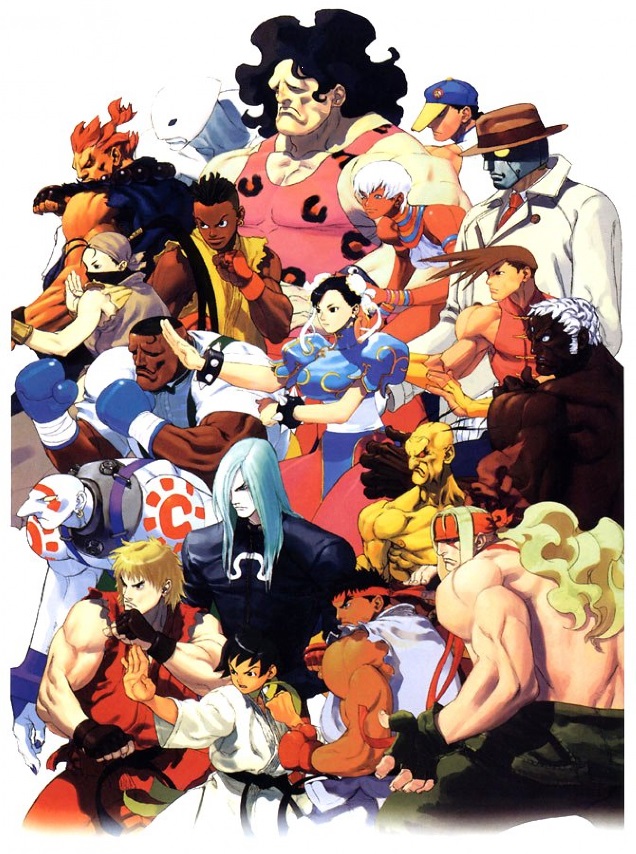
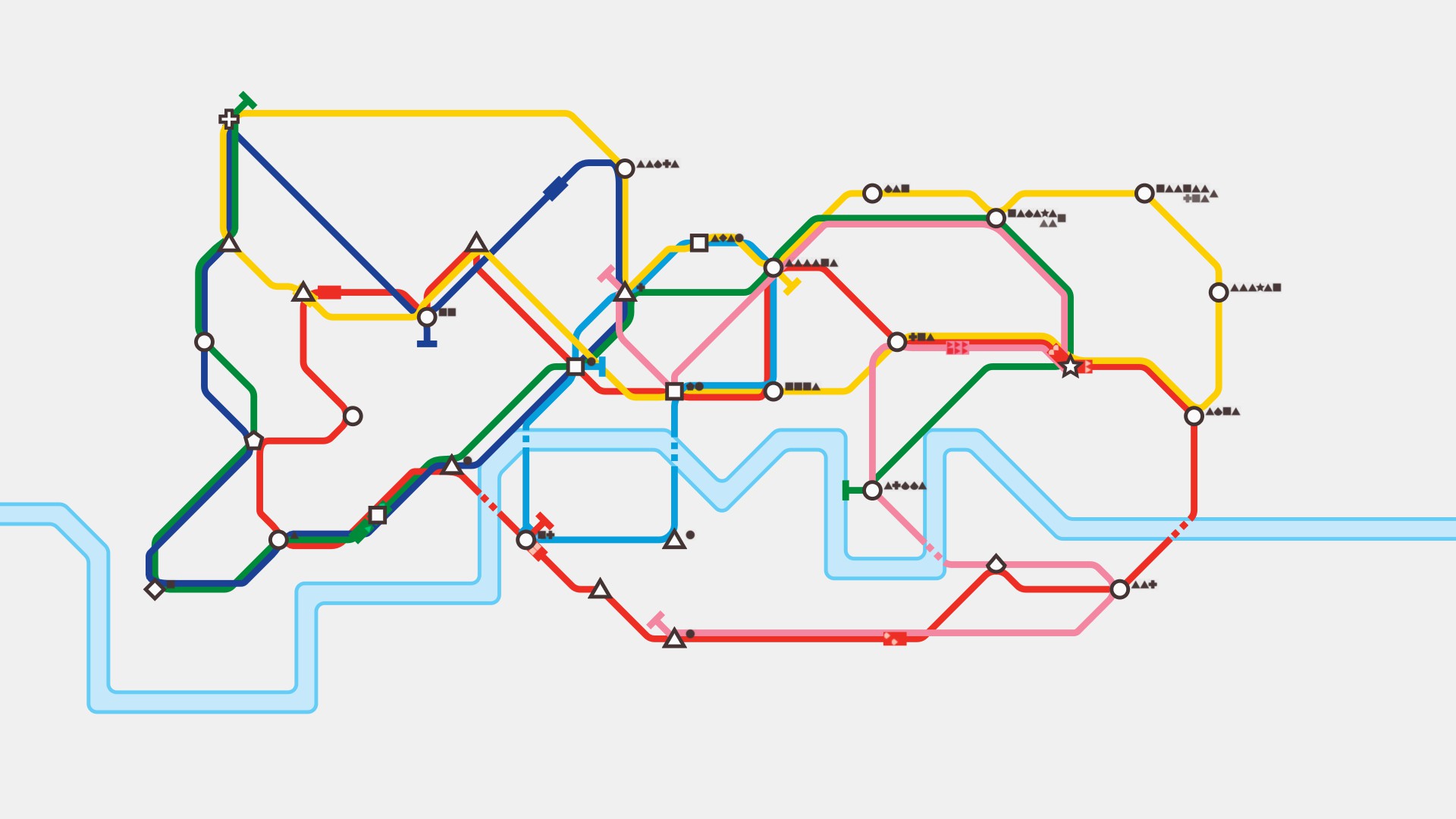
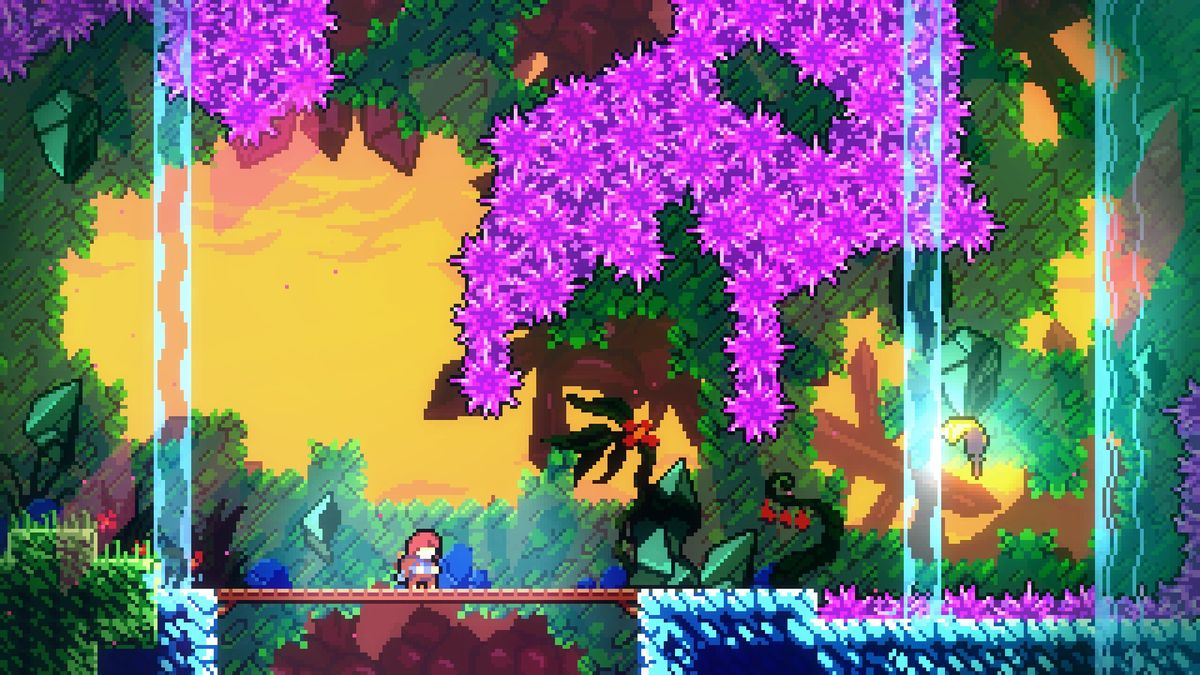


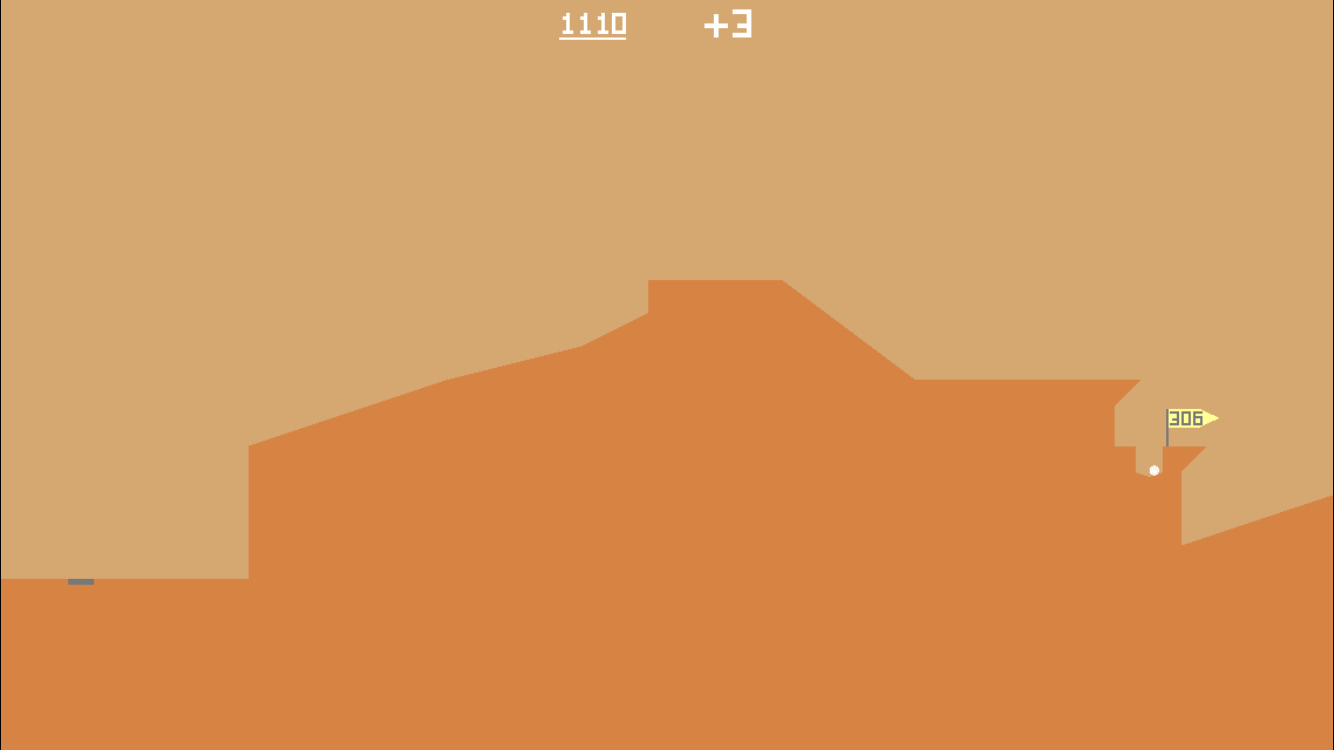







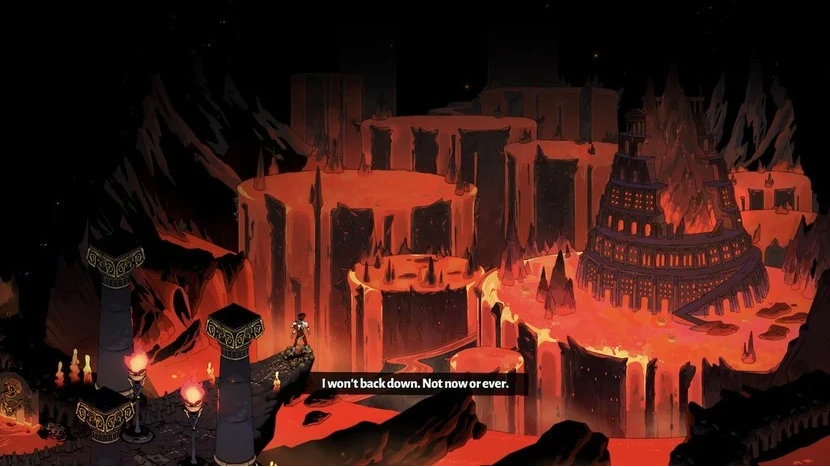
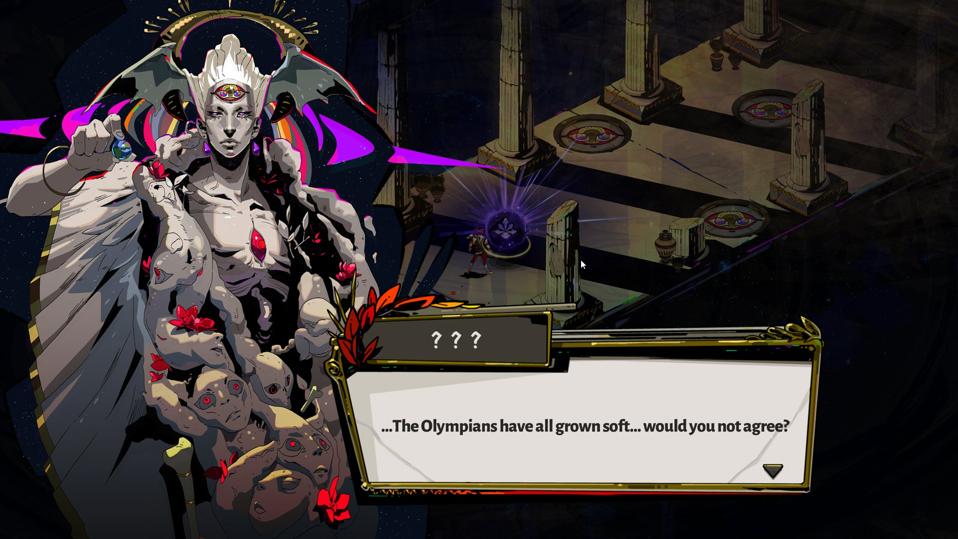
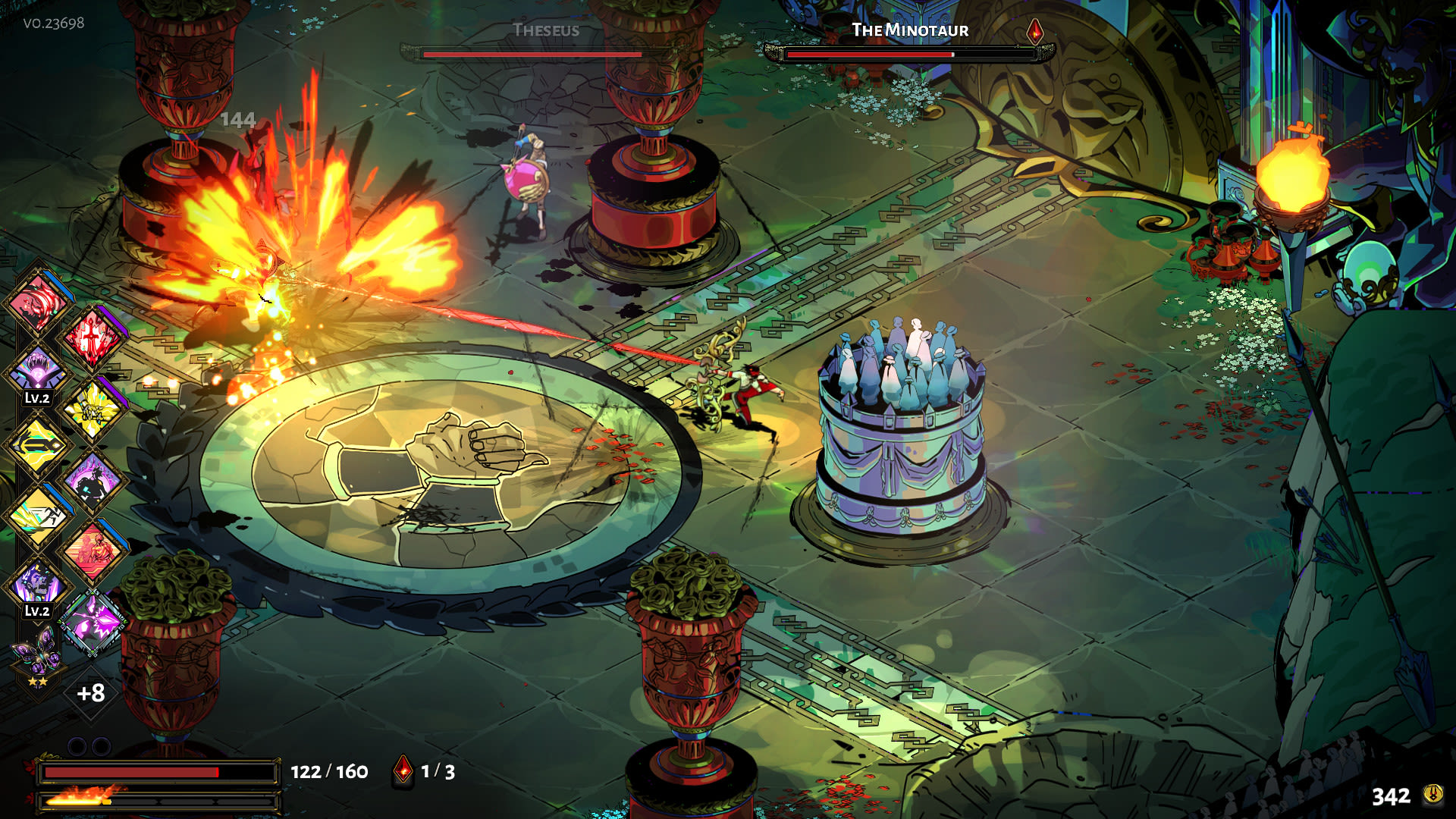
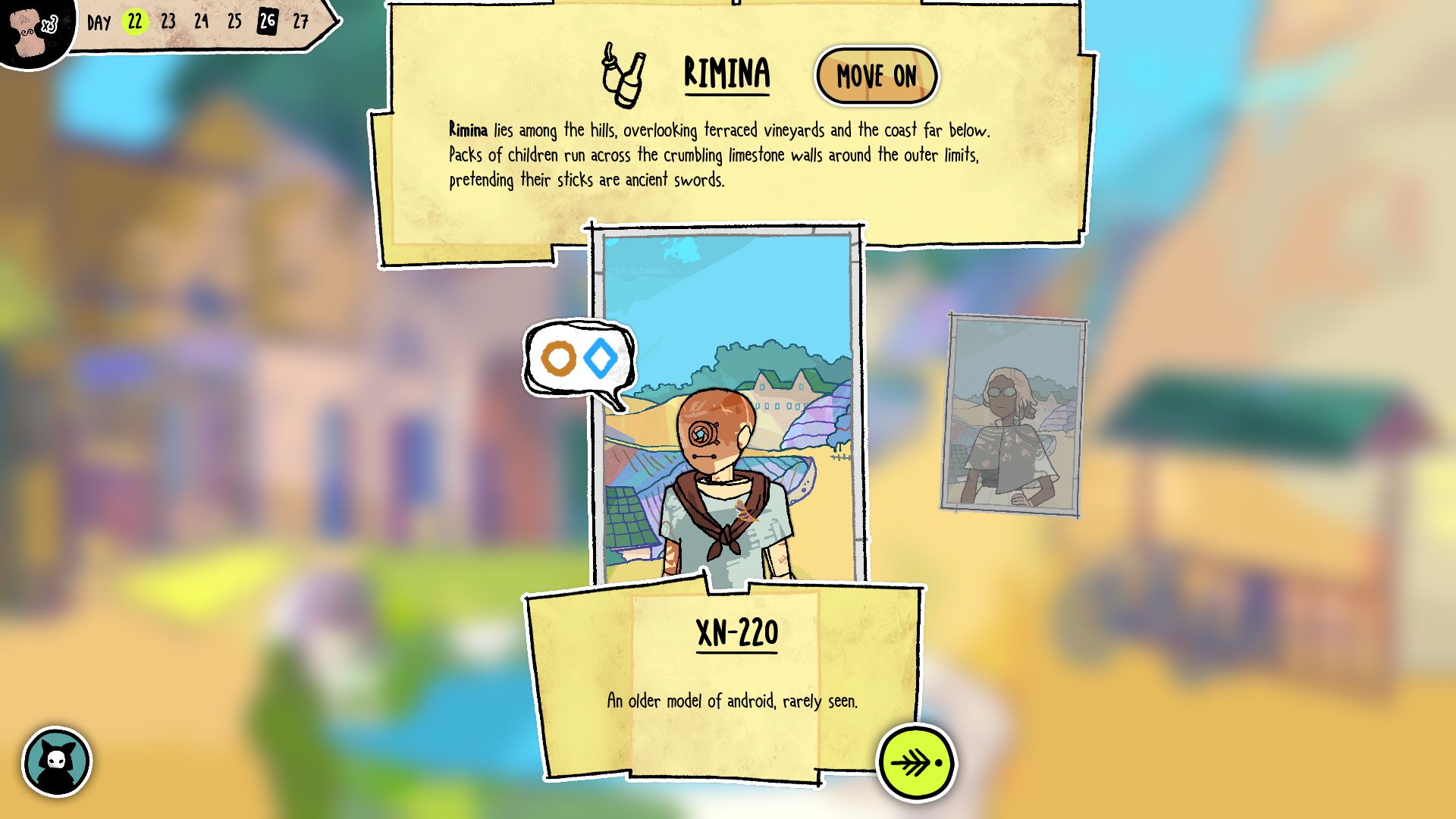
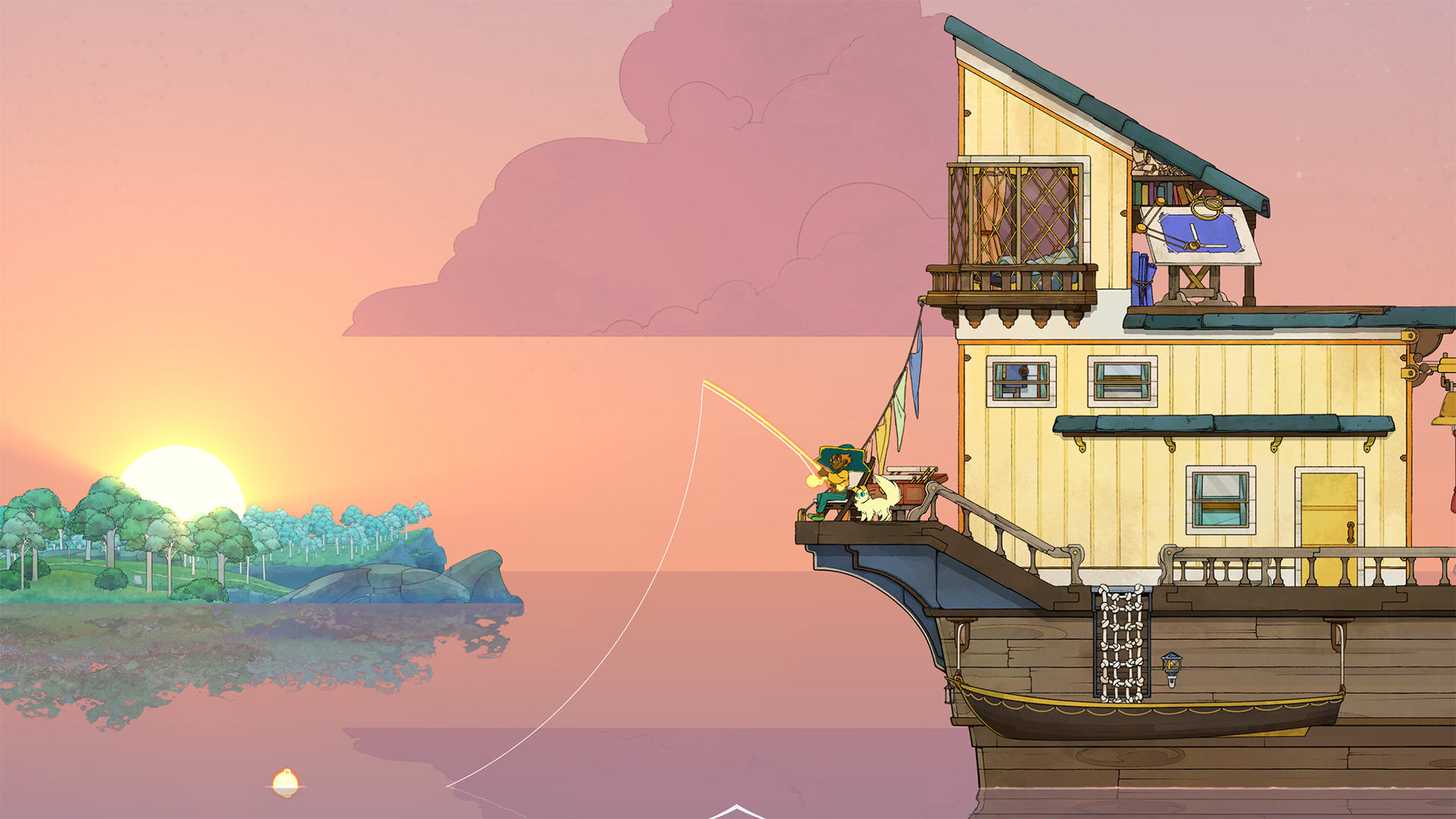
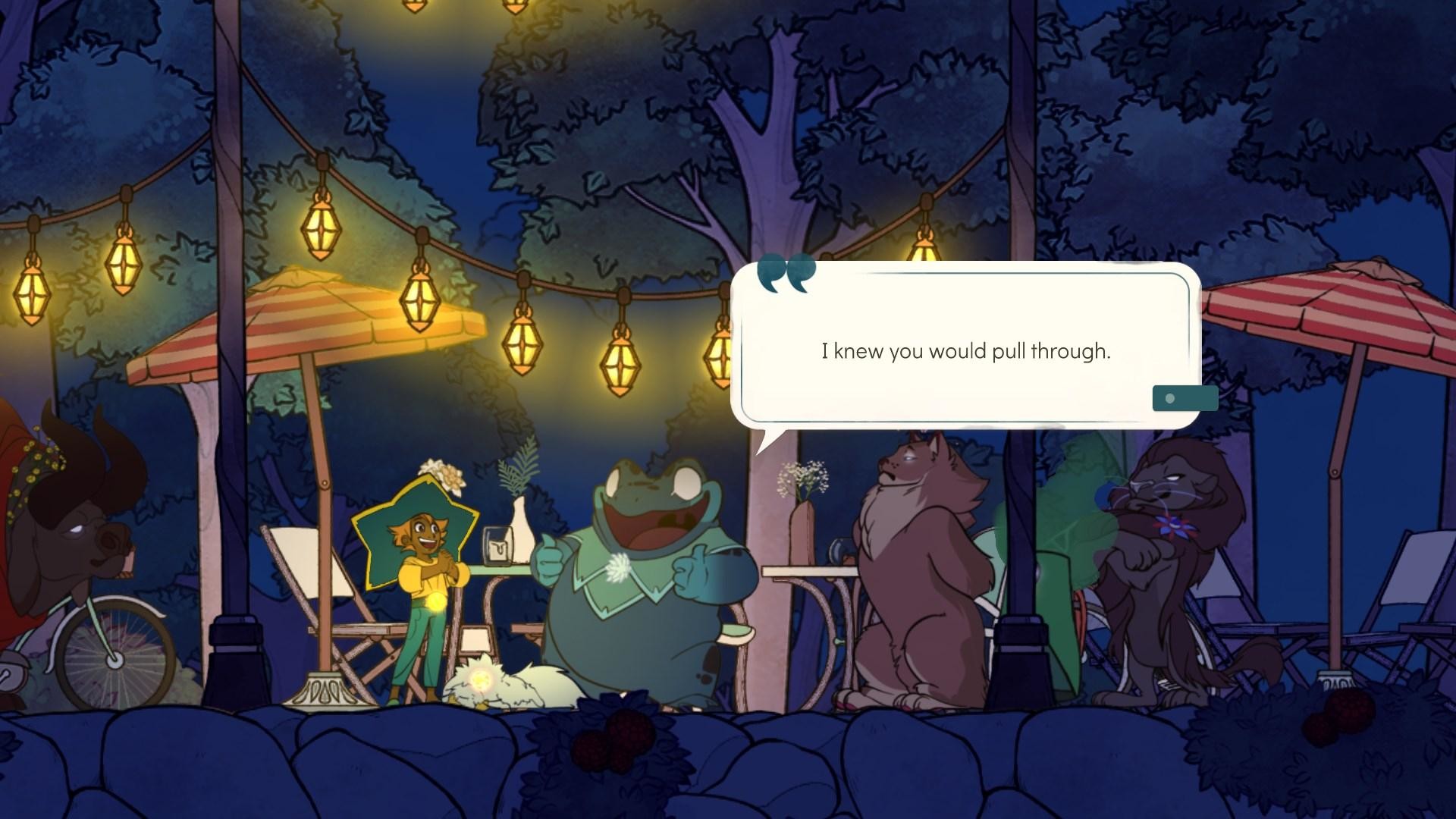
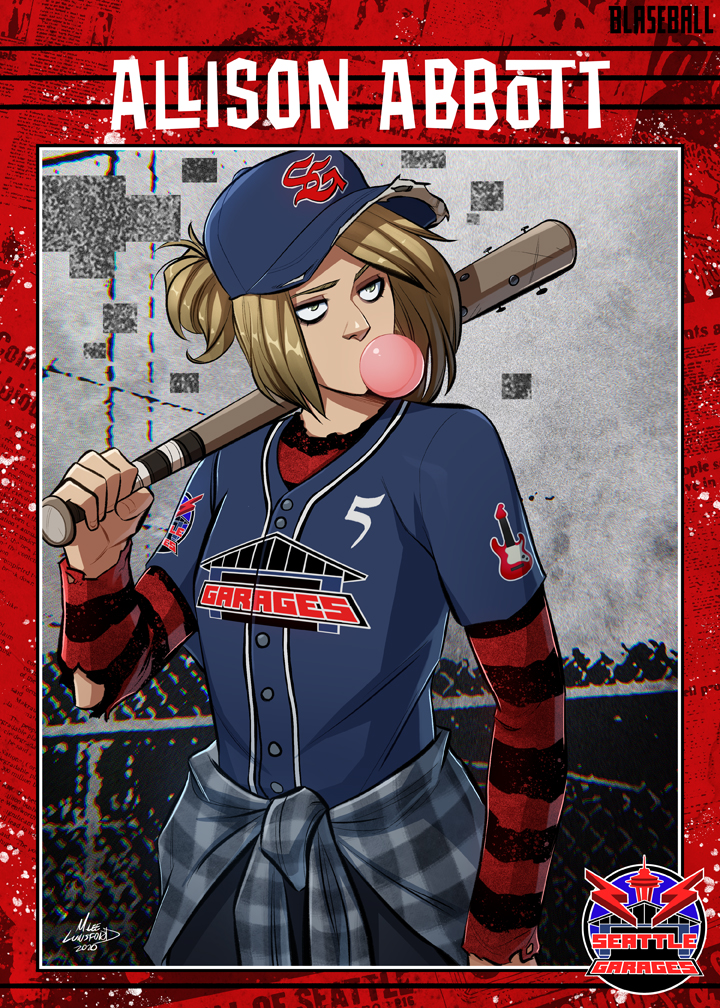
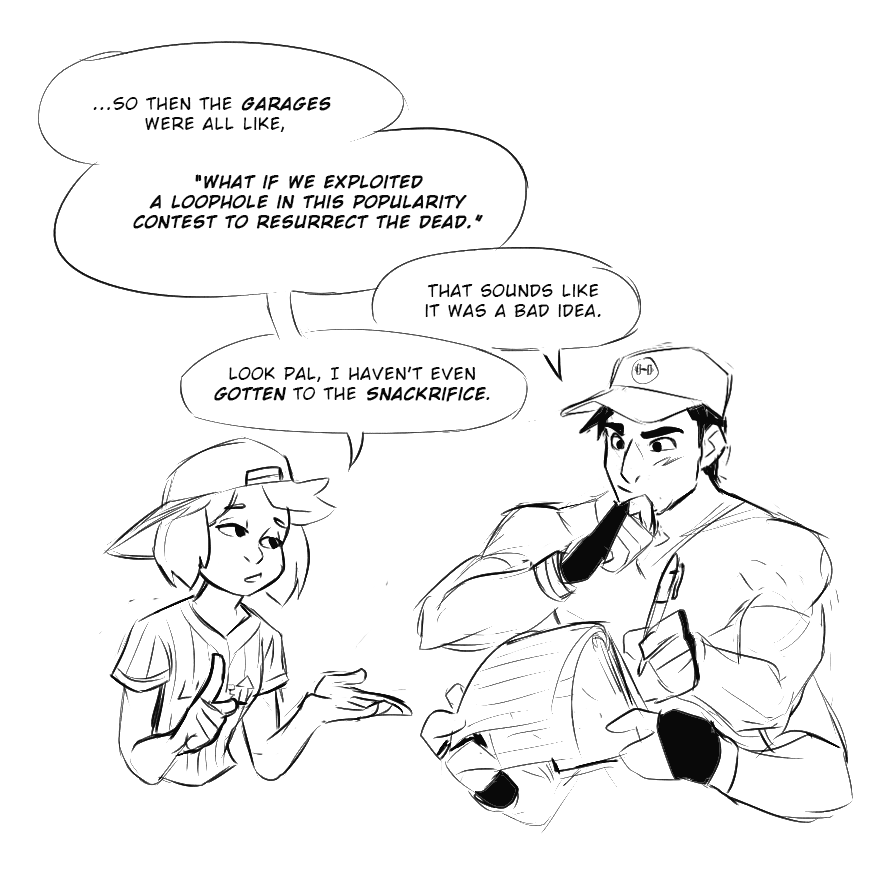
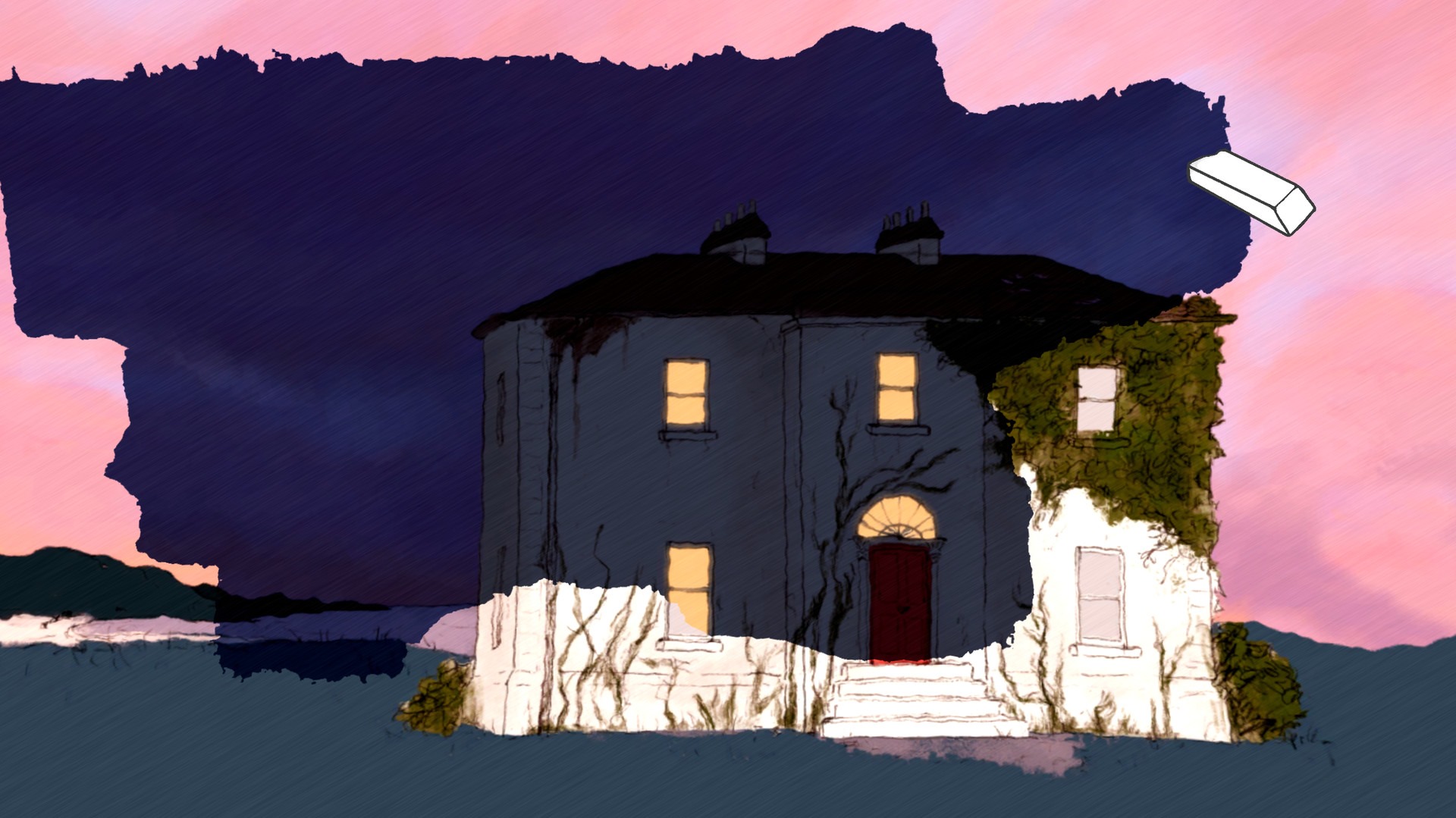
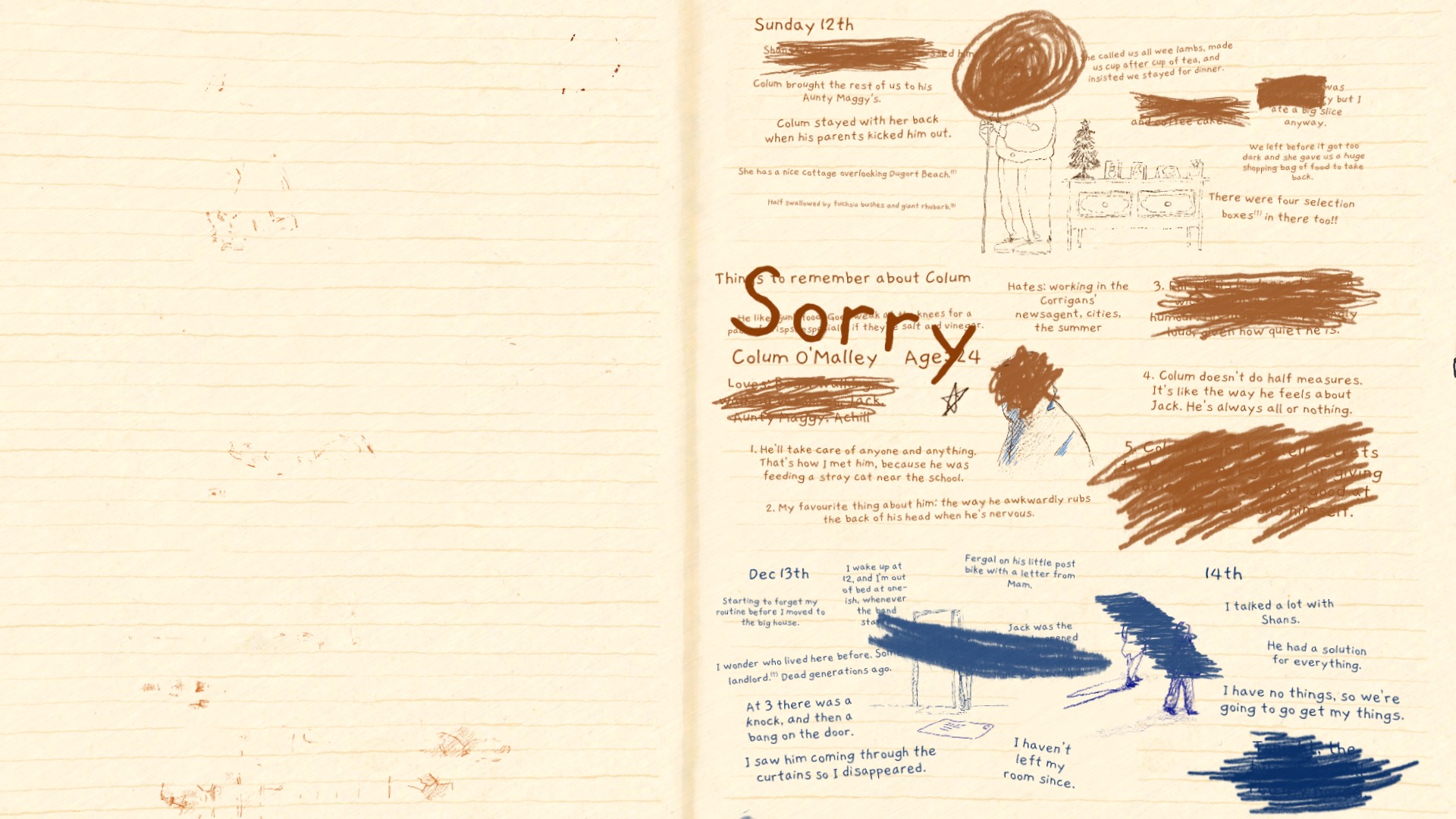

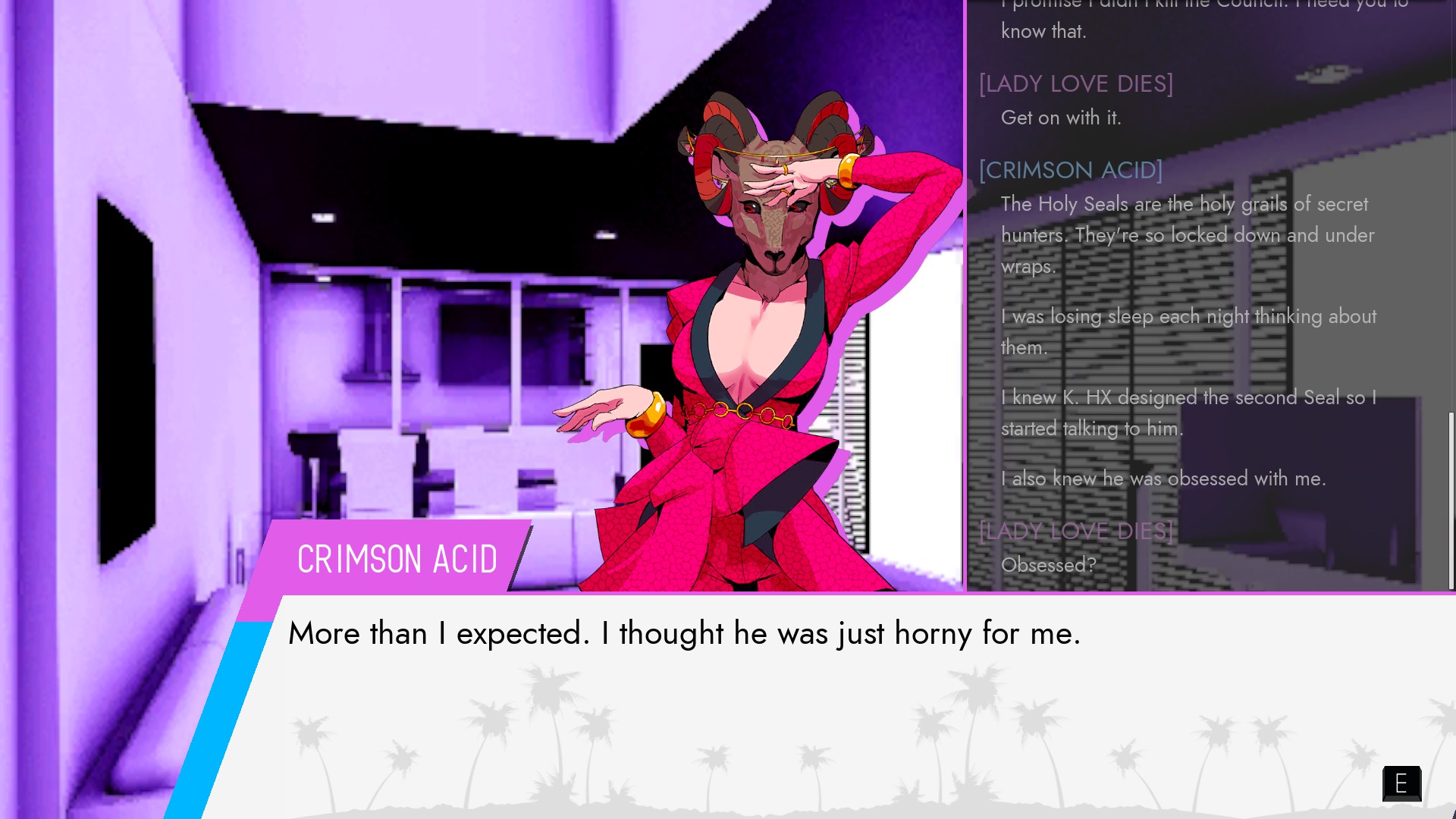

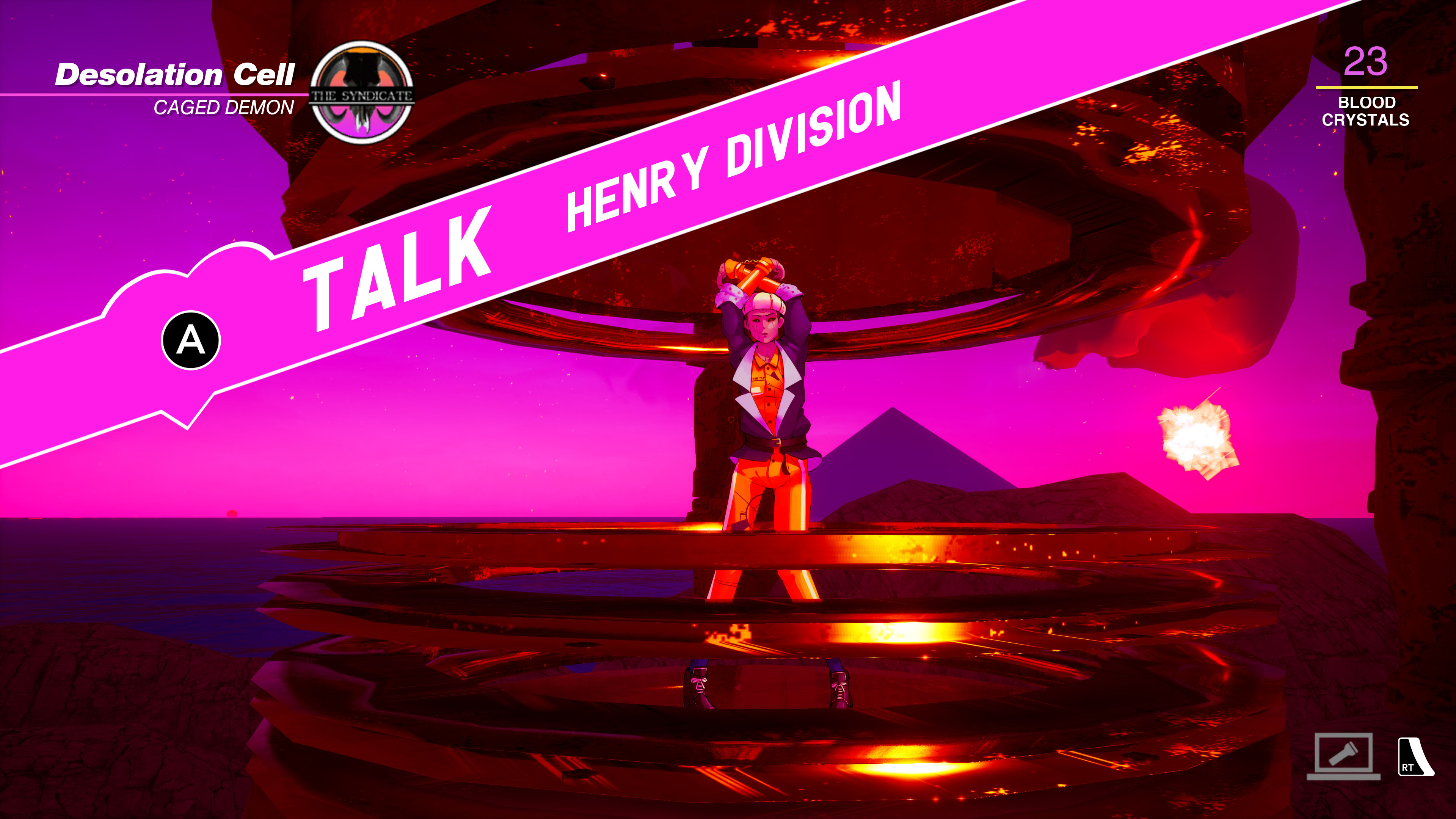
 All My Friends