Simogo Games
2024
Switch, PC, Playstation
Released just a couple months before the full staff resignation at Annapurna Interactive, Simogo’s newest puzzle adventure game Lorelei and the Laser Eyes marked the first in a multi-game deal with the publisher following the success of their previous title, Sayonara Wild Hearts. That behind-the-scenes drama may be responsible for the game’s relatively low profile, but I’d also venture to assume it’s the game’s devious reputation for difficult puzzling that has won reticence from potential fans.
However, Lorelei and the Laser Eyes represents the apex of the studio’s puzzle games. Compared to Year Walk and Device 6, Lorelei is easily the fairest, most compelling, and deepest puzzler they’ve assembled. The game is played entirely with movement controls (joystick or d-pad) and an action button – every button on the controller not dedicated to movement operates on the same control. If there’s no contextual action to complete, like reading a sign or accessing a locked door, then the button opens your main menu, where your full quest log of “mental notes,” your inventory, and every important document, map, design, or clue is stored in Photographic Memory. While this game uses many puzzle languages, it also contains all the information you need to complete the puzzles in question – the few times my wife and I resorted to hints over the game’s hundreds (thousands?) of puzzles, we always found that it was a logic gap between us and the solution, not a knowledge gap.
The player takes on the role of Lorelei Weiss, who is called to an old German hotel by the mysterious Nero Renzo to participate in a form of artistic exhibition. It becomes apparent through found documents, correspondence between Renzo and Lorelei, and supernatural forces that Renzo and Lorelei are previously acquainted both with this hotel and one another. Someone died here in a way that affected fate. The years 1847, 1963, and 2014 keep coming back up – what’s the connection? Solving this mystery and understanding the actual sequence of events guiding Lorelei and the Laser Eyes is engaging, emotionally satisfying, and helps the game’s intense atmosphere.
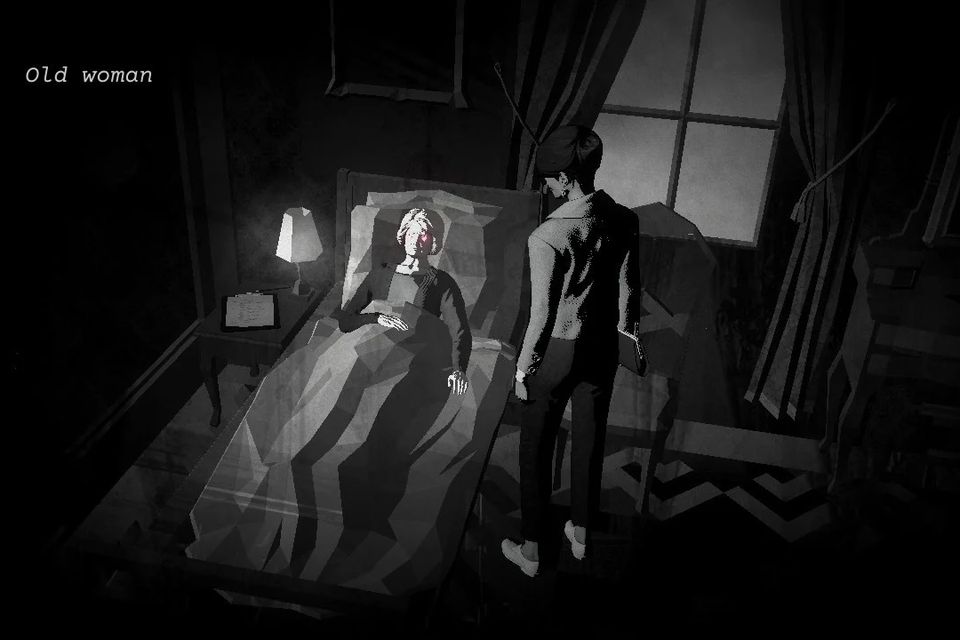
Atmosphere which has so much space in it! There’s the spooky haunted house, of course – it never becomes “Too Scary” but there are times you’re starting to feel some impending dread. The game informs you in the instructions you can read when you first start the game that you must make special note of anything someone with an owl mask tells you and that if someone points a gun at Lorelei, there is a risk of a game over. It can take a couple hours to find the first of these threats – knowing they hang overhead creates great tension. And when you do finally see your first supernatural beings, they’re striking without being so threatening you can’t offer the game to a scaredy-cat.
But the game is also full of humor. The first NPC you actually meet is a sweet dog named Rudi – then you meet Renzo, and a magician named Lorenzo, and everything either says is painted with a touch of the surreal and absurd. There are video games scattered around that need to be debugged – an elevator needs fixing and gets some funny dialogue – there’s a trap door that only goes off after you’ve stepped off it. There are jokes about the art world, European auteur filmmakers, even simple number puzzle jokes. It creates space for the game’s eventual melancholy tone, marrying the funny and scary into understanding that a tragedy played out, but not one without some humor.
And the design of the game is so striking. Everything you encounter will be black, white, and red – any other color you encounter will come from a screen. The game uses its limited palette and its fixed camera perspective to create an incredibly memorable sense of place. I won’t forget how Lorelei’s Hotel Letztes Jahr fits together, where red footprints lead, where red windows glow. I admit, that’s…also because there’s a lot of backtracking. If that’s a dealbreaker for you, you may not end up seeing the game’s penultimate puzzles through.
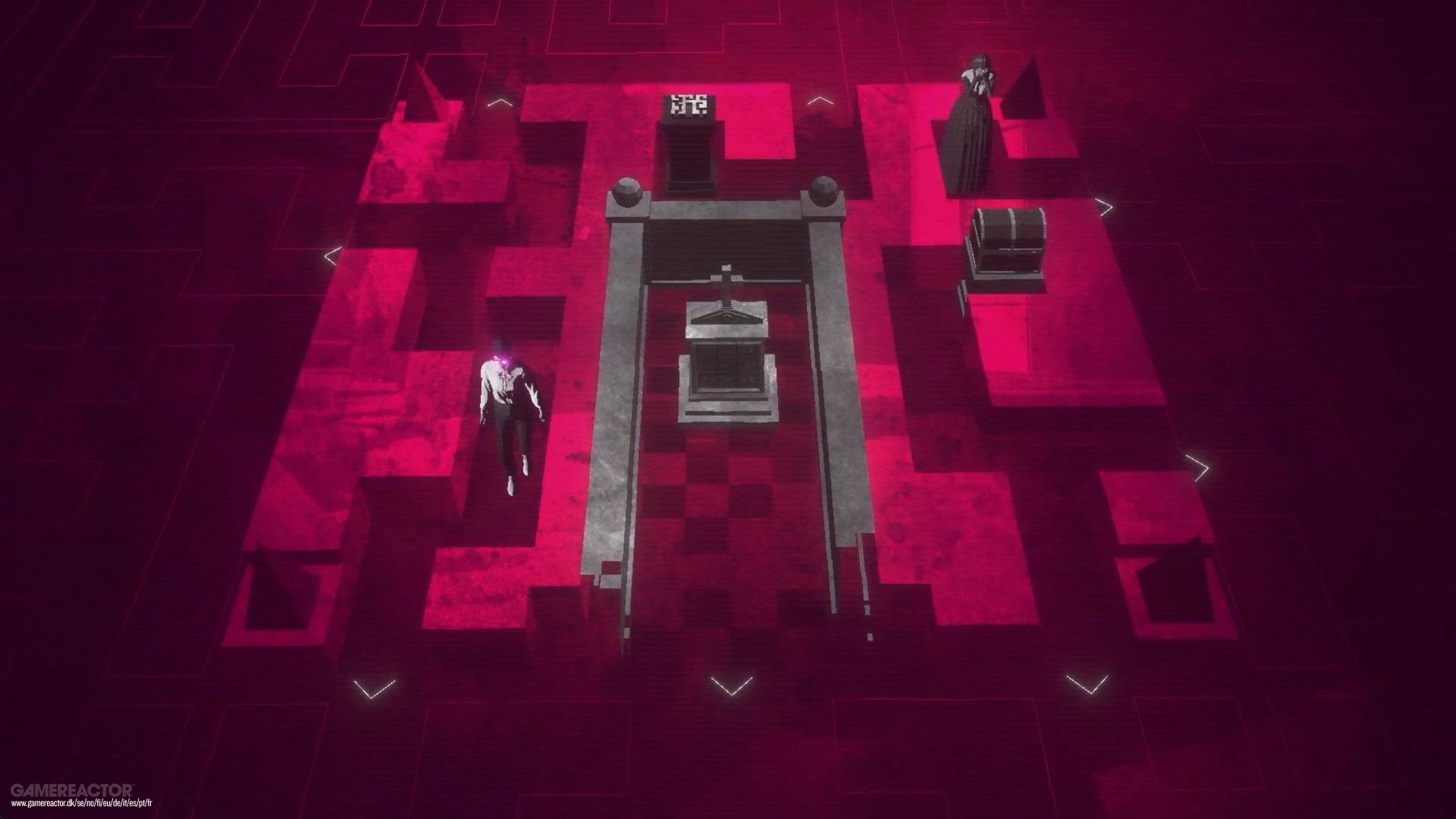
Without getting into explicit spoilers, I think this game has deceptively insightful things to say about creativity, being recognized in your time vs. after it, and the gap between outsider perspective and abject vapidity. It guards against this with that sense of humor. There is a confusion of identity across time, names repeated and relationships borrowed, parsing through the historical record and trying to assemble what exactly happened. This all builds towards an elegant, emotional conclusion, and the final moments of the game are a highlight of the gaming year.
Over a little less than a month, my wife and I would turn the lights down low (but not too low to read her notebook!) and play through this game together, putting two brains together to unravel the game’s strong collection of ciphers, logic puzzles, and mazes. It is an immensely pleasurable ghost story which marries many influences into a game that can not be replicated. While incomparable to rhythm optimist game Sayonara Wild Hearts, I believe Lorelei is the culmination of a decade of great puzzling and storytelling for Simogo. I can only hope that after whatever’s happened at Annapurna shakes out, they find their footing quickly.
 All My Friends