R.I.P. D’Angelo

Three of the most perfect albums ever recorded. D’Angelo’s voice and instrumentation are so precise, so delectable, ethereal. He could croon like Al Green, float like Marvin Gaye, scream like James Brown. His harmonies tower like columns. But then that Native Tongues influence keeps his beats contemporary, hip-hop, not just stuck in the past but still somehow looking to the future. His songs are time travelers, back to the future, blasts from another history. Even the other neo-soul greats, Badu, Hill, The Roots, even the alt hip-hop D’Angelo claimed as inspiration, none of them could replicate the ease of his grooves or the stratospheric height of the call and response between his vocals.

Debut albums are often honed and distilled versions of years of previous work, a collection of years of songs that represent the artist coming into their identity and really solidifying their sound. But they rarely show the confidence D’Angelo’s Brown Sugar displays, the comfort in extended jams by a solo musician, the willingness to luxuriate in a sound rather than deliver every great idea in three minutes or less. D’Angelo cited Prince as a direct influence on his choice to sing and record all the instrumentation himself – I would argue Prince wasn’t this comfortable drifting off of pop for more than a song or two until much later in his career, saving most of his extended jams for his most uptempo songs.

Brown Sugar had hits and acclaim, and then writer’s block hit until D’Angelo’s first son was born in 1998. Voodoo makes its home in the same sort of extended jams as Brown Sugar, but the lyrics are more explicit, more about black life, more about sex. When we did Maintained Madness’s original Songs of the Decades tournament, it was “Untitled (How Does It Feel)” that we picked to represent D’Angelo’s work, a song with releases that cusp Y2K with a video too hot for polite company. The soul music had been honed into a mission, representing a celebration of life and an argument for R&B outside pop music, unvarnished and clear-eyed, music for adults. 

Usually, I put the limit around “working artists” around ten years between works. But someone like D’Angelo is the rare champion who you never count out. His struggles with addiction, fame, and hypersexualization extended the development of Black Messiah to nearly fifteen years after Voodoo solidified him as one of the most essential musicians alive. Songs from Black Messiah have existed in different forms since 2002, and they started leaking as early as 2007. Questlove joked in December 2011 that the album had become the “black version of Smile,” for which the (incredible) The Smile Sessions archival collection had released a couple months earlier.

When D’Angelo released Black Messiah in December 2014, it was in direct response to the Eric Garner and Michael Brown rulings, moved forward from a spring 2015 date out of political urgency. When the lyrics are social critique, they focus more on systemic oppression and the way cycles of activism and protest are controlled for and diminished – songs like “1000 Deaths” and “Charade” are written from a wider lens than the personal struggle of something like Voodoo’s “The Line.” But, just as essentially, D’Angelo never stops celebrating life and music, never reduces worth solely to contribution. A song like “Sugah Daddy” or “Betray My Heart” is nourishment. And then, that conclusion, “Another Life,” is earth-shattering stuff, a whole universe of sounds in one last jam session.

It’s been a little over ten years since Black Messiah, and I’d say there’s been no better album since. Raphael Saadiq claimed D’Angelo was working on a fourth – I’m sure whatever does exist will be released, maybe completed by collaborators like Questlove and Q-Tip. Two of his three children are adults – he never married. His privacy was essential to his process, and I’m unsurprised he didn’t share his illness, but the sudden nature of this loss is a deep wound. I loved imagining him tooling around surprise club appearances, seeing friends with new ideas, an eternal tinkerer who’d share another masterpiece when it was ready to see. The way people describe Bowie, Lynch and Prince as people they imagined were eternal, D’Angelo is a man out of time – I cannot be grateful enough for his gifts.
R.I.P. David Lynch

David Lynch (1946-2025.)

Lynch was not a filmmaker first. He’d gone to the Pennsylvania Academy of the Fine Arts as a painter, and only began filmmaking out of a desire to see his paintings move. His first “films,” Six Figures Getting Sick and The Alphabet, are mixed media exhibitions that, even after the rest of his strange and wonderful career, come across more as museum pieces than cinema. Six Figures Getting Sick, notably, was originally presented on a sculpture “screen,” complete with plaster heads bubbling out of it. Working contemporary to Warhol and the evolution of video art, Lynch diverted from that path with the AFI funded The Grandmother, which signalled many of his anxieties, thematic concerns, and stylistic flourishes from the very start.

But my favorite of these early shorts is actually The Amputee, a two minute film (with two different takes, on two different filmstocks) in which an older woman writes an opaque letter about a convoluted series of relationships. It’s a very simple, one shot film, where the titular amputee is played by Catherine Coulson, better known as Twin Peaks’s Log Lady. Coulson was working behind the scenes on Eraserhead when they decided to shoot The Amputee as a film test – she’d been brought on board with her husband Jack Nance, though they divorced before Eraserhead debuted. This short, to me, is emblematic of the way Lynch works with fellow artists, takes these little diversions, and discovers something magical. While Eraserhead is this moral shock, this exorcism of Lynch’s demons around city life and the family unit, it’s The Amputee that paints the way forward as an empathetic look at the frustrations of internal life and the gaps between people.

Lynch described himself as an absent husband and father, saying himself in Room to Dream that “film would still come first.” The safest way to stay in Lynch’s life was to be an artistic collaborator first and a friend or lover second. His loyalty to Coulson and Nance was lifelong – perhaps the most profound moment of David Lynch’s final mainstream work, Twin Peaks: The Return, is Coulson as The Log Lady, eulogizing herself. Her words come to me regularly, reminding me “about death – that it’s just change, not an end,” words that I’ll be thinking about for many days to come. Kyle MacLachlan, Laura Dern, Naomi Watts, Grace Zabriskie, Sherilyn Fenn, they all joined Lynch’s repertory family. Jack Fisk, Angelo Badalamenti, and Mary Sweeney, among many others, were collaborators over several decades. When he became largely homebound with his emphysema, sometimes the greatest collaborator was his own family.

“What Is David Working On Today? 5/5/22,” in which David shares the barn he made to teach “Farm” during COVID isolation.

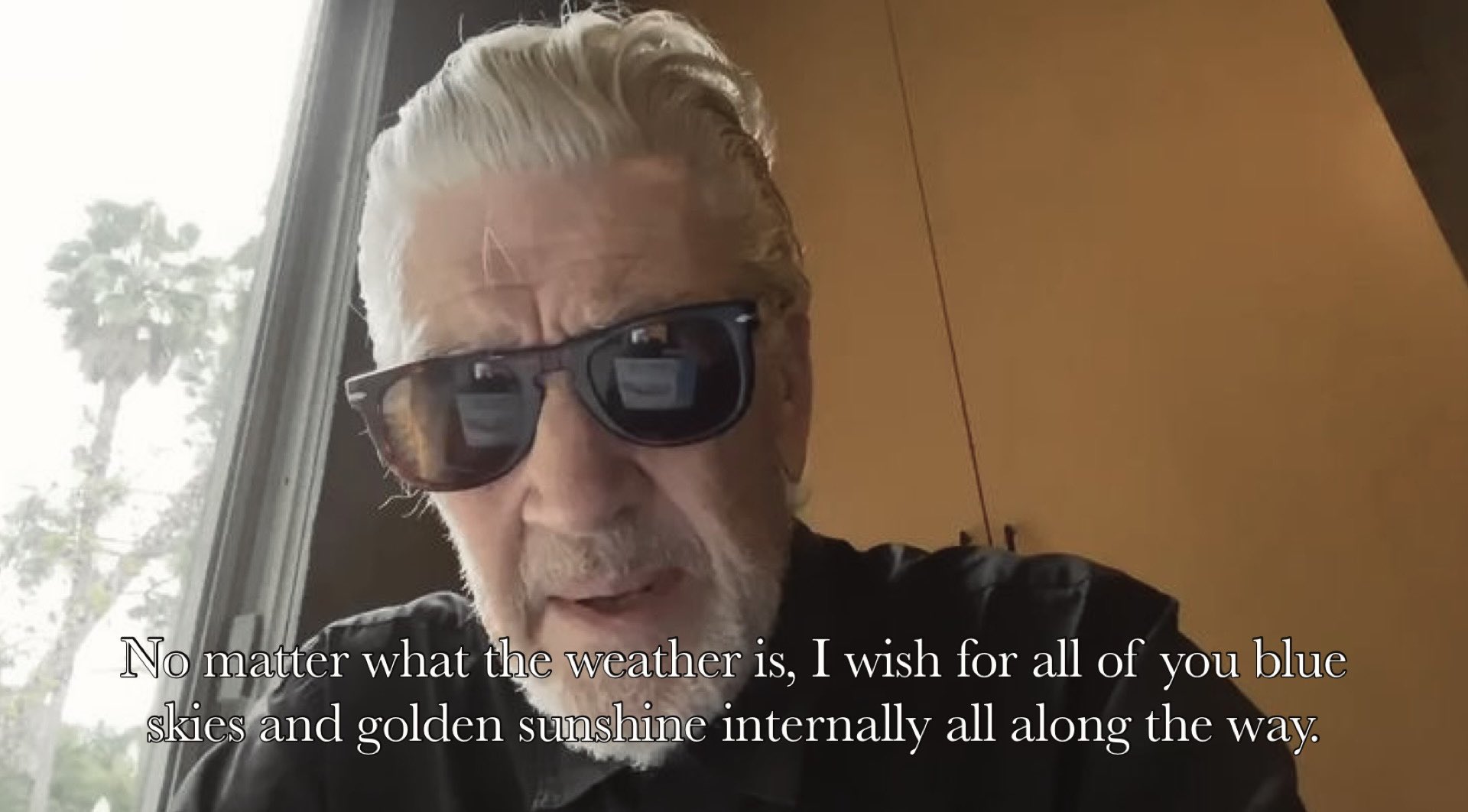
One of the greatest things about David Lynch was that, so long as the art was not “taken away from him,” he did not consider any of his artistic endeavors unworthy of love and attention. When David Lynch fell in love with Flash animation, he made Dumbland, which is not some intellectual exercise but is just as puerile and funny as anything on ebaumsworld or Newgrounds. When David Lynch made a barn for his daughter, he shared it with the world. When David Lynch did daily weather reports, he did it with pride, and when he had to stop, he did so apologetically because he knew they brought people joy. Some people voiced frustration with David highlighting an announcement only for it to be more experimental music with Chrystabell – but it’s his love for all this creation that made him the man who never thought twice about taking the personal path.

I don’t want to catalog what the films and Twin Peaks mean to me right now – I’d like to give them all the space they deserve, each a treasure worthy of being unpacked on its own, each not painting the full picture of who this man is to me. I named my newsletter The Horizon Line after his final on-screen appearance as John Ford in Steven Spielberg’s The Fabelmans. As I shared in my Blue Velvet piece, Lynch’s work is at the heart of so many of the relationships I have in my life. He is at the fundament of my worldview and identity, my belief in a person’s ability to grow, my belief that the inexplicable can also be human. Like many, every time he made a public statement or new work of any kind, I was happy to hear his voice again. I’ll miss him so dearly.

R.I.P. Shelley Duvall

Watching Shelley Duvall’s 70s work, I find myself confronted by an unvarnished truth. In a movie like 3 Women, Duvall plays both the underlying frustration and the surface level facade of genial perfection with equal honesty. Neither should qualify as a spoiler – compare first this clip of Millie’s genial side, and then this one of a milder snap. There is a truth to what many consider a mask – it is a presentation of the idealized self, sure, but our ideals can also be part of us. Duvall performs a psychological complexity that many misunderstand. The ugly things we say are not truer than the kind ones just because our politeness holds us from saying them. The things we say to wound based out of rash impulse are not inherently “more honest” than the ones we use to glide above anger and social mismatch. I think Millie is being honest in both clips, and it’s given to us as the audience to read her reaction to Mildred (Sissy Spacek) for what she’s feeling.

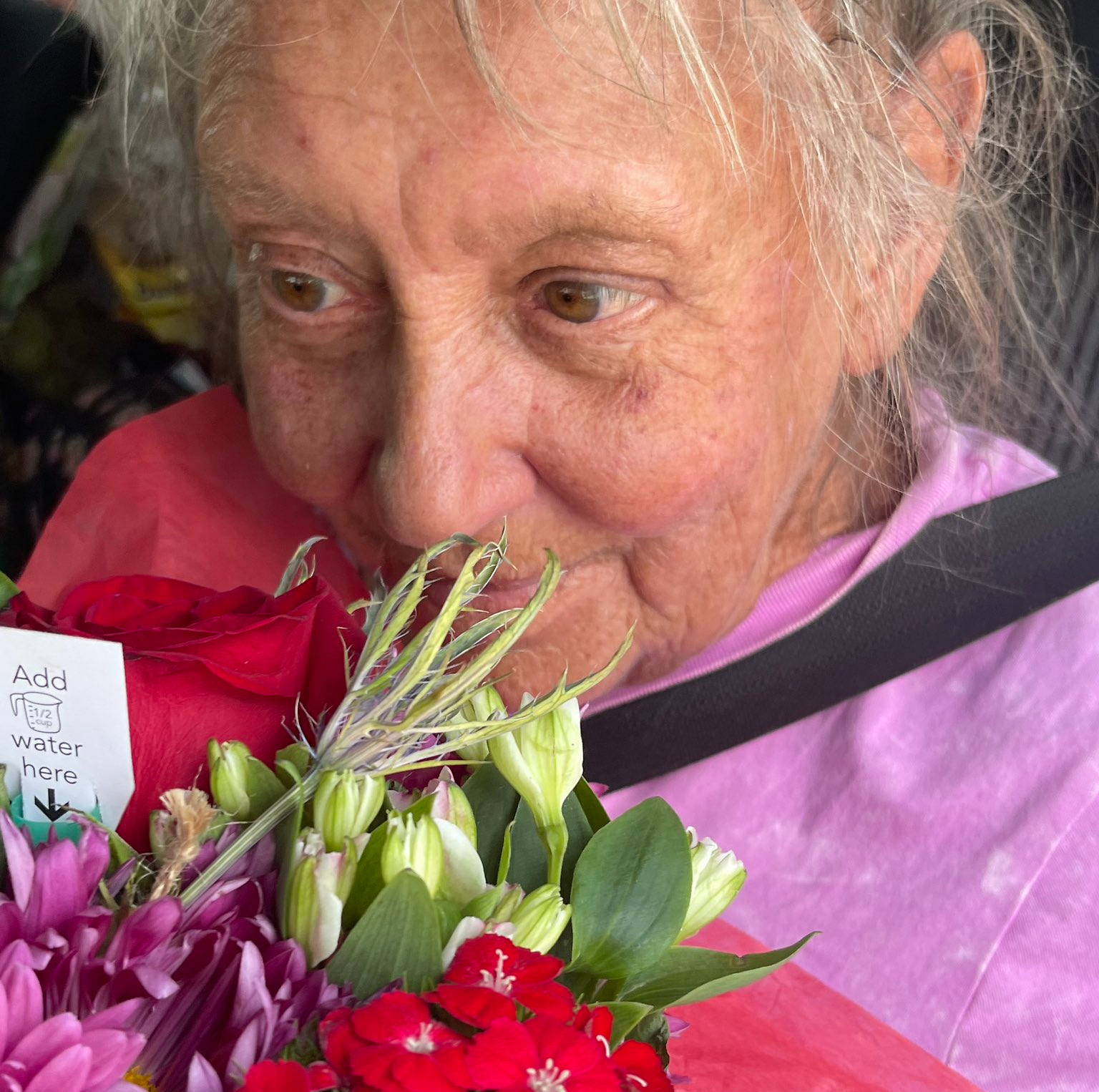
Duvall’s Millie, like many of her characters, isn’t psychologically complex because she’s an obvious intellectual. If anything, Duvall’s characters are often defined by a sort of cluelessness, either by living simple lives or ignoring red flags. Part of it is just that she’s damned funny. She was funny in Nashville as an outrageous boy-crazy It Girl flown in from L.A. Funny as the disreputable (and insightful) Countess Gemini in Jane Campion’s otherwise po-faced The Portrait of a Lady. Funny as the Astrodome tour guide who hooks up with Bud Cort’s Brewster McCloud in her first on-screen role. But she was also funny in real life, in profiles like the 2021 THR piece Searching for Shelley Duvall, a profile in which she dispels some of the more despairing images of her struggles with mental health and trauma. (I’m saving thoughts on The Shining for its own piece, but Duvall is the real masterful performance in the film. Suffice it to say that I believe her repeated account that Kubrick was warm and friendly and that the work of making The Shining was emotionally exhausting for almost everyone involved.)

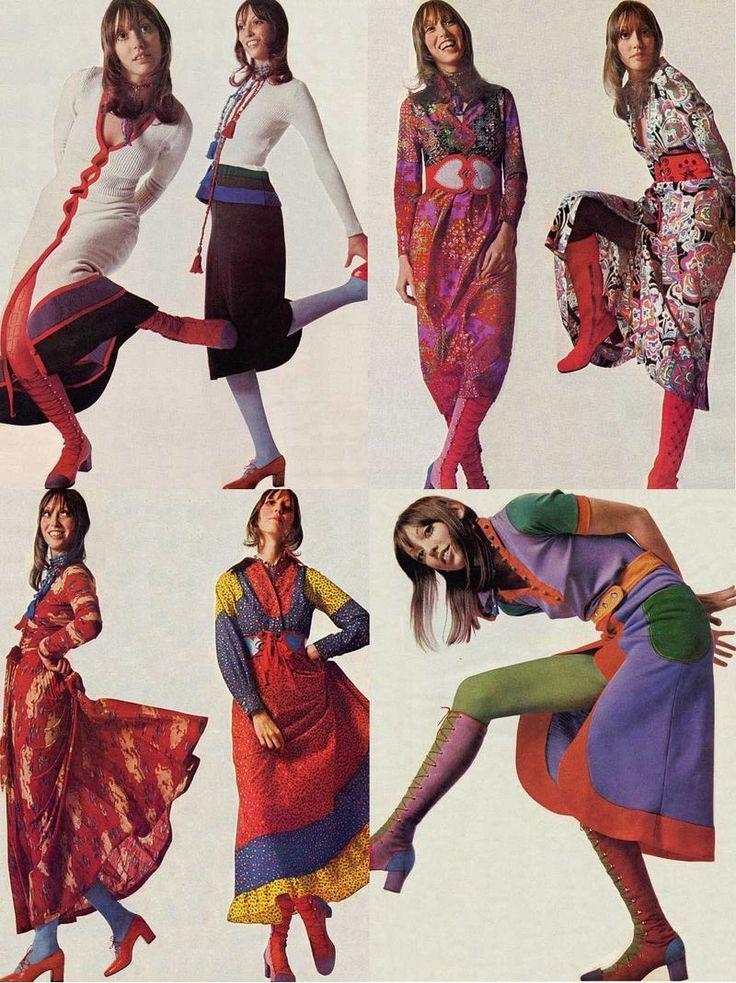
Duvall in Vogue.

Maybe more than anything, the throughline of Shelley Duvall’s canon confronts our understanding of who gets to be iconic. Part of it is the colorful aesthetic that defined her personal fashion – it’s no surprise looking at her combinations of color and pattern that she’d become invested in children’s programming and fairy tales. That aesthetic means a lot to me. Looking at some of Duvall’s choices of clothing invokes a sense of comradery. It’d be too simple to call it “camp,” but there are choices in her makeup and her wardrobe that expand my own sense of queer euphoric fashion.

It’s also her choice in roles, bringing that complex version of emotional vulnerability to characters of all classes, levels of status, and ranging from victims of abuse to literal cartoon characters. I haven’t seen a couple of the landmark Duvall films. Many of my friends mourning Duvall have posted scenes from Robert Altman’s Popeye, a reclaimed gonzo blockbuster adapting the classic cartoon – it’s hard to imagine a more obvious Olive Oil. Two of her 70s Altman collaborations, Thieves Like Us and Buffalo Bill and the Indians, remain on my queue. I’ve heard a lot of love for her work in the original live-action Frankenweenie, and I’ve seen none of her children’s programming at an age I’m old enough to remember. I’m thankful for a little more Shelley Duvall on my horizon. I’m glad she passed celebrated by her friends and community for all the beauty she brought into the world.