THE ONLY SON Dir. Yasujiro Ozu 1936 Criterion Channel
This piece originally ran on September 23, 2019 in The Solute. Please follow the link at the end of this preview for the full piece – there is no paywall.
“Life’s tragedy begins with the bond between parent and child.”
The Only Son, Japanese director Yasujirō Ozu’s first talkie (and 35th film) u, opens with this brief, unattributed axiom. A brief prologue introduces us to Ozu’s famous style and tone— shooting subjects head-on, looking directly into the camera to confront the viewer with their emotional culpability. But we also see a parochial pre-war Japan where a mother (Choko Iida) cannot afford to send her son to middle school. A visit from the elementary school teacher reveals both the son’s lie about his future and the impossible but important task of adapting to a world that will change Japan very, very soon.
So begins a tale of a simple drama — a mother gives her last remaining days of youth to support her son, and after graduating college, he doesn’t respect her enough to tell her when he gets married or when he has a child. His justification is that he hasn’t become successful enough as a businessman — he is living in shame, but his mother is far less hurt by his fiscal “lack of success” and more by the man he has become.
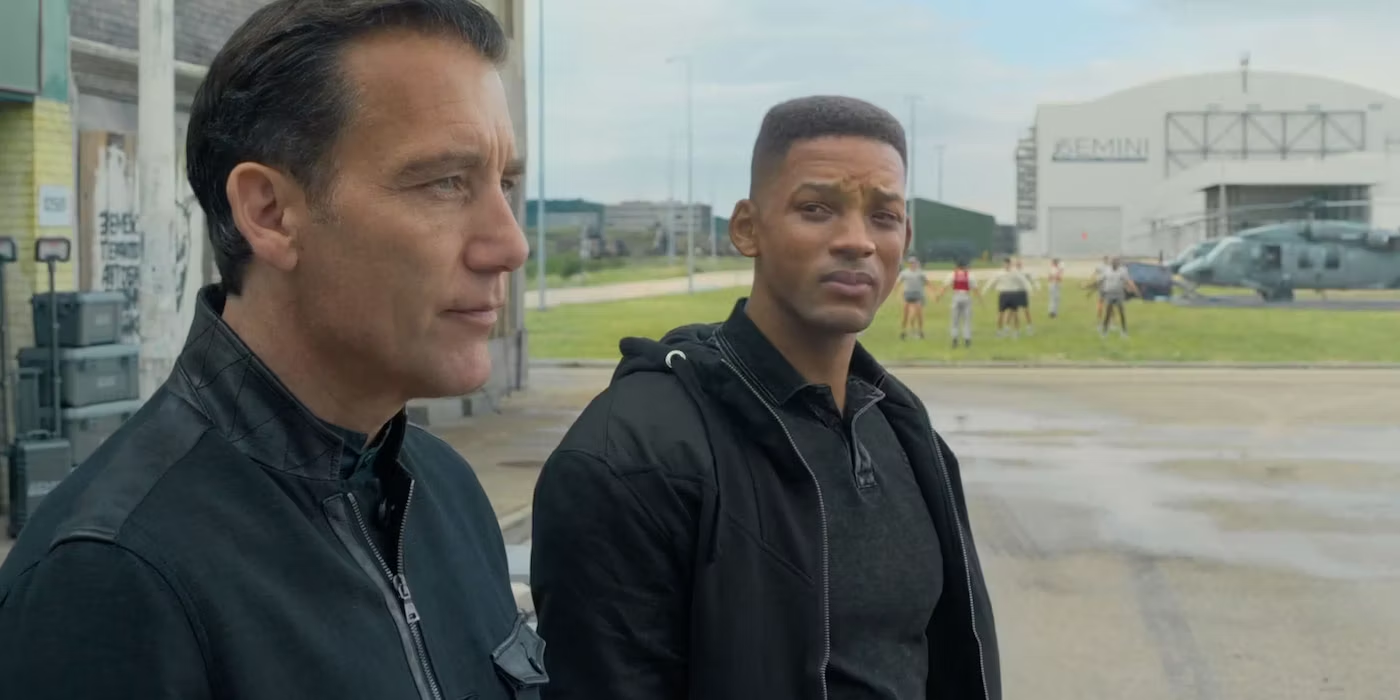
This is one of those rare movies where I get mad because the people who like it don’t like it enough for me. Gemini Man isn’t just “a well directed movie with a bad script.” Gemini Man fucking rocks. Gemini Man, directed by Crouching Tiger Hidden Dragon and Brokeback Mountain’s Ang Lee, is a combination of the high-octane masterpiece action he’s still maybe most acclaimed for with the sensitive humanist sentimentality of his adaptation of Sense & Sensibility or his masterpiece Eat Drink Man Woman.
Under another director, I don’t doubt the dialogue in this film would clang left and right. There is a lot of exposition required to tell the story of Henry Brogan, ex-US government assassin and now fugitive being hunted by his own youthful clone. The most obvious comparison for this movie is to Hideo Kojima’s Metal Gear Solid, a saga about genome soldiers, crossed allegiances personal and political, and full of the same ridiculous over-the-top bullet time action you see in Gemini Man.
This film excises Metal Gear’s famous extended political diatribes (for those who don’t play games, these basically play out like Donald Sutherland’s extended monologue in JFK, complete with archival footage) and places any monologue in the mouth of either Will Smith or Will Smith, the sole exceptions belonging to Clive Owen’s villainous Clay Verris. The Verris scenes largely play out like a more standard villain from a 90s film, though there are some pleasantly disarming moments where he can’t help but actually show some affection for his favorite experiment. It’s an interesting choice, the sort other directors would probably excise so he were easier to hate. Ang Lee understands that his villains are best when they have their weaknesses.
Jr. and the villainous Clay Verris.
The dual Smith performances are honestly pretty remarkable. Younger Will as Junior put some effort into playing him closer to Bel-Air; a famous anecdote claims Ang Lee told Smith he needed to “be a little more wooden, act worse” because the maturity of his portrayal was spoiling the effect. Older Will as Henry plays the disaffected glaze of an easygoing snark in a way always betraying the pain underneath. He doesn’t play it like a violent sociopath, either – it’s represented more personally, as someone who recognizes that their life choices led them to create a bubble of alienation and excess that never really provided room for intimacy or growth. The mask falls during a confrontation with Junior, and Smith plays the growing crescendo of doubt swallowing him whole.
That scene in particular is so fascinating to me as a representation of the way therapists talk about the therapeutic dialectic. The older Smith looks at his younger self and addresses every insecurity, every trauma, every happy memory and every impulse with the neutrality of an outside observer, and both performances are forced to reckon with how it feels to both witness and be witnessed at the same time. These are simultaneously the things that make them the same and yet the expression of them inherently divides them across a mass gulf in power and experiences. How do you talk to yourself? How does the inner voice that tells you these things treat you, and how do you respond as both audience and presenter?
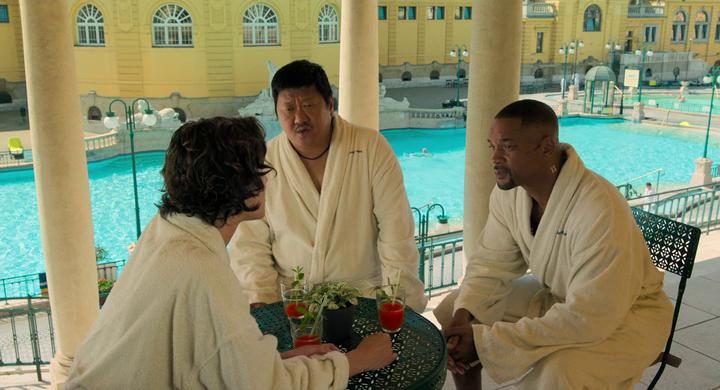
Poolside meeting, waiting for a Russian bioengineer.
There are other ways to dig into the ways this film says things about concentrations of power, abusive dynamics, denial, transactional relationships. Admittedly, they largely aren’t that deep – what they do is provide a structure to what is just whip-ass action. In their first big fight scene, one Will Smith throws a grenade and the other shoots it out of the air back at him. Later, one of them roundhouse kicks the other with a motorcycle. There’s a lot of really wonderful wirework in this film, and transposing it into the modern era results in a lot of Mom’s Dead Parkour. Lee’s direction of action is just so much better than so many of his contemporaries, and I’m surprised by the dismissal of this film on those grounds alone.
I unfortunately never got to see the film in True Ang-O-Vision, 120fps 3D 4K, but in 60fps it’s still pretty breathtaking stuff. The effect of the high frame rate and 4K capture has me looking at every action scene and going “how the fuck did they do that?” It serves the more dramatic conversations well, too, as Smith is so good at playing the growing microexpressions through a scene, and it obscures some of the uncanny of the de-aging. If you don’t have access to the 4K Blu-Ray for that 60fps presentation, we’ll have to watch it sometime.
I SAW THE TV GLOW Dir. Jane Schoenbrun 2024 PVOD, may still be in theaters near you!
This piece alludes to spoilers for the film I Saw The TV Glow – CW for intense depictions of gender dysphoria.
I Saw The TV Glow is a horror fantasy film about two teenagers, Owen (Justice Smith) and Mattie (Brigette Lundy-Paine,) who bond over their love of a monster of the week TV show The Pink Opaque. Owen isn’t allowed to watch it because the show is broadcast past his bedtime, dictated not by overprotectiveness (this stays true into high school) but by a distant, controlling father. So Mattie leaves Owen VHS tapes of the show – the film plays the development of their relationship in gorgeous lighting and on-screen marker-work while a great original Caroline Polachek song plays. It is not the first or last great original song in the film. One night, Owen asks if he can stay up and watch the season finale himself. Owen’s dad asks him upon hearing the request, “Isn’t that a girls’ show?”
When I was growing up, I was introduced to anime somewhere around the age of six or seven. I don’t actually remember which came first between Sailor Moon and Pokemon – they came roughly together. My parents applied zero “isn’t that a girl’s show” pressure around me watching Sailor Moon, they bought me the tapes. If anything, Mom’s shared with me that her attitude was always that they actively encouraged us to engage with entertainment in an ungendered way, to enjoy what I enjoyed so long as it was age appropriate. But by third grade, the boys in my cul-de-sac who would introduce me to internet porn a year later called it a girls’ show, and those tapes never came back out again.
Owen and Mattie first meet when Owen is in the seventh grade, played by Ian Foreman. The central three performances in this film by Justice Smith as Owen, Brigette Lundy-Paine as Maddy, and Ian Foreman as Owen in the first twenty minutes, are all astonishing. There’s an astonishing degree of trust and immersion in the day-to-day awkwardness of being a teenager that comes along with the deadly suffering of repression. Lundy-Paine gets to transform this over the runtime of the movie into a confidence, their final monologue one of the film’s few empowering and energizing scenes.
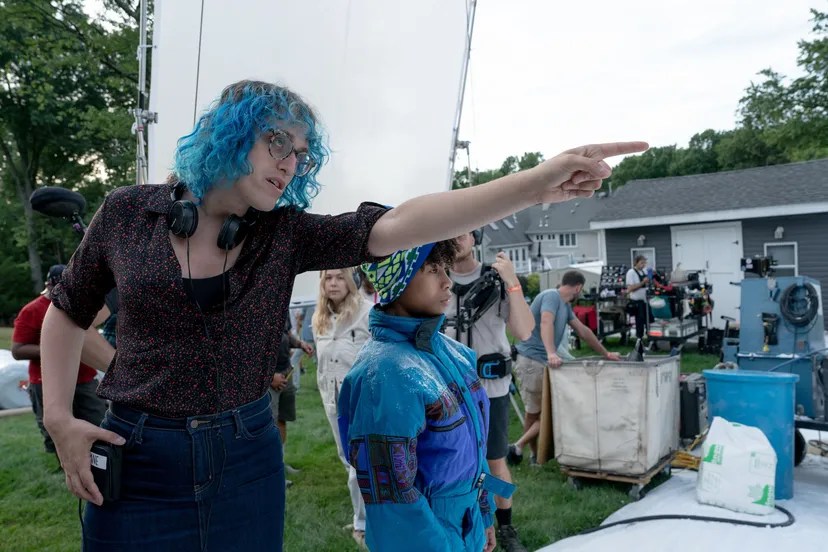
Jane Schoenbrun (left) directing.
I Saw The TV Glow is a film about gender dysphoria. It is about an oppressive world that hates you for who you may not even yet know yourself to be. This hatred plays out in Small Horror Ways, microaggressions and hard stares, and in Big Horror Ways, in makeup and special effects and blood and ooze. It is also about trying to find community over the smallest of connections and finding a friendship that feels like a home. It’s not all oppression and despair, but I would not call it a “fun watch” or “inspiring representation!”
Inspiration is still happening, though – director Jane Schoenbrun, talking to Jordan Raup, said “I’d say at about a third––if not half––of the screenings that I’ve been to with the film, some shy person has sauntered up to me afterwards and been like, “That was it.”
I kind of can’t stop reading about this film, interviews with critics like Willow Maclay, Juan Barquin, and Charles Pulliam-Moore informing the writing of this piece. Alongside them, a chorus of trans viewers feel I Saw The TV Glow will save lives. When I tried to say those words to friends after my screening, I started breaking down crying again.
Justice Smith gives a performance I can’t stop thinking about. One of the most painful scenes in the movie is a scene where Smith gets to perform full slapstick comedy. He manages to make his body move like Scooby Doo at a moment where you desperately want him to face his fears. Another early scene, his first confession of his sense of difference, is an astonishing performance of vulnerability of evil thoughts directed at the self, presented like it’s normal because he’s only sort of sure that it isn’t normal and he’s not just being dramatic. This performance carries trauma the way Sheryl Lee carries trauma in Twin Peaks: Fire Walk With Me. It is in the body as much as the voice and the mind, but it is also normalized, casual, and deeply painful. The feelings he is carrying are so private that he is compartmentalizing them from himself, repressing as much as possible.
I came out as nonbinary to myself and close family and friends shortly after the election of Donald Trump. That night, the terror and overriding anger it made me feel, made me realize that the relationship I had to that man, and all men, was not one of shared identity and shame. It was a question I’d had lingering in the back of my mind for years as I found myself gravitating toward trans artists, writers, and style icons, and that pushed me over the edge. I tried using they/them pronouns briefly and found it hard to recognize people were talking about me – I moved back to he/him pronouns and, for the most part, I’ve talked about my identity a few times a year before putting it back on the shelf to deal with later.
The overriding feeling of pain and the panic attack I had when the film cut to credits confused me. I didn’t have an egg to crack – what was happening? After taking a week to process, I’ve accepted that what I’ve been doing was grieving all the time I’ve lost. If this film had existed a decade ago, I might have confronted some of my insecurity, anger, and repression a lot sooner, before it led to lashing out at myself and loved ones. I might not have put my identity on a shelf rather than owning it, talking about it often, taking pride in who I am rather than regarding it like car repairs I’m putting off.
Schoenbrun’s previous film, We’re All Going to The World’s Fair, was in my roundup of the best films of 2022. I described the film foremost as about feeling small and childish in a room (the internet) where you suddenly realize everyone else thinks you’re acting out. That feeling of the judgment of others looms over huge swaths of I Saw The TV Glow, and it results in Owen losing weeks or years of time to a passive sense of “trans time,” as Schoenbrun calls it. There is a disconnection from everything because Owen’s own role in that life feels wrong. Like the sense of online immaturity in World’s Fair, I relate to this feeling of time slipping.
I can’t stress enough that this film is immaculate, gorgeous and inventive in cinematic language, funny and scary and beautifully acted. I also accept that I’m not going to be normal about this movie. This is the most impactful a new release has been on me in a decade. I can’t and don’t expect people to have the same reaction to it. The enormity of this film makes me feel small and childish, and maybe I will look back on this version of myself the way I have looked at the smaller, more childish versions of myself over the years. As Maddy insists, I will not apologize for it. We are always becoming new versions of ourselves – the film’s signature line is a chalk scrawl which reads, ”There is still time.”
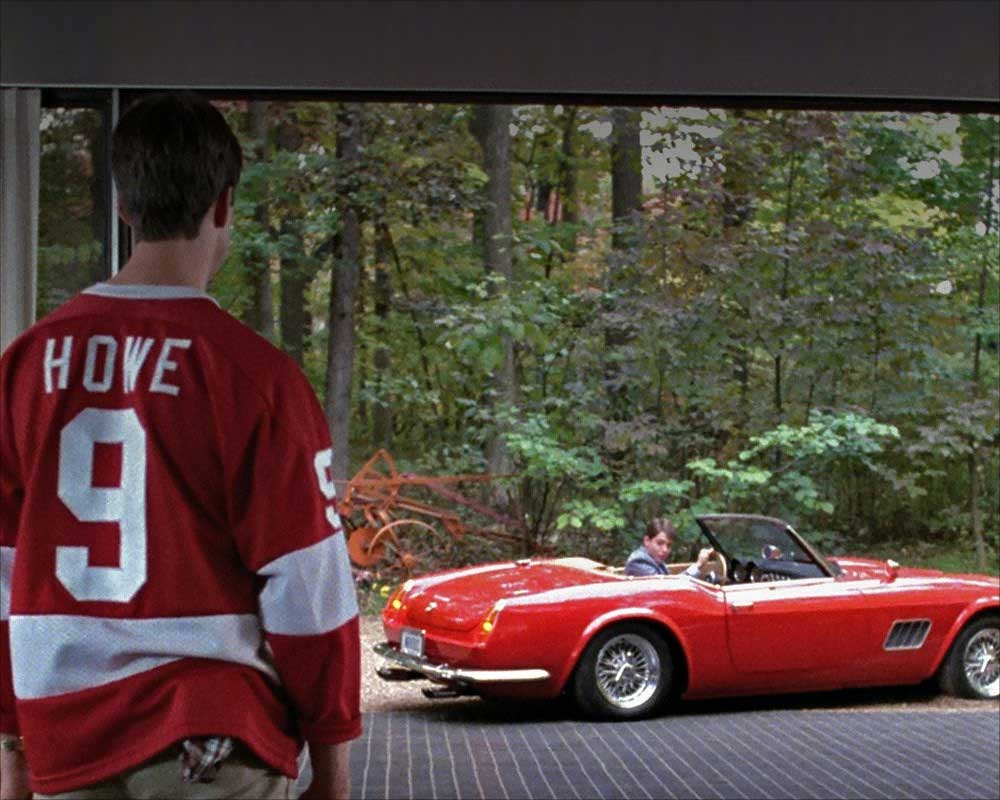
It’s hard to overstate the dominance Ferris Bueller’s Day Off had over the entire rest of the 80s catalog growing up in the northwest suburbs of Chicago. Sick days, substitute teachers, pizza parties, Von Steuben Day Parade, school field trips to the Art Institute, this was as constant a companion as The Indian in the Cupboard or Newsies. I went to a talent show at Glenbrook North with a friend back in high school, and they were still constantly referencing Ferris in 2010. One of my mom’s OTs claimed he was “the guy who did the flip” during the “Twist & Shout” sequence.
Until Mean Girls and Fall Out Boy, Ferris was our pop culture representation. And, frankly, he probably still overshadows either one when it comes to relating to one another. We love the Art Institute – we love Wrigley – we love our sausage and want it to overshadow any fine dining establishments we might have in the city. We don’t have an entire city of women as hot as Jennifer Grey and Mia Sara, but we celebrate those women where they exist.
Scolds have given this film something of a beating, insisting Ferris is a bad person. This line of criticism is noxious to begin with (Ferris is my friend!,) but it also misunderstands Ferris’s dramatic function. Ferris isn’t an audience cipher or a real person – he’s Bugs Bunny, set loose in a Looney Toon with Alan Ruck’s sad sack Cameron and the Fuddian Dean Rooney. If he’s aspirational, he’s aspirational the way a cryptid is aspirational. God forbid we have a little fun in this world.
I actually do think this is misunderstood partly because of other John Hughes films like The Breakfast Club or Planes, Trains & Automobiles, which are more humanistic approaches with deeply flawed characters. Hughes set out to make a hypercapable character who can handle anything who comes his way. He comes across as a funny sociopath, but he also really loves Sloane and Cameron. I love the guy. I wish I had that spark. The film teaches you how to watch it, too – it makes space for people who can’t stand Ferris from the start and then asks you what harm he’s really doing.
This film also employs one of Hollywood’s greatest cinematographers of all time, Tak Fujimoto. Fujimoto’s first credits include Terence Malick’s Badlands, exploitation greats like Switchblade Sisters and Death Race 2000, and the original Star Wars – he became famous for his collaborations with Jonathan Demme on films like The Silence of the Lambs and Philadelphia and his later work with M. Night Shyamalan on The Sixth Sense and Signs. There is an incredible tactility to Fujimoto’s choice of lighting and lensing in every shot of this film, and the framing he chooses to match Hughes’ blocking makes the Art Institute sequence one of the most beautiful in film history. A moment like Cameron looking at Seurat’s A Sunday on La Grande Jette is, for my money, an instant admission to the all time hall of fame.
Ferris Bueller’s Day Off is a home for me. I have so many memories both of watching the film itself and of being in the places it depicts. I remember old friends and their families. Revisiting it always brings me a lot of joy, and I get the stupid “Oh Yeah” Yello song stuck in my head every time. If someone asked me if I wanted to get some Portillo’s and throw it on this minute, I’d do it in a heartbeat. Sounds like a great afternoon.
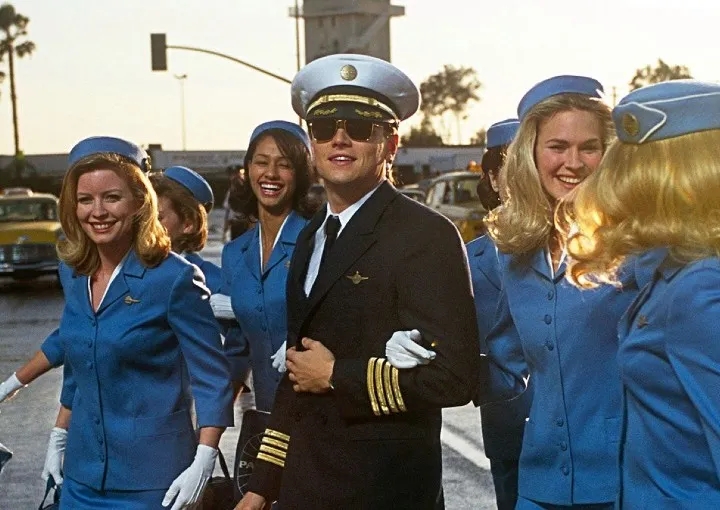
This past Christmas, unable to split the difference picking a holiday movie, I threw on Catch Me If You Can, a film which centers its core relationship between youth con artist Frank Abignale Jr. (Leonardo DiCaprio, maybe never better used for his charisma and ability to play nervy anxiety) and FBI Fraud Agent Carl Hanratty (Tom Hanks) on Christmas correspondence. While it spends a lot of its runtime in sunny Miami, Louisiana, and Georgia, this only drives into the stark relief the cold Christmas toward the end of the film set back in New York City
Really making the space to watch this as a “Christmas movie” helped really make the isolation and grief Frank has in deciding to be independent far too young. He’s a boy who saw his parents’ marriage fall apart and decided he’d use his skills to give them the resources and excuse to come back together. Watching it after Spielberg’s The Fabelmans, it’s almost impossible not to see how much of himself he poured into his portrayal of Abignale Jr. That’s true even before you read the real Frank Abignale’s account of the film, that the FBI chase was very accurately portrayed and the family relationship was almost entirely fictionalized.
Catch Me If You Can is one of Spielberg’s most vulnerable films – the (also fictional) scenes between Abignale Sr. (Christopher Walken, maybe at his career best) and his son give love and dignity back to a man whose role in the original story was to be a failure who lost touch with his son entirely. Walken plays these scenes with a recognition that the fantasy Jr.’s maintaining to honor Sr. as a father figure is a mutual charity – when it finally explodes, the anger at the condescension never stops betraying the pain.
Frank walking with his Pan Am entourage.
But this is also one of Spielberg’s most electric and fun films, too. Frank’s fraud is consistently played as a farce, his scenes with Hanratty crackling with Golden Age Hollywood repartee and beautiful deadpan from Hanks. The score is one of John Williams’ liveliest in the 21st century, brass and piano playing cat and mouse and setting the 60s milieu alongside the wonderful production design and costuming. Janusz Kaminski shoots the film fairly modern, which allows for an athletic departure from the cinematic language the film’s 60s world would match, and it keeps the pace racing.
One of life’s great pleasures is the film that holds up. Some films are too exhausting to want to revisit, and others are too light on substance to keep being rewarding. I don’t think Spielberg is immune to either problem, but his best films are remarkably light on their feet while also offering layers and layers of character psychology and structural meaning. Spielberg opening his heart with this film gives it that extra push it needs to combine the dance and the brain into an enduring masterpiece.
By comparison, I’m still getting to know Coppola. I’ve seen the classic 70s quadrilogy, Bram Stoker’s Dracula, and outside I’ve only seen Peggy Sue Got Married and One From The Heart: Reprise. Peggy Sue I find nostalgic to the point of acrid, with really only its bizarre Nic Cage performance breaking through to make me think we might be laughing together. So I came into One From The Heart: Reprise knowing it was a film which bankrupted both Coppola and his Zoetrope Studios into financial ruin, a film reviled upon release that had seen some reappraisal since, and a “musical” sung through by Tom Waits and Crystal Gayle. I hoped to get some fun out of a calamity.
From the opening credits which unveil this reconstructed fantasy of the Las Vegas strip from under a sea of sand, I spent basically all 93 minutes of this film with my joyful smile in rictus. During the fantastical dream ballet sequence (shown in the trailer and borrowed in Damien Chazelle’s La La Land) I started crying. This story of two people falling out of love and still refusing to let go is not told effectively through the script, but through the film’s intoxicating color, music, and rhythm. The story, which positions Frederick Forrest’s Hank as so unlikable that you’re rooting for Acme violence against him by the film’s second half, serves as friction against that cocktail.
Hank……………………
Hank has been living with Frannie (Teri Garr) for several years, and they’ve fought and made up repeatedly the entire time. He cheats, they break up, they get back together the next day, and the dysfunction continues. This film’s fight appears to be the fight that finally ends things, and they pursue new relationships with new flings. Nastassja Kinski’s Leila can really only engage with Hank on a surface, physical level, a sheltered immigrant circus performer who romanticizes the idea of running away together. That relationship sings because, honestly, romantic fantasy is all Hank can provide, too – the death of their time together is built in from the moment they meet because she only wants a fantasy and he’s a facade.
The real meat of the movie is Frannie and Raul Julia’s Ray, a singer/waiter who challenges her to actually follow her dreams and see the world. Their relationship is lush, coming across as having real empathy, chemistry, sex, fun. Surrounded by skeptics, it was their scenes together that very obviously pulled everyone onto the same page. Their reunion after a couple small flirtations is the beginning of the film’s longest dance sequence, and while their dialogue together is much stronger than Hank and Leila’s, it’s the dance that sells you that these two are meant for one another.
Even outside the dance sequences, there are long, dialogue-free songs set to the Tom Waits and Crystal Gayle vocals. Early in the film, there’s a lot of walking from one end of the strip to the other, looking around longingly, bathed in neon and shadow. I’ve been explaining “what happens” in the film so far, but it’s really a film baked in How It’s Shown. Hank wandering through the cold blue neon of the martini bar and eventually seeing the giant superimposed Leila was an emotional powerhouse for me. I won’t say “the art speaks for itself,” but this film is a case where a picture is worth a thousand words, and there are too many pictures that make my heart soar here to dig into what I find so beautiful about each one as part of this film.
Frannie!!!!
The running story of Coppola at this time is about his upcoming Megalopolis. Once again, Coppola is betting the farm (in this case, the vineyard) on a passion project. The conversations around it have highlighted a lot of his personal failures, among them his lack of realistic perspective on the state of art commerce and his refusal to disavow evil men. There’s a tension between wanting to view Coppola as a master artist and tragic figure and the recognition that his choices lead him down the road he deserves. I’m not sure it’s as simple as believing that people get what they do or don’t deserve – my feelings on One From The Heart reflect that same tension, a film ending on someone who maybe would better have been left alone in a dark room. Maybe with future viewings, I’ll pull some new meaning from that last thirty seconds. For now, I’ll settle on it being a promise that the story is not quite over yet.
This piece contains spoilers for the film Mind Game.
GKids released a wonderful Masaaki Yuasa boxset last year which meant I finally got to see Mind Game in proper high definition. It was almost like seeing it again for the first time, the vibrant colors of the film’s musical sequences shining bright a clean, the tiny details of the climactic sprint fully visible to me for the first time. I’ve mostly been rewatching my favorite film on a 480p file I got from Prof. Ridgely’s course on anime I took in 2012. At the time, there had been no official Western release of the film.
Mind Game portrays a young broke mangaka named Nishi who nurses a jealous crush on his childhood sweetheart Myon. They nearly went on a date once in high school, but got too shy to ever pursue it. When they reunite at the start of the film, she’s engaged to a nice, successful young man – and is being pursued by two yakuza seeking revenge on her womanizing father. When Nishi comes between Myon and the temperamental Atsu, he’s shot dead. Seeking to humiliate him, God shows him this death on a giant screen, on a hundred giant screens, looped, represented in 3D models, in slow motion, even in text. Then God tells him to surrender to oblivion – the afterlife is nothingness.
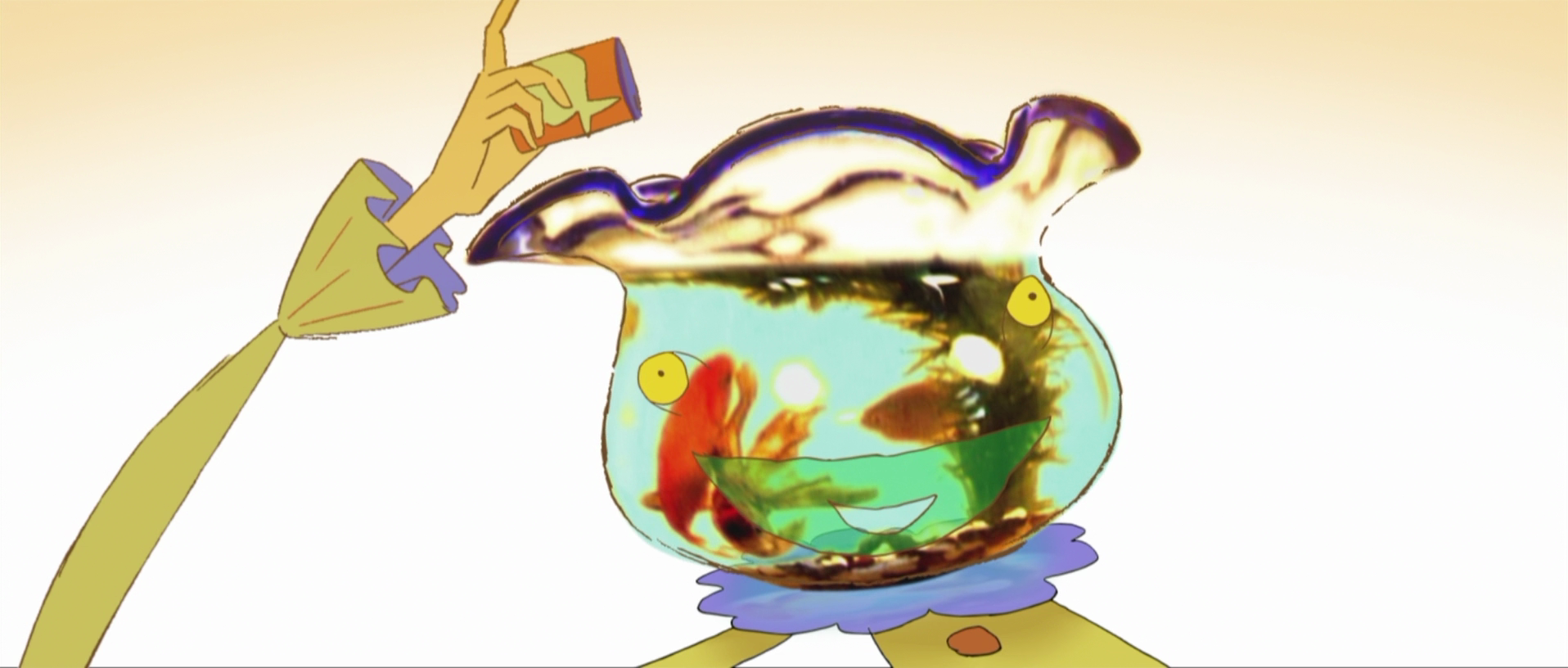
One vision of God in Mind Game’s afterlife.
When I’m faced with anxiety about a hypothetical risky situation, I maybe too quickly default to “the worst thing that happens is we die, and then we don’t have to worry about it anymore.” It’s a coping mechanism I’ve learned after a lot of unwelcome surprises in my young adult life. It keeps me from getting bogged down in the “but what happens ifs” and leading me toward the “so what do we do about its.” It maybe makes me complacent sometimes. Those pain points can be dealt with later, because pain isn’t fatal.
When I was still dating, this made it easy to ask people out, as getting a “no” back doesn’t leave me dead or in jail. Just asking to spend time together and then being pleasant to be around is, it turns out, also the secret to adult friendships – who knew? When it came time to uproot from Buffalo Grove and move to Nashville, this mentality kept me from considering cold feet. When it came time to leave Nashville and come back to Madison, it kept losing our apartment from creating total despair. When I think about somehow turning writing and media analysis into a career, this mentality turns waiting another few years until I’m in a “better place to write” into a pain point rather than an existential crisis. When jobs previous to the one I’m in now burdened me with overwork and too much responsibility with no increase in pay, I would say, “this too shall pass.” When I think about addressing my nonbinary identity, I have said “I don’t really want to get into all that right now” – that, at least, is starting to change.
This philosophy creates a tapestry of decisions and indecisions. Some are healthy and fun. Others are stupid and painful. There are decisions that have no especially value-based consequence. Some people I’ve known react to it as optimism – that I refuse to give into despair. Others sense that it might be a form of nihilistic despair itself, that there’s a feeling that there’s no way to improve things beyond “at least we’re not dead.” I feel it both ways. I’m not convinced it’s healthy. I’m not convinced it isn’t, either.
After sharing this mentality with my therapist a few times, I was thinking about how this mentality relates to the compartmentalization of gaming. In video games, if you fail, you can always just start the game over. And you haven’t lost until you actually hit “game over,” in Tetris or in a Halo lobby. Losing the battle doesn’t mean losing the war. Any pain is only temporary (and, in a game, only “real” in the emotional sense.) Learning to accept the risk of defeat will make you a way better gamer – it makes it easier to learn from your mistakes in the moment, not give in to the anxiety of losing, and allows you to take greater risks without being so protective. Once you’ve learned enough mastery, you can recognize what’s actually worth protecting.
“The worst thing that happens is we die.”
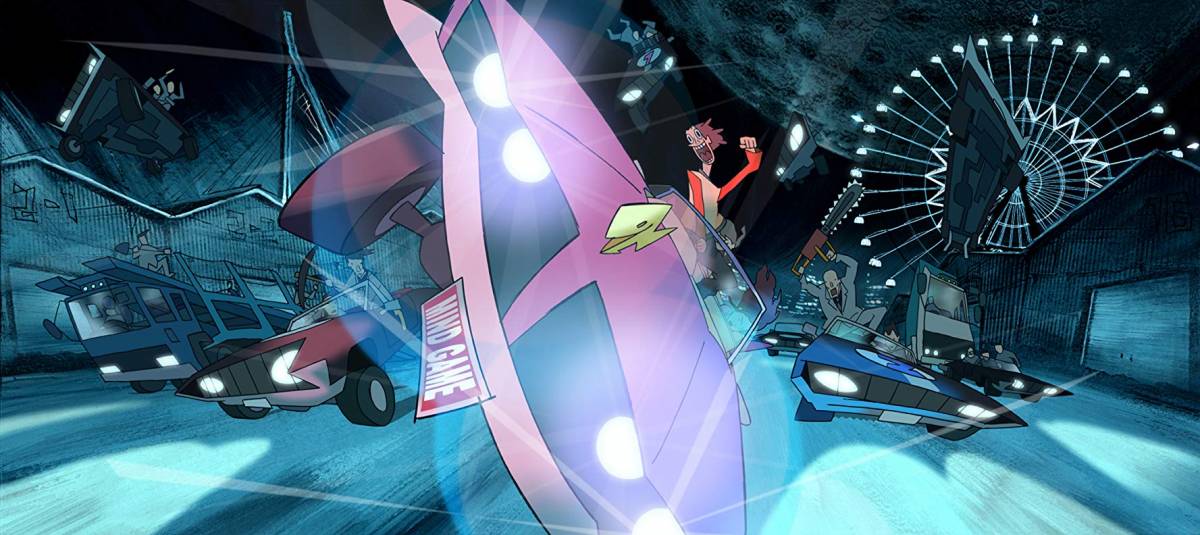
Nishiki sobs at first, but then he realizes that God is headed back toward life itself. He decides he’s not going to give in, that he’s not going to let it end this way. He sprints back to life and takes the second chance he’s been given in a manic stride, killing Atsu, stealing the other older officer’s car, and kidnapping Myon (and her sister, Yan.) They end up in a violent car chase, driving off a bridge, and being saved only by the grace of a blue whale swallowing the car whole. So begins the true movie of Mind Game – a modern riff on Jonah and the Whale.
Inside this whale, our trio meets a nameless hermit – he’s survived at least thirty years inside the belly of the beast, himself escaping a criminal past. He’s collected an incredible wealth of treasures within his shelter and made friends with a Jurassic pal. Inside the whale, Nishi, Myon, and Yan find new life. It’s a place for play without commerce, without social expectation beyond the family, without the concept of competition. In a lot of ways, this becomes a sex comedy for a while. It’s a mess, and the way it handles one character’s sexual exploration is even messier.
I love Yan!!!
The way this sequence is filmed is unbelievable – it is so colorful, so fantastical, so lively. Masaaki Yuasa is largely known as a master of setting animation to vibrant color and danceable music. You can go back to his earliest credits on Crayon Shin Chan and Chibi Maruko-Chan, to his first animated sequences, and see the kind of blissed out work he does in that setting. To me, it’s ecstatic. Some people would describe it as “trippy,” others synesthetic. I see also Merrie Melodies and Looney Toons, the origins of character cartooning. This film enters development shortly after the Superflat exhibition opens in Japan and begins to tour internationally. Mind Game isn’t coherent with the philosophical cynicism of Superflat as a movement (that distinction goes to Tamala 2010: A Punk Cat In Space,) but I can see a line between their postmodern visions of color and iconography.
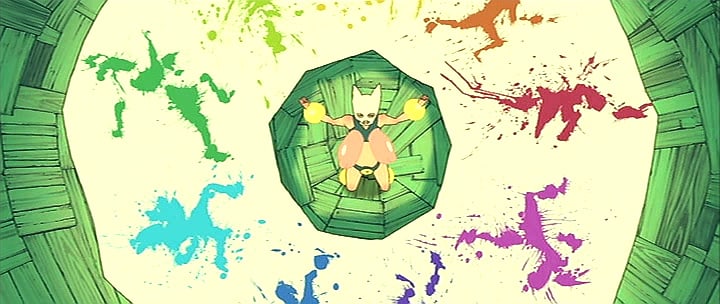
The end of the time in the whale comes and we head toward the film’s climax. Our heroes hatch their escape plan. After their race back to life, a montage plays of these characters’ entire 20th century ancestry. Every small decision in their lives is played in sequence, creating an apparent butterfly effect chain of every choice and non-choice made by our characters. Nishi’s high school heartbreak, the hermit leaving home for the last time, Atsu’s yakuza boss being raised as the patriarch. It is a tapestry of decisions followed by a final epitaph affirming life.
Just before their climactic attempt at escape, Nishi deflects the fear the hermit expresses about trying to escape the whale. Nishiki declares:
“So what! I wanna get out! ‘Cos there’s so much out there! So many different people, living different lives! Incredibly good guys, bad guys… Folks completely different from us! It’s one huge melting pot! See, it’s not about success, dying in the streets, who’s better, who’s not! I just want to be a part of it! I realized that even if I’ve no connections, no talent, even if I’m one big loser, I want to use my hands and feet to think and move, to shape my own life! We can just die here or we can try, see what we’ve got!”
FYI – this film is also available on Criterion Channel in higher quality.
MESHES OF THE AFTERNOON Dir. Maya Deren, Alexander Hammid 1943
Elliptical haunting nightmares inventing new dream logic. There’s a lineage of the dadaist and surrealist imagery of the early 20th century. I unfolded a greater understanding when I watched Jean Cocteau’s Blood of a Poet, Wladyslaw Starevich’s The Cameraman’s Revenge, Man Ray’s Return to Reason. I saw Meshes of the Afternoon early in this journey, directed by reference to my love for David Lynch. Unsurprisingly, I didn’t “get it” then, appreciating some of the imagery but only able to make reference to things I had already seen.
I’m still nowhere near an expert on abstract or experimental cinema, having largely seen only the most acclaimed and beloved films or museum pieces I happened to have someone else program. I find it hard to engage with abstract cinema at home, especially anything longer than a few minutes long. Something like Bruce Baillie’s Quick Billy is hard for me to keep in my head with streaming video quality and phone notifications. So, please consider my love for Meshes of the Afternoon a pledge that you, whoever you are, can enjoy it too.
The story, told simply, is a cat & mouse between our heroine, a dreamer, and a mysterious stranger with a mirror for a face. She chases the mourner/reaper and finds it carries a knife. Parts of the chase keep recurring, both lived and observed from afar, omens of violence rising until a desperate conclusion. As much as I love the more daring shots, some of the most impactful are the mundane images. Closeups on her falling asleep in the chair or running to follow the mourner, those are such incredibly daring and modern images. The tension still gets me, the uncomfortable feeling of impending doom.
Meshes of the Afternoon is a late silent film, though Deren’s third husband Teiji Ito wrote a classical Japanese score (embedded above.) I’ve watched it with Ito’s score, in silence, with a faux-Badalamenti score, with Liturgy’s Aesthetica. My tip for watching silents at home, if you cannot find a score that works for you, is simply to put on music you feel like listening to. There are unexpected synergies to whatever you can choose, from Outkast to Buckwheat Zydeco. If it makes it easier to commit your attention, it’s the correct choice for that day.
I had to train myself to watch and enjoy silent film. It took about a year of learning how to watch what I was looking at, and many of my early Letterboxd reviews document growing pains in that process. I lack forgiveness of myself for failing to be a better critic sometimes. There’s a decent chance that ten years down the line, I’ll read most of what I’ve published in this birthday project and go, “ah, damn, what a naive kid.” I think writing about perspective in Meshes of the Afternoon is putting me both in the mindset of the dreamer and the mourner, looking to future’s past. While I take great pleasure in Meshes of the Afternoon, this film still stumps me. Let this be an engraving of humility, reminding me how much more room there is to grow.
The short films David Lynch made in art school, as well as Eraserhead, contain his intense visual horror flair and his otherworldly treatment of sound and light, but they’re deeply angry films, a young man railing against societal failures and expectations. The Elephant Man and Dune are adaptations, Lynch putting his distinct style onto other people’s work. But they also soften his edges quite a lot – Dune marks what I think his first real mature work showcasing empathy and friendship, the relationships between Paul Atreides and his friends full of liveliness. It’s the first time watching a David Lynch project I feel like you can really fall in love with some of the characters.
It’s also the last time Lynch would ever work on something that massive in scale, even accounting for Twin Peaks: The Return. The degree to which Lynch poured his heart into the film, the time he spent with Frank Herbert (who largely liked the film) undermined in post-production by the De Laurentiis family, ended Lynch’s desire to work on big-budget films going forward. Creative control came with a lower asking price – according to producer and Lynch collaborator Sabrina Sutherland, that approach is still getting pitches into board rooms as long as they aren’t about mythical Snoots.
The lessons he learned making Dune are visible in Blue Velvet, not least of which through the return of Kyle MacLachlan as Jeffrey Beaumont, another precocious golden lion-boy quickly corrupted by exposure to a world where naivete can become egomania. While Blue Velvet was conceived in 1973 alongside Eraserhead, it lacks that film’s sour edge and general misanthropy. The film is still on the knife’s edge of thriller and horror, depending on how unsettling you find its darkness, but it comes to that darkness through a deep love of its characters. Jeffrey is presented from the start as a character more like one of the Hardy Boys than Jack Nance’s Eraserhead Henry Spencer, and while he does find some unseemly, voyeuristic desires and a penchant for manipulation in himself, his conscience also always seems aware that these things are wrong.
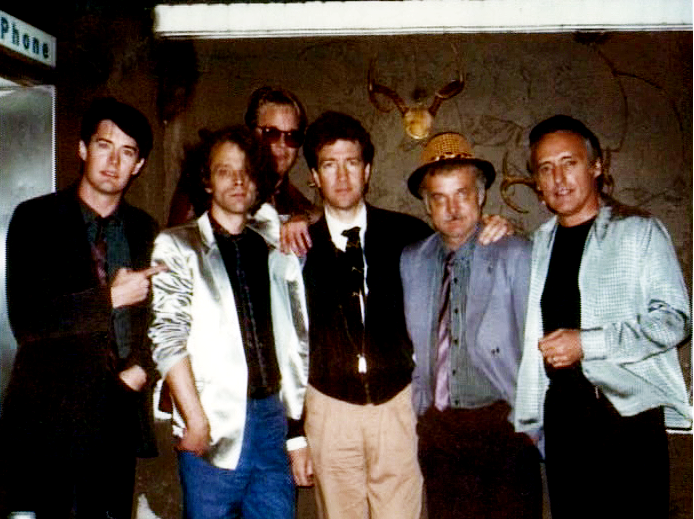
Lynch (center) and the boys (from left to right, Kyle MacLachlan, Brad Dourif, J. Michael Hunter, Lynch, Jack Nance, Dennis Hopper)
That melodramatic empathy with these characters is, to me, the real heart of the Lynchian ideal, as it combines tropes or familiar, mundane elements with intense tragedy or darkness. Some people take this to mean something as simple as “the radiator is menacing” – while I think that’s certainly true of Lynch, it’s also true of iconic images like the telephone on the stairs in Maya Deren’s Meshes in the Afternoon or the basement in Charles Laughton’s The Night of the Hunter. I think what really makes the Lynchian whole is the juxtaposition of menace and love, and just about every Lynch work from Dune onward is embodied by that ideal.
It’s certainly the primary iconic juxtaposition of Blue Velvet, Bobby Vinton playing over a suburban lawn until the grass leads us back to a severed ear. Isabella Rosselini’s Dorothy Vallens is tragic but also erotic, and her trauma response cycles between despair and desire in the flash of a moment. Frank Booth is a terrifying villain, and that villainy never comes forward more uncannily than watching Dennis Hopper sob over the performance of the woman he brutalizes. Even Dean Stockwell’s terrifying pimp Ben is given the Roy Orbison “In Dreams” solo, creating a dynamic of traditional American beauty and violent blood running under the surface. The only person spared this conflict is Laura Dern’s Sandy, whose only exposure to the darkness is to see it crashing down upon her lawn in the film’s crushing climax of melodrama.
David Lynch’s work has meant a lot to me for the past ten years or so, since I first met Twin Peaks and Eraserhead. Annie and I originally bonded over talking about Twin Peaks, and his films have been a source of many beloved memories of mine. Last summer, when we moved back to Madison, the first film we saw at the UW Cinematheque was Blue Velvet, and there I reunited for the first time with friends I met maybe six months after my first time watching Twin Peaks. It’ll remain a special experience to me for a long time.
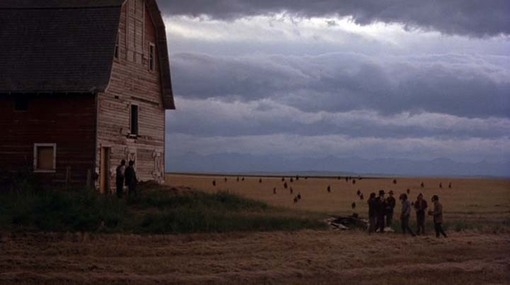
After an opening credits set to archival photos of pre-WWI urban Americans, one of the first images we see is of glowing, hot fire. Bill (Richard Gere) works in a steel mill, and we see molten molding as our first major elemental power. This film luxuriates in vast expanses of the classic elements, on fields of wheat and riverbeds, on major storms and hair in whirling wind. Days of Heaven is most famous for its golden hour sunlight, fought for in protracted production to get twenty minutes of shooting done to get the rich colors captured in this film’s photography. But Days of Heaven never comes alive quite like it does in front of fire, which we see as the opportunity both to give life (such as at the final workers’ hoedown bonfire, sparks shooting off the central flame around the fiddler and the dancing) and to create hell.
I’m maybe lucky that my first Terrence Malick film was To The Wonder, the beginning of his autobiographical sequence I’ve seen people call “The Twirling Trilogy,” films extremely light on plot or consequence, heavy on reflective, poetic narration and beautiful people shot in beautiful lighting. After enjoying that introduction, I take any amount of conflict, plot, or Big Cinematic Beauty as its own reward. Knowing the hellfire that’s coming at the end certainly gives the preceding hour incomparable tension.
A good thirty minutes of Days of Heaven is mostly spent watching labor. After Bill gets in a fight and kills his steel mill boss, he takes his sister Linda (Linda Manz, who narrates the film) and his “sister” Abby (Brooke Adams, in an incredible double-header year where she also dominates Invasion of the Body Snatchers) to work on a wheat farm in the Texas panhandle and hide out from the law. The work of shucking wheat and collecting hay is shown in detail, repeatedly, broken mostly by moments where Linda is able to play with an unnamed friend. Annie referred to the pace as “a glacial 94 minutes” – I prefer the term “meditative,” but I’m a sicko for this stuff.
It helps that the golden hour photography makes the panhandle look like paradise. There are funny, storybook-like shots in the montage of the arrival to the farm. One shot of a train crossing a bridge in front of a bright blue sky immediately brought to mind Wes Anderson – a later scene at a river dock brought to mind Martin McDonagh. The definitive look of Malick’s modern films is shaped entirely by his collaboration with cinematographer Emmanuel Lubezski, and together they create deeply personal images which make me understand the appeal of sacred geometry. They are largely shot in immersive, close-up long takes, the camera’s sweep lively documentarian when people are in frame and methodical when shooting still images. His first two films, shot by (among others) Tak Fujimoto, Nestor Almendros, and Haskell Wexler, are no less gorgeous, but they present images in a more classical manner. The flashes of the future are here in shots of wildlife, from the rabbits and pheasants around the farm to the dread-inducing shots of locusts which threaten Texan Eden. And they are here in one riverbed conversation between Bill and Abby, an uncomfortable proposition that uses montage to show reconciliation.
The farmer (Sam Shepard) falls in love with Abby, and the drama progresses. In the latter part of the film, we see traditional dramatic acting in the triangle, and all three are so great at communicating their characters through body language and their facial expressions rather than through extended dialogue. But in the early part of their relationship, almost all interiority is only understood through Linda’s narration. Manz is somewhere between a real street urchin and a trained actor, having attended at least some classes but having run away for most of them. Because the film was largely shot in improvisation, Malick made a wonderful decision to let Manz narrate in post-production, apparently just a stream of consciousness improvised by Manz watching the movie herself. Her observations are so funny and so sincere – it truly creates the impression that they plucked this character out of a Faulkner novel and started rolling.
The great conflagration at the film’s climax feels like it could be where the film ends. It continues on another fifteen or twenty minutes, laying track for our “heroes’” fates, drawing some fairly clear delineation on what will or will not change. This decision feels mildly uncinematic, closer to the way a Great Novel ends, and filmmakers inspired by Malick (first thought in mind is Ryusuke Hamaguchi’s Evil Does Not Exist, but also Alejandro Gonzalez Inarritu’s The Revenant or Jeff Nichols’ Take Shelter) often cut to credits right at that moment of Great Emotion. But that landing runway takes suit after his beautiful, surprising ending to Badlands, and predicts the iconic beach sequence that concludes The Tree of Life. Denouement is an essential part of Malick’s storytelling – it gives the story space to exist in context, to merely be where the curtain closes rather than where meaning dies.




 All My Friends