IN THE MOOD FOR LOVE

IN THE MOOD FOR LOVE
Dir. Wong Kar Wai
2000

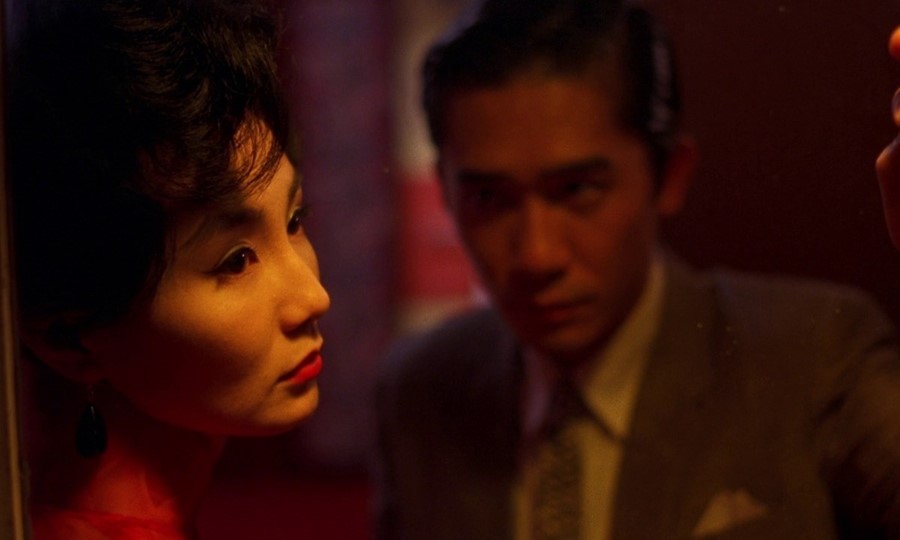
It is a restless moment. 
She has kept her head lowered… to give him a chance to come closer. 
But he could not, for lack of courage. 
She turns and walks away.

Mise-en-scene is the human weapon in film. The term translates roughly to “what is put in the scene,” and it is meant as the ineffable summary of the image. It belongs only to those unique combinations of director, cinematographer, and production designer who can create an uncanny and unforgettable moment on screen. Many great moments of mise-en-scene are defined by literary context – the image summarizes a pivotal moment in plot, character development, or unpacking of metaphor. Images like the Binary Sunset in the original Star Wars, or Cameron staring at Seurat in Ferris Bueller’s Day Off, can create this intense feeling where the character’s psychology cannot be expressed more effectively through words. Others are defined by displaying the unusual, the elemental, as Kubrick, Trumbull and Unsworth took us Beyond the Infinite or Lynch and Deming and the team at BUF took us to the birth of JUDY and BOB in Twin Peaks: The Return.

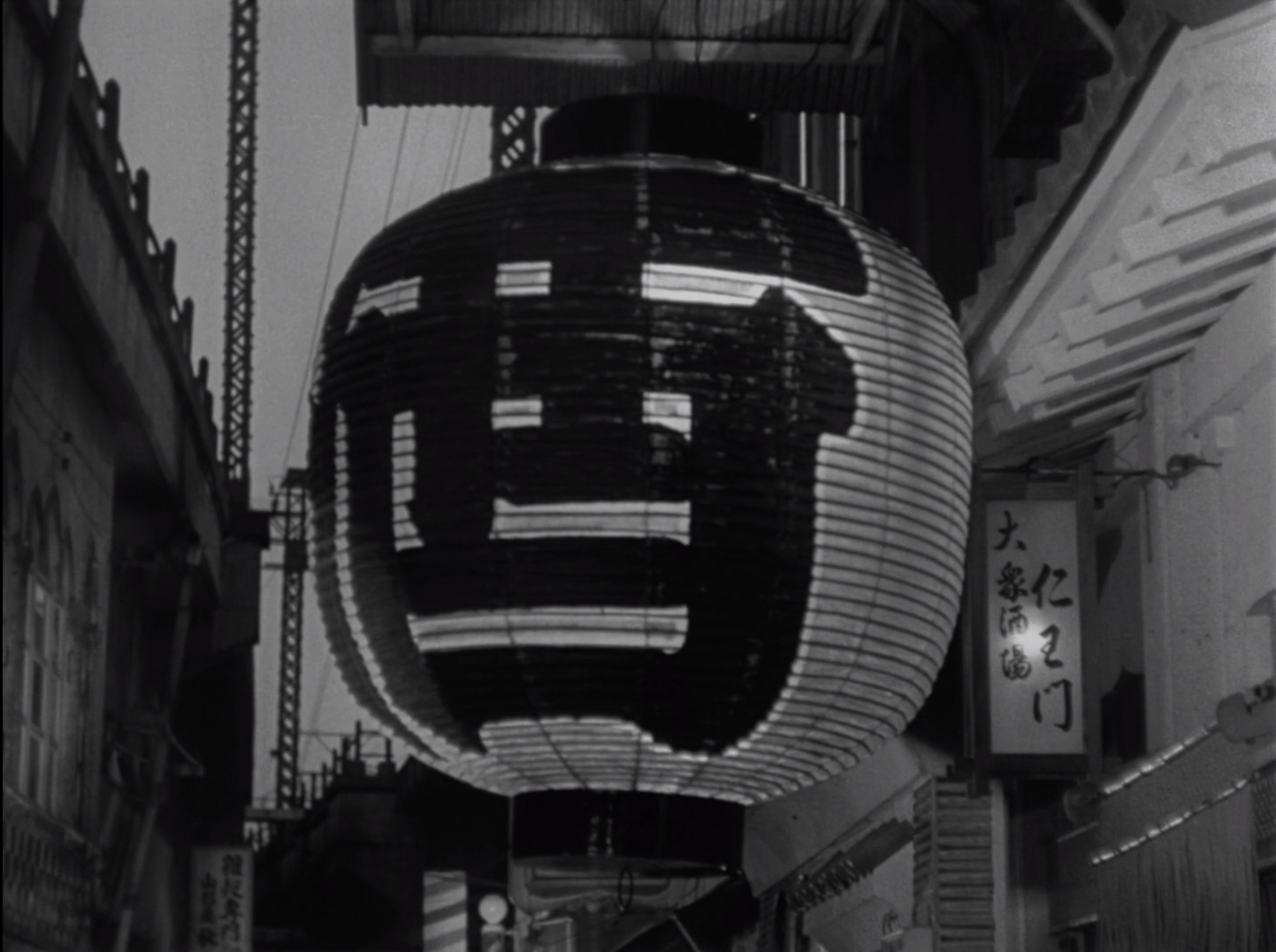
Tokyo Story, as described below.

It takes a different kind of mastery to make the mundane the center of an overpowering moment of mise-en-scene. In Yasujiro Ozu’s masterpiece Tokyo Story, there is a cut from a conversation between Chishu Ryu and Hisao Toake where they decide to go visit another old friend for drinks – the scene cuts to a hanging lantern sign which reads “Sake.” The first time I saw this cut, I burst into tears. The sign is framed center, as are most images in Ozu’s films with legendary cinematographer Yuharu Atsuta, and immense on screen, framed beautifully by the roof of a building on the other side of the street and the other signage for the bar and neighboring businesses. It’s not just the image itself, taken out of context (like I’ve done here, just so people know what I’m referencing) but the build of one hour of images framed with similar intelligence that made my heart explode.

While all the other Wong Kar Wai films I’ve seen are beautifully shot and impossibly well-paced, none have the power In the Mood for Love has to create undeniable mundane images. The film is a sensual feast of antiromance, of not arriving at the pivotal moment, of prolonged longing and years of yearning. These images are deeply lived in by Maggie Cheung and Tony Leung, giving all-time great performances as people desperately trying to decide whether or not to give in to desire. There are small etiquettes that feel less like historical put-ons and more like smart observations of how these characters behave. The way the two actors control their posture, their leaning into one another and apart, their gaze and their expressions – I’d be hard pressed to say that better acting exists.

For those who haven’t and may not see it, In the Mood for Love tells the story of two neighbors whose spouses enter an affair shortly after their move-in dates. The cheating spouses’ faces are never seen – we’re left with seeing Leung and Cheung as they try not to consummate their own love. Each cut back to stairwell into the noodle shop where they start encountering one another is a cut to the heart. The scenes of the two of them standing in an alley smoking while waiting for torrential downpour to cease are excruciating. Cigarette smoke has never looked better than in this film, its slow-motion arcs ascending into shapes that seem impossible.

Chow Mo-Wan leans in slightly – Su Li-zhen looks away.

Moments of beauty are anchored by the cinematography of longtime Wong collaborator Christopher Doyle, who granted Wong’s previous films a kinetic, experimental free-form (very 90s) and longtime Hou Hsiao-Hsien collaborator Mark Lee Ping-bing (Flowers of Shanghai, Millennium Mambo, The Assassin,) who gives this film his signature stillness and grace. They are soundtracked by the reused titular theme of the 90s film Yumeji, now almost certainly better known as the theme used in In the Mood for Love. These elements combine into an intoxicating aesthetic experience, one that despite its melancholy I never wanted to end. When the film does finally reach its conclusion, it is a wrenching goodbye.

Of all the films I’ve chosen to write about this month, In the Mood for Love is the most acclaimed. In the 2022 Sight & Sound polls for the greatest films of all time, it placed 5th with critics and 9th with directors (tying with Bergman’s Persona and Kiarostami’s Close-Up.) I exited my screening this past September, having not seen the film in a decade, accepting that I’d now adopted In the Mood for Love. My relationship with this film is still young. I won’t let it go another decade before rewatching again.

He remembers those vanished years.
As though looking through a dusty window pane, the past is something he could see, but not touch.
And everything he sees is blurred and indistinct.

ONLY LOVERS LEFT ALIVE

ONLY LOVERS LEFT ALIVE
Dir. Jim Jarmusch
2013

Core dividing lines on the reception of Only Lovers Left Alive come down to one question – are the immortal vampire artists Adam and Eve, portrayed as burned out gen-X rock idols by Tom Hiddleston and Tilda Swinton, the coolest icons of hipster culture ever or semi-pretentious dorks? Division on that answer sets up so much of where a viewer’s sympathies lie, whether or not you think their lives are suffocatingly tedious or eternally romantic. I was originally set up by film critics to believe they were meant to be as cool as Jim Jarmusch himself, and in watching I realized too many of the film critics I read spent most of their free time reading Wikipedia pages about the Christopher Marlowe/William Shakespeare conspiracy and Rolling Stone magazine. To be clear, I actually think the film works either way – it’s just that it creates a huge split on how you choose to read the central characters.

According to Adam, the world is dying. The “zombies” (read: us) are polluting our spaces and our bodies, fighting over oil when we should be fighting over water, desecrating our architecture and dishonoring our scientists. All the vampires are experiencing some of the negative outflow, here – human blood itself is more full of toxins (well, toxins to vampires) and a bad batch can spell the end for these immortals. He’s taken on the persona of a reclusive rock star who doesn’t want any of his music being published, a droning noise rock played by Jarmusch’s own band SQÜRL. If you see Adam as the arbiter of cool, this dismay is cosmic in scope, an indictment of humanity – we have a living god, and we have failed him. If you see him as a self-pitying dweeb, you hear him say “I don’t have heroes” and it’s easier to notice when Eve finds his wall of fame with photos of Buster Keaton, Jimi Hendrix, William S. Burroughs, RZA.

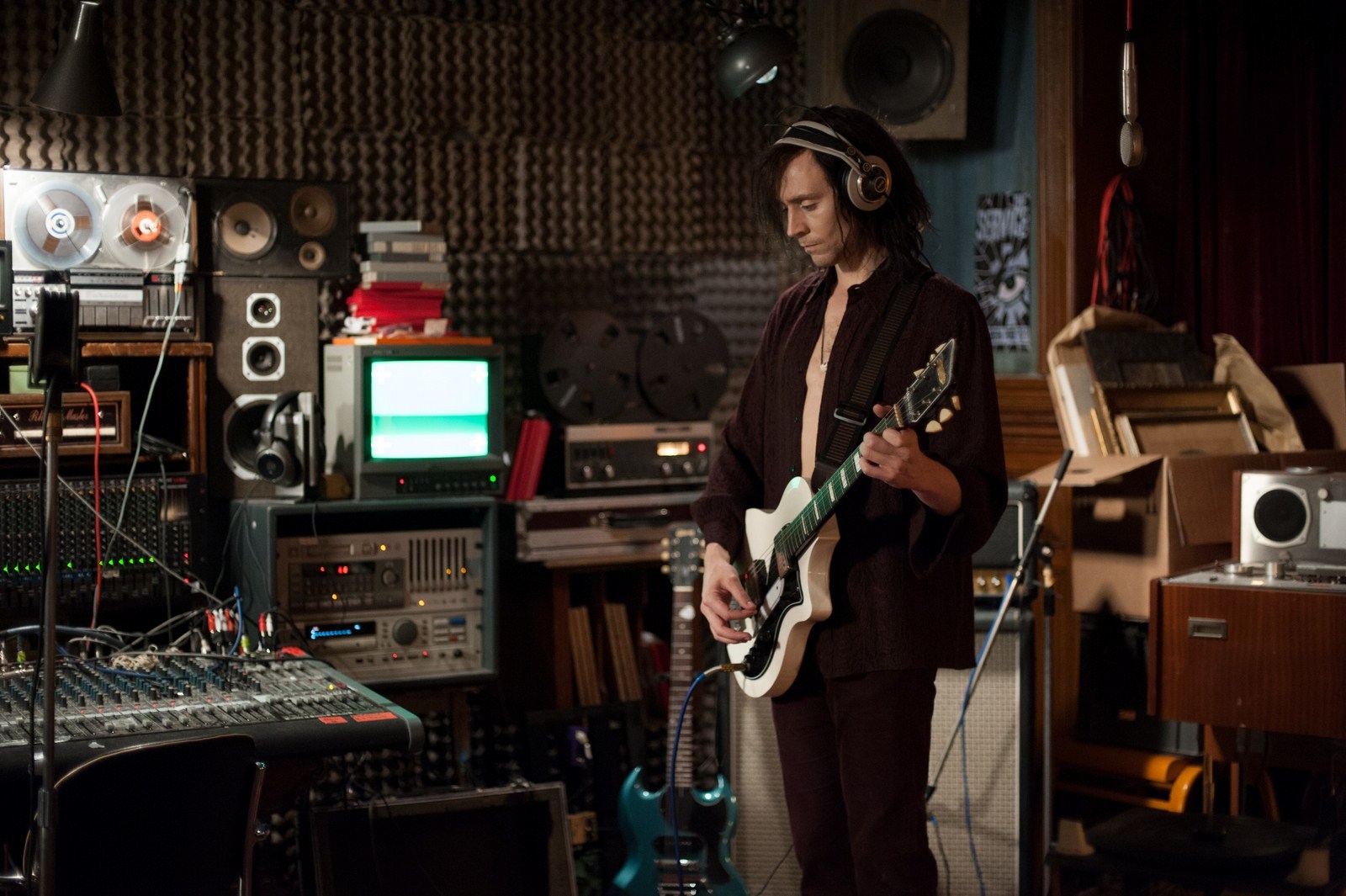
Adam, riffing on a level that is frickin sublime.

“I don’t have heroes.” Adam actually doesn’t have heroes. Heroes fight valiant adventures and die. He’s made art religion, and these are idols. The work got out there – they’re immortal. Gods. He knows as well as anyone that the world is still alive. And we see that reinvigoration happen late in the film when he sees a live performance and finds it admirable. Eve tells him about the singer and says, “She’s going to be very famous.” Adam says, “God, I hope not. She’s much too good for that.” Shut up, nerd!

But whether or not they’re performing some of the exhaustion, Adam and Eve live sad, tired lives. They’re married, and they love one another, but they also need years or more apart. They’ve built lives on different continents because they badly need their space. Adam is contemplating oblivion – Eve is a little more comfortable because of her friendship with Kit Marlowe (John Hurt, perfectly warm) but knows he’s starting to become less lucid. While they take joy in so many little things, so many familiarities, they despair in different resignations. Eve is certainly more upbeat, but Tilda plays her as a little too placid, a little too indifferent, and the moments of sincere disappointment bring out a volatility.

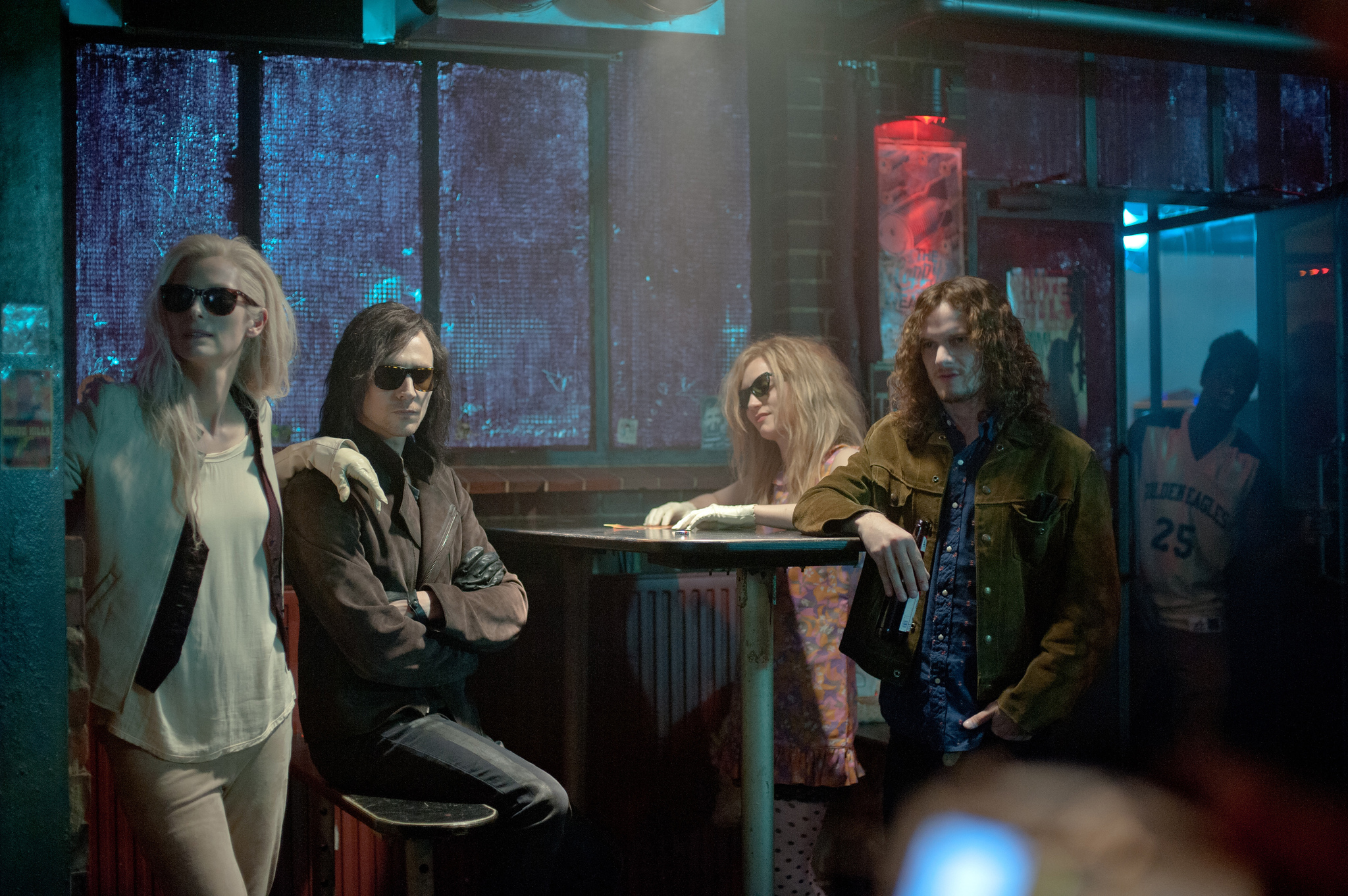
Eve, Adam, Ava, and Ian at the White Hills gig.

That sadness comes between so many little bouts of tastemaking, art celebration, and is surrounded by a very funny supporting cast. Anton Yelchin plays the sweet Renfield to Adam’s Dracula, a young rock fan named who seems to be a middleman for expensive goods. He’s deferential, naive, and overwhelmed to meet people he admires. Jeffrey Wright plays Adam’s supplier of “the good stuff,” and his big scene is so funny, played as a too-cool-for-school doctor and dealer. Wasikowska plays Eve’s sister Ava as a menacing socialite lush, and you immediately get why Adam is so loath to let her visit. The movie is funny, cute, and everyone is having a good time. It’s really only when Jozef van Wissem’s lute score takes focus that the tragedy will set back in.

Hipster cool is consistently identified as the core of Jim Jarmusch’s appeal beyond the independent cineaste landscape. He exports cool bands, cool actors, vibes, and haunted landscapes in urban settings. That Gen-X cool is also occasionally appropriative, performative, and insular. I think what makes Only Lovers Left Alive stand out among Jarmusch’s films is that it gives the audience space to both admire and laugh at the speed with which these hipster vampires can identify wood grain by its Latin name or cite the exact year of a release. That admiration and amusement doesn’t come at the expense of the film’s dramatic stakes, either, and it became a gateway to the slow cinema Jarmusch has often cited as an admiration.

THE END OF EVANGELION

Together or separate?

THE END OF EVANGELION
Dir. Hideaki Anno
1997

Neon Genesis Evangelion is a mecha anime about the end of the world. Teenagers face the horrors of the apocalypse, alien kaiju known as “Angels,” in their armored Evangelion suits, which are themselves more alien than machine and less alien than it seems at first. The adults in the room, an orgnaization named NERV, serve as their scientists, armorers, tacticians, therapists, parents, and jailers. The teenagers sometimes can put on a brave face, but their egos are being destroyed. Like teenagers in real life, a lot of their hyperfixations are on sexual desire, the difficulties of connecting with other people, and social performance. There’s a lot of lingering on teen sexuality in this show, including some leering at womens’ and girls’ bodies – for some people, this is a bridge too far, and the repulsion overwhelms whatever points the show is trying to make.

Evangelion’s fourth episode is titled (in English) “Hedgehog’s Dilemma.” This central idea, borrowed from Arthur Schopenhauer, is the central thesis of our primary POV character, Shinji Ikari. In essence, the dilemma draws a parallel between mankind and hedgehogs on a cold winter’s day. The hedgehogs wish to bundle for warmth to survive the harsh weather, but their quills causes pain – so it is with mankind and emotional intimacy. We want to be close, want to let our guard down, but rejection is too painful, and those who are too willing to accept that emotional intimacy will take on other peoples’ burdens. Shinji has elected to wall himself off from all emotional intimacy after the indifferent, abusive treatment of his father, Gendou – also the commander of NERV – and therefore constantly finds himself unable to seek comfort from loved ones despite taking on the immense psychological strain of piloting the EVA. This question of emotional intimacy defines Shinji’s arc throughout Neon Genesis Evangelion, and reflections of the Hedgehog’s Dilemma play out in the arcs of many of its characters.

Together or separate?

The End of Evangelion exists as a theatrical sequel/alternate ending to the 26 episode anime Neon Genesis Evangelion. The original show ran out of money and its director, Hideaki Anno, ran out of mental health to guide the production. The myth goes that to fulfill the episode order with what little budget they had left and a network pissed off about the content in episode 24, they trekked forward with storyboard caliber sketches and cels drawn weeks prior for other episodes to create a last-minute ending, with The End of Evangelion representing “the true ending.” This ascribes the incredibly dense script of the final two episodes of the anime, filled with intense psychological and metaphysical dialogue about the nature of trauma and the relationships of every character in the show, to a hasty rewrite. That understanding also tends to ignore how this side of the show had grown over the back half of the series, and also that similar dialogue reappears in The End of Evangelion.

It’s unclear whether The End of Evangelion is an alternative ending to the final episodes of Neon Genesis Evangelion . Both endings feature the onset of the Human Instrumentality Project, a psychological melting pot that will return human consciousness to a single collective. In both endings, we see characters’ consciousnesses bleed into one another, sharing memories, being unable to hide away ugly thoughts, trying to win the final argument and reach consensus. One side argues Episode 25 and 26 depict in detail what’s happening internally, whereas End of Evangelion is more focused on the physical consequences of Human Instrumentality and the war to end all wars.

All these arguments about canonicity, about intent, get even more complicated when you factor in the Evangelion Rebuild project. Anno embarked on a remake of Neon Genesis Evangelion over the course of four films. But by the early scenes of the second film, Evangelion 2.0: You Can (Not) Advance, it became clear that the story was changing. Characters were suddenly arriving with altered names – their personalities didn’t line up, and not in a simple rewrite way – it eventually became clear these were new characters in old roles. By the third film, the plots had completely diverged, and the fourth film offers a new ending. Many Evangelion fans dislike the rebuilds and write them off entirely. In a literal sense, the rebuilds are the “true” ending in the sense that they conclude Anno’s emotional arc over thirty years of stewarding this series – he recently gave a statement that more Evangelion may be coming with his blessing, but he won’t be steering the ship.

Together or separate?

In The End of Evangelion, whatever sympathy the show maintained for Shinji is dissolved. Shinji is putrid. Shinji is capricious. Shinji is motivated primarily by sex or hate. Shinji is emotionally catatonic because he was forced to kill the only person who’s shown him seemingly unconditional kindness since the show began – Shinji lashes out by objectifying every person in his life, sexually or as collateral damage. Because Shinji is the pilot of the EVA Unit 01, Shinji is given the keys to the Human Instrumentality Project. Will mankind maintain its borders? Or will it all come tumbling down?

Shinji fails to make a clear decision. We see the borders between people collapse in the musical “Komm, Susser Tod” sequence, a song that sounds like a Sgt. Pepper’s era Beatles track. The juxtaposition of gore, horror, and joyous sounding pop (with apocalyptic lyrics) – it’s the Feel Bad Movie of All Time. The End of Evangelion is full of great anime action, really strong character writing, and the show’s signature score by Shiro Sagisu (whose “Decisive Battle” is so good that he’s just kept using it in future works. But I’m fully willing to hear out any argument that The End of Evangelion is overrated within the broad Neon Genesis Evangelion project on the behalf of the powerful and sad “Komm, Susser Tod” climax.

While some anime fans criticize elements of Evangelion having been done before, in series like Yoshiyuki Tomino’s Mobile Suit Gundam and Space Runaway Ideon, the next sequence innovates in its combination of live action, insert documents, and animation. This sequence combines metacommentary about human existence by the show’s cast, footage of live-action cosplayers and fans attending the preview event for the film itself, and disturbing letters and drawings Anno received after the completion of the Neon Genesis Evangelion series – as it concludes, we see that Shinji has still not made up his mind. The limbo as he flip-flops between options becomes an unbelievable nightmare.

Together or separate?

EYES WIDE SHUT

Eyes Wide Shut
Dir. Stanley Kubrick
1999

Eyes Wide Shut, a widely misrepresented movie, is about a prude herb narcissist turning into a corncob at the idea that his wife might possibly have her own life and desires, who then becomes so fixated on it that even after witnessing CSA and the Fidelio party he still just keeps replaying an imagined tryst. Kubrick’s swan song is an extremely funny movie that keenly observes the violence of men and the degree to which conservative mores are just wholly removed from reality.

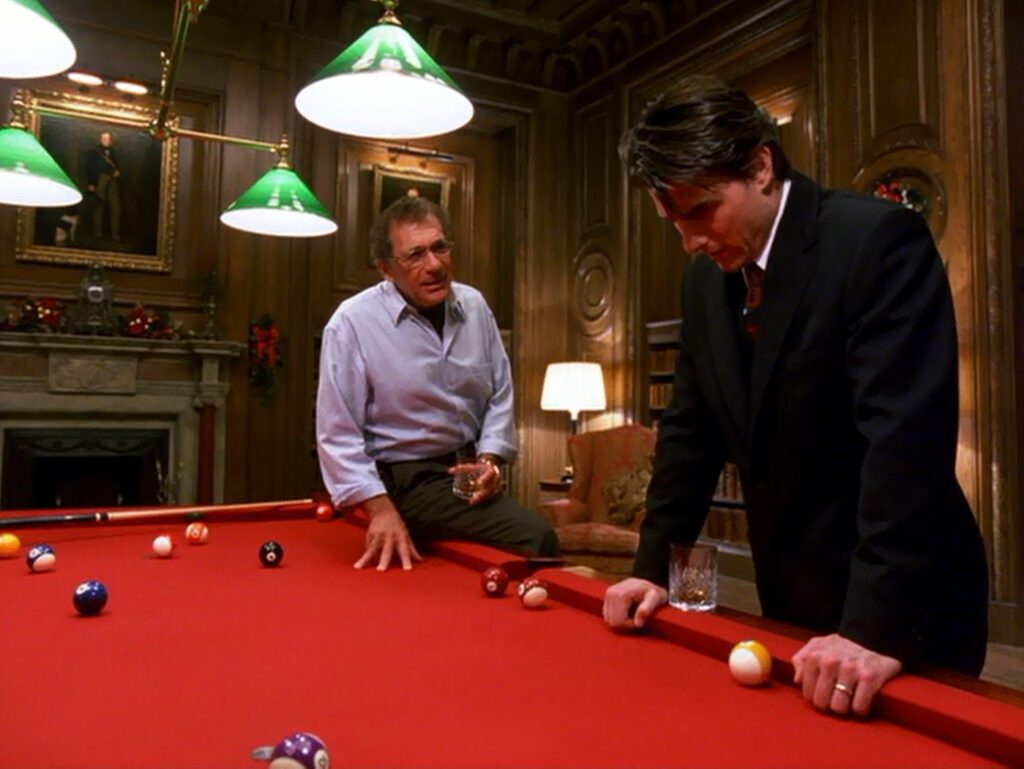
A quick synopsis for those who haven’t seen it – Bill Hartford (Tom Cruise) and his wife Alice (Nicole Kidman) flirt with friends of friends at a colleague’s holiday party. Bill gets in a fight with Alice over her dreaming of cheating on him on vacation some years back, and he walks out into the night. There, he embarks on a psychosexual journey into not getting laid and getting freaked out by a lot of people who are less repressed in their sexual desires than he. Things come to a head when he comes into contact with a secret society named Fidelio, and he realizes he might not be able to go back home safely again after his walk through the night.

Because the film is about the direction of sexual provocation at Bill and Alice Harford, you don’t actually get a ton of insight into real sexual desire, and certainly very little genuine eroticism (though the way Alice carries herself, Bill with Alan Cumming as the hotel clerk, and the encounter between Bill and Sally, these have some release to them.) Rather, it’s more of a collection of how these value systems interact with the bombardment of desire. Alice seems pretty healthy about how she enjoys attention and quickly recognizes Bill’s dehumanization. Bill certainly compartmentalizes a lot, and that can be healthy, but he’s also totally obsessed with himself and his own presentation to the point that he doesn’t even entertain what other people want anymore.

Victor (Sydney Pollack) tries to reassure Bill (Tom Cruise.)

The most erotic figure in the film, though, is probably the self-secure dynamism of Sydney Pollack. It’s your choice whether or not to believe his story in his big scene, but the fact is the way he talks about and treats women makes him pretty horrific either way. But that evil isn’t repellant or odious – it’s ingratiating, welcoming, maybe intoxicating. Compared to the harsh lighting of the film’s street scenes (infamously taking place on a studio recreation of New York streets, Larry Smith’s cinematography captures neon signs with all the threat of Taxi Driver), the Pollack scenes are shot with the comforting light and color of the glitziest 90s prestige drama – he’s shot with enough distance to look like a friend, shot from high enough that he doesn’t go full John Huston.

Without much doubt for me, this is right up there with Barry Lyndon for the best Kubrick. Nothing else really comes close. Cruise the corncob, Kidman the familiar housewife. She’s funny, she’s sexy, she’s made a little insane by her inattentive husband, and it’s hard not to take her side even when she’s twisting his words. Or maybe it’s just hard to take the side of Cuck Supreme even before he fails to get laid for ~72 hours.

DOG DAY AFTERNOON

DOG DAY AFTERNOON
Dir. Sidney Lumet
1975

Watching Dog Day Afternoon again last summer, I’d genuinely forgotten how it ended. I sat in total suspense for the last twenty minutes, trying to rack my brain and remind myself where it was going. I didn’t figure it out, and the film broke my heart all over again. Of course, Dog Day Afternoon is based on the true story of Sonny Wojtowicz’s hostage-fraternization bank robbery, so knowing the ending can hardly be considered a spoiler, but I really sat there pinching myself and hoping it was gonna turn out all right for Sonny and Sal.

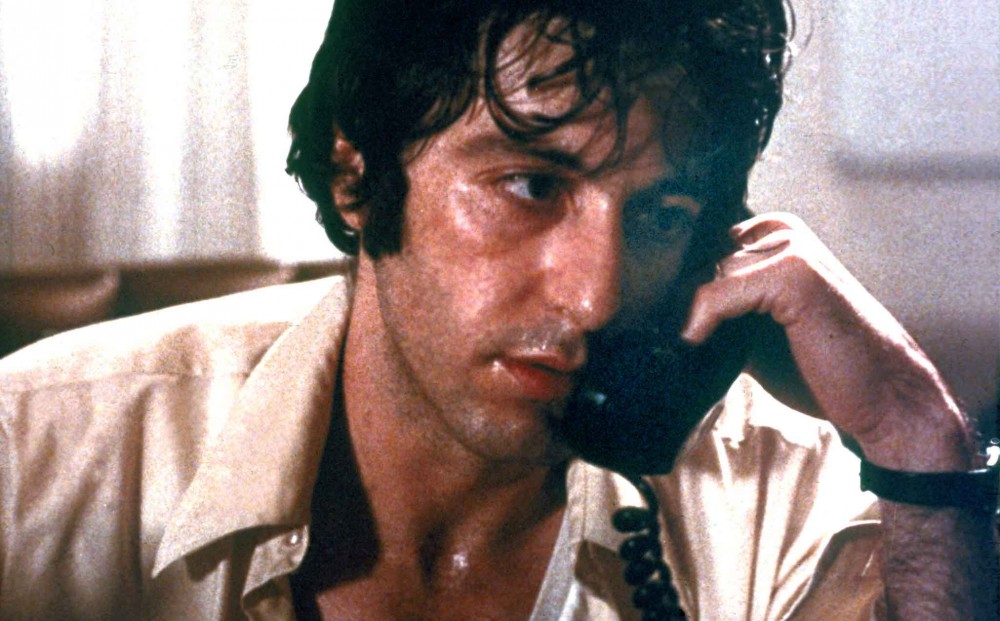
In the first street scenes, where Pacino’s Sonny loses the oversized suitcoat and starts feeling himself, he’s as hot as anyone has ever been on screen. The film is filled to the brim with great performances (Cazale and Sarandon, obviously, but also Durning, Allen, Kane) but it all must rest on Pacino’s shoulders, and it’s perfection. It is, to be clear, a busy ass performance – the theatrics are extremely heightened, and largely the world has risen to match those theatrics. But it is also a sensitive one, where he really takes seriously the mania and the affection Sonny has for the people in his life.

We never see Sonny’s worst side. Leon and Grace both allude to a dangerous, violent darkness (one Grace sees as impossibly as we do, one Leon knows all too well.) Instead we see the charismatic people pleaser compromising constantly. Acquiescence is Sonny’s fatal flaw – as he repeatedly says, he’s “under so many pressures,” and he can’t begin to know who to disappoint until his mother shows up.

The sweatiest, hottest Pacino has ever been.

All this is drenched in Lumet’s golden cinema. Incredible crowd work, hysterical sight gags (the fifth time a police bus arrived, people were howling. The pizzas!) So many great moments for all the women in the bank to shine in a panning shot or background work. Cazale’s deadpan is so fun. The fact that this is all built around such a wonderful character study – it’s something that makes perfect sense from the director of 12 Angry Men, creating this ecosystem of strong characters around one cult of personality.

Dog Day Afternoon is one of the most famous and beloved films I’m writing about this month, considered both a landmark of anti-authoritarianism and of on-screen queer representation. Reading quotes about its production, you can sense quite a bit of consternation on the behalf of the cast and their representation about the queer aspect of the film, some thoughtful and effective and some retrograde and offensive. The result of those tensions is a film that feels more like it’s judging no one too harshly and giving no one a total pass. That tension feeds directly back into the film, a hot summer’s day boiling over, no “cooler heads” to prevail in sight.

SKATETOWN U.S.A.

SKATETOWN U.S.A.
Dir. William A. Levey
1979

Skatetown U.S.A., released in 1979 as the marketing juggernaut for a real-life chain of disco skate rinks (three months after Disco Demolition Night,) was almost impossible to see for decades. It played a few times on TV broadcast in the 80s, but due to music licensing costs, it was absolutely untenable to bother releasing it on home video. I first saw the film at UW Cinematheque’s Marquee Monday screening in 2014, and spent the next five years watching a terrible quality VHS recording on YouTube when I’d show it to friends.

Maybe ten minutes into the first screening, I remember turning to look at the three boys I was seeing the film with and all of us had a wide smile plastered onto our faces. Loosely anchoring an Airplane! tier of scattered gags is the plot of two siblings who crash the Skatetown U.S.A. skate competition dominated by a roller gang, led by the sinister Ace (Patrick Swayze, in his film debut.) Our protagonist, Harvey (Flip Wilson, who is styled as a proto He-Man) falls in love with a roller girl (Katherine Kelly Lang) – and would you believe it, she’s Ace’s sister! Ace will do anything to win the contest, so we see his gang cheat and ruin some “really great” choreographed roller skating.

Harvey and Ace stand off surrounded by Ace’s gang.

But you’re not really here for Ace and Harvey, though Ace’s dance to The Hounds cover of “Under My Thumb” (which sounds like it was blasted in from a Daft Punk influenced future) is hysterical, as he plays up his bad boy cred by whipping his leather belt around. You’re here for Judy Landers as Teri, the ticket girl who can’t keep straight how to take tickets because she’s too busy learning feminist theory. You’re here for the nerdy couple who arrive to Skatetown U.S.A. to celebrate their honeymoon despite not being able to skate as they fall into the sexual provocations of their fellow skaters. You’re here for the drug smuggling concession stand guys who won’t stop doing Three Stooges routines, giving the cold shoulder to poor Dorothy Stratten as she asks for the fourth time, “Can I have my pizza, please?” She’s being hounded by Leonard Barr, a 1930s comedian who basically just keeps rattling off faux-Groucho zingers.

Then there’s the Skatetown wizard, who summons everyone at the start of the film with a zap of his fingers. He drops in a couple of times, including to introduce Traffic’s Dave Mason, a musician nobody under the age of 45 has any opinions about unless they’ve seen this film. There’s the Skatetown doctor, who is a PTSD vet despite never leaving basic training. Scott Baio plays our hero Harvey’s coach, who mostly is here to make out with random women and take bets on whether or not Harvey can beat Ace. The other skaters in the competition are named Pistol Pete (a white guy in a racist pistolero costume,) Uncle Sam, and two extended performances by skating bands. Maureen McCormick plays Harvey’s sister, and she’s doing so much cocaine offstage that the drug deserves a producer credit. I’m trying to communicate chaos to you because blissful chaos is what Skatetown, U.S.A. has to offer.

Maybe the most emblematic oddity of Skatetown is the moment where it cuts to the changing room and a cop is walking by. Suddenly, a hot lady in her skates and a unitard rides out. The cop looks goggle-eyed at her. It cuts back to her, and she bends over, wiggles her ass like a rabbit’s tail, and skates off. He zips up his open fly and runs after her like a cartoon chasing a donut. These characters are never seen again.

This film suddenly arrived on Blu-Ray in 2019, put out directly by Sony, with no real explanation for what changed. The new transfer looks incredible, really allowing the decadent color scheme of the film’s cheap neon and costuming to shine through. It’s getting funnier every time I watch it. The one thing I’d warn somebody trying to watch at home is that there’s a lot of dancing and a lot of extended musical sequences, because whoever edited this movie was told “You’ve got the rights to Shake Your Body Down To The Ground and you’re gonna play the whole damn song!” In my book, you’ve gotta watch with friends who are down to experience something magical. When it’s not dancing, it’s firing off gags a mile a minute. And when the music’s playing, if you’re like me, you’ll be feelin’ alright.

M

M
Dir. Fritz Lang
1931

As a teenager, I felt the most generic form of entertainment that existed outside the reality TV show was the crime procedural. Law & Order, Criminal Intent, SVU, Monk, Psych, Murder She Wrote, Columbo, Matlock, Poirot, The Closer, even the ones I didn’t watch like JAG and NCIS and CSI – these are more familiar formats to me than even sitcoms ever were. Fritz Lang’s M foretells a century of crime procedurals, a series that has spawned several official remakes and thousands of imitators.

Before M, the mystery story and investigation thriller were popular formats – but they tended to follow private investigators or super sleuths like Sherlock Holmes or Sam Spade. As a result, M actually has to lay an extended groundwork for the intensive labor of a manhunt. An early section of the film lays out the concepts of scouring a perimeter, having hundreds of officers interviewing self-reported witnesses, introducing the concept of fingerprinting and handwriting analysis. In modern procedurals, we accept these ideas because we’re so inundated with this story – M has to actually introduce them to a public who may never have learned about this kind of police work, and simultaneously invents the cinematic language that will be used to depict them for the next century.

The reason M survives as a masterpiece, however, is its cultural commentary and intelligence. M was the final film Lang released in Germany before fleeing the Nazis, his next masterpiece The Testament of Dr. Mabuse banned by Goebbels’ ministry of propaganda. The tension Lang feels about being a citizen in a police state is present in the film – while he does not openly portray the police as corrupt or fascistic, he does portray them as completely unable to combat the murderer. In fact, all they can do is create a public nuisance, harassing “the usual suspects” until the mob decides they’ll catch the killer themselves. Rather than a film about police justice, M becomes a film about the allure of mob mentality and how quickly natural citizens will give over to fascism and capital punishment. Without spoiling the climactic ending for anyone who hasn’t seen it, the theater which plays out at the trial of the killer is still queasy, exciting, and iconic. The film’s ending, on mothers declaring “No sentence will bring the dead children back,” is as thoughtful and reflective a final statement on the nature of criminal justice as the end of Kurosawa’s High and Low or Scorsese’s Killers of the Flower Moon.

Peter Lorre is largely considered to have broken out with M, previously a comedic character actor in small roles, and while I love later turns in The Man Who Knew Too Much, Mad Love, and The Maltese Falcon, he may never have been better than as this film’s killer. He haunts the film with his whistling of “In The Hall of the Mountain King,” a thoughtful early use of music in the still-nascent sound film format. During the film’s chase scenes, his face catches the expressionist light and shadow of this film to look both pathetic and a monster, his bulging eyes leaping off the screen. He is nowhere near cinema’s first great villain – Georges Melies played too many devils for anyone else to claim the role – but he is still a personal favorite of mine.

MALCOLM X

Malcolm X
Dir. Spike Lee
1992

I was thrilled when Madison film critic, programmer and friend Jason Furhman held a screening of Spike Lee’s Malcolm X as part of his Madison Library Cinesthesia screening series earlier this year. It’s a film I’ve adored since I first saw it in June of 2016, with Spike Lee having grown to be one of my all-time favorite filmmakers, but I especially appreciated watching it while so much conversation centered on last year’s biggest surprise hit, Christopher Nolan’s Oppenheimer. To be able to compare and contrast these epic length biographical films, whose stories as central American political figures were swallowed up for decades by slander and misrepresentation, was to me a unique and thoughtful programming choice. If we can convince Jason to start putting his program notes online, I’ll update this piece to include a link to them – he very comprehensively laid out the history of this film’s production and reception, and I’d feel foolish trying to sum up his work here.

Spike Lee’s Malcolm X is the ultimate example of my “cathedral” model for masterpieces. The film takes you past grand images of seemingly isolated frescoes and gives you the space to really linger in them, either relishing in the details or taking in the grand effect. I found myself focusing on the big picture on this watch – there is absolutely an effect to watching so many consecutive scenes of Malcolm’s ascent from street preacher to national preacher, so many consecutive scenes of Baines converting him, so many consecutive scenes of the violence his family was threatened with. It creates the sense of his total devotion to the cause. If the audience struggles to sit with it for an hour, imagine the conviction it took to live it for twelve years.

Contrast this with the propulsive structure of Nolan’s Oppenheimer. Nolan manages three separate timelines throughout the film, cross-cutting across decades to synthesize meaning, creating one linear thematic jist out of three nonlinear ellisions. The emotional weight of that film is reaching across time, allowing our feelings about Oppenheimer’s trial to reach back to our feelings about the Trinity Test itself. Here, Lee instead uses a cumulative emotional weight, guiding us through the story as it happened, giving the audience the responsibility to link repeated themes into syllogism. You may not have the full symbolic meaning of Delroy Lindo’s false idol of charismatic organized crime when we first see Malcolm jailed, but the image sticks in the brain long enough to start seeing parallels with Al Freeman Jr.’s Elijah Muhammad.

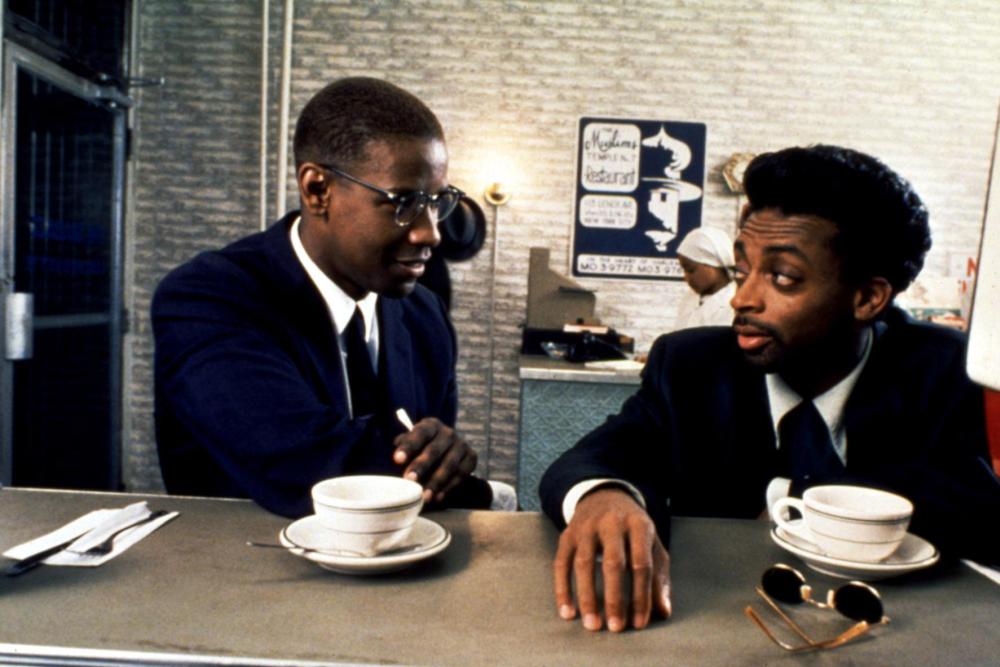
Malcolm talking with lifelong friend Shorty (Spike Lee.)

I find myself surprised at the resistance some film fans have had to embracing Spike Lee as one of the great American filmmakers. Do The Right Thing has fully arrived, for sure, but I feel the rest of his work is often still seen as homework, uneven, unfamiliar deep cuts. It’s maybe never been more obvious than the gap between critics and general esteem for Da 5 Bloods, once again starring Lindo, a film too few saw. Malcolm X is one of those films that breaks through partly because Denzel Washington, the greatest living movie star, gives his most beloved and iconic performance in the title role. He gets to be everything – a cult of personality, a sex symbol, the kindest man you’ve ever seen, a messiah sending himself to absolution, an angry spirit of vengeance, a funny firebrand, a wilting flower. To say everything there is to say about Washington would reward a scene-by-scene breakdown of exactly what he’s doing and the way he strings incredible continuity over the entire film.

I chose this film for the birthday project on April 24th, one week into Columbia University students camping in protest of Columbia University’s ties to the genocidal Israeli government and the ongoing annihilation of Gaza and Palestine. I find myself starting this piece on May 3rd, after a week of disproportionate police abuse of those protesters, Zionist counter-protestors at UCLA assaulting the Free Palestine encampment with fireworks and bricks, and our own UW-Madison calling MPD on the student body. I did not, at the time, foresee the renewed conversation about “peaceful protest” and police violence reaching the height that it has. Any study of Malcolm X will once again reveal that even peaceful protest will be slandered as violence, that malfeasance can be manufactured, that “progressive” is not a linear stamp where the powers that be let difference in opinion live.

UFOs

CW: FLASHING LIGHTS, STROBE EFFECTS

UFOs
Dir. Lillian Schwartz
1971

The last weekend I visited my dad, he showed me his mind machine. It was a shoddy looking piece of tech strapped onto a pair of goggles. He told me that in order to use it, I’d have to close my eyes. The homemade headset would flash lights in psychedelic patterns over your eyes, which of course you kept shut. I used the machine for twenty minutes when I was 17, about six weeks before he died. I have no idea if he made it himself or got it from a friend of his. 

Lillian Schwartz’s UFOs is widely considered one of the very first computer animated films. Her collection, including Pixillation, Olympiad, and Enigma, are largely similar experiments in color and light, exhibited as museum films and now living almost exclusively online. It is the kind of experimental work that, for many, will serve only as a historical oddity, something for academics and archivists and no one else.

An image of UFOs, light and color for those who cannot watch the film.

I admire the film’s choice of compositions. The strobing circles that make up the majority of the runtime, the flashing rim of a flying saucer, are alienating. The rippling strokes create a very cool liquid motion effect that would be hard to successfully capture in digital effects for some time afterward. The sea of lines create such an abstract darkness that it captures the oceanic more than the extraterrestrial – though obviously many would cite terrors of the deep as more likely to be met in our lifetime than someone out there. While the fear of the unknown is on mind with this film, I don’t find its portrayal of the other as threatening so much as neutral. Confronting that discomforting fear in a safe setting feels healthy.

I am not the only person who has found this film very personally comforting and beautiful. One mutual of mine found it to capture something spiritual – another writer found it to be the ultimate overstimulation. This film reminds me of my father – it reminds me of how firm his bed was, how his brined oven baked chicken tasted, of his rat tail hair and the story he told of getting LSD from a coworker at his Starbucks cafe.

Today, writing this [April 25,] I am laid out with a sinus infection [it was COVID.] I recharged the Oculus Quest I received from Mom a few years ago, loaded up the Internet Archive video of UFOs, and shut my eyes. I saw the sort of flashing colors I remembered from all those years ago. I wondered if Schwartz ever experimented with drugs. Her work is currently exhibited at the Henry Ford Museum in Dearborn, Michigan. Maybe someday I’ll go – I wonder if I’ll feel Dad as close as I did this afternoon.

THE ONLY SON – Link Out To The Solute

THE ONLY SON
Dir. Yasujiro Ozu
1936
Criterion Channel

This piece originally ran on September 23, 2019 in The Solute. Please follow the link at the end of this preview for the full piece – there is no paywall.

“Life’s tragedy begins with the bond between parent and child.” 

The Only Son, Japanese director Yasujirō Ozu’s first talkie (and 35th film) u, opens with this brief, unattributed axiom. A brief prologue introduces us to Ozu’s famous  style and tone— shooting subjects head-on, looking directly into the camera to confront the viewer with their emotional culpability. But we also see a parochial pre-war Japan where a mother (Choko Iida) cannot afford to send her son to middle school. A visit from the elementary school teacher reveals both the son’s lie about his future and the impossible but  important task of adapting to a world that will change Japan very, very soon. 

So begins a tale of a simple drama — a mother gives her last remaining days of youth to support her son, and after graduating college, he doesn’t respect her enough to tell her when he gets married or when he has a child. His justification is that he hasn’t become successful enough as a businessman — he is living in shame, but his mother is far less hurt by his fiscal “lack of success” and more by the man he has become.

Read the rest on The Solute.