ASTRO BOT

Team Asobi
2024
PS5

Astro Bot has been a Game of the Year finalist just about everywhere you can look, including taking home the prize at Geoff Keighley’s The Game Awards. The successor to PlayStation 5 pack-in game Astro’s Playroom, Astro Bot takes that game’s high-polish 3D platforming and blows it out to a full game, each level a fun, playful celebration of motion. In the way that Wicked or Dune Part Two is the film of the year, Astro Bot represents the peak of industry investment. It is everything your expensive game console wants to be able to do without any of the open world cruft, microtransactions, or cinematic storytelling. This is a celebration of video games as video games rather than as an alternate vehicle for an HBO miniseries or a pure capitalist skinnerbox.

It’s pretty good!

Even compared to some Mario games, Astro Bot’s jump, speed, and responsiveness to its environment is really satisfying. If you have love for running around in this kind of space and bonking orb-shaped baddies, this game has it in spades. When you land on the ice, rather than taking on that somewhat frustrating slippery-foot feeling Ocarina of Time players know all too well, Astro Bot starts ice skating, giving you propulsive forward motion but also a fine degree of control. The air hover allows for precise landings in a way the Super Mario Sunshine F.L.U.D.D. dreams of doing.

There are nine different upgrades you can find midway through a level, and each of them gives you a new way to experience the platforming and exploration of the game. Some are fairly simple – there’s a rocket boost, a racing charge forward, a boxing glove that lets you punch harder and farther. But they also have surprising uses – the boxing gloves also let you grab onto certain objects and swing farther. One highlight is a shrinking device that lets you get through small holes and navigate new spaces – it lets you get real small and see the levels in entirely new ways. About half of them feel directly ripped from Super Mario Sunshine or Galaxy, but they are all perfectly well implemented.
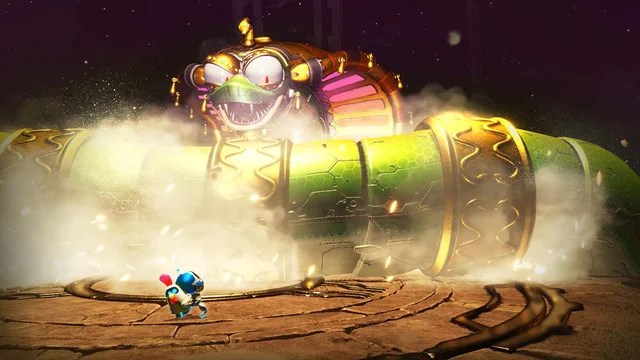
One of Astro Bot’s bosses, which are generally fairly standard pattern repetition bosses with some charming animation and a sense of large scale.

These upgrades help diversify the game’s many levels, each about five minutes in length and containing somewhere between 8-12 hidden secrets to obtain. Sometimes, like in Super Mario World before it, there are secret exits that unlock new levels. Sometimes, navigating the overworld map menu in your little spaceship gives you a chance to unlock new challenge “meteorite” levels. All of these are largely really well designed platforming levels, and if you’re someone like me who laments the fact that open world games often contain kind of haphazard play spaces where you’re meant to “find the fun,” Astro Bot rejects the idea that connective tissue is what helps attach you to a video game.

In fact, it basically rejects any kind of connective tissue. Astro Bot is constantly ping-ponging between different visual pastiches on its little planetoids. You’ll play a desert tomb level – a jungle level – a tundra level – and there’s no real effort made to try to sell these as places rather than video game levels. The enemies rarely receive any more personality, meant to be pretty interchangeable between levels.

The only real sense of cohesion comes from the PlayStation brand. In every level, between one and three of the rescuable fellow bots will be costumed as a character from a different PlayStation game. It starts with you rescuing Ratchet and Rivet from the Ratchet & Clank games. Then, it’s Solid Snake, Psycho Mantis, and Gray Fox from Metal Gear Solid. This experience does not exclusively contain cameos from games as beloved as these or as distant in the past. When you complete a world, you end up playing an entire level based on one of these properties. Some of these game series have been dead for decades – others feel so new that it’s a little giving Poochie.
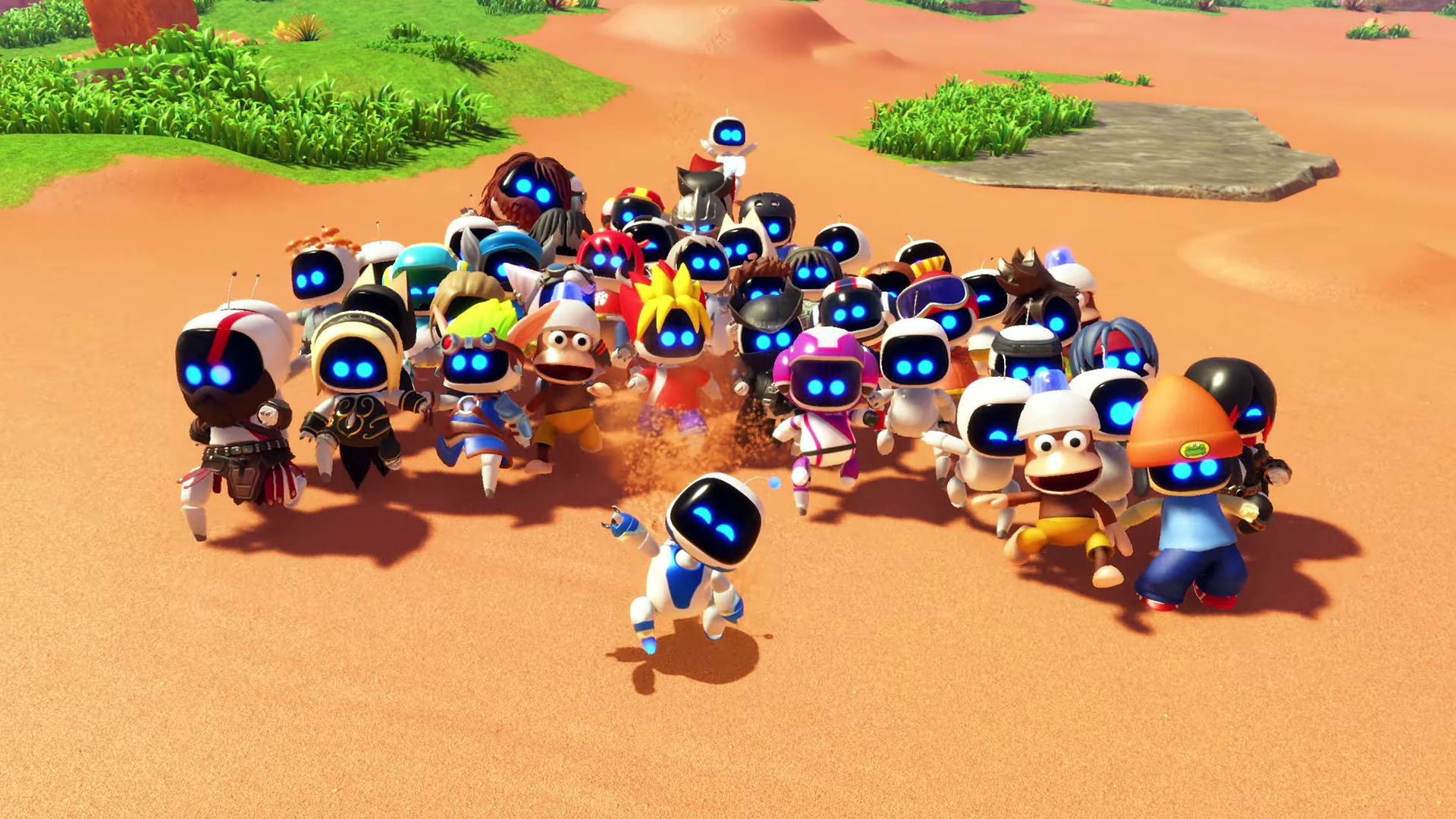
A host of bot cameos, including Parappa the Rapper, Kratos from God of War, The Hunter from Bloodborne, and many more.

All along the way, there is a nonstop chattering of these bots. They are constantly chirping, whining, woo-hooing. It is a lot like watching the Minions from Despicable Me. I find them completely exhausting. I started to get a headache. Despite the game having a pretty good soundtrack, I had to turn the sound off entirely after an hour to shut these damn bots up.

As curmudgeonly as I know I sound, I want to give some generosity to “loving the brand.” Not because I think it’s virtuous, to be clear, but because I remember being a child. I remember playing Super Smash Bros. for the first time, encountering Ness, and being fascinated by the concept of Earthbound, a game I would eventually play and fall in love with. I remember booting up Super Smash Bros. Melee and just wanting to hang out in its non-worlds to listen to the music and experience more of these games. I remember my dad declaring war against Banjo-Kazooie because of the non-stop squawking every time you took a step in Talon Trot.

I did not want to spend more time puttering around with the (quite intricate) physics simulations in Astro Bot’s world. I was not filled with wonder playing a level inspired by LocoRoco, a game somewhat unimaginable under modern Sony leadership where their games are either live service megaliths that are too big to fail (or will be shut down the moment they do) or are better suited to an HBO TV series. I did not enjoy seeing Kat from Gravity Rush, whose developer Sony Japan was gutted, the remainder forming Team Asobi and making Astro Bot. I can only imagine what a game without all these cameos might be like, given more space to develop its own identity like Shadow of the Colossus or Okami. And yet Nintendo never released another Mother game in the US – hell, it took decades to even get Earthbound available again on the Wii U or Switch. F-Zero and Kid Icarus were given one more chance before being resigned to ports of classic games. That didn’t stop me from chasing them down.

But there is a new Okami coming out! A new game from Shadow of the Colossus developer Fumito Ueda! The Gravity Rush director, Silent Hill creator Keiichiro Toyama, came out with a new game this year, a reimagining of Siren called Slitterhead. Slitterhead, dude! Whatever problems the game industry might have – and there are many – Astro Bot is not responsible for them. I hope it inspires young players to seek out these old classics, and I hope it inspires Sony and its colleagues to make those classics readily available.
INDIANA JONES AND THE GREAT CIRCLE

MachineGames
2024
Xbox Series, PC (PlayStation 5 Spring 2025)

At times, Indiana Jones and the Great Circle follows in its publisher Bethesda’s lineage as the year’s best “turn your brain off and follow these waypoints” game of the year. With three major open world hubs, major sequences of your playtime will likely be dedicated to opening your questlog, heading to a section of the map, knocking unconscious every fascist guard in sight, and picking up whatever quest item you need to bring back to the quest giver to unlock another segment of your health bar. I cannot stress enough that unless you enjoy this kind of play, the game does not require it, and in fact the gameplay may even get worse by your process of unlocking overpowered disguises, upgrades to your health and ammo, and having explored cool locations before the main story intends you to do so.

This stuff is here because it allows the game to function as a mystery. Indiana Jones and the Great Circle takes place somewhere between Raiders of the Lost Ark (barring an incredibly misguided intro where you play that film’s opening) and the Last Crusade, the Nazis still spreading influence throughout the world but not quite openly at war, Marion Ravenwood having dumped Dr. Jones. A giant played admirably by the now-deceased Tony Todd (not quite his final screen appearance thanks to this year’s upcoming Final Destination: Bloodlines) ransacks Marshall College and sets Indiana on a globetrotting trip to uncover a classic fascist plot to weaponize one of history’s great artifacts.

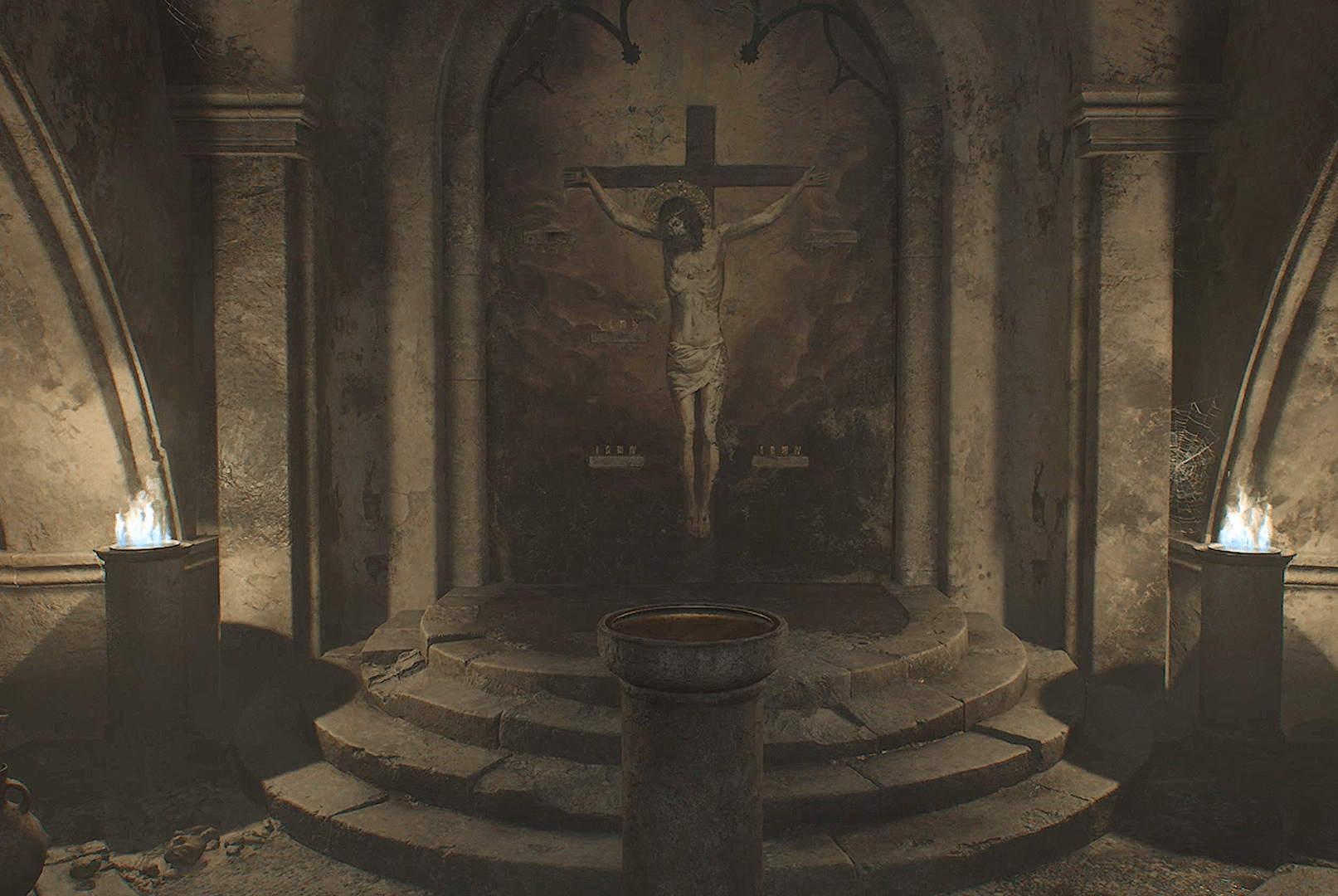
One of the puzzles found somewhere in the Vatican City.

Ultimately, while you spend a lot of this game knocking out or killing fascists (the game is not shy about identifying Blackshirts, Nazis, or the Empire of Japan) the game is more about exploring the environments, solving puzzles, and trying to figure out what the overarching mystery is going to be before the game gives away its own story. (Yes, it involves Jim Alison’s obscure Great Circle conspiracy.) The game gives Indy a sounding board in journalist Gina Lombardi, a nemesis in Nazi archeologist Emmerich Voss, and a collection of local friends more knowledgeable about what’s going on in their city (think Sallah.) It’s propulsive enough to dollop information to you regularly, and in the early running of the game, solving puzzles captures some of that staff of Ra feeling. It’s very satisfying, and the game’s lack of emphasis on combat and gunplay helps keep things feeling like the better movies in the series.

I also think the little worlds MachineGames (who are previously known for their Wolfenstein reboot) has built for Jones to explore are quite compelling. For one thing, while they make use of negative space at the ground level for wide streets, gardens, and open deserts, the maps are very thoughtfully vertical in design. There are tunnels under, roofs over, and so much scaffolding set up alongside buildings. When you’re infiltrating enemy camps, there are often watchtowers, multi-floor buildings, tunnels underneath, and ziplines between parts of the camp. It creates a running tension of always having reasons to look for pathways, and then the game still manages to surprise you when a secret was right under your feet the whole time.

I also think this game is notable as a really impressive use of a limited scope. While the budget obviously hasn’t been reported, I think it’s evident playing the game that MachineGames largely knew where to invest the highest fidelity graphics and where to use fairly limited character animation. There are some effects that are less impressive than others, like when you burn a cobweb or when waves splash against a boat. And yet this game still often feels huge, that promise of “next generation” feels achieved, even where a game like Cyberpunk 2077 still feels “more expensive.” The way sunlight hits in this game is pretty consistently incredible.

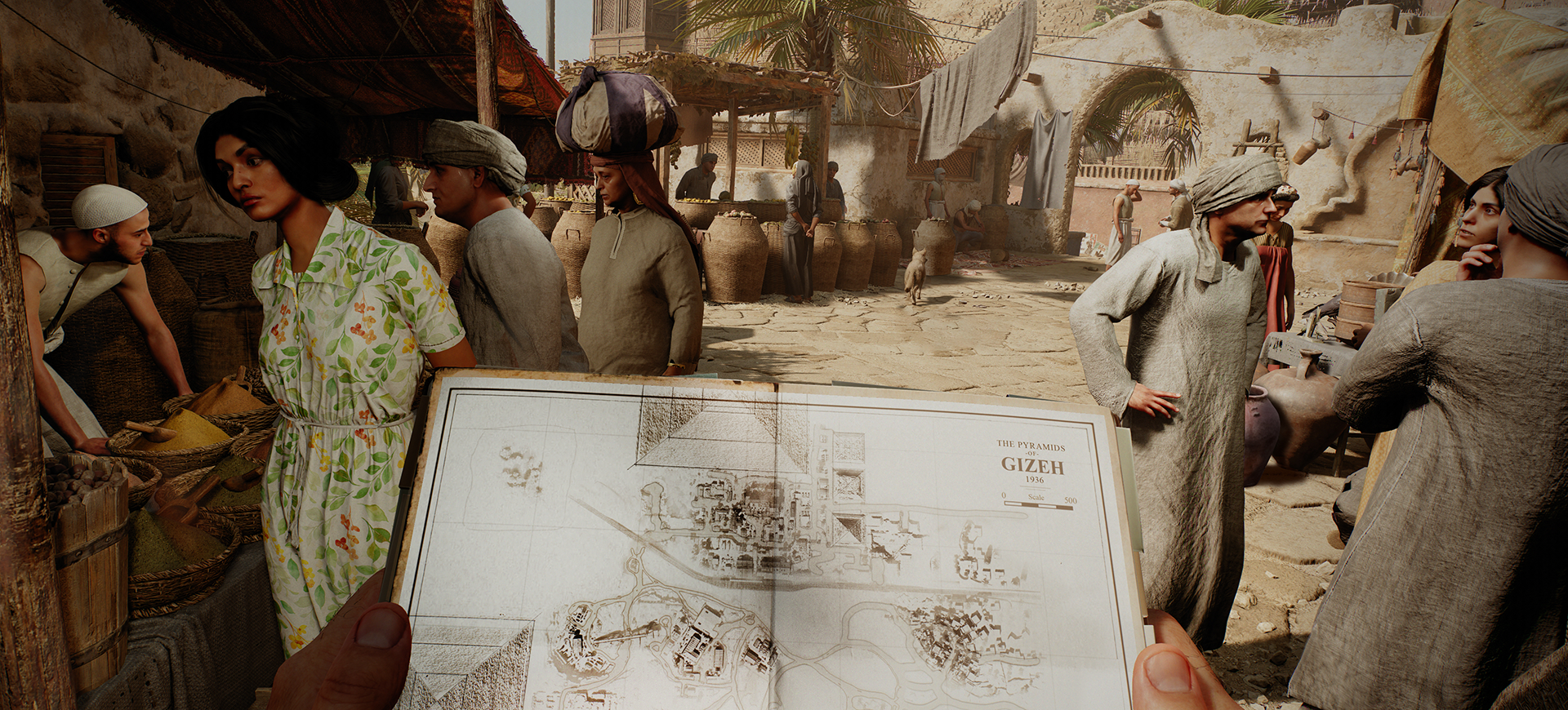
The game’s maps exist as an item Indy pulls out, and you’ll often find your nose deep in them walking past the citizens.

Jones is played pretty admirably by Troy Baker (among other credits, Booker DeWitt from BioShock Infinite and Joel Miller from The Last of Us) who does a fairly impressive Harrison Ford impression without being afraid to sound like himself at Jones’s louder cries of pain or distress. I admit, as much as I love Raiders and Last Crusade, as people discuss rebooting Indiana Jones I’ve lamented that he’s a pretty thin character without Ford’s charisma to anchor the role. I’d say MachineGames landed on an interesting characterization – they’ve made him a little more of a cad, slightly flanderized his fear of snakes, and they settled on a refusal to face his personal problems as part of the call to adventure.

If I hesitate to put this game higher, it’s because the game’s back half really drops the ball. While the actual spectacle gets way higher – this link is to a MASSIVE spoiler, but it’s the coolest goddamned image in the game – the gameplay gets messy. The third hub forces you to pilot a boat that’s unpleasant to control. A late temple gives you a really noxious enemy to escape and sneak around by trial and error. The characterizations the game has been emphasizing don’t quite come to satisfying conclusions. And the climactic cutscene, while narratively communicating enormous stakes, really drops the ball in terms of the game’s visual effects and cinematic storytelling. I like the denouement pretty well, and while the actual grand mystery was perfectly acceptable, I wish it maintained the quality of what had come before. The Great Circle does not stick the landing, but I was hoodwinked enough to finish the game – and, well, I also like to run around a hub and knock out guards, sue me!

The Best Games of 2024

25 games, not all of which I played!

Hi, gang!

I’m doing a Game of the Year write-up again!

It’s been four years since my last one, but I just feel like getting writing. I already had done drafts for a bunch of these games, but I figured, what the hell, lemme just get these out now. Unlike in 2020, I don’t have them combined into themes. I’ll be doing twelve write-ups in total, one per day, through February 1. I’ll tell you now, the top 3 of this list are interchangeable, and all of the games I wrote up are very much worth your time, so don’t fret too much about placement please.

It’s a weird, transitional year for games, but I also fully admit I delayed on a bunch of games that are extremely up my alley. A hearty “play you later” to Final Fantasy VII Rebirth, Elden Ring: Shadow of the Erdtree, Metaphor Re:Fantazio, Alan Wake II: Night Springs, Arco, CLICKOLDING, Crow Country, Cryptmaster, Dead Rising Deluxe Remaster, Dragon’s Dogma 2, Duck Detective: The Secret Salami, Fate/stay Night, Indika, Infinity Nikki, Kunitsu-Gami: Path of the Goddess, Nightmare Kart, Open Roads, Penny’s Big Breakaway, Satisfactory, Shadows of Doubt, Silent Hill Short Message, Slitterhead, Splatoon 3 Side Order, Stalker 2: Heart of Chornobyl, The Rise of the Golden Idol, Thrasher, and Unicorn Overlord.

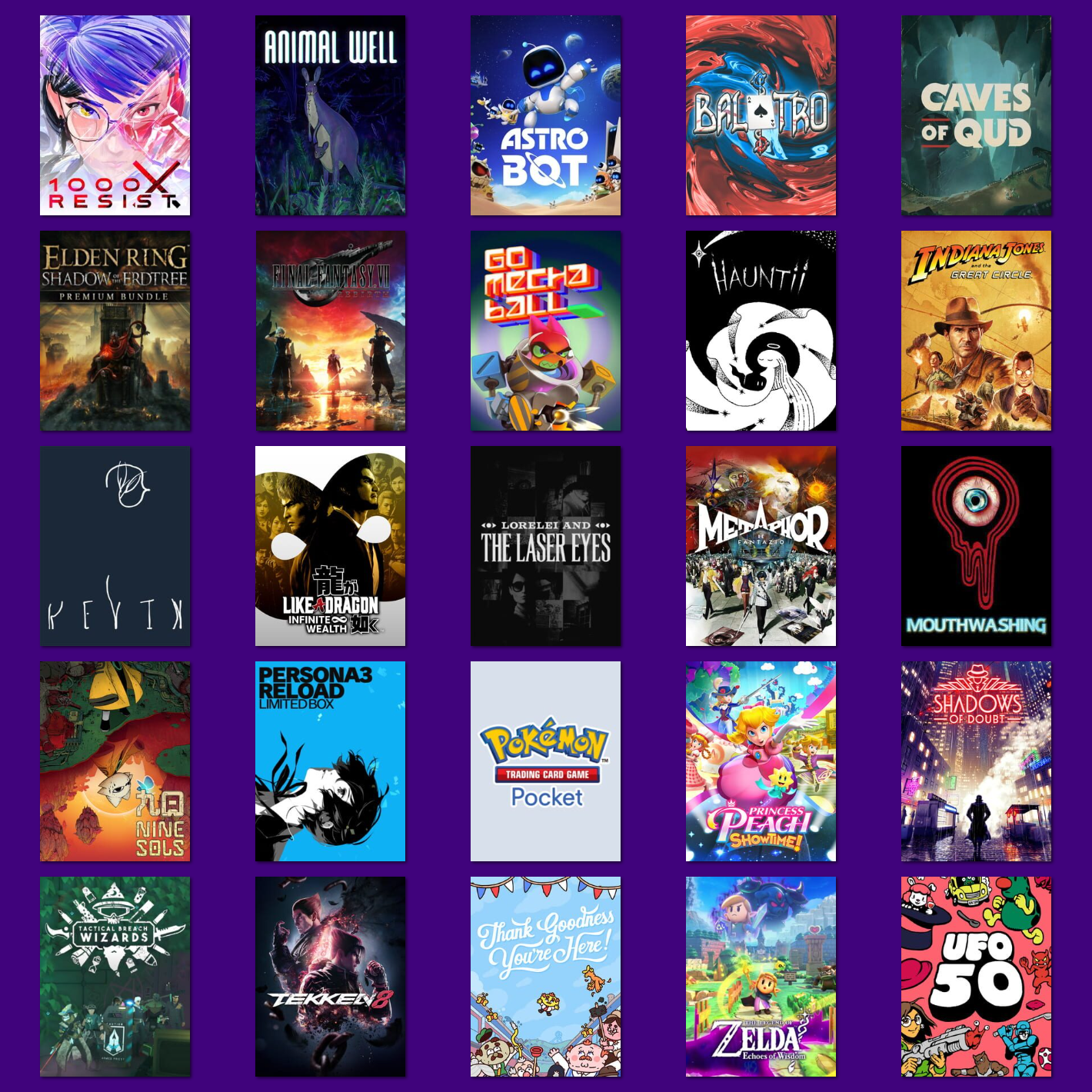
Hauntii.

SOME BULLETPOINT GAMES I LIKED AND WANTED TO SAY SOMETHING ABOUT

  • Go Mecha Ball: The first new game I played in 2024, it’s a roguelike where you play as a mech that can turn into a ball. It feels really good! The mechanics and animations are really high quality, too. I did not end up digging that deep into this game, but I’m surprised it’s gone so completely unremarked upon.
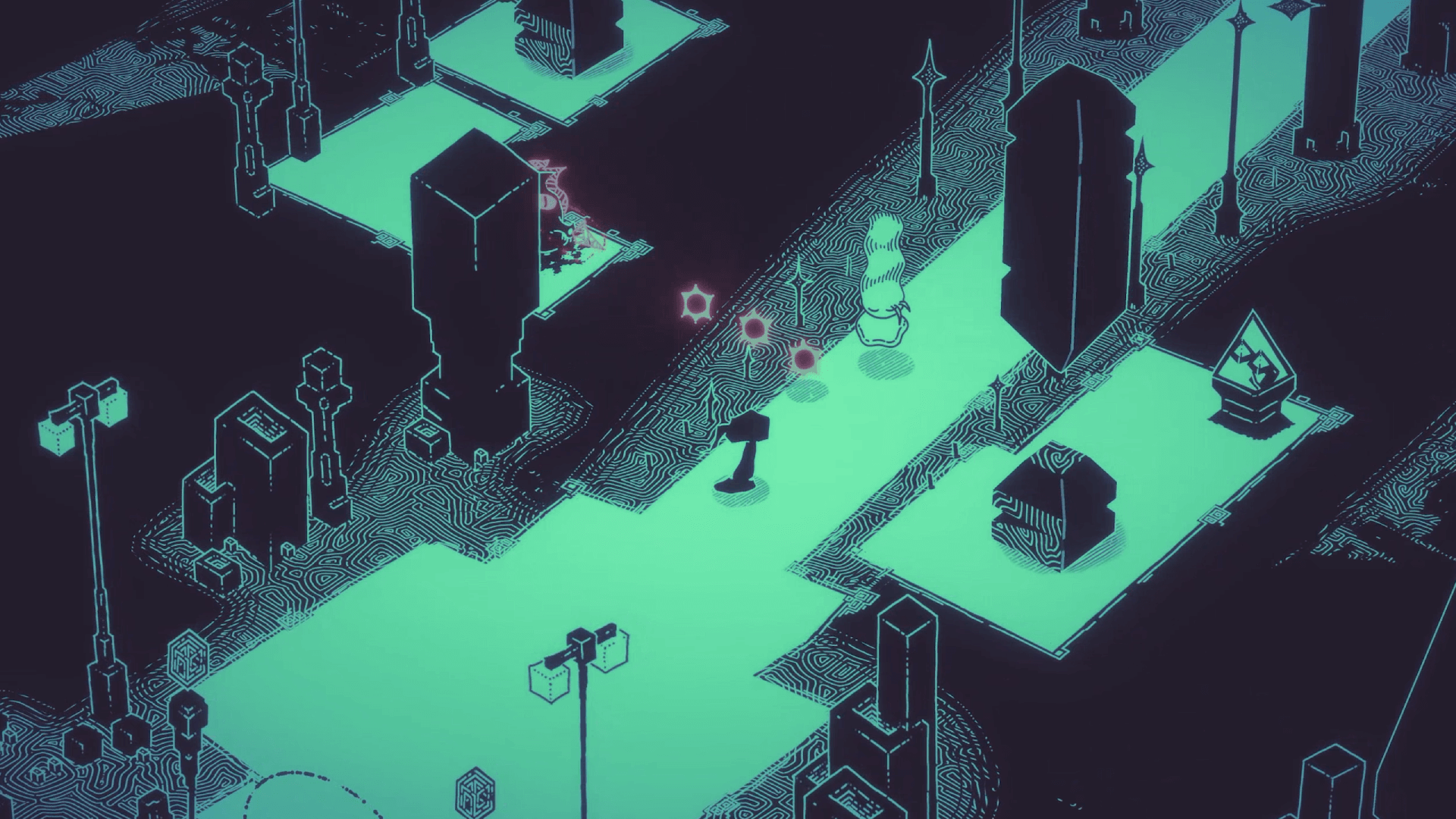
  • Hauntii: This game’s art style really is the best thing going for it. An adventure game with a sweet tone, I have a hard time believing I’ll go back to it, but I was immediately charmed by the look.
  • Home Safety Hotline: I actually can’t stress enough how impressed I am with the user interface and the quality of everything that’s in Home Safety Hotline, a game where you assist customers with problems they’re having in their home that quickly veer into the supernatural. The voice performances of some of these customers, especially if you fail to address their problems and they call back, are some of the best in any independent game. I honestly think if this had some sort of remixed/endless/community content function, it would easily be on this list, as I find the core gameplay loop and the basic diagnostic project so entertaining. As it is, I found it just a little short.
  • The Legend of Zelda: Echoes of Wisdom: This game is really cute! We finally get to play as Zelda, and it’s in a full-blown 2D style Zelda! I played the first dungeon and a half before getting distracted and playing other games. I think this game will be looked back on as quite underrated, and I keep meaning to go back and play more.
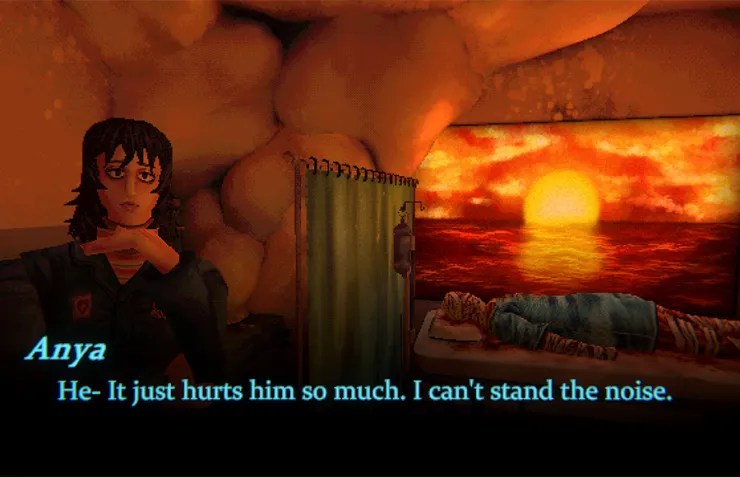
  • Mouthwashing: Mouthwashing tells the story of a space trucker delivery gone wrong, with the crew of five getting cabin fever and finding out that the circumstances of their crash are worse than they seem. I really like the things this game does with perspective and jump cuts – at times, it is using filmic editing techniques in real time gameplay to poignant effect. I also think, in terms of story, that it’s a worthwhile, adult game with literary story concerns, and its characterization is strong for such a short few hours. I just also think it’s more in the camp of “the best sci-fi story in this monthly magazine” than “one of the best stories of the year.” Look forward to seeing their next project!
  • Persona 3 Reload: I’m farther than I’ve ever gotten in any version of Persona 3, but I’m still too early to really write up what makes Persona 3 great outside of “it’s a Persona game.” I’ll probably circle back to this one, but I think they’ve made a lot of smart quality of life improvements that make Persona 3 a lot more approachable. I maybe prefer the rigid weirdness of the PS2 game, and I definitely prefer the original game’s soundtrack, which has been re-recorded for Reload with almost universally weaker vocals. Look forward to catching up with Metaphor sometime, too!
Mouthwashing.
  • Pokemon TCG Pocket: I want to give props to simplifying the Pokemon Trading Card Game, and I want to give props to the fact that just by logging in every day and playing through the single-player content I’ve managed to collect the vast majority of the cards in the game so far. I get happy whenever I see a Pokemon card from my childhood – some of the new art is really good, too! I wish the game balance was at all fun for multiplayer, but anyone playing this can tell you immediately about the three decks that only got stronger with the new expansion. Still, fulfilling my ever-present Fartstone needs.
  • Princess Peach: Showtime!: The second of Nintendo’s princess game experiments of 2024, I think this is a really admirable sampler platter for game mechanics and design. Peach participates in a number of stage shows inspired by different genres, and each show plays differently enough to keep things fresh. If someone said “I want to get into video games but I don’t know where to start,” this is a pretty good entry point, and based on their favorite of these shows, you could make recommendations for what to play next. Probably a lot more fun if you’re relatively new to video games than if you’ve been a gamer for decades.
  • Shadows of Doubt: This procedural indie mystery game, where you play a private detective and collect clues and evidence to find murder suspects for cold cases, is a fascinating work of design. It unfortunately just runs like crap on my computer and every streamer I’ve ever seen try to play it is a combination of impatient and incompetent. Can’t wait to have a device where I can play this myself!
  • Tekken 8: I played like two hours of the campaign and a little online play when I borrowed this from the library and it rocks, dude. I love fighting games but haven’t ever really invested time into Tekken game. In a world where I got to play way more of this, I can imagine it being toward the top of my list.
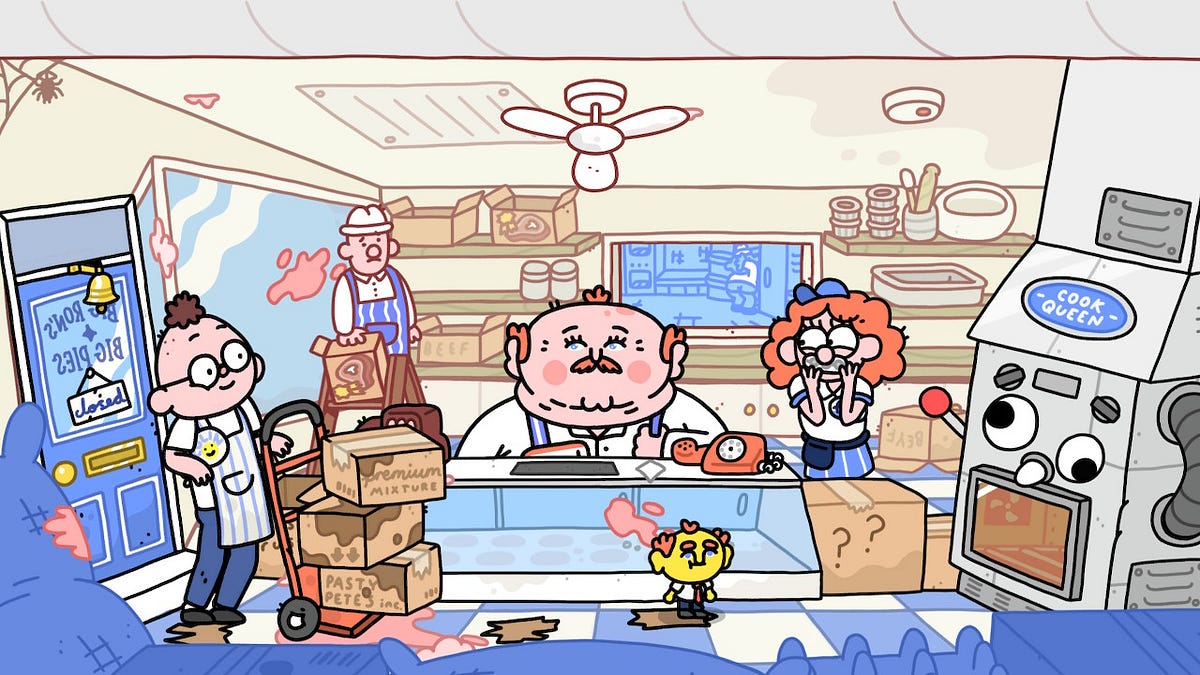
  • Thank Goodness You’re Here!: Maybe wish I’d played this myself rather than watch a bunch of someone streaming it, because the jokes are the appeal of this game! Thank Goodness You’re Here! is basically a “touch everything for a laugh” game, sort of comparable to Untitled Goose Game, except with pretty gorgeous hand animated cartooning and a hundred times more British. There’s a running joke about your weird little gremlin going down a poor guy’s chimney that really took me out.
Thank Goodness You’re Here!

AND THEN, MY LIST:

#12: Kevin (1997-2077)
#11: Indiana Jones and the Great Circle
#10: Astro Bot
#9: Animal Well
#8: Tactical Breach Wizards
#7: Like a Dragon: Infinite Wealth
#6: Nine Sols
#5: Lorelei and the Laser Eyes
#4: Caves of Qud

#1a: Balatro
#1b: UFO 50
#1c: 1000xResist

KEVIN (1997-2077)

Kevin Du
2024
PC

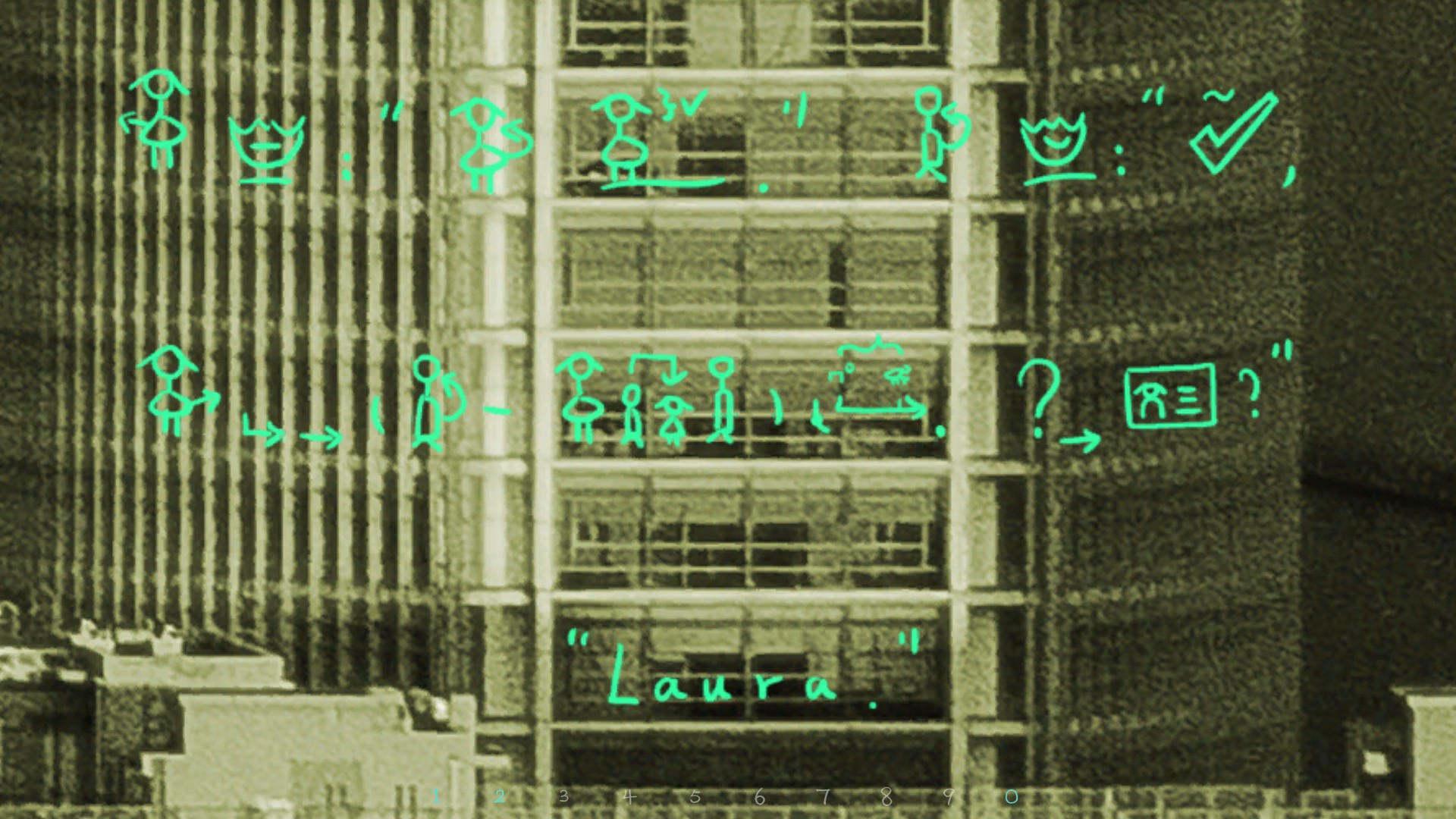
A friend messaged me to ask about an IGF finalist they’d not heard about prior – nominated for the Nuovo Award, Kevin (1997-2077) released to the public on February 2 and otherwise dropped off the face of the earth. We were both intrigued by the premise – a translation cipher game which lacks the clean, concrete solution logic of games like Chants of Sennaar. However, it was impossible to gauge the game’s difficulty or quality from the outside, so we waited for a review or stream – to no avail. Apart from one gamedeveloper.com interview and some non-English streams on YouTube, this game remains almost entirely uncovered in public visibility.

I bit the bullet and decided to investigate, the game’s low price point and unique presentation pulling me in. My first experience was overwhelming – I am not good at language learning, so I bounced off some of the syntax rules Kevin lays forward in the early part of the game. Furthermore, the game offers no advice in the way of navigation, simply offering you a map without boundaries to scroll for ciphers. This is not a game for those who demand a ten minute hook – your first real experience needs to be with a preparation to embed.

An untranslated story in Kevin (1997-2077.)

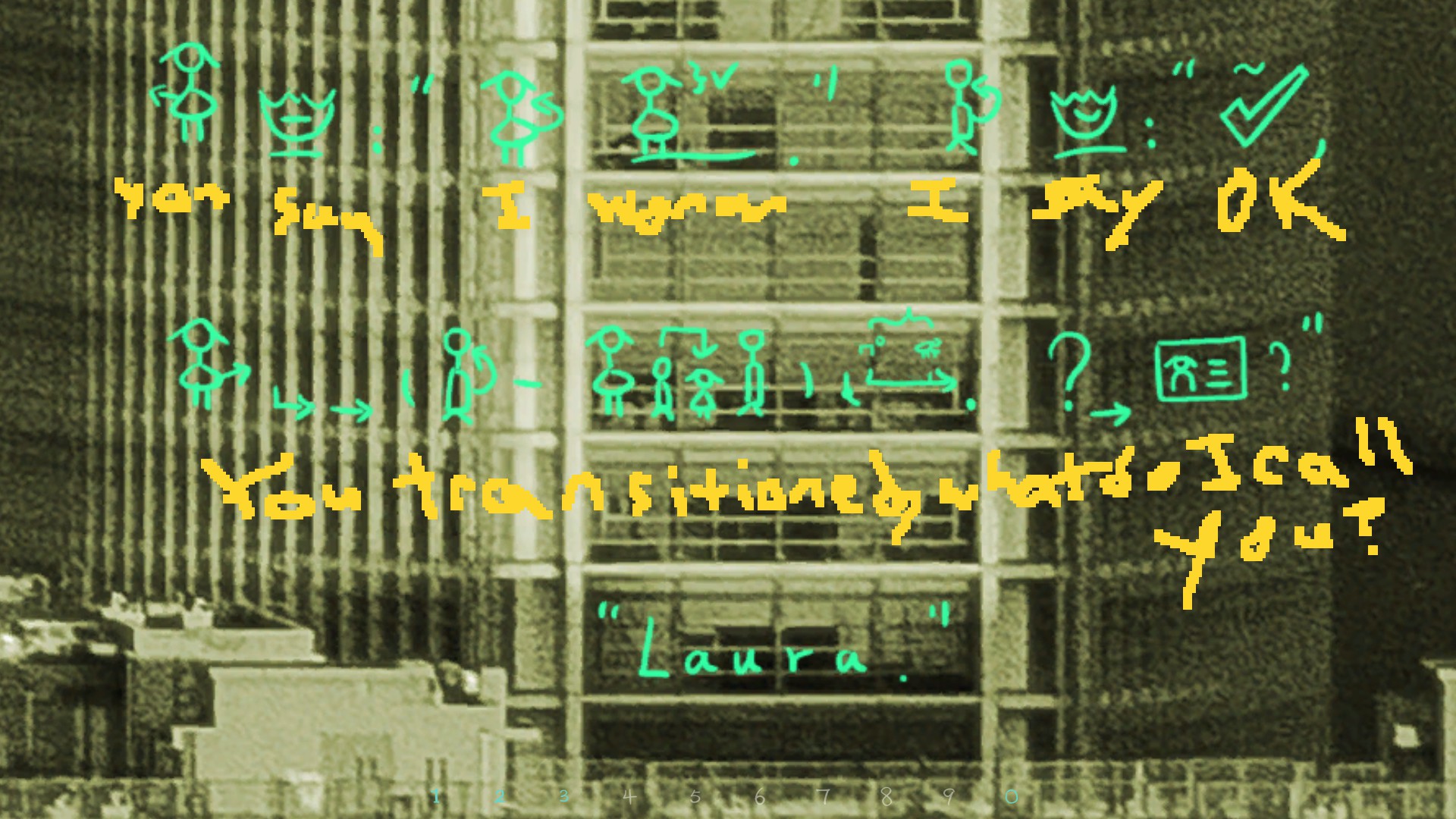
The play experience is relatively simple. Using the arrow keys or your mouse, you can scroll the “map” (in early areas, literally topographical maps – in others, photographs in collage) for written short stories or letters, always in pictographic cipher. You are given a pencil (which you can change to many colors and erase) to write your annotated translation. There are occasionally small markers of spots named “friends” you can open which combine a new visual collage element and more letters. Over time, you get a sense of the “story” told in some of these letters, and eventually the story of developer Kevin Du and the people in his life.

The game offers what amounts to an introductory workbook (including short love stories, a story about a dog bite, and more standard “i you they/he she them” grammatical lessons,) and it also offers the ability to create fast travel points and return to that opening lesson at any time. After a brief attempt to translate the early lessons, I scrolled over to the broader map and decided to learn what exactly we’re translating. At first blush, most of these stories are about encounters with fellow academics, coworkers, or potential romantic interests. Even before completing the “tutorial,” it’s possible to get the gist that Kevin’s telling a story about an awkward encounter getting coffee with an old girlfriend, or a boss asking about his vacation.

In both the Steam page and the gamedeveloper.com interview, Kevin Du expresses that he is sharing deeply intimate, sometimes uncomfortable feelings and stories in this game, but he wants to see the players put in the work if they’re going to try to understand him. The mechanics also embody this hedgehog’s dilemma – unlike other cipher games, there is no automatic translation possible. Like in English, symbols change meaning depending on context – “feel” and “body” share a symbol. In addition, your ability to zoom in and out is limited to very specific areas, meaning it can be difficult to see an entire story at once. You don’t have an in-game scratch pad, either, so any ideas you want to carry between stories have to be written in a real-life notebook.

My attempt to translate the above story. How do you think I did?

However, the experience this game most evokes for me is Yume Nikki. At first, the lack of direction and inscrutability seems openly hostile, defying the player to just go ahead and close the game rather than engage any further. But adopting a more patient perspective, choosing to simply enjoy being in the game’s space rather than automatically assume control of the situation, and picking up little bits as you see patterns creates a sense of melancholy connection. Unlike Yume Nikki, someone who masters this language is going to have a relatively concrete idea of each of these stories’ meanings, and this game is expressly a memoir, so its final interpretation is not likely to shock the player. But from the sheer density of the game (the Steam page cites “200+ friends to meet,” but there’s also loads of text just on the overworld) it will take months if not years to beat.

I will almost certainly not be the player who ends up solving Kevin (1997-2077.) I very nearly flunked out of Latin 2, and didn’t fare much better in Spanish 3. I still plan to poke my head in every so often and see if I can grasp at a new story. I am confident in saying this game’s design is brilliant and sound – right now, it is beyond me to advocate for its quality as a work of memoir literature. From this year’s games, I’m not sure I can point to a game throwing down the gauntlet more openly. Indie loving game academics like myself have clamored for a text this dense, literary, and open to player rejection. I worry gamers only want language learning games if they have the dopamine rush of Duolingo.

brat

brat
Charli XCX
2024

Monoculture is fried. That’s rarely more apparent than looking at the Billboard Hot 100, where I’ve tracked Chappell Roan slowly clawing her way since May toward the top 10, which has for weeks now been a few songs I’ve heard a lot (“Not Like Us”, Sabrina Carpenter’s “Espresso” and “Please Please Please”, “Birds of a Feather”) and the “different America” country of Morgan Wallen, Benson Boone and Teddy Swims. There’s a Hozier song, “Too Sweet,” that’s been lodged there for weeks, and I’ve had conversations joking about Hozier that never mention it (it’s pretty good!) Songs by major artists like Cardi B, Doja Cat, and Travis Scott seem to hide on the charts for months without me ever knowing they exist.

The friends I have who do keep up with new releases are largely hooked on Chappell Roan, Four Tet, or Charli XCX’s new album brat, the last of which has so far peaked outside the top 40 with the Lorde remix of “Girl, so confusing.” It’s not bizarre that Charli XCX isn’t a chart-topper – it’s actually incredibly impressive that her arena tour is selling out 70% of all tickets given her previous sales history. But “The Algorithm” (or, more accurately, the four or five different algorithms) is feeding me new takes and memes on brat daily. It’s the biggest album since Kendrick Lamar’s DAMN. if you’re on My Internet.

Part of that is that I’m queer. Charli’s association with hyperpop artists like SOPHIE, 100 gecs, and Rina Sawayama keeps Charli front of mind for queer pop music despite being straight herself. Among gay icons, she’s quite different from the more wholesome discopop yearning of Carly Rae Jepsen (straight,) the ethereal otherworldliness of Bjork (undefined), or the relatable fanfiction decoding of Taylor Swift (despite what the Gaylors will tell you, straight as far as we know.) Her music is about driving fast, doing party drugs, and having good sex – at least, when it’s not about the comedown.

Charli XCX, producer A.G. Cook, and fiance/collaborator George Daniel discuss album closer 365.

Executive producer A.G. Cook anchors a dance-forward collection of electronic beats alongside a host of collaborators, including Hudson Mohawke, Easyfun, Gesaffelstein, and Charli’s fiance George Daniel. Some of it is on the accessible, dancy side, like the city walk friendly “360” where Charli declares she’s “so Julia.” It’s unsurprising that “Apple” has gone viral on Tiktok given its bouncy vocals and the delightful trip to the airport in the hook. Other songs are down in the pit, like the driving beat of “Club classics” or the groove of “B2b.” brat is cohesive without being repetitive, ensuring something like the piano riff at the end of “Mean girls” or the harmonies on the hook of “Talk talk” create a texture for listening through the full album.

What makes brat so remarkable is its more emotional side – and I actually don’t think it’s consistent throughout the album. Songs like “Sympathy is a knife” and “I might say something stupid” match similar songs on Charli (2019) and how i’m feeling now, somewhat abstract about an emotional experience, expressing something that marries style and substance. This is a traditional pop vulnerability, as it expresses a relatable feeling with a very pointed form of artistry. “Sympathy is a knife” and the album closer “365” are probably the most obvious instant classics from the album on the more serious side.

It’s in the back half, opening up with “So I”, that Charli abandons abstraction entirely. Charli’s elegy for SOPHIE is incredibly direct about their relationship, emotionally vulnerable about how Charli actually wasn’t always an especially good friend, vulnerable about not wanting to sing the songs that survived. It maybe never gets more startling than on “I think about it all the time,” a bouncy, delightful melody very explicitly about Charli meeting her friends’ baby and questioning her career against opportunity for motherhood. This isn’t dressed up poetically, isn’t guarded in platitudes. It’s more direct than most people would be with their own therapist. The “Girl, so confusing” remix with Lorde defusing their “beef” and hearing Lorde just as directly address their relationship and her own battle with fame and anorexia exposes just how radical this style feels.

When people describe lyrics as “anecdotal,” they usually just mean that they describe an experience you can relate to – that story is still usually told using the rhetorical devices of storytelling, with entertaining jokes, clever rhymes, strong imagery. They do not usually just involve phrases like “She’s a radiant mother and he’s a beautiful father/And now they both know these things that I don’t” to end verses. It’s beyond conversational, because if you had a conversation with someone this unguarded you’d usually be uncomfortable. This kind of radical transparency isn’t 100% new, especially as you dig into album-oriented artists’ deep cuts. But even within the context of a great pop album like brat, it feels revolutionary. If brat is an all-timer (it’s been a month, folks – I’m not ready to commit to that yet!) it’ll be one that marks transition into an authenticity you can’t mistake for another submission from the tortured poet’s department.

KEY TRACKS: “Sympathy is a Knife,” “Girl, so confusing,” “I think about it all the time,” “365”
VERSION: the three more songs so it’s not version – the three songs are all really good!
CATALOG CHOICE: Vroom Vroom, Charli
NEXT STOP: 1000 gecs, 100 gecs
AFTER THAT: Chris, Christine and the Queens

R.I.P. Shelley Duvall

Watching Shelley Duvall’s 70s work, I find myself confronted by an unvarnished truth. In a movie like 3 Women, Duvall plays both the underlying frustration and the surface level facade of genial perfection with equal honesty. Neither should qualify as a spoiler – compare first this clip of Millie’s genial side, and then this one of a milder snap. There is a truth to what many consider a mask – it is a presentation of the idealized self, sure, but our ideals can also be part of us. Duvall performs a psychological complexity that many misunderstand. The ugly things we say are not truer than the kind ones just because our politeness holds us from saying them. The things we say to wound based out of rash impulse are not inherently “more honest” than the ones we use to glide above anger and social mismatch. I think Millie is being honest in both clips, and it’s given to us as the audience to read her reaction to Mildred (Sissy Spacek) for what she’s feeling.

Duvall’s Millie, like many of her characters, isn’t psychologically complex because she’s an obvious intellectual. If anything, Duvall’s characters are often defined by a sort of cluelessness, either by living simple lives or ignoring red flags. Part of it is just that she’s damned funny. She was funny in Nashville as an outrageous boy-crazy It Girl flown in from L.A. Funny as the disreputable (and insightful) Countess Gemini in Jane Campion’s otherwise po-faced The Portrait of a Lady. Funny as the Astrodome tour guide who hooks up with Bud Cort’s Brewster McCloud in her first on-screen role. But she was also funny in real life, in profiles like the 2021 THR piece Searching for Shelley Duvall, a profile in which she dispels some of the more despairing images of her struggles with mental health and trauma. (I’m saving thoughts on The Shining for its own piece, but Duvall is the real masterful performance in the film. Suffice it to say that I believe her repeated account that Kubrick was warm and friendly and that the work of making The Shining was emotionally exhausting for almost everyone involved.)

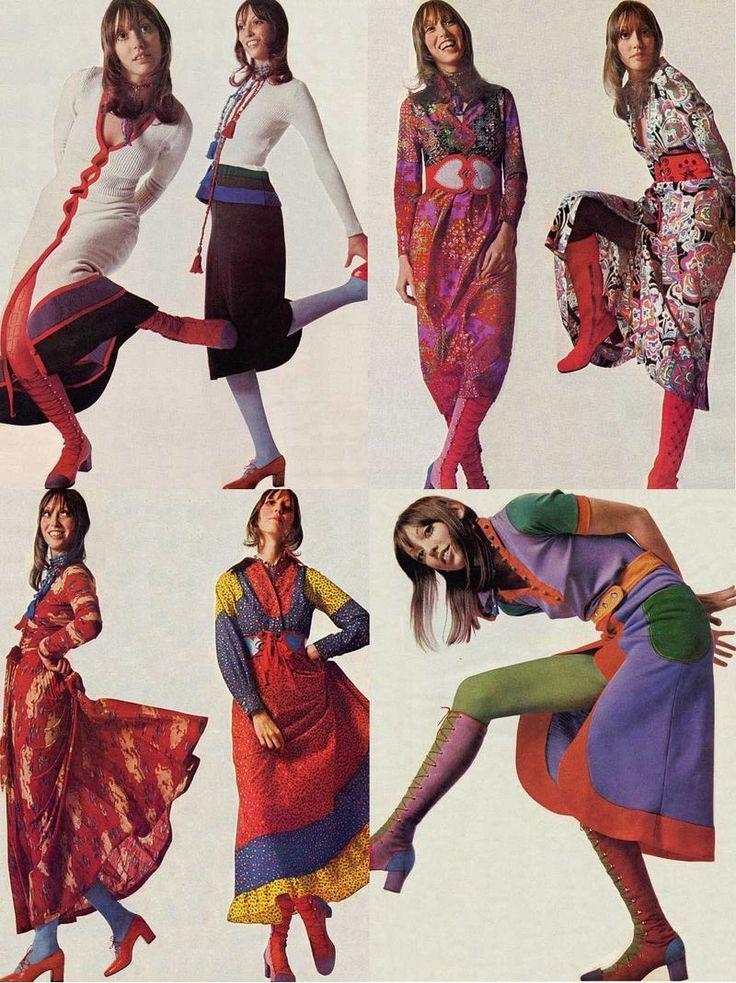
Duvall in Vogue.

Maybe more than anything, the throughline of Shelley Duvall’s canon confronts our understanding of who gets to be iconic. Part of it is the colorful aesthetic that defined her personal fashion – it’s no surprise looking at her combinations of color and pattern that she’d become invested in children’s programming and fairy tales. That aesthetic means a lot to me. Looking at some of Duvall’s choices of clothing invokes a sense of comradery. It’d be too simple to call it “camp,” but there are choices in her makeup and her wardrobe that expand my own sense of queer euphoric fashion.

It’s also her choice in roles, bringing that complex version of emotional vulnerability to characters of all classes, levels of status, and ranging from victims of abuse to literal cartoon characters. I haven’t seen a couple of the landmark Duvall films. Many of my friends mourning Duvall have posted scenes from Robert Altman’s Popeye, a reclaimed gonzo blockbuster adapting the classic cartoon – it’s hard to imagine a more obvious Olive Oil. Two of her 70s Altman collaborations, Thieves Like Us and Buffalo Bill and the Indians, remain on my queue. I’ve heard a lot of love for her work in the original live-action Frankenweenie, and I’ve seen none of her children’s programming at an age I’m old enough to remember. I’m thankful for a little more Shelley Duvall on my horizon. I’m glad she passed celebrated by her friends and community for all the beauty she brought into the world.

I SAW THE TV GLOW

I SAW THE TV GLOW
Dir. Jane Schoenbrun
2024
PVOD, may still be in theaters near you!

This piece alludes to spoilers for the film I Saw The TV Glow – CW for intense depictions of gender dysphoria.

I Saw The TV Glow is a horror fantasy film about two teenagers, Owen (Justice Smith) and Mattie (Brigette Lundy-Paine,) who bond over their love of a monster of the week TV show The Pink Opaque. Owen isn’t allowed to watch it because the show is broadcast past his bedtime, dictated not by overprotectiveness (this stays true into high school) but by a distant, controlling father. So Mattie leaves Owen VHS tapes of the show – the film plays the development of their relationship in gorgeous lighting and on-screen marker-work while a great original Caroline Polachek song plays. It is not the first or last great original song in the film. One night, Owen asks if he can stay up and watch the season finale himself. Owen’s dad asks him upon hearing the request, “Isn’t that a girls’ show?” 

When I was growing up, I was introduced to anime somewhere around the age of six or seven. I don’t actually remember which came first between Sailor Moon and Pokemon – they came roughly together. My parents applied zero “isn’t that a girl’s show” pressure around me watching Sailor Moon, they bought me the tapes. If anything, Mom’s shared with me that her attitude was always that they actively encouraged us to engage with entertainment in an ungendered way, to enjoy what I enjoyed so long as it was age appropriate. But by third grade, the boys in my cul-de-sac who would introduce me to internet porn a year later called it a girls’ show, and those tapes never came back out again.

Owen and Mattie first meet when Owen is in the seventh grade, played by Ian Foreman. The central three performances in this film by Justice Smith as Owen, Brigette Lundy-Paine as Maddy, and Ian Foreman as Owen in the first twenty minutes, are all astonishing. There’s an astonishing degree of trust and immersion in the day-to-day awkwardness of being a teenager that comes along with the deadly suffering of repression. Lundy-Paine gets to transform this over the runtime of the movie into a confidence, their final monologue one of the film’s few empowering and energizing scenes.

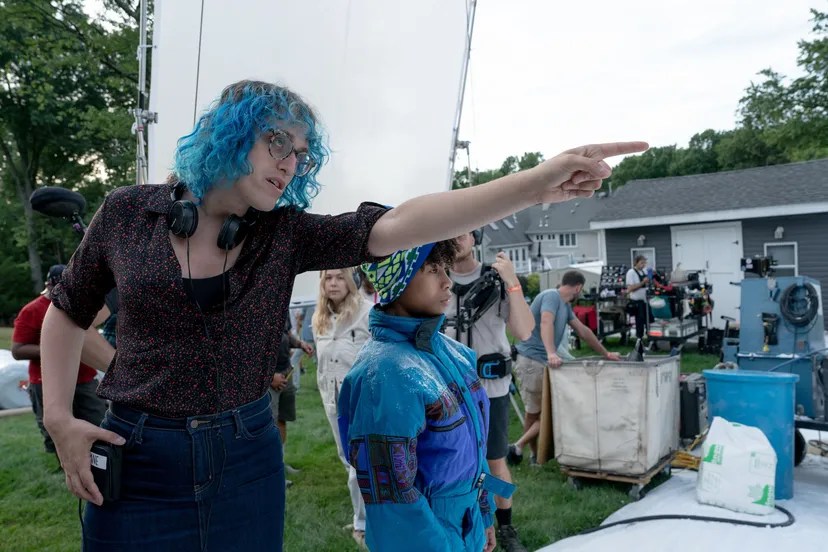
Jane Schoenbrun (left) directing.

I Saw The TV Glow is a film about gender dysphoria. It is about an oppressive world that hates you for who you may not even yet know yourself to be. This hatred plays out in Small Horror Ways, microaggressions and hard stares, and in Big Horror Ways, in makeup and special effects and blood and ooze. It is also about trying to find community over the smallest of connections and finding a friendship that feels like a home. It’s not all oppression and despair, but I would not call it a “fun watch” or “inspiring representation!”

Inspiration is still happening, though – director Jane Schoenbrun, talking to Jordan Raup, said “I’d say at about a third––if not half––of the screenings that I’ve been to with the film, some shy person has sauntered up to me afterwards and been like, “That was it.”

There are
now
many reviews that
are equal part film criticism
and processing
coming out.

I kind of can’t stop reading about this film, interviews with critics like Willow Maclay, Juan Barquin, and Charles Pulliam-Moore informing the writing of this piece. Alongside them, a chorus of trans viewers feel I Saw The TV Glow will save lives. When I tried to say those words to friends after my screening, I started breaking down crying again.

Justice Smith gives a performance I can’t stop thinking about. One of the most painful scenes in the movie is a scene where Smith gets to perform full slapstick comedy. He manages to make his body move like Scooby Doo at a moment where you desperately want him to face his fears. Another early scene, his first confession of his sense of difference, is an astonishing performance of vulnerability of evil thoughts directed at the self, presented like it’s normal because he’s only sort of sure that it isn’t normal and he’s not just being dramatic. This performance carries trauma the way Sheryl Lee carries trauma in Twin Peaks: Fire Walk With Me. It is in the body as much as the voice and the mind, but it is also normalized, casual, and deeply painful. The feelings he is carrying are so private that he is compartmentalizing them from himself, repressing as much as possible.

I came out as nonbinary to myself and close family and friends shortly after the election of Donald Trump. That night, the terror and overriding anger it made me feel, made me realize that the relationship I had to that man, and all men, was not one of shared identity and shame. It was a question I’d had lingering in the back of my mind for years as I found myself gravitating toward trans artists, writers, and style icons, and that pushed me over the edge. I tried using they/them pronouns briefly and found it hard to recognize people were talking about me – I moved back to he/him pronouns and, for the most part, I’ve talked about my identity a few times a year before putting it back on the shelf to deal with later. 

The overriding feeling of pain and the panic attack I had when the film cut to credits confused me. I didn’t have an egg to crack – what was happening? After taking a week to process, I’ve accepted that what I’ve been doing was grieving all the time I’ve lost. If this film had existed a decade ago, I might have confronted some of my insecurity, anger, and repression a lot sooner, before it led to lashing out at myself and loved ones. I might not have put my identity on a shelf rather than owning it, talking about it often, taking pride in who I am rather than regarding it like car repairs I’m putting off.

Schoenbrun’s previous film, We’re All Going to The World’s Fair, was in my roundup of the best films of 2022. I described the film foremost as about feeling small and childish in a room (the internet) where you suddenly realize everyone else thinks you’re acting out. That feeling of the judgment of others looms over huge swaths of I Saw The TV Glow, and it results in Owen losing weeks or years of time to a passive sense of “trans time,” as Schoenbrun calls it. There is a disconnection from everything because Owen’s own role in that life feels wrong. Like the sense of online immaturity in World’s Fair, I relate to this feeling of time slipping.

I can’t stress enough that this film is immaculate, gorgeous and inventive in cinematic language, funny and scary and beautifully acted. I also accept that I’m not going to be normal about this movie. This is the most impactful a new release has been on me in a decade. I can’t and don’t expect people to have the same reaction to it. The enormity of this film makes me feel small and childish, and maybe I will look back on this version of myself the way I have looked at the smaller, more childish versions of myself over the years. As Maddy insists, I will not apologize for it. We are always becoming new versions of ourselves – the film’s signature line is a chalk scrawl which reads, ”There is still time.”

IN THE COURT OF THE CRIMSON KING


IN THE COURT OF THE CRIMSON KING
King Crimson
1969

I’ve been trying to be cool enough to enjoy King Crimson since hearing the iconic “21st Century Schizoid Man” sample in Kanye West’s “Power.” As a teenager, I wasn’t ever able to access the split between that track and the remaining four. The instrumental groove on “Moonchild (The Illusion)” is the kind of thing I used to get impatient with – now, I appreciate being peppered with small, fragmentary sounds. I’m more attracted to songs like “I Talk To The Wind” and “Epitaph,” adoring their sweet sadness. In the Court of the Crimson King’s loose, relaxed songs primarily anchor themselves on Greg Lake’s plaintive vocals and gorgeous, low-key instrumentals.

You can hear in “21st Century Schizoid Man” and “In The Court of the Crimson King” the germ of progressive rock’s experimentation with major tempo shifts and extended jazz instrumental breakdowns. But the titles there betray a semi-mythical status the songs don’t necessarily employ – the lyrics throughout the album are closer to the poetics of folk music than the arcane mythology of Emerson, Lake & Palmer’s later “Karn Evil 9” or the rock opera of Rush’s 2112. The “21st Century Schizoid Man” is a survivor of war. The title track has medieval themes, but is in line with Dylan’s “All Along The Watchtower.”

The later evolution of the Tolkienesque and science fiction in progressive rock is what I anticipated hearing that future blast through that opening riff, that vocal distortion effect, the absolute chaotic ramp into high tempo chaos. I was really into Stephen King, Mass Effect, and Dungeons & Dragons at the time. I don’t blame that kid for not enjoying the pleasures of Ian MacDonald’s woodwind solos – now, I really adore them. This being the inaugural album for this birthday project, it feels apropos that it’s one that had to grow on me over thirteen years.

KEY TRACKS: “21st Century Schizoid Man,” “I Talk to the Wind”

NEXT STOP: Close to the Edge, Yes

AFTER THAT: Ege Bamyisi, Can

PENTIMENT

PENTIMENT
Obsidian Entertainment
PC, Xbox, Nintendo Switch

Describing the process of pitching Pentiment to the executives at Obsidian Entertainment, Fallout: New Vegas director Josh Sawyer stated, “I never would have proposed Pentiment if it weren’t for Game Pass,” the Xbox subscription service which offers a Netflix-like model for playing new games. Indie game development creates brilliant games, but Pentiment is the sort of achievement that can only be made with the decades of expertise leveraged by its development team and the resources afforded by studio development. One look at its art in motion reveals the nature of this staggering accomplishment – they have married the medieval art of liturgical Dutch masters with a game Sawyer described in the linked interview above as “Night in the Woods meets The Name of the Rose.” The presentation of this game is clever and full of the kind of ideas smaller teams cut for scope.

You play primarily as Andreas Maler, an apprentice artist working on his masterwork (think master’s thesis in a grad program) in a monastery outside the small Bavarian village of Tassing. You characterize Andreas through dialogue choices which offer you great freedom, but his voice and sense of humor largely remains the same wherever you place his values. Andreas, meanwhile, characterizes his peers, with different fonts reflecting different levels of literacy – when he realizes he had somebody wrongly pegged, their next line will play out, change font, and then be presented again to reflect their class and education. It’s the sort of judgment you get used to Andreas making.

Andreas defending friend and mentor Piero from the snobby Brother Guy.

The game’s story spans twenty five years in Tassing’s history where the town is thrown into uproar by a series of murders, all seemingly disconnected…save for one mysterious link. Andreas takes it upon himself to solve these murders and protect the falsely accused, partly because he is an educated outsider but also because he is somewhat arrogant and selfish. These murder investigations take place over the course of a handful of days. Andreas will visit with different townsfolk to ask questions, potentially lure them into exposing secrets, and collect evidence. At the end, whether he has enough evidence or not, he will nominate someone for execution, and depending on his case, his accusation will succeed or fail.

Unlike classic LucasArts games, it is impossible to collect all of the evidence and information you need in one playthrough. Convicting the wrong person for a crime won’t stop the game in its tracks. It’s a storytelling game, and part of that story involves finding your own values as you explore impossible situations. As a result, navigating the game’s choices becomes a series of very intentional decisions, and exploring Tassing’s world merits eagle-eyed attention. As a roleplaying game, it gives you so much space to play, to solve problems and find new ones based on choices you made hours ago, that it compares favorably with Sawyer’s prior landmark quest design in New Vegas.

Pentiment’s story is told with expert writing which neither becomes self-serious and dry or the Monty Python skit the art evokes for many modern players. The game is very funny without being condescending to its characters – it respects them as people, not so different from us, but also respects the difference a world of rotted food and Catholic governments would have on its characters’ worldviews. There are moments in this game where a less expert hand might make this a diatribe, but Sawyer and his narrative design team manage to largely keep Pentiment in the voice of the manuscripts which have survived from the era – albeit in plain English rather than unnecessary Middle dialect.

Andreas, dreaming of Saint Grobian and his revelers.

On that Middle dialect – I don’t want to scare people away who might enjoy this game but may not have the Medieval European history education to enjoy it. Whenever a proper noun or historical movement is invoked, you can hit the view button and it will zoom you out to view definitions of each of those terms. Adding in-line footnotes to a game based in history is so outrageously smart that it should become a standard in almost any narrative game. The UI itself is presented as a medieval text, clear maps and quest logs laid in an artful tome.

The joys of Pentiment come in unraveling its mystery and coming to love its characters. Its core mystery weaves in and out and comes to a satisfying conclusion. In the meantime, meals, knitting competitions, local festivals, gossip and play give you opportunities to care for the people you might be sending to conviction. One of my favorite characters is Klaus Bruckner, a block printer and family man whose sense of friendship and loyalty are spoken in sometimes blunt but fair clarity. There are ten other characters I might’ve selected.

One highlight is optional. An Ethopian priest, Brother Sebhat, has come to visit Tassing’s monastery to present his manuscripts for study and documentation. However, he hasn’t gotten a chance to meet the townspeople. He asks you to organize supper. When you arrive, more people than he ever imagined have joined to meet him. Sebhat takes the opportunity to learn about life in town and share his experiences as an outsider, before reading a passage from his own bible. The game’s art style changes at this moment – he presents the story of Lazarus in the art of Ethopian Orthodox Catholicism, with the townsfolk joining this story. The children ask why everyone in his bible is brown. Sebhat’s storytelling gets the chance to express a deeply felt, reassuring sermon about death and salvation, a welcome balm during this murder investigation. As he’s telling his story, one of the little girls steals Andreas’s hat – she then mad dogs you, like, “are you going to interrupt Brother Sebhat to get your hat back?” If you let her keep the hat, twenty years later, her child will be wearing it as a family heirloom.

Brother Sebhat’s Bible, at the moment Andreas’s hat is stolen.

That sequence, I think, highlights the deftness with which Pentiment expresses its narrative. Pentiment is not afraid of the scripture in its world, willing to embrace religion as a powerful force in the lives of its characters, but remains skeptical of the institution which governs that religion. It celebrates the difference between different churches, the churchless, the pagan, the European and African, between men and women. It tells this serious story with a sense of humor, the recognition that sometimes kids are just little shits, without becoming a farce. Sebhat’s supper is one of many scenes that moved me deeply.

I’m a geek for this kind of stuff – medieval literature meets murder mystery is a fanfiction my dreams wrote up while I was writing D&D campaigns in high school. I never thought it would be realized in a video game. It is chock-a-block full of magic, empathy and history. Pentiment marries a celebration of life alongside a recognition of the hardship and violence of a time where most leave no monument. From graves marked for “Two innocents” to the ruins of Roman aqueducts littered throughout Tassing, Pentiment works to preserve a history many never learned.

Happy Birthday, Alex

Muscleman here has usurped my suitcase as his new favorite bed.

For my birthday this year, I set out to write about twenty of my favorite albums, twenty of my favorite video games, and twenty of my favorite films. I did this partly because I could not decide what I wanted to do for my birthday this year. I also did this partly to kick myself in the ass and make myself put words into a text field. I’m hopeful getting into the daily habit of writing roughly 1500 words to finish this project will convince me that I should get to at least 500 each day rather than writing only four times a year.

Many of these works are consensus masterpieces, and many of them are more personal favorites. All of them are works I love very personally. I looked at my lists of favorites and picked some which I have not written about to satisfaction. I have vaguely given myself a lofty goal of writing about every work which I consider a personal favorite and what it means to me – where possible, I’ve given bias to works I’ve already revisited over the past year or two rather than giving myself additional homework in completing this project.

This also includes the first written music criticism I’ve done since I was in college. I find music criticism exceptionally challenging, and that’s precisely why I’m making myself do it. The format of these album write-ups is borrowed exactly from Tom Moon’s 1000 Recordings To Hear Before You Die, a book I’ve treasured since I was thirteen or fourteen years old. Should you find yourself a copy, you’ll find a better music critic than I ever aspire to be.

If you decide to come along for this journey, I really appreciate your readership. If you want to talk to me about something I’ve written, I’d love to hear your thoughts. I don’t know if I’ll be doing this project again, but it feels good to be nose deep in a word processor. These pieces were largely written in one sitting as drafts and then edited once before publication – while they don’t make up the highest caliber of word-tinkering and scansion-smoothing in my writing history, I hope they are a pleasant enough read.

As these articles go up, I’ll have links posted on this master page and a preview of what’s coming tomorrow!

MUSIC:
1. In the Court of the Crimson King – King Crimson
2. The Soft Bulletin – The Flaming Lips
3. Life Will See You Now – Jens Lekman
4. Syro – Aphex Twin
5. Rumours – Fleetwood Mac
6. My Name Is My Name – Pusha T
7. Remain in Light – Angelique Kidjo
8. Emotion – Carly Rae Jepsen
9. Dopesmoker – Sleep
10. Weezer – Weezer
11. Dig Me Out – Sleater-Kinney
12. Low – David Bowie
13. Daydream Nation – Sonic Youth
14. Sound of Silver – LCD Soundsystem
15. Colter Wall – Colter Wall
16. Rubber Soul – The Beatles
17. Room25 – Noname
18. Reign in Blood – Slayer
19. Anti – Rihanna
20. Mack the Knife: Ella in Berlin – Ella Fitzgerald

FILM:
1. Kiki’s Delivery Service
2. Days of Heaven
3. Blue Velvet
4. Meshes of the Afternoon
5. Mind Game
6. One From The Heart
7. Catch Me If You Can
8. Ferris Bueller’s Day Off
9. I Saw The TV Glow
10. Gemini Man
11. UFOs
12. Malcolm X
13. M
14. Skatetown U.S.A.
15. Dog Day Afternoon
16. Eyes Wide Shut
17. The End of Evangelion
18. Only Lovers Left Alive
19. In the Mood for Love
20. Zardoz
BONUS: The Only Son
BONUS: Bottle Rocket

GAMES:
1. Pentiment
2. Celeste
3. Mini Metro
4. Street Fighter III: Third Strike
5. Drugwars
6. NieR Replicant
7. Knotwords
8. Depression Quest
9. Fez
10. The Legend of Zelda: Tears of the Kingdom
11. The Yawhg
12. Nidhogg
13. RollerCoaster Tycoon 2
14. Higurashi – When They Cry
15. Norco
16. Rhythm Heaven Fever
17. Outer Wilds
18. Hearthstone: Heroes of WarCraft
19. Signalis
20. Spelunky