ROOM25

ROOM25
Noname
2018

Fandom is hard in the online era, man. Noname is someone I so badly want to root for, who does so much cool shit, who also thinks J Cole is corny and who is vocal about injustice in America, whose raps are so funny and so thoughtful ninety percent of the time. Her Noname Book Club is a genuinely really cool project! That ten percent where she gives Jay Electronica a supremely antisemitic Black Isrealite verse on Sundial, though. Noname is a gaze into the mirror of being perpetually annoying online, and while I’m not sure I’d like her half as much if I didn’t follow her on Twitter before she deleted, I also know I wouldn’t sigh as hard at the fact that I love this album.

Room25 is the debut album, and it came from a place of transition into real adulthood. She’d moved from Chicago to L.A. – she’d started having sex – she needed to pay rent. That sense of obligation maybe helps birth its tossed-off introduction, a 1:35 song fragment that feels like it started halfway through. “Self” is maybe the best the album ever gets, though – the freeflow pleasure she has on “Mister money man, Mister every day he got me/Mister weather me down, Mister me love, Mister Miyagi,” is one of the greatest rap moments of the last decade. It has that same sticky teeth feeling of the best beats by The Neptunes, the best Big Willie Style hooks, the best playground songs.

But, then again, maybe the best moment is “Blaxploitation,” which combines jokes about bad feminism and exhaustion with trying to have good politics and darker outrage about the state of the world. In terms of the album’s mission statement, “Prayer Song” and “Montego Bae” are maybe the most representative combinations of sex and politics, some lines phenomenal (“If you wanna help me to put me inside the cuffs/Put the cigarette in my back/Keep the hospitals overrun-run-run-run, Chicken Little/How my city gonna run off shits and giggles?”) and others corny (“America the great, this grateful dead and life for me/Apple pie on Sunday morning, obesity and heart disease”.)

Not being able to put my finger down is kind of the appeal of Room25. At its best, it’s one of the absolute great rap albums of the 2010s and an all-time great rap debut. There’s nothing quite like it and I’m not sure you could regulate it on purpose. That 10%, though.

KEY TRACKS: “Self,” “Prayer Song,” “Montego Bae”
CATALOG CHOICE: Telefone, “Song 32,” “Song 33”
NEXT STOP: Everything’s Fine, Jean Grae and Quelle Chris
AFTER THAT: Ho, Why Is You Here?, Flo Milli

REMAIN IN LIGHT (Kidjo)

REMAIN IN LIGHT
Angelique Kidjo
2018

As an undergrad, I remember saying “The Talking Heads [sic] are the most underrated band in rock history.” I was going off an understanding of rock history shaped by classic rock radio, Rolling Stone magazine, and T-shirt shops. And even I was not really listening to Talking Heads all that much – I’d bought a copy of Remain in Light, their most acclaimed album, and I really liked it. Later, when I listened to their other albums, Remain in Light faded quite a lot in my estimation. It remains a transitional album in my ears, a mix of the New Wave and Brian Eno experimentation that defined the band’s early years and the branch into funk and the polyrhythm of Fela Kuti. I preferred the interpretation of those songs on Stop Making Sense to the studio recordings.

Kidjo’s reinterpretation of the album reasserts the African influence on the album. The instrumentation and arrangements she’s applied to these songs gives them such life. She gives some of these songs new tempos, some of them new brass and woodwind parts, new grooves, but they’re all perfectly suited interpretations of the songs. In her writing about recording the album for Pitchfork, Kidjo talks about how her approach was to build from percussion back into the full song. I wonder if Byrne borrowed that concept back when constructing the stage version of American Utopia, where every member of the cast carries their instrument, so many of them drums. 

While I love David Byrne with my whole heart, I think few would argue that he’s traditionally as strong a singer as Kidjo. But I adore that she does not pursue making these songs as melodic as possible. Kidjo sings Remain in Light with a great sense of humor, pushing the momentary anger, frustration, revelation over diva architecture. The way she sings “Once in a Lifetime” is with so much joy and naivete, a song to so many defined by that televangelist ecstasy of Byrne. The harmonies she adds throughout fit beautifully – her new vocal additions (generally not captured in lyric sheets, likely in Fon or Yoruba) feel equally natural.

This album highlights the false ceiling of my imagined canon of estimation as a young firebrand. It’s not that I was wrong that Talking Heads are more interesting than Aerosmith or AC/DC – it’s that I imagined I’d already heard the world’s most important music at twenty years old and everything else would just be “filling in gaps.” At that age I’d only read the name Angelique Kidjo. I didn’t imagine how she could blow the roof off the pop canon. This month, as I ease back into writing about music, I’m writing about a lot of that pop canon I’ve loved all these years – I’m hoping next time I have the confidence to push myself a little farther afield.

KEY TRACKS: “Crosseyed and Painless,” “Once in a Lifetime,” “Listening Wind”
CATALOG CHOICE: Aye
NEXT STOP: Who Is William Onyeabor?, William Onyeabor
AFTER THAT: The Indestructible Beat of Soweto, Vol. 1

Holding Infinity In The Pocket of Your Shorts

Well, here we are again.

It has been three years, eleven months, and four days since my last confession. And again I confess – I’m playing Desert Golfing.

Do you know that people make lists on the internet? Sorry, I don’t mean to be pedantic. Of course you know there are lists on the internet.

You’ve seen them on Buzzfeed, Bustle, Pottermore, BusinessInsider, and Epicurious. If you play games, you see them on IGN, Polygon, and Kotaku Dot Com.
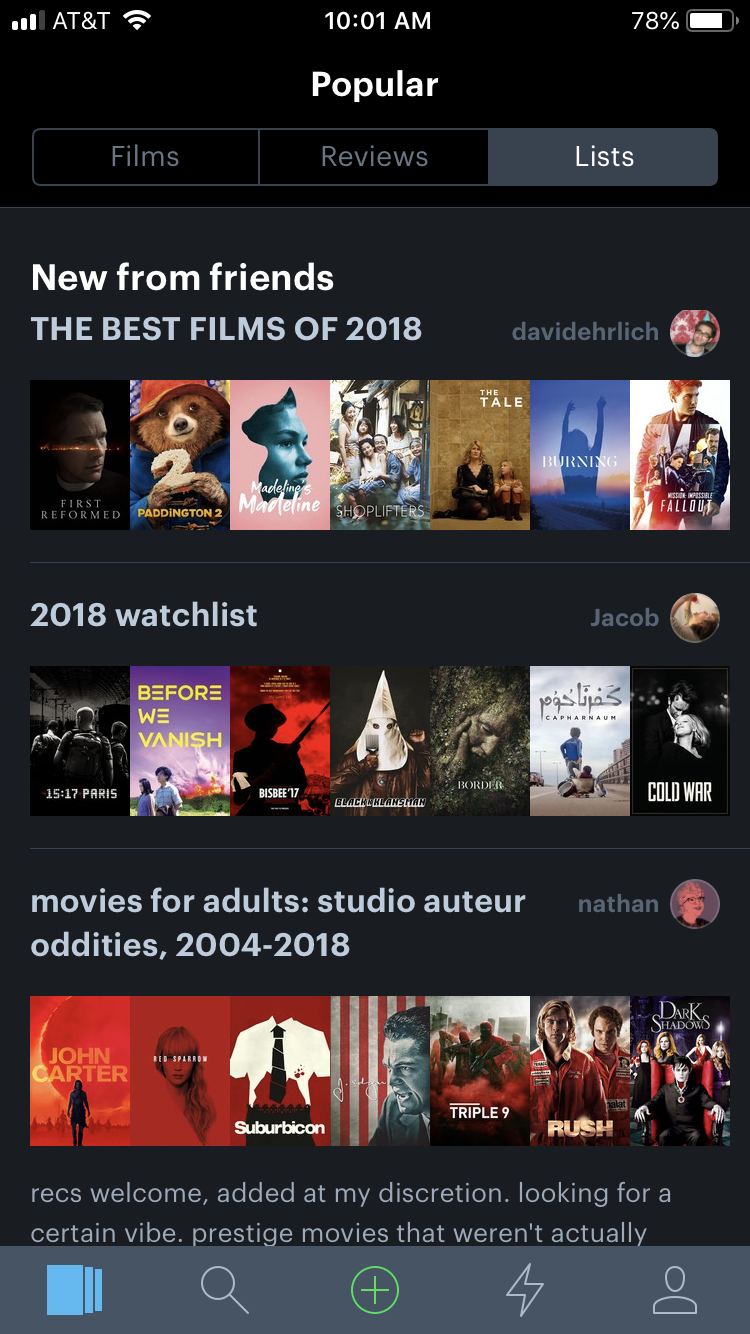
I don’t mean the kind of lists someone pays you to make or the kind of lists someone makes to “generate clicks,” though. I don’t even just mean that the internet is flooded with lists. Letterboxd is a website where the libertarian right and the queer left primarily engage in discourse in the comments section of lists of movies. I used to write for a website whose sole purpose was to help its user make a ranked list of favorite movies. BestEverAlbums is a site where almost the only interaction you can have is to contribute your own list. These lists reflect the phenomenon of the lists people make on the internet.

But no, not just those lists. Because then there are the lists that never necessarily are meant to be shared. Sometimes those lists are basically wishlists or to-do lists of movies to watch, recipes to try, etc.

But then there are the private lists that half of the supreme art dorks have of their top fives (and tens and twenties and hundreds) of…everything. Guitarists. Coffee brands. Studio Ghibli movies. Dog breeds. They’re kept in a google doc or a spreadsheet, updated constantly.

My mom used to keep her movie list in OneNote before I showed her Flickchart. Maybe she still does – some of the other Flickchart writers I knew kept their spreadsheets intact and updated.

And these lists never see the light of day except in conversation with other list keepers. Then they may battle their lists for list supremacy, a sort of Pokemon Battling over whether or not Life During Wartime is a top ten Talking Heads song, or they will add blindspots “to the list.”

It is a scrivening privacy, often the very definition of mental masturbation. It operates like an ethereal university of blind academics, wandering the halls and working on solipsism, until they collide into one another.

So, anyway, my friends and I are making a list, and Desert Golfing is on the list of things we’re eventually going to narrow down to make a shorter list.

My partner asked me for good iPhone games and with Desert Golfing back on my brain, I told her to download Desert Golfing. I watched her play the first hundred or so holes.

I booted up Desert Golfing, wondering if after transitioning my SIM card to a new phone and downloading the game again it would have my progress.

Happily, it did.

I can’t say what it would have felt like to play Desert Golfing again if I had been alone, in my own home, wondering if anyone would have been willing to talk about Desert Golfing with me.

Instead, I was playing next to my partner. At first, I didn’t want to spoil the scope of the game for her and tried to play furtively, my phone turned away from hers.

She started to get very frustrated on a hole; it took something like ten shots. I decided it would be funnier to show her the hole I was on, and that even having all but mastered the game, sometimes a hole takes forty five.

A minute or two later, my ball bounced on a wall in such a unique way that it lodged into it. The sand held it on a perfect vertical slope. I screenshotted it and sent it to my list-making friends. One of them laughed. The other was worried I’d actually gotten stuck – I hadn’t, this was an easy three-stroke hole.

The other then shared a screenshot from the beginning of Getting Over It with Bennett Foddy – he joked that someone should tell the developer that he should fix the controls. (five comedy points, steve.)

This was about a week and a half ago, and I’ve been booting in here and there, enjoying pulling back on the ball (“exactly the way you would pull a red bird to fire at a piggy,” i think i said in 2014.) I’ve loved relearning the way the sand catches the ball, how to climb a slope, how to use its dampening quality to deaden a bounce off a wall into a hole rather than over it.

It is lonelier without someone sitting next to me playing along. It feels a little like walking blind down the hallways of some ethereal university.

And then, this morning, before my coffee and after my medication, I found myself chatting online about a different game on a different list with a different friend. I remarked that I like big, beautiful messes. The clean elegance of an idea well expressed is wonderful, to be sure. But I love the sprawl of elaboration and tangent, too. Blame the academics and writers who taught me that the Whale Encyclopedia chapters of Moby-Dick were “totally the best ones.”

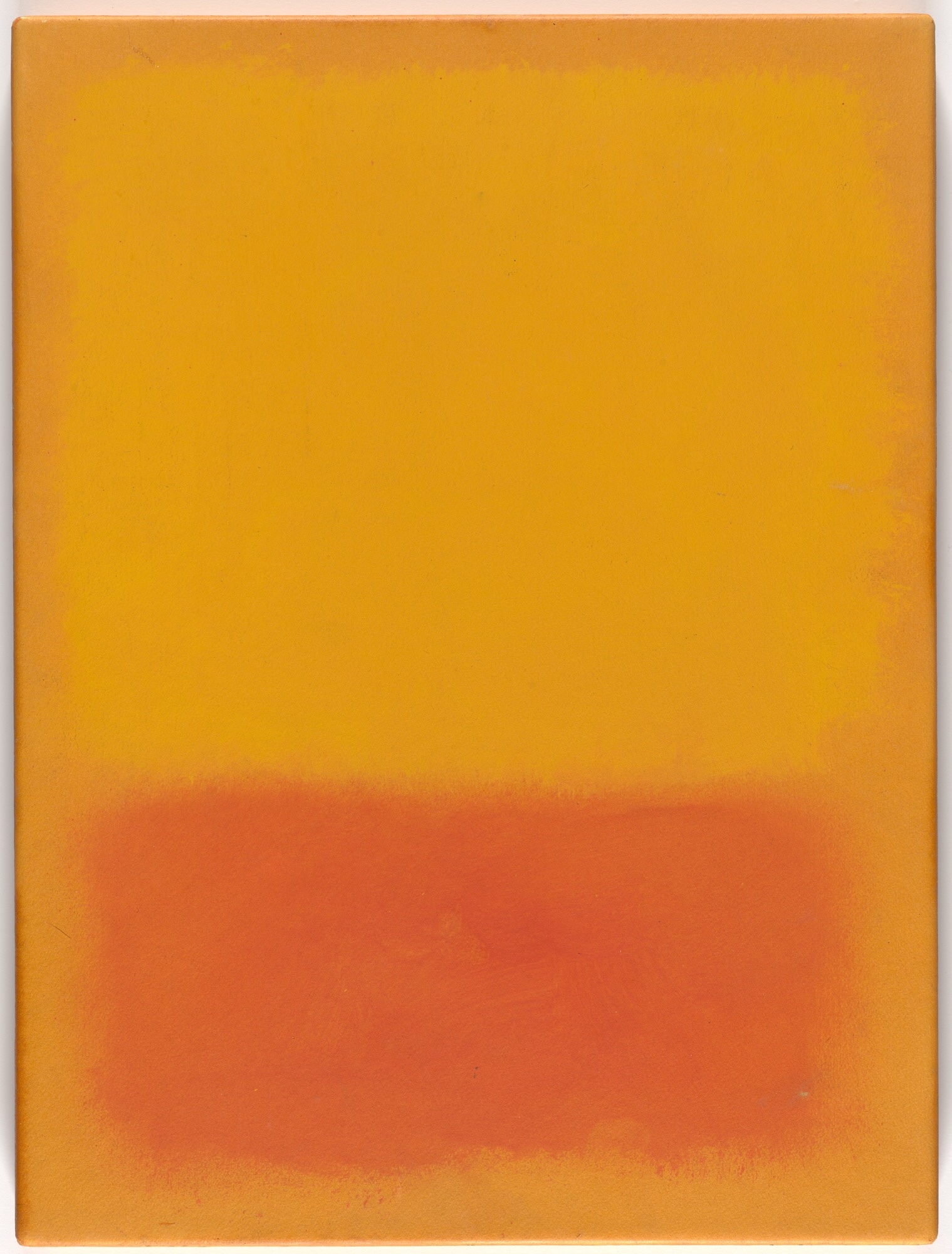
I joked that the only form of “containment” I liked was that of Mark Rothko. I love Rothko, he’s usually my go-to favorite artist. His color work is so soothing to me. The joke wasn’t about Rothko. I went to google a Rothko in case my friend didn’t have a 20th century art history education.
And then I wrote this.