COLTER WALL

COLTER WALL
Colter Wall
2017

If I can point to any moment that walked me back to country and folk music this past several years, it was the first time I heard Colter Wall’s “Thirteen Silver Dollars.” The confidence of writing this humorous, self-effacing little anecdote as your lead single for your debut album, with the remove and referential pop culture of a Stephen King short story – it reinvigorated my feeling that telling little stories was something I hungered to find again.

But, really, it’s that damn voice. When I played him for Austin for the first time and told him Wall was only 22 when this album was recorded, he called me a liar, belting, “That man is divorced!” It’s a pretty gorgeous raspy vocal tone, deep and soulful, low and smooth. It’s allowed Wall to have incredibly successful covers of classics from “Big Iron” to “Diamond Joe” to “Do Re Mi”, but I’m not sure he’s ever used its ache as beautifully as on this self-titled album.

“Codeine Dream” and “Me and Big Dave” have this fantastic melancholy to them – his voice just sounds exhausted, and he understands the way to use the guitar to harmonize that baritone just right. These are haunted songs that see death and desolation around those who still draw breath. Then there’s the righteous fury of “Kate McCannon,” a gunslinger ballad that draws the line directly to Marty Robbins, with that undeniable percussive buildup and sinister guitar lick. That’s probably the “best” song of the album, this wonderfully poetic story told with musical brilliance. 

He doesn’t let the fun songs slack, either. “Thirteen Silver Dollars” ends with that jaunty tone, but “Motorcycle,” “You Look To Yours,” “Fraulein,” these are delightful without becoming the syrup of modern pop country. He’s turned toward that a little more on his last couple albums, falling in love with some studio tricks and his band. While you’d never pretend this album is a one man operation or a low-budget production, it certainly lacks the gloss that Nashville money can bring. I’ve enjoyed the journey into popularity of Colter Wall (the lead single of his next album, “Plain to See Plainsman,” is easily one of his best songs,) and hope I get to hear him play live someday soon. But it’s a lightning bolt moment to hear this guy’s voice for the first time and know this young songwriter is already fully formed.

KEY TRACKS: “Thirteen Silver Dollars,” “Me and Big Dave,” “Kate McCannon,” “You Look To Yours”
CATALOG CHOICE: Songs of the Plains, Imaginary Appalachia, “Big Iron”
NEXT STOP: Purgatory, Tyler Childers
AFTER THAT: A Sailor’s Guide to Earth, Sturgill Simpson
SOUND OF SILVER

SOUND OF SILVER
LCD Soundsystem
2007

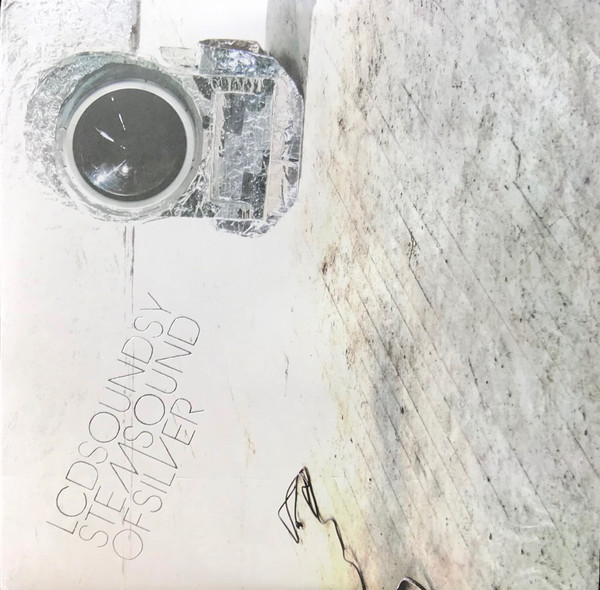
I first found LCD Soundsystem in early 2011, when I bought This Is Happening on iTunes. I’m perpetually haunted by this decision, as “All I Want” is the first song that plays every time I plug my phone into my car. If I’d started with Sound of Silver, I’d surely instead be haunted by “All My Friends,” a song that anchored me during some of my deepest collegiate depression. The break-up of LCD Soundsystem, documented in the not-very-good-documentary-but-there’s-a-much-better-concert-film-in-the-special-features Shut Up And Play The Hits, was the first time a band I’d found as an adult and imagined a much larger future for, was supposed to be ending. Of course, they haven’t actually ended, their new music is still pretty good, and James Murphy’s constant posturing has aged into making him deeply uncool. He’s come full circle, I guess.

LCD Soundsystem’s albums were laser targeted at my “Talking Heads are underrated” resentments and my burgeoning affection for the epic build of Bruce Springsteen and Sonic Youth’s “Teen Age Riot”. “All My Friends” and “Dancing in the Dark” make so much sense together Hot Chip mashed them up. It’s soaring arena rock made with new wave synths and anchored by Murphy’s sing-talk baritone.

Sound of Silver used to sound like the future to me. It’s such a fascinating blend of indie rock trends, electronic dance pop, and irony-drenched lyrics. “Time To Get Away” and “North American Scum” are so fun to shout along to precisely because the idea of singing them has already been tossed aside. It’s cynical and playful at the same time. I didn’t understand that this was already a dead end, that the last great rock bands seeming to revel in disposability and excess signaled death rather than bravado. The danciest songs on this album play like worn-out versions of late-70s Eno collaborations with Byrne and Bowie, revived by the necromancy of `funk guitar, incredible polyrhythms, and synth stings. They’re fun, they’re funny, they’re acrid.

What makes the album not curdle over is the more sincere grief of the less ironic music. “Someone Great” and “All My Friends” are really heartfelt power pop. The former is more explicitly the death of Murphy’s longtime therapist, the literal grief of losing a loved one. The latter is more the grief of time, exploring how relationships and missed opportunities change faster than it feels possible. These have a more melodic sound and less repetitive lyrics to them, and it’s more obvious the way these songs wear their sincerity. Similarly, the closing ballad, “New York, I Love You” is undeniably a downer-ballad, still removed with some humor but also very sincerely celebrating Murphy’s home city. Less lyrically emotional is “Sound of Silver,” but its sonic journey is maybe the most adventurous and epic build on the album, situating its “teenagedom” very personally in Murphy’s own adolescence.

The end of the party is how LCD Soundsystem fancied itself at the time. The myth is that with the death of the Meet Me In The Bathroom New York rock scene, we gave in to modern pressures and got old. We’d reached the end of the line, and there was nothing left to say in the rock format. Obviously, anyone still listening to modern rock music can dispute that with their own assortment of twenty bands who are doing something exciting and interesting and personal, or who are using Pixies and Springsteen and new wave to say new things. That feeling that you’re getting old and the world isn’t following your vision anymore is attractive to people of every generation. It’s fun to listen to LCD Soundsystem sell the fantasy of being The Last Good Band, because boy, they sell the hell out of it.

KEY TRACKS: “Time To Get Away”, “Someone Great”, “All My Friends,” “Sound of Silver”
CATALOG CHOICE: This Is Happening
NEXT STOP: Challengers Original Score, Trent Reznor & Atticus Ross
AFTER THAT: Mosquito, Yeah Yeah Yeahs

DAYDREAM NATION

DAYDREAM NATION
Sonic Youth
1988

I think for the first ten years I owned this album, I would listen to “Teen Age Riot,” to me the perfect rock song, and then shut it off maybe one minute into “The Sprawl.” I can’t help what I wanted, and what I wanted was The Stone Roses. There was more I would’ve liked at the time, even just finishing “The Sprawl” or listening to songs like “Total Trash,” but I didn’t have the appetite for something as burned out and adult as “Silver Rocket.” Hell, I barely had patience for long instrumental sections – so much of my enjoyment of music for so long was built on singing along, I’m not sure I would’ve stuck through anyway. I got my fill through so many bands inspired by Sonic Youth, from Yeah Yeah Yeahs to The War on Drugs.

I started Sonic Youth from the beginning when I started getting really into the less radio friendly side of Pixies, looking to recapture the distortion and feedback of being in my twenties at the Majestic in Madison and blowing my ears out. Coming back to Daydream Nation after listening to their 80s output, it’s so much clearer why this is considered their landmark album. They’d mastered noise rock with evil lyrics a few years prior, Bad Moon Rising culminating in the extremely uncomfortable “Death Valley ‘69,” making music for the end of the world. Daydream Nation instead comes out of making longer instrumental jams, and those jams resulted in much more melodic guitar parts with a lot more texture. Without that context, I was under the impression the darkness was overwhelming melodic beauty – now, I understand instead that the distortion and uptempo rage was the starting point.

I’ve been reading through William Gibson’s Sprawl trilogy this past year or so, and Sonic Youth’s “The Sprawl” came out two weeks before the publication of the third novel, Mona Lisa Overdrive. Where Neuromancer cohered into pretty cogent worldbuilding and rage about our increasingly transactional reality, the second novel Count Zero is 90% fun action and vibes and 10% conspiratorial agitprop. It’s hard not to joke that “The Sprawl” also borrows that structure, with maybe two minutes of fairly enjoyable and poetic reflection on transactional sex, imposter syndrome, and a decaying, rusting home and then six more of absolutely gorgeous guitar interplay.

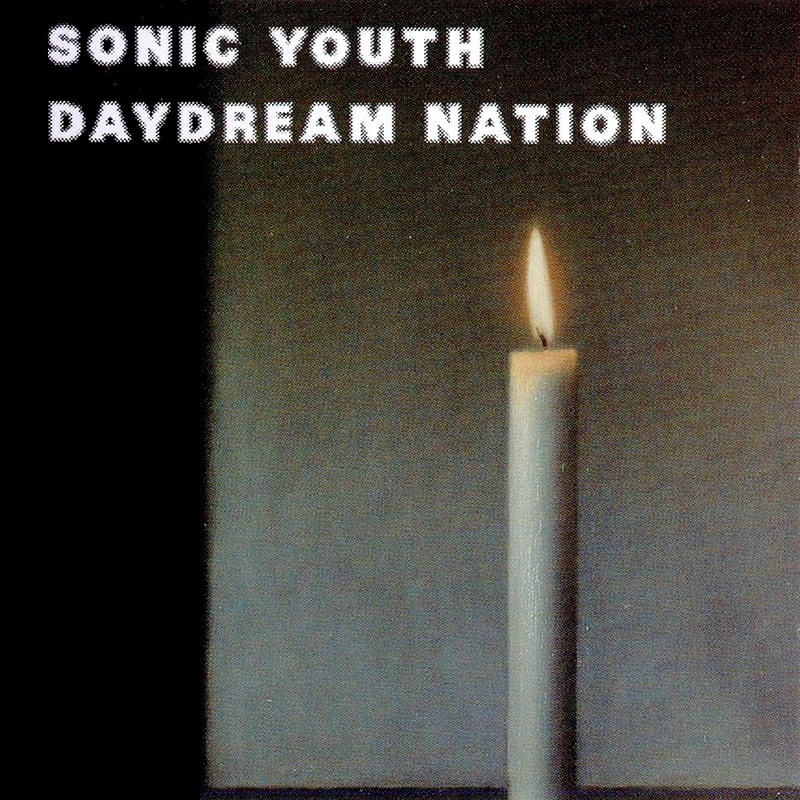
A lot of the lyrics on this album are window dressing on top of a massive instrumental jam. “Candle” is a pretty simple reflection on feelings of fatalism at a young age, but any sense of anger or resolution is really only told through the dark riff under the verses or the noisy instrumental break. This still isn’t a pop album, but it represented the breakthrough into popular critical acceptance and college radio airplay that Sonic Youth hadn’t found yet. Their next album, Goo, would include more radio friendly dance music and fewer songs over 7 minutes long. It also amped up the political and pop culture references, a little less vague and poetic.

The signs of that change are in that song I loved so much as a teen, “Teen Age Riot.” That song was originally titled “J Mascis For President,” and Dinosaur Jr.’s frontman is still in there with his Marshall stacks. The opening, Kim Gordon’s “spirit desire” intro, is so funny – whatever its original intent, it comes across now as a lampoon on the post-hippie new age radicals and manifestation as resistance. Then, the power pop arrives, the perfectly tuned guitar tones of Thurston Moore and Lee Ronaldo in conversation with one another, chunk and clean. The remainder imagines a revolution with a charismatic alt-rock hero, and it ends still on the riot trail. I think there’s enough humor to the song to understand that this may be some “meet the new boss, same as the old boss” bullshit (“He acts the hero/We paint a zero on his hand”) but it doesn’t give in to that defeat. Taken out of context, that might sound like cynicism swallowing a dream – but, again, this is the daydream of the people who’ve put out some of the darkest no-wave noise rock of the 80s, so maybe it’s the start of believing in something.

KEY TRACKS: “Teen Age Riot,” “The Sprawl,” “Total Trash”
CATALOG CHOICE: Bad Moon Rising, Goo
NEXT STOP: Bossanova, Pixies
AFTER THAT: A Deeper Understanding, The War on Drugs

LOW

LOW
David Bowie
1977

I lifted the format of these writeups directly from Tom Moon, author of 1000 Recordings to Hear Before You Die, as he was essentially my bridge between Guitar Hero and actually enjoying multiple genres of music. In his introduction to 1000 Recordings, Moon writes, “Finding renegade jazz pianist Cecil Taylor next to sensitive singer-songwriter James Taylor, who abuts the Russian composer Tchaikovsky underscores the astounding range of musical expression available, while subtly discouraging people from hanging out in their genre neighborhoods (ghettos?) they know best. This journey taught me that there’s great treasure waiting on the other side of wherever you draw your territorial lines.”

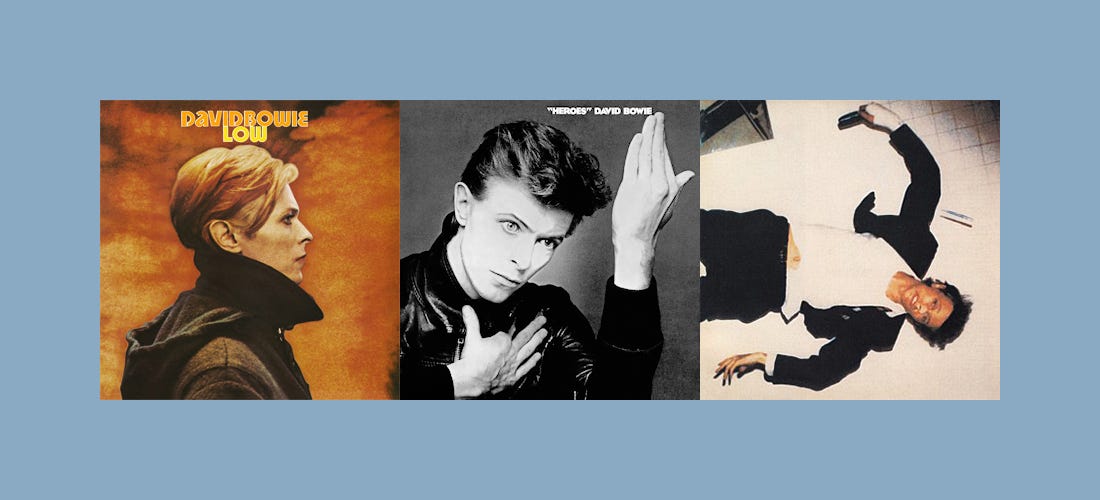
Few figures in music history underscore that philosophy more than Brian Eno, whose collaborators range from John Cale to John Cage, Sean Kuti to Sinead O’Connor, and perhaps most famously David Byrne to David Bowie. Eno’s influence is bringing ambient and classical into pop, African polyrhythm into rock, and subverting listener expectations in ways that enriched the quality of pop songwriting in ways we might now take for granted. While Bowie is quick to point out Eno is only a contributor and not a co-producer on his experimental Berlin Trilogy, Eno’s contributions help define what makes Low so different from Bowie’s Thin White Duke era of funk-infused pop.

The Man Who Fell To Earth, Bowie’s first starring role, was originally supposed to be scored by a version of the album that became Low – Nicolas Roeg rejected it and opted for a more traditional score from John Phillips of The Mamas and the Papas. Bowie was coming off Station to Station and the Thin White Duke, a persona defined by snorting coke and saying fascist bullshit. The plot of The Man Who Fell To Earth is that of an alien who becomes addicted to fame, alcohol, and TV before being imprisoned by the government – there’s temptation to apply that template to Bowie’s own decline (not to mention Bowie’s own Ziggy Stardust, whose “Rock N’ Roll Suicide” culminates the most iconic and beloved of all Bowie’s albums) but there’s no reason to read Bowie’s dependency as managed by outsiders or brought upon by anyone but himself.

Bowie’s Berlin Trilogy, Low, Heroes and Lodger.

Low reflects this fragmented place in life. The first half of the album, through “Always Crashing in the Same Car,” is a series of wonderful song fragments. They’re equal parts funk, blues, rock, maximalist decadence of layers upon layers and minimalist anti-pop with vocals that crash in with forty-five seconds remaining on the track (if at all.) For an act often defined by Bowie’s yelp and star persona, Low is a spotlight of Bowie the multi-instrumentalist, trading parts with longtime guitarist Carlos Alomar and session musician Ricky Gardiner. Without looking at liner notes, it’s easy to miss where Bowie fits into some of these tracks at all (sometimes, it’s mostly saxophone!) This album bops along through the transition of “Be My Wife” and “A New Career in a New Town,” slowing slightly and becoming more traditionally rock, “Be My Wife” a song that would have fit just as well on Diamond Dogs or Hunky Dory.

On the second side of the vinyl, Low shifts to “nighttime,” Bowie’s largest adventure into the Eno-esque ambient. It’s easy to imagine “Warszawa” or “Subterraneans” scoring The Man Who Fell To Earth – the jaunty funk of side one for the narcotic highs, the droning despair of “Art Decade” filling the scenes of isolation and dependency. This is, for me, where Bowie lays out the future that leads to The Next Day and Blackstar. He’s creating an eerier sense of drama than the pomp (fun) of “Five Years.” In confronting his own darkness, Bowie’s found something more honest, and it’s something harder to look at directly.

KEY TRACKS: “Sound and Vision,” “Warszawa”
CATALOG CHOICE:
Heroes, Scary Monsters & Super Creeps
NEXT STOP: Who Is William Onyeabor, William Onyeabor
AFTER THAT:
Surf’s Up, The Beach Boys

DIG ME OUT

DIG ME OUT
Sleater-Kinney
1997

My first riot grrl song was Bikini Kill’s “Rebel Girl,” a song I totally rejected as a high school choir boy who did not get it. I came back around with the release of Gone Home, a for-its-time narratively ambitious queer adventure game that heavily used Bratmobile’s “Cool Schmool.” I started reading feminist literature and came around on Kathleen Hanna. I added a few singles to my playlists. This is a self-flattering version of this story. A couple years later, Sleater-Kinney reunited and released No Cities To Love to near-universal acclaim. St. Vincent said the reunion album was her favorite Sleater-Kinney album yet, signaling the beginning of the end of the band as it had existed for twenty years.

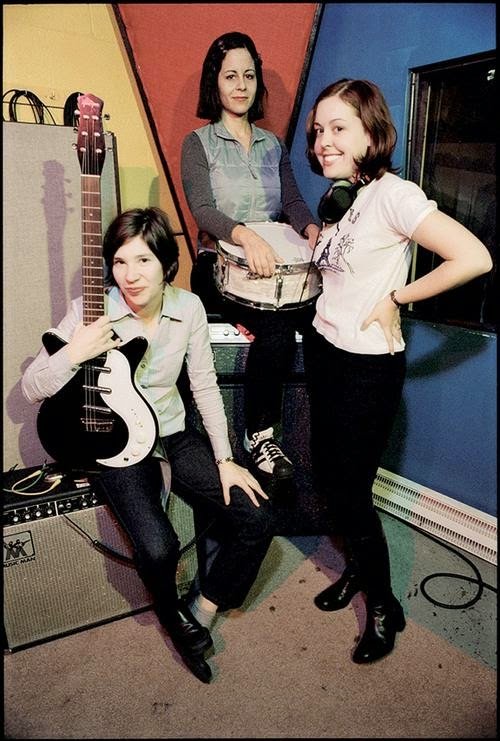
1997’s Dig Me Out was the first album after drummer Janet Weiss replaced Lora MacFarlane. According to Corin Tucker, “Musically, she’s completed our band. She’s become the bottom end and the solidness that we’ve really wanted for our songwriting.” Listening to their prior album, Call the Doctor, you can hear the difference – MacFarlane is a much more straightforward 90s rock drummer, with Weiss invoking borrowed fills from 60s girl groups and the British rockers who covered their hits. There’s a sense listening through Dig Me Out that every song is equal part fill and main beat – her style gives a texture that fills each song, already short, with novel grooves.

From left to right: Carrie Brownstein, Janet Weiss, Corin Tucker

That same approach to providing new stimulus grew in the songwriting by Tucker and Carrie Brownstein, too. Corin and Carrie’s vocal harmonies and guitar lines weave in and out constantly throughout the album. While you’d never confuse Corin’s powerful, intense vibrato for Carrie’s clean, more traditionally punk vocal, songs like “Words and Guitar” and “Heart Factory” trade lead and counterpoint often enough that (similar to some great Beatles songs) you can’t easily assign “this is a Corin song, this is a Carrie song.” The intense distortion on the guitars, set in alternative tunings, and Corin’s vocal power help mask some of the more delicate pop origins of some of their techniques.

The Beatles comparisons don’t stop with the harmonies. “One More Hour” tells the story of Carrie and Corin’s breakup, a gay Rumours descendant people don’t talk about enough. Coming up together as young twenty-somethings, Sleater-Kinney burned hot for a little over a decade before Carrie and Corin hung up the band to heal emotionally and spend time on other projects. Carrie had launched Portlandia by the time No Cities to Love came out. Writing The Center Won’t Hold, Carrie and Corin informed Janet that she was no longer an equal creative member of the band. While she’s been nothing but polite in public, she told them to fuck off. Their new music sounds like music by forty somethings – the tempo is slower, the riffs are synthier, there are ballads. They’re too old to write greatest-of-all-time songs about getting head. Corin’s a mom now, so “Little Babies” got taken off the setlist.

I’ve seen Sleater-Kinney twice in concert, both times since Weiss departed. For whatever reason, their new drummer, Angie Boylan, has never quite ascended to full membership in Sleater-Kinney. Sleater-Kinney is the first band I feel like I’ve gotten into right as they got too old to be the band in people’s brains. The first of those shows was rejected by the largely geriatric season ticket holders at the Ryman in Nashville – Carrie invited everyone to the front of the auditorium because it got lonely up there. But they seem to have found their new audience now, their show at The Sylvee a riot of people just as into the music from The Center Won’t Hold and Little Rope as they were “Dig Me Out” and “One More Hour.” I’ll probably keep seeing Sleater-Kinney until they’re too old to keep touring. I love this band a lot. 

KEY TRACKS: “Dig Me Out,” “One More Hour,” “Words and Guitar”
CATALOG CHOICE: The Hot Rock, No Cities to Love
NEXT STOP: Germfree Adolescence, X-Ray Spex
AFTER THAT: Rat Saw God, Wednesday

WEEZER (Blue)

WEEZER (Blue)
Weezer
1994

Weezer’s self-titled debut turned 30 on May 10th, 2024, the day I am writing this first draft. This album is the mainstream companion to the nerdcore rising of Weird Al Yankovic, They Might Be Giants, and Barenaked Ladies. Enough of the songs have plausible deniability that you can play one or two of them without devolving into a conversation about Monty Python, Mel Brooks, or stale YouTube videos. Almost every band signed to Fueled By Ramen cites Weezer as an influence. If I made a playlist of “the good Weezer songs not on the debut,” it would run about an hour, and every one of those songs is only really good in a live concert setting. Bassist and songwriter Matt Sharp left the band after Pinkerton somewhat acrimoniously, and with him he took all the harmonic complexity that makes the Blue Album more than “catchy.”

I absolutely love this album despite everything. While its relationship to Pixies’ Doolittle betrays them as the commercial correction to Nirvana, Weezer’s appeal lines them up alongside The Cars, Cheap Trick, Kiss. On this album, they’re writing extremely crunchy pop music that sounds phenomenal loud. Sharp and Patrick Wilson (no relation) make a perfect rhythm section responding to Cuomo’s best hooks. And I mean best hooks by a lot – Cuomo never wrote anything quite as complex and interesting as “Holiday”’s soaring, interlacing chorus, very consciously modeled after The Beach Boys’ Pet Sounds but sung without any of the beauty of Al Jardine or the Wilsons. It’s yelled more than sung, the “Heart! Beat!” call and response – until the even more explicit Beach Boys breakdown, which is sung in a clean, low baritone.

He never wrote anything as pleasantly catchy as the “Buddy Holly” chorus, either. The verse is kind of a mess, a weird yelp over a fairly simple guitar part. But it builds perfectly into that chorus, the little “Ooh oohs!” setting up that “Ooh wee ooh!” so nicely. And then, of course, that iconic, corny, major key solo. Almost half of this album has been isolated and dissected into memes, maybe none more than “Buddy Holly,” and yet it can’t spoil the fun of just listening to the damn song for me.

Every year I end up relistening to this album and end up with different favorite songs. This time, “The World Has Turned And Left Me Here,” “Undone (The Sweater Song)” and “Holiday” jump out – sometimes, it’s “Surf Wax America,” “In The Garage,” “Only In Dreams.” It’s, admittedly, almost never “My Name Is Jonas,” though I love playing it in Guitar Hero! And it’s almost never “No One Else” though I dig its uptempo groove and the way Cuomo sings “Hou-ow-ow-ow-ouse!” but is Cuomo at his more toxic incel vibe. That ends up dominating Pinkerton, an album I spend very little time with, and then all edge is flushed out by The Green Album in ‘01, making music only for commercials afterward. As I said, there’s some catchy tunes left. But as far as I’m concerned, it’s basically this one album, an album you can warp into the dumbest configurations and then still come back and love. 

KEY TRACKS: “Undone (The Sweater Song)”, “Buddy Holly,” “Holiday”
CATALOG CHOICE: “All My Friends Are Insects,” “The Perfect Situation,” “The Greatest Man That Ever Lived”
NEXT STOP: Sincerely, Dude York
AFTER THAT: Little Busters, The Pillows

DOPESMOKER

DOPESMOKER
Sleep
2003

I remember a high school night hanging out with an ex-girlfriend and her friends at IHOP till around two in the morning where one of the metalheads at our table invited me out to his car to listen to a song he was really excited about. The song was Dream Theater’s “Six Degrees of Inner Turbulence,” which he did not inform me was 42 minutes long. I got out around minute 10 to go back to my date, but I’ve never forgotten that introduction. I ended up seeing Dream Theater with him a few years later.

Let me inform you that while the original version of Sleep’s Dopesmoker (released as Jerusalem in 1997) broke its 52 minute runtime into six tracks, the version I know is a full eleven minutes longer and presented as one song. That ends up being more true to the listening experience anyway – while there are movements and instrumental breaks, the experience of Dopesmoker is largely one outstanding build, grooving on this one riff and a seemingly eternal drone. Some people might find it too heavy, too oppressive – as far as metal riffs go, I feel it maintains a level of pleasant record store noise. Avoiding harsh noise, blast beasts, staying in a guitar tone without the shrill soloing of Kerry King or Steve Vai – it’s not quite “optimistic” music, but it never signals doom, either.

That drone doesn’t get repetitive because Sleep is just so fucking conversational with their playing. They will introduce new notes, fills, and solos with such a casual approach to the spotlight. Because there is such consistency within the album’s sonic vocabulary, changes in time signature and in and out of sung verse come and go almost without notice. There’s a drum part that comes in around the 35 minute mark that electrifies the same guitar riff under an entirely new energy, and then just as quickly the drums back out and let the guitar charge some speed on their own. When the drums come back, they return to the rhythm the album began with, but the guitar has built new layers and the bass is filling new gaps. It progresses over the hour long runtime into something that Black Sabbath would envy.

The lyrics themselves, which tell the story of a modern stoner “weedian” being transported back to Biblical Nazareth and recreating the world’s image under the Weed Seed of Eden, are performed in a growling chant. The actual process of memorizing and recording this is an almost comical and nightmarish story of battling the equipment and finding that once they started playing, the song got slower, “freakier.”

David Rees referred to this album as like a “Mark Rothko painting hitting you over the head with a bag of hammers” in the New York Times. The album can either place you into a ceaseless meditation on a comforting surface or you can listen attentively for every textured brush stroke. I could honestly listen to another hour of Dopesmoker. I could loop this shit. It’s like sitting by a waterfall. Writing about Dopesmoker, I am both inviting you out to my car to hang out for an hour and fully aware that your date is back in the restaurant. Maybe instead we’ll just set aside an afternoon to sit in the sun and listen on a Bluetooth speaker.

CATALOG CHOICE: The Sciences (if you’re new to Sleep or sludge/stoner metal generally, I’d probably recommend The Sciences first!)

NEXT STOP: Mastodon, Blood Mountain
AFTER THAT:
Baroness, Yellow & Green

EMOTION

EMOTION
Carly Rae Jepsen
2015

Poptimism’s original incarnation won out of self-evidence. The original concept of poptimism is that pop music (as defined less by radio format and more by its relationship to disco, Max Martin and Madonna) is worth taking seriously in the same way as rock music. First coined in 2004, poptimism flourished with the early careers of Beyonce as a solo artist, Rihanna, Robyn, Lady Gaga – these albums are phenomenal, the songs enduring, the standards high. We’ve now hit a second wave that establishes that anything commercially successful must have inherent critical esteem. With maybe the sole exception of Maroon 5, who may be too crassly commercial and anonymous to defend, I’ve seen vociferous defenses of just about every artist with a radio hit this past decade. It’s frustrating because I want to find good music and want to know who to trust.

The rock critics who’ve integrated some pop music have kept space in their hearts for Carly Rae Jepsen, making her a borderline automatic answer for what “good pop music” someone might want to listen to instead of [insert musician people are going to yell at me for saying they made a bad album.] Her reputation for making more thoughtful, higher quality dance pop began with Emotion, or more specifically with the release of “Run Away With Me,” a song with a saxophone intro riff that served as her call to action. Within a year, she was the favorite new pop star of podcasters, rock critics, and millennial gays – but, with the exception of “Cut to the Feeling,” a song she made for children’s animated film Leap/Ballerina, she never really charted again. It feels just as contrarian to argue the market got this wrong, that the post-Robyn yearning of Dedicated or the 70s throwbacks of The Loneliest/Loveliest Time should have made her a superstar. But I can still feel strongly that “Too Much”, “The Loneliest Time,” and “Boy Problems” are all way better than [okay okay stop throwing things at me this is the problem i know i know]!

P.S. To be honest, sitting down to write this one, the first thing I want to talk about is the damn sweater. The original is a 1973 Valentino sweater, though in 2015 they reissued it. I’ve been fixated on it as a favorite garment for almost a decade now. If I could get something similar, it’d be my go-to pride gear until I wore it to shreds. The Chevron, the sleeve asymmetry, the lack of clearly identifiable pattern in the color sequencing – pop music demands an aesthetic, and that sweater is as sticky as many of the songs themselves.

Emotion betrays a lot of the standard practice of modern pop songwriting. It’s not edgy or especially personal in subject matter. Most of the songs have a minimum of four songwriters between music and lyrics. The songs are silly, very clean, mostly a lot of fun. There’s a couple that are hornier than others (“All That” with music by Blood Orange’s Dev Hynes, bonus track “Black Heart”) and a couple that are more general audiences in their aim (“I Really Like You,” lead single with a Tom Hanks music video, “Boy Problems”.) On paper, it’s the album for everybody and nobody designed by committee in the 2010s.

The secret to that formula is just getting a really great committee. Jepsen didn’t necessarily need to keep making pop music, working on Broadway as Cinderella in a Rodgers + Hammerstein production. “Call Me Maybe” gave her the clout and freedom to make whatever she wanted. As a result, she exhibits the creative control in choosing collaborators she actually admires, from Hynes to Ariel Rechtshaid (“Climax,” “Ring Off”, “Take Me Apart”) to Rostam (Vampire Weekend). It’s an organic collection of really smart people who contributed something alternative.

I can’t think of a better nine track run in pop music than the first nine songs on Emotion. Every summer, I have different favorites. When we were doing Maintained Madness, I recommended the title track as our entry because it has moments echoing almost every great moment of the album. The synth beat is delightful, the crescendo from verse to chorus is rousing every time, and Carly’s voice is as bright and energetic as anywhere else. But I love just as much the melancholy of “Gimmie Love,” a song which presages some of the sound of Dedicated. Today, I’m really enjoying “Let’s Get Lost,” which brings back the saxophone from “Run Away With Me” for a more 80s solo riot, a little bit sitcom, but a lot of fun. I’m still not tired of any of these songs. I suspect I never will be.

KEY TRACKS: “Run Away With Me,” “Emotion,” “All That”
CATALOG CHOICE: Dedicated, The Loveliest Time
NEXT STOP: Freetown Sound, Blood Orange
AFTER THAT: Women in Music Part III, Haim

REMAIN IN LIGHT (Kidjo)

REMAIN IN LIGHT
Angelique Kidjo
2018

As an undergrad, I remember saying “The Talking Heads [sic] are the most underrated band in rock history.” I was going off an understanding of rock history shaped by classic rock radio, Rolling Stone magazine, and T-shirt shops. And even I was not really listening to Talking Heads all that much – I’d bought a copy of Remain in Light, their most acclaimed album, and I really liked it. Later, when I listened to their other albums, Remain in Light faded quite a lot in my estimation. It remains a transitional album in my ears, a mix of the New Wave and Brian Eno experimentation that defined the band’s early years and the branch into funk and the polyrhythm of Fela Kuti. I preferred the interpretation of those songs on Stop Making Sense to the studio recordings.

Kidjo’s reinterpretation of the album reasserts the African influence on the album. The instrumentation and arrangements she’s applied to these songs gives them such life. She gives some of these songs new tempos, some of them new brass and woodwind parts, new grooves, but they’re all perfectly suited interpretations of the songs. In her writing about recording the album for Pitchfork, Kidjo talks about how her approach was to build from percussion back into the full song. I wonder if Byrne borrowed that concept back when constructing the stage version of American Utopia, where every member of the cast carries their instrument, so many of them drums. 

While I love David Byrne with my whole heart, I think few would argue that he’s traditionally as strong a singer as Kidjo. But I adore that she does not pursue making these songs as melodic as possible. Kidjo sings Remain in Light with a great sense of humor, pushing the momentary anger, frustration, revelation over diva architecture. The way she sings “Once in a Lifetime” is with so much joy and naivete, a song to so many defined by that televangelist ecstasy of Byrne. The harmonies she adds throughout fit beautifully – her new vocal additions (generally not captured in lyric sheets, likely in Fon or Yoruba) feel equally natural.

This album highlights the false ceiling of my imagined canon of estimation as a young firebrand. It’s not that I was wrong that Talking Heads are more interesting than Aerosmith or AC/DC – it’s that I imagined I’d already heard the world’s most important music at twenty years old and everything else would just be “filling in gaps.” At that age I’d only read the name Angelique Kidjo. I didn’t imagine how she could blow the roof off the pop canon. This month, as I ease back into writing about music, I’m writing about a lot of that pop canon I’ve loved all these years – I’m hoping next time I have the confidence to push myself a little farther afield.

KEY TRACKS: “Crosseyed and Painless,” “Once in a Lifetime,” “Listening Wind”
CATALOG CHOICE: Aye
NEXT STOP: Who Is William Onyeabor?, William Onyeabor
AFTER THAT: The Indestructible Beat of Soweto, Vol. 1

MY NAME IS MY NAME

MY NAME IS MY NAME
Pusha T
2013

Of every rap album, this might be the one where the highest number of full verses wander back into my brain. Ten years removed from Clipse (whose “Grindin’” I maintain is the best song of the 00s,) Pusha T reclaims all-time status with My Name Is My Name, his debut album after a number of mixtapes exploring his identity and sound as a solo artist. Unlike many of the rap albums of the last fifteen years, the track list is sparse, with twelve radio length songs and zero bonus tracks or skits.

The musical variety on this album within that short runtime is impressive. There are aggressive songs that only make sense in the context of the house inspired album rap of Death Grips and Danny Brown. There are ballads that serve as alternatives to Drake’s sad rap – there are gritty, trap beat songs ready for NBA championship ads. Pusha unifies it all, from the movie references, the coke jokes, the stoic exhaustion of a man who’s been doing all this a little too long. He’s elevated to another level as a rapper, with the complexity of his flows and the energy of his vocal delivery reaching new highs. 

Normally I only do one video for these album write-ups, but this video is so incredible!

The list of collaborators is top of the industry then and now, including Future, Pharrell, Jeezy, 2 Chainz, Rick Ross, and Kelly Rowland. In a top 5 all time Kendrick guest appearance, “Nosetalgia” has a second verse that shatters the at-bats by everyone else. By the time the “taco meat laying on his gold” delivery arrives, I’m back in my little rap dork driver’s seat, hitting every line like I’m doing it at karaoke. The obvious bum note is Chris Brown singing the hook of “Sweet Serenade,” a choice I’d already feel shitty about given his history of abuse, but the hook also doesn’t sound especially good. You aren’t listening to My Name Is My Name for its kind heart – this is coke rap with violence at its outskirts (and sometimes center stage.) 

At some point, maybe I’ll feel like writing about Kanye West again. His work meant an incalculable amount to me for many years – his disintegration was probably less into being an offensive reactionary and more into being a very boring one. The closest I’ll come this year is his executive production on this album – while every song he’s credited for producing has an essential collaborator, it’s hard to deny the aesthetic overlap with his album Yeezus earlier that year. At the time, when I was hooked on the guy, I loved this album all the more for its part in that myth.

In my memory, this album retreats into the “yeah, it was cool when it came out, but how great is it really?” zone only maintained by cowards. The moment I hear the opening shrieks of that Hudson Mohawke sample and the insane beat on “King Push,” I’m all in forever. “CB4 when you rhyme, Simple Simon.”

KEY TRACKS: “King Push,” “Numbers on the Board,” “Nosetalgia”
CATALOG CHOICE: King Push – Darkest Before Dawn: The Prelude
NEXT STOP: Wolf, Tyler the Creator
AFTER THAT: Shook, Algiers