Last year, I celebrated my birthday by publishing 60+ write-ups about my favorite movies, albums, and video games. It’s one of the most rewarding creative projects I’ve ever taken up, and I look back at those pieces with pride and share them when a friend picks up something I love. On top of just having enjoyed the process of publishing so many words, I enjoy having the pieces to look back on themselves, a testament to my thoughts and feelings about a work, maybe not the totality of what I want to say about something I love but a representation of some of that love.
I aspired to do the same project this year, and every year moving forward. Depression and motivation got away from me. Some of that writing energy went into Horizon Line, which I’m very proud of writing each week, and I also accept that it’s taken up some of my creative energy to maintain. I have far fewer pieces ready today than I did in 2024.
Rather than abandon the project entirely, I’m adjusting the timeline. Last year, I published 60 pieces in 30 days – this year, I’m committing to spending at least 20 minutes per day writing, probably with an interruption or two related to work or celebration, until I hit at least 60 pieces. That may take the summer – that’s okay! I’d rather have the gift to myself of celebrating my favorite works than cut myself the slack, and the timeline will matter less than the reward.
Anyway, expect to see me post a new piece to my site every few days for the rest of the summer. I have eight pieces drafted so far. I’ll publish one per day for the next week and see where we go from there. If you’re reading what I’ve written and enjoy it, please let me know! The encouragement will help with the motivation, and I’m sure I’ll be happy to tell you about the stray thought I had the day after publishing that didn’t make it in the piece.
As these articles go up, they’ll continue to be linked from this landing page. The ones I have written out but not linked are still in the drafting process.
Satoshi Kon, whose life ended prematurely to pancreatic cancer at 46, attained a legendary stature directing four films and one television series. His most acclaimed film is Perfect Blue, his debut, a gnarly thriller about pop stardom and internet stalking, an outrageously prescient work, and it carries his trademark mastery of character motion and facial expression. When a character eerily moves too quickly, too lightly, it alerts the sense of wrongness quickly. He takes that skillset next to Millennium Actress, a dreamlike “biopic” of a fictional actress inspired by Setsuko Hara, using abstract fantasy to bring narrative propulsion and metatextual emotional depth. Recently reclaimed (after a much better translation to English) is his Christmas film Tokyo Godfathers, which celebrates found family with a flair of more cartoonish animation. And his television series, Paranoia Agent, was likely the introduction for many people my age who saw the show on Adult Swim, a mystery show about serial assaults by a young man with rollerblades and a bat. Its shockingly episodic structure and willingness to dramatically change tone from episode to episode create a memorable and challenging arc, and it represents Kon’s most dreamlike narrative thus far.
Kon’s career concluded with the film Paprika, in some ways a summation of every piece of Kon’s filmography thus far. Paprika is a dream therapist, using a science fiction technology called the DC Mini to participate in psychiatric clients’ dreams and record the encounter, working through repressed anxieties and symbols to identify traumas or needs. Paprika is also the alter ego of scientist Dr. Atsuko Chiba, one of the lead scientists of the DC Mini development team, who is using the device before it’s officially market tested and fully “safe” to use. When it appears that terrorists are using the DC Mini to invade people’s dreams and cause nightmares, delusions, and havoc, it becomes the DC Mini team’s responsibility to track down the people abusing the technology before the program is shut down permanently.
The film begins with an extended dream sequence with one of Paprika’s clients, Detective Toshimi Konakawa, who is experiencing debilitating panic attacks he believes may be related to the murder case he’s working. This dream contains elements recognizable to film fans – the film draws attention to Tarzan, but it also quotes The Greatest Show On Earth, and, most directly, From Russia With Love and Roman Holiday. When Paprika asks Konakawa about movies because of these references in his dream, he shuts down, even more than when discussing the murder – his trauma lies there, and he’ll need to be pulled through his own past to remember why he’s so stuck.
After Konakawa’s dream, the opening titles play. If you’ve never seen them, you can watch them now.
I have probably watched these opening titles a hundred times outside of the movie. For my money, this two minute sequence might be the single greatest work of cartooning in animation history. There are so many emotionally thoughtful ideas expressed with incredible economy. The way Paprika can transport and transform herself by way of images is a delightful power fantasy, the ecstasy of the digital pen giving her flight, teleportation, transmogrification. She is omnipotent but not entirely infallible – we see her caught off guard by rushing cars until she can stop them. I love the detail of Paprika putting the jacket back onto the sleeping office worker, whose desk has photos of the woman he loves at home – this all-powerful being is a healing spirit. But then she also doesn’t have time for boring, boorish men, and the image of her four reflected, increasingly disgusted reaction shots is only outmatched by her heading out to the street to coast away on the t-shirt of a rollerskater. I love the music by Susumu Hirasawa, music that is optimistic and futuristic, music that is a little off-putting but also catchy. And, lastly, I love that the transformation of Paprika back into Atsuko happens gradually across multiple cuts, communicating their different personalities before Atsuko speaks a single word.
All of these emotions are brought forward into the film, a film whose plot is hard to follow on a first viewing but whose emotions and vibes are immaculate. Elements of the shared dreaming were later made more familiar to American viewers by Inception, but it is otherwise a very different film – where Inception views dreams as a magic trick that works best as convincing its targets that the dream is really happening, a heist performed by experts looking to fool their client into believing the pitch, Paprika instead embraces the artifice in search of something grander. Postmodernism is often applied to works about dreams because their inherently abstract plotting bring to mind questions of identity and The Cogito, but Paprika goes a step further to embrace the communal and political aspect of postmodernism. If modernism is defined by the death of institutions, Paprika’s vision of postmodernism proposes that as the foundation for building the impossible.
Maybe the most iconic dream image in Paprika is the “dream parade,” the dream of a delusional patient where a parade of toys marches toward some unknown goal. The parade has its own terrifying electronic theme song. It also has a trademark nonsense poetry, one which starts somewhat incomprehensible but becomes a rhythmic series of absurdist social commentaries over the course of the film. The collection of toys represents different eras of traditionalism, from daruma and hina dolls to retrofuturistic robots and anatomical dummies. Eventually, cartoon characters and yokai join the mix – the clash of the Golden Age of Hollywood references and the electronic music of the postmodern title sequence returns again in the parade dream, and the battle between progress and conservation ends up being essential to understanding the film’s mystery.
Detective Konakawa, caught in a dream parade.
This might make the film sound really intellectual and, well, boring – again, like the title, these ideas and emotions are generally presented simply as part of the action rather than in the endless dialogue of other philosophical films. These dreams are seen in thriller scenes of investigation and action, Atsuko exploring potential sites of danger, Paprika trying to identify potential dream invaders and fighting them off in fantastical chase sequences. The more impactful dialogue in the film is emotional – one wonderful scene between Konakawa and Paprika’s boss is them reminiscing over being in college, “when we used to talk about our futures.”
I’m going to wrap up this section because I’ve got a spoiler wall coming. Paprika is, since Tokyo Godfathers’ recent translation, often the bottom ranked of Kon’s films. I’d say this owes to two primary criticisms I’ve seen – the first is related to its portrayal of Dr. Kosaku Tokita, the primary inventor of the DC Mini and a very obese and childish character. While I have come to peace with Tokita’s character, there are undeniably jokes about his body that are fatphobic and meanspirited – Kon’s biggest flaw, across all his work, is how he handles unconventional bodies, generally marrying psychology and body in ways that can feel cruel. The second is general criticisms of the film’s plot and final act, which are confusing and can feel loose. In the spoiler section, I’ve identified a reading of the film that helps me understand both of these aspects, and I hope they help those of you who’ve seen the movie and are scratching your heads. But outside of the film’s relatively divisive final act, the very final scene of the film, which closes on Detective Konakawa, is one of the kindest and most wonderful endings to a film I’ve ever seen. I love Paprika. Rest in peace, Maestro.
SPOILERS FOR PAPRIKA
Let’s talk about the very climax of Paprika – we see the dream parade arrive in Tokyo. Paprika has been swallowed by the toy robot Tokita, and Detective Kanakawa has allied with the Radio Club bartenders, who have come to the real world through the spread of the dream. Kanakawa and the bartenders come across the great pit of despair.
Just before the Chairman emerges in his dark hole, Atsuko appears to Tokita to dream. She dreams of finally confessing her love for him, that the fact that he “swallows everything” is what makes him so much fun. Her coldness and cruelty at his childishness and obesity is what she thinks she’s “supposed” to feel about this genius savant. But in her mind, there is no one else. The dream then continues on, once the chairman appears, and Atsuko becomes the child who swallows everything. Through this dream, she vicariously experiences the thrill of eating it all up, the muck and the dreams, until she grows back to her adult, complete self. Finally completing this fantasy, when they wake up, Atsuko can finally be warm and loving toward Tokita, and they announce their marriage just before the credits roll.
It’s through this dream that Atsuko is able to finally make peace with herself and love Tokita. There is a subliminal thread of crosswired jealousy and romantic feeling throughout the DC Mini team. Tokita is at the center of the team, and his childishness allows him to focus on his creations, but he is also approval-seeking when it comes to Atsuko. Himuro is not envied by anyone, and we never hear his character’s true voice, but Osanai claims Himuro is jealous of Tokita as the head inventor – Himuro is also covetous of Osanai’s romantic affection, with Atsuko calling out Osanai “selling his body for the DC Mini” to him. Osanai himself is sexually fixated on Atsuko, but also is jealous career-wise of both Atsuko and Tokita, stating as much openly, even in his colleague persona. Chief Torotaro is in love with Paprika, and finds himself torn between his allegiance to Atsuko and her alter ego. But Atsuko herself only really thinks of Tokita, and her frustration, affection, admiration, and envy can only be sorted out by her experiencing a dream of his euphoric gluttony, much the same way Detective Kadokawa can only process his guilt by defeating the trauma in the dream.
This lingering thread also finally helps me close the loop on Tokita’s obesity. The romance between these characters never quite clicked for me, and the resolution of this nightmare image that goes unremarked upon really left me grasping for meaning and coming up short. Now, the understanding of this physical rejection as a barrier for Atsuko’s unspoken feelings about Tokita’s contradiction helped anchor his obesity as more than just a joke. Atsuko can’t see for herself the sort of therapeutic observation that Paprika can offer her clients – that she’s diverting a vulnerable, kinder feeling by affecting a societal cruelty against Tokita and herself. We’ve seen Konakawa resolve his arc just before the dream crashes into reality – I now understand the way the remainder of that dream concludes Atsuko’s.
“But what about the rest of it?”
After Atsuko saves the world, Konakawa receives Atsuko and Tokita’s wedding notice with a laugh. He’s already resolved. He leaves work and sets off for something to do. Posters for Perfect Blue, Millennium Actress, Tokyo Godfathers, and Satoshi Kon’s unmade The Dreaming Machine decorate his walk. This scene, to me, is an impossible dream of imagining how we can reclaim our lives, the real power fantasy being the belief that we can, in fact, be anything, do anything, and find community. It imagines, after all the fantasy we’ve seen, that an equally powerful fantasy to saving the world is saving ourselves. Just before the film cuts to credits, Konakawa walks up to the box office and requests: “One adult, please.”
There are people who will tell you this was “a bad year for movies.” Those people are being lazy or incurious. I’m not sure it’s possible for there to really be a bad year for movies if you are a person who watches films from around the world, films of all budget levels, films in all genres, documentaries, animated films, etc. Even 2020, which saw COVID-19 take a sledgehammer to a schedule full of movies best seen in theaters, still saw a remarkable slate of documentaries and wonderful dramas like Let Them All Talk, Da 5 Bloods, and Steve McQueen’s Small Axe anthology.
But, no, this was not an all-star year. There are a handful of master filmmakers who released 2024 films, but those that weren’t given a limited release in January of 2025 released to pretty divisive reactions. Instead, this is more of a rebuilding year. People have been projecting doomsday at the death of the New Hollywood directors who top their lists like Spielberg, Scorsese, and Schrader. A look at this year’s best films highlights a new class of exciting filmmakers who have many years ahead of them, actors who are getting roles which unfold a new level of their talent, and an audience that is seeking out these films and beginning to take their fresh talent seriously. And these “best films” are not weaker for that fact – you just have to go looking a little deeper.
You’ll see a few Oscar players in my lineup – I also saw a few more. There is a lot I like about Anora, but I found the “driving around” portion of the film interminable and unfunny, and I think that really hampered my willingness to engage in anything more intelligent it might be trying to do. I have nothing nice to say about Emilia Perez other than that it is beaten out as the worst movie I saw last year by Aggro Dr1ft, my first theatrical walkout in a decade of logging movies on Letterboxd. The Brutalist is the latest in a sad group of movies that montage past their ostensible subject so they can be a more conventional drama about something less interesting, but I loved Daniel Blumberg’s anthem and Lol Crawley’s nighttime photography. I gotta shout out Scoot McNairy, Edward Norton and Monica Barbaro in A Complete Unknown, a movie I enjoyed mostly because a character would play a song and about a minute later someone else would join in and start playing with them midway through – they brought humanity and energy to characters that could have been so much more stock. And, of course, our future best picture winner Madame Web, whose web connects us all, was disqualified for this list because it was clearly originally released in 2003.
A hearty “see you later” to All We Imagine As Light, Between the Temples, Bird, Blitz, C’est Pas Moi, Dahomey, Exhuma, Hard Truths, Hundreds of Beavers, I’m Still Here, Kinds of Kindness, La Chimera, Look Back, Love Lies Bleeding, Maria. Nightbitch, REFORM!!!, Rebel Ridge, Riddle of Fire. Strange Darling, Stress Positions, The Bikeriders, The End, The Imaginary, The People’s Joker, The Room Next Door, and The Substance, among many others.
HONORABLE MENTION: My dad never told me I love you
Dir. Adrien Caulier YouTube
I couldn’t quite figure out where to place this short, but I wanted to introduce people to it. I don’t personally absorb much from photo albums – maybe that’s why I admire the presentation of this complex relationship Adrien Caulier portrays in My dad never told me I love you. Caulier explores his grief in a meditative way, and the formal technique highlights an emptiness that cannot be filled by memorabilia.
24. T Blockers
Dir. Alice Maio MacKay Shudder, VOD
A major year for trans cinema between T Blockers, I Saw the TV Glow, and my still-unseen People’s Joker and Stress Positions, T Blockers is microbudget horror about finding Nazi creeps with brain parasites and righteously beating their heads in. Even for a 75 minute movie this gets so loose you’re begging for every tangent to be some new way forward but the core charm and pissed off retaliation is so strong that it makes for a perfectly solid entertainment. I’ll be looking forward to catching up with the other horror by director Alice Maio Mackay, who seems to have developed a pipeline for making movies quickly outside a system that can say “maybe don’t make the movie about killing transphobes” and win the argument.
23. Civil War
Dir. Alex Garland Max, VOD
In terms of base pleasures, Alex Garland’s Civil War is well acted, loud, full of ironic and high energy needledrops, and occasionally strikes a high-contrast colorful look that is visually striking. I really like Kirsten Dunst’s performance as war photographer Lee, almost as much as Stephen McKinley Henderson’s performance as the mentor who should’ve known better than to come along on the trip into enemy territory and Jesse Plemons’ one-scene performance as Sergeant Patriot Genocide. Cailee Spaeny’s solid as the naive rookie who insists on tagging along, though I probably saw more discussion of her really good pair of jeans than her performance. This film is not really an action movie or schlock, at times operating on a level of dramatic stakes I might call “ponderous.” But I’ll offer a fair warning that in terms of political satire or commentary, this has very little to say, either. If there are greater ideas on offer, they’re the self-reflexive impulse of Garland meditating on why people still see value in telling stories in a world that seems to be falling apart.
22. Only The River Flows
Dir. Wei Shujun VOD
A small town murder mystery where the crime itself is running away from being answered, Wei Shujun is already on his fifth feature film and yet none before Only the River Flows have been seen by anyone I follow except the wonderful Ryan Swen. Our lead detective (Zhu Yilong) is being told to stop looking for the “real” killer because everyone has accepted the first suspect, and his refusal to settle is costing him so much sleep that reality and fantasy seem to be conflating. Cinematographer Zhiyuan Chengma is able to deliver a classical, sludgy 16mm look that lends with the more surreal sequences in the film’s back half, but you have to be ready to tolerate a metatext about writer’s block and trying to tell the real story even when the obvious one is right in front of you.
21. Janet Planet
Dir. Annie Baker Max, VOD
Lacy (Zoe Ziegler,) 11 years old, bails on summer camp to go home with mom, Janet (Julianne Nicholson,) and spends the summer watching Janet fall in and out of three weird relationships. The debut film of acclaimed playwright Annie Baker, Janet Planet offers two of the best performances of the year, and watching these characters try to figure out the changes in their relationship as Lacy becomes more aware and adult is a pleasure because Baker never condescends to either character. Janet is a sometimes frustrating mother, and she’s a granola hippie in ways I find unrelatable, but she never is really positioned as negligent or disinterested – she’s loving, and when she and Lacy are talking, she’s so warm and thoughtful. And Lacy is a sometimes annoying or frustrating kid, but she’s never diminished as “a weird kid from hell,” either. Of the three relationships, my favorite is the one with Sophie Okenedo, an old friend getting out of a theater troupe/cult who doesn’t seem ready to get her life together either.
20. Hit Man
Dir. Richard Linklater Netflix
Hit Man offers two great chapters. The first is the SNL demo reel for Glen Powell, who is playing an undercover informant disguised as the “ideal” hitman for the vengeful strangers who summon him to various diners or empty lots. It’s a ridiculous, over-the-top series of impressions and characters, and while simple, it’s very entertaining. The story arrives when Powell’s hitman job leads him toward a new girlfriend and he has to continue to play the role. Things get complicated, and when they peak in an exchange involving Notes app, this movie takes off in a sequence that must have been a thrill to write and develop. In between those two parts of the movie, Richard Linklater takes a loose, hangout approach, and it mostly settles on enjoying Glen Powell’s actual best performance in the movie as a neurotic nerd.
19. Immaculate
Dir. Michael Mohan Hulu, VOD
Last year, I gave an honorable mention to The Pope’s Exorcist for being perfectly pleasurable before nailing the final twenty minutes. Immaculate is significantly more tense before its third act, offers some memorable and colorful imagery, and then goes just as hard in the third act. Sister Cecilia (Sydney Sweeney) joins an Italian convent and quickly finds herself pregnant – unsurprisingly, things get sinister fast. I’m sold on Sweeney, who auditioned for a failed version of this script a decade ago and bought the rights herself to make with director Michael Mohan (who previously worked with her on The Voyeurs.) I think she’s great in this, playing a balance of apprehensive fear and resignation before the scream queen horror arrives. When you throw on a random horror movie, this is basically the platonic ideal.
18. Conclave
Dir. Edward Berger Peacock, VOD
Probably best described as “Succession with cardinals and less cussing,” Conclave is one of the most entertaining dramas of the year. That description sells it slightly short, though, as Edward Berger and cinematographer Stephane Fontaine sometimes capture high-contrast mannerist images, and Volker Bertelmann’s use of bass string plucking is a stylish evocation of older mysteries. Ralph Fiennes as Cardinal Lawrence leads a collection of expert character actors through the papal conclave election, and the twists of who’s scandalized and who’s willing to sell out are great, soapy fun.
There’s a reason the film has found its strange connection as a meme object for the queer community – its characters are archetypical, reminiscent at times of anime characterization or reality show contestants. The film finds itself somewhere between a moving, insightful grappling with the culture war within the Church – where there’s more and more tell of young reactionary priests who would prefer to cut the music and not even face the congregation, and congregations returning to women wearing the veil – and a more crowdpleasing work of liberal values showing their virtue. I have to make especial note of Sergio Castellito as Cardinal Tedesco, maybe the slimiest and most bigoted of the film’s holy men, who plays his villainy with a shit-eating grin and a puff of the Most Valuable Vape.
Chime is a horror barely-a-feature with a simple premise – a cooking instructor (Mutsuo Yoshioka) is told by one of his students about their obsession with a ringing chime no one else can hear, and to his horror he starts to hear it too right before terrible things begin to happen. In forty five minutes, Japanese horror legend Kiyoshi Kurosawa (Cure, Pulse, Sweet Home) creates three or four indelible sequences with incredibly simple aesthetics, instead using solely great performances and incredible blocking. There’s a horror reaction in this that’s one of the best single acting choices in any movie this year. It’s quickly clear that even if nothing horrible has happened yet, things were off before the cameras started rolling – not knowing which pieces are going to feed back into the narrative left almost everything feeling portentous. Fair warning that this is a mystery that remains enigmatic – the lack of resolution is part of the point here, maybe reminding me of nothing more than Junji Ito’s “The Sad Tale of the Principal Post.”
16. Dune Part Two
Dir. Denis Villeneuve Max, VOD
Dune Part Two is a marked improvement over Villeneuve’s first, with Javier Bardem getting to play a great comic relief version of Stilgar and Greig Fraser capturing a far more colorful Arrakis than before. Rebecca Ferguson, who stole the first film as Lady Jessica, hands off her expanded role to Zendaya as Chani, and Zendaya nails the repulsion when Paul Atreides takes on his role as Lisan Al-Gaib. This film would potentially make this list for the Giedi Prime sequence alone, and Austin Butler as Feyd Rautha is one of the best villain performances in years. I adored the inky-black photography, the framing of Butler and Lea Seydoux, the punctuation of Butler stumbling out “What do we do?” like a cowed child. But, I say again – I still prefer the Lynch film!
15. On Becoming a Guinea Fowl
Dir. Rungano Nyoni Wider Release March 7th
I haven’t seen director Rungano Nyoni’s previous film, I Am Not A Witch, but I’ll have to go back after being pretty swept up by On Becoming A Guinea Fowl. The film has been misrepresented as a black comedy – it opens with a dead body in the middle of the road and a Supa Dupa Fly costume, but it becomes clear very quickly that this is a film about family trauma and sexual abuse. That isn’t to say the film doesn’t have a sense of humor – more than anything, it reminded me of Sean Baker’s Tangerine, which veers between farcical cartooning and intense emotional violence. The performances of the women in this family, especially leads Susan Chardy and Elizabeth Chisela, navigate the film’s humanist despair and its righteous anger by keeping things light and restrained, their characters talking shit, pushing the action forward, and taking moments of rest. As a study of complicity and unwillingness to confront the crimes of the dead because they loomed large in our lives, it remains an effective study of how respectability can perpetuate oppression.
14. Red Rooms
Dir. Pascal Plante AMC+, Shudder, VOD
Red Rooms has largely been sold to me as a tech update of Videodrome, our protagonist Kelly Anne (Juliette Gariepy) following a high-profile murder trial into the dark web. This isn’t quite accurate, though – unlike Cronenberg’s films, this avoids body horror or graphic gore, instead operating almost entirely in implication and reaction. We see people watching snuff – their reactions (or lack thereof) tell us what we need to know about what we’re hearing and what we need to know about them. But the real journey is meeting Kelly Anne, whose motivation and internal life remain so distant as to transform from enigma to sociopathy, the Patrick Bateman of true crime. In some ways, this is closer to Paul Verhoeven’s Elle, where the violence’s presence as mostly verbal makes things more uncomfortable. Almost the entire film exists as a character study of this protagonist, and while there are times I felt I lost the internal logic, it’s gripping throughout.
13. Babygirl
Dir. Halina Reijn VOD
Babygirl is arguably the most misunderstood movie of the year, with too many people watching it expecting either lurid hardcore sexuality or something coherent to say about sexuality and sociological gender roles. I don’t think it’s even really pretending to do either – Babygirl is about a sexually frustrated middle-aged executive who carries an immense amount of shame around her fetish (this isn’t a spoiler, it’s the opening and premise of the movie) and pursues it in unhealthy escapism. Nicole Kidman and Harris Dickinson both sell the lack of familiarity and comfort in their affair while also selling the pleasure and empowerment it’s bringing them – Dickinson in particular is remarkably elusive, not because it feels like he’s mysterious, just because it feels like he’s really opaque. You never know whether he’s going to get frustrated and shut down or whether he’s continuing his power play. I love the music in this movie, both the score and its weird vocalizations and the needledrops. It’s kind of vanilla, kind of shallow, but I had fun and enjoyed its character study. Even just on a camp level, I enjoyed getting to watch Kidman make the 😲 emoji face and wear beautiful outfits. I wish it ended better.
12. Queer
Dir. Luca Guadagnino VOD
I was prepared, at some level, to separate the art from the artist with Queer, but I wasn’t expecting to have to separate the art from the other art. The William S. Burroughs novella Queer is combined here with elements of Junkie, neither of which I’ve read, but also with elements of Burroughs’ life and David Cronenberg’s Naked Lunch. In Queer, Bill Lee is a gay heroin addict who becomes fixated on a young man – in most ways, Lee is an analogue for Burroughs, who briefly went by the pen name William Lee. Burroughs wrote the original manuscript of Queer while awaiting trial for the “accidental” murder of his wife in a William Tell stunt. Cronenberg brings this and other elements of Queer into his Naked Lunch – Guadagnino extends that conversation into Queer, directly lifting shots and rhythms from that film.
It is a funny, queasy, often deeply uncomfortable film. Daniel Craig is remarkable as Lee, equally terrifying and pitiable, a man who was handsome a decade prior and doesn’t know he’s too wasted to get away with being such a prick. I think the way this plays out as a film about what happens when we chase queerness back into the dark and allow old creeps to be our guides through this world is just as relevant as it was in the gentler Call Me By Your Name. Jason Schwartzman is remarkably funny as a furry little hobbit of a man who also gets far more play than Craig’s Lee. If this film is lower than the sum of its parts, it’s because I really hated the epilogue, which drove the links to Burroughs and Naked Lunch too far for me.
Perhaps the most frustrating casualty of the strikes of ‘23 sliding the slate forward, Challengers and Queer deserved their own distinct awards runs by the brilliant team director Luca Guadagnino has assembled. Like Challengers, I love the screenplay written by Justin Kuritzkes, who is sharply funny, so elegant at drawing distinctive characters, and is careful with withholding information. I love the cinematography by Sayombhu Mukdeeprom, the genius who shot my previously beloved Beckett and Memoria (as well as Challengers and Trap this year!), whose visual language creates a dreamlike city of expats living in lush, painterly light. I love the costumes by Jonathan Anderson, who in both Challengers and Queer creates distinctive modern wardrobes that both feel immediately recognizable and also visually iconic. I love the music by Trent Reznor and Atticus Ross, working in a subtler mode compared to their Challengers score, but one that helps create the intense loneliness of Bill Lee’s exile.
I’m not sure when I was a teenager watching Rejected on YouTube that Don Hertzfeldt would become, almost inarguably, America’s greatest working animator two decades later. Between his feature film It’s Such a Beautiful Day and the wonderful World of Tomorrow trilogy of shorts, he’s demonstrated incomparable insight into generational trauma, the ever-warping detachment of memory, and the increasingly isolated modern world. ME takes these themes and applies them to a musical short film, replacing his often very poignant dialogue with the pulsing beat of Brent Lewis’s Drumsex and classical aria. That doesn’t leave ME too abstract – rather, it’s maybe the most straightforwardly funny film and directly political he’s made since his film school work. I don’t want to spoil what happens – Hertzfeldt’s own advertising for the film is deservedly enigmatic – but I can say that Hertzfeldt’s animation has rarely been more expressive or better edited.
10. A Different Man
Dir. Aaron Schimberg Max, VOD
A film which threatens to be too clean and manages to disorient over and over again, Schimberg’s A Different Man offers a New York City that feels disjointed from time entirely. Sebastian Stan’s Edward lives in a shitty apartment when he’s not starring in altogether awful ads, the limit of the work he can get with his advanced neurofibromatosis between frequent surgeries. Miserable, he receives an opportunity to pursue a miracle cure right as he falls in love with his new neighbor (Renate Reinsve) – when the cure works, he takes a new lease on life, only to meet another man with the same condition that lives the life he wishes he had all along.
Working with a sense of humor that bounces between the irony of Dostoevsky and the simple pleasure of a good Simpsons episode, this is the funniest movie I’ve seen this year. A Different Man navigates heftier subject matter like representation and ableism with a willingness to go for the joke and yet always maintains its tension. The Umberto Smirelli score and Anna Kathleen production design maintain a sinister undercurrent to Edward’s machinations. I’ve never seen Stan better playing both the empathetic frustration of Edward’s emotions without any ego about the dark and often stupid places the character goes. And Adam Pearson has rightfully become the centerpiece of discussion of this film, an instantly charming socialite who is also constantly one-upping Edward at every turn.
9. The Beast
Dir. Bertrand Bonello Criterion Channel, VOD
If you need one more dollop of the Lynchian to cap off your mourning of film’s greatest dreamer, Bertrand Bonello’s The Beast contains an overt love letter to Lynch’s style. Bonello begins The Beast as an adaptation of Henry James novella The Beast in the Jungle with a science fiction frame, and in that it is a gorgeous, sincere, tragic story of someone whose existential dread has swallowed their dream of love and happiness. The gauzy camerawork gives these scenes the soft lighting of rococo, and the production design of this sequence is rich. Lea Seydoux plays her usually catlike coldness, unknowable but alluring, and if you’ve not seen her in a film before, it tells you everything you need to know about her persona.
But in his next trick, Bonello transposes that story out of time and reincarnates it in Los Angeles, resurrecting elements of Lost Highway, Mulholland Dr., and Twin Peaks The Return to set the lead lovers at odds. The two leads, Seydoux and George MacKay, are two of the best performances of the year, communicating so much with posture and expression that their characters are afraid to say aloud. And yet most impressive is the way Seydoux plays the relative comfort of that Los Angeles storyline, logically aware something is off but emotionally unguarded from whatever that might mean.
At some level, this is the most frustrating film for me in this top ten, because it gets a little too cute with its homages and its metaphors and at times drowns itself in pastiche. When it’s working, it is one of the more profound and beautiful films of the year. I hope I grow to love it even more over time.
8. Furiosa: A Mad Max Saga
Dir. George Miller Max, VOD
[this is an abridged version of a longer piece i’d drafted about Furiosa and was never quite happy with. Hopefully, it entertains you now.]
Furiosa is a fun action film full of bewildering stunts and perfectly choreographed action sequences, unbelievable color underneath revving engines and fiery explosions, and Chris Hemsworth as Dementus devours the whole hock of ham. I enjoyed watching Anya Taylor Joy in the role despite not thinking Furiosa is all that strong a character – I appreciate the way the film shows Furiosa as a resourceful survivor from the beginning of her journey, always looking for the best path to her goals rather than that being a response to her life in Immortan Joe’s Citadel.
The merits of the film are both somewhat self-explanatory on the screen and hard to discuss without watching multiple times. Instead, what I want to talk about is Furiosa’s wasteland. Fair warning that this will contain spoilers for the film, though I doubt anything I say will spoil the experience.
Dementus, Octoboss, and the gang.
Furiosa starts us in The Green Place, a place of abundance. We see men in The Green Place’s town, we see horseback riders, and we see wind turbines. In Fury Road, The Green Place has become the stilt-walker swamp. It’s hard to imagine scavengers not finding them more often. The scavengers we do see, Toejam (David Field) and his gang, ride to Dementus’s tent camp. That tent camp eventually rides to round up other scavengers, including the torture game we see in the gang battle that recruits Mr. Norton (Elsa Pataky’s second role.) Tent camps are not considered civilization – when we return to Fury Road’s trifecta of The Citadel, Gastown and the Bullet Farm, there is “nothing else out there.”
And this world is defined by vehicles driving at relatively high speeds. Even being relatively conservative, the V8s and rigs likely drive around 45 miles per hour across hard desert (metric, that’s roughly 72 kmh.) East to west, that leaves modern Australia roughly 55 hours across – keep in mind that the oceans are not what they were. In describing her journey to Praetorian Jack (Tom Burke,) Furiosa states they’ll drive three days east from the Bullet Farm, and then “take the bikes the rest of the way.” This is far enough that The Citadel, Gastown, and the Bullet Farm don’t find The Green Place.
Either they’re right that nothing else is out there, it’s too expensive to explore that far out safely, or they found The Citadel and are encouraging those in their circle to stay within the world The Three Fortresses create. The Three Fortresses operate on barter economy – rigs drive between (including that of Praetorian Jack) and deliver food from The Citadel, guzzoline from Gastown, and ammo/weaponry from the Bullet Farm. We don’t get a ton of visibility into life as a warboy, even while Furiosa is in disguise. “Witness” is the primary reward structure – valiance potentially leading to promotion within the ranks.
Praetorian Jack and Furiosa in the rig.
When I isolate how this world works economically – how it creates this system of trade and political control by Immortan Joe and his designated allies – it starts to become clearer how this world’s design operates and the story it’s telling. The world of Fury Road and Furiosa is one where control of resources and information control are one and the same. Dementus never gives away to Immortan Joe that The Green Place exists, and Furiosa only shares that knowledge with Praetorian Jack. But pursuit of other territory is never part of Joe’s goals. Joe is portrayed as a rapacious and tyrannical fascist, with his domination focusing primarily on the brides and his warboys.
Some post-apocalyptic stories, like the Fallout games or Stephen King’s The Stand, operate as colonial resets. The political allegiances have been obliterated, and unincorporated territory is open again for reclamation. Wars play out between factions seeking to claim control. The “evil” faction is the one that allows subjugation, debauchery, or enslavement. The “good” faction usually seeks to reinstate the status quo of liberal democracy, or maybe create a small sense of collectivism. In Zardoz, we see a world where the subjugators reshape the world in their service, their tabernacle separating immortals from the “brutals” farming and cultivating resources. Others offer an Eden – find the Green Place, save your people.
Furiosa, and Mad Max Fury Road, don’t really operate that way. The story is not about returning to The Green Place because Furiosa wants to claim it for her people. Furiosa’s initial drive is about returning to family and virtue for the individual. Her journey is about learning that the evil subjugators who have removed her from a paradise have actually earned the vengeance she wreaks upon them; and, she learns that their victims merit consideration. This film tells a story about learning to tend to your own neighbors, even in a homeland you despise, rather than solely serving oneself.
We are in a time of global political turmoil. Rising far-right fascism, theological or purely narcissistic, surrounds us on every continent. People I admire are once again scanning for emigration, trying to find places where social movements are at least moving in the right direction. With the prior film, Fury Road, the story may have told a fairly surface-level “fuck you” to misogynist slavers and fascist cults of personality, considered the idea that we might be too late to return to paradise, and relished in a conclusion that asked us to consider the ideal life in a broken world. Furiosa: A Mad Max Saga pulls the myth back and begs us to recognize the sacrifice our epic hero makes, her monomaniacal escape drive kicking back toward empathy and real heroism to protect the victims of evil.
Some Dementus vs Warboy action.
7. Trap
Dir. M. Night Shyamalan Max, VOD
The most perfectly designed of Shyamalan’s films since The Sixth Sense, Trap is a wildly entertaining identity game. The Butcher (Josh Hartnett), that freaking nutjob that goes around chopping people up, is taking his daughter to a tween pop concert, and the feds know The Butcher is there and have turned the whole concert into a trap. Watching Hartnett assess the extent of his opposition while a pretty realistic depiction of a C-list pop concert happens in the background is pure candy, and the sudden outburst of violence or jokes at Hartnett’s corny dad persona are equally blissful. Sayombhu Mukdeeprom’s stellar year never made me laugh harder with a camera movement than a pivot to a piano in the film’s second act.
But then on top of all that, this is a film with so much to pull apart, from meditations on fatherhood, ostracism, depersonalization, the validity of anger, and structural choices that inform our opinions on fame, policing, pathetic violence. It operates on a meta-level of Shyamalan working with his daughter Saleka, who plays the pop star Lady Raven in the film, and asking questions about how family and “personal projects” are ethically kept separate. (On that note, I also think Saleka’s performance has been wrongly dismissed – I think she’s believable as a stage kid, and her music is believable for the kind of audience she attracts!) It’s both as fleshed out and as entertaining a film as he’s ever made. After the last three, I think he’s really reclaimed his title as a master filmmaker.
6. Evil Does Not Exist
Dir. Ryusuke Hamaguchi Criterion Channel, VOD
Since I last wrote about Ryusuke Hamaguchi when he took the top slot on my top 21 of 2021 with Drive My Car, he’s only grown in my estimation as a storyteller. His prior films, Wheel of Fortune and Fantasy, Happy Hour, and Asako I & II all solidified his mastery for stories of mistaken identity, complicated friendships, and people aspiring for profundity when play would have been more socially acceptable. Evil Does Not Exist largely eschews Hamaguchi’s comforts in art and artists. It is, instead, a film about gentrification and its threat to a small rural town, with a talent agency trying to lay claim to a COVID-era development grant and build a glamping site. The flashy urbanites are set instead as the outsiders looking to displace our heroes’ way of life, even if the agents sent to negotiate the development are well meaning. Hamaguchi and the cast treat both the locals and these agents with love and humor, recognizing when they are being difficult or manipulative without diminishing their empathy.
But perhaps his biggest departure is in tone and presentation. This is a film with long periods of quiet, originally conceived as a silent companion to Eiko Ishibashi’s gorgeous score, where you watch tasks like chopping wood or collecting spring water. The most dramatic scene in the first half of the film is a town hall meeting discussing the glamping site, one which recalls similar “confrontations” in films like Frederick Wiseman’s City Hall more than traditional drama. But when the stakes raise in the film’s climax, there was something terrifying and desperate that Hamaguchi has not tapped into elsewhere, and the title’s ominous and confrontational title takes shape in a way I’ve been wrestling with all year.
5. Nosferatu
Dir. Robert Eggers Peacock, VOD
The most baffling response I’ve seen people have to Nosferatu is to dismiss it as a “technical exercise.” I think it’s because I know Eggers’ history – that Nosferatu is his longest running passion project, that he adapted it for the stage in high school, that that play became his first professional production at the Edwin Booth Theater in New York in 2001, that he was going to make this film after The VVitch if The Lighthouse hadn’t taken precedence. The exacting control over this film’s visual language isn’t dispassion or validation – it’s decades of monomania come to fruition. Eggers is the historical reader’s ideal filmmaker. His desire to play with tropes and familiar subjects and return them to the culture from which they sprung reminds me so much of discussions with two of my favorite instructors Jeffrey Steele and Ron Harris, who shared their love of Herman Melville and Christopher Marlowe while refusing to mythologize them as unrelatable or inhuman.
But, even setting aside motivation, I simply think Eggers made a thrilling and gorgeous film. I can’t sing the praises of every performance without making this altogether too long, but I agree that Lily Rose Depp and Bill Skarsgard should be taken as especially remarkable for their portrayals of Ellen Hutter and Count Orlok. Their approaches to those characters are so remarkable both in their physicality and their voices, and I especially think they compare favorably to Winona Ryder and Gary Oldman in Coppola’s adaptation of Dracula. Unlike that film, there is no romance to Eggers’ fated – they are doomed to one another, and the “appetite” Orlok identifies is one of despair and plague. It’s real monster shit, and it fucking rocks.
4. Megalopolis
Dir. Francis Ford Coppola Pending Rerelease
I have tried a couple times to write about Francis Ford Coppola’s Megalopolis and I keep getting stumped. I keep attempting to describe what the movie is, which is best answered by watching the movie, and not why I care. People who know my film taste probably recognize my propensity for audacious, colossal epics that others might describe as “a money pit of terrible ideas executed terribly,” “a deranged freak-fantasia,” “a personal vision writ extremely large,” or “a glittering cultural trash pile.” I find these films often challenge the preconceived notions we have about storytelling, adventuring into a selfhood that no one can quite replicate, and many can’t enjoy without the remove of “camp” to offer guard against the life-altering substance at the film’s core. Sometimes, I’m lucky enough to see these films reclaimed by a larger cultural movement. But I’m also okay maintaining my small community of like-minded jellicles who keep the concept of a cult film alive.
At the expense of other details, I must highlight the performances. Adam Driver as architect, city planner, and artist Cesar Catalina is able to wring a charismatic, compelling presence out of an impossible character. Catalina’s motivations and ego are constantly in a storm, and he veers wildly between theatrical monologues (his first contains the entirety of Hamlet’s famous “To be or not to be”) and monotonous deflection. It is solely through Driver’s hand that this becomes a character we understand and care for. Aubrey Plaza is his closest match as the venal and lusty Wow Platinum, really leaning into the comedy of her character’s femme fatale role and heightening the work of everyone around her. I enjoy almost everyone else – Jason Schwartzman in particular gets two of my biggest laughs of the year – but those are the two I consider really especially remarkable.
Let’s talk about Megalon.
Megalon is the liquid metal unobtanium Cesar Catalina has synthesized to construct Megalopolis, his utopian project. It’s unclear exactly what Megalon is made from, if it requires the harvesting of some raw material, if it has any definitive physical properties. At one point, Cesar divulges how he came across the core of Megalon in mourning his suicidal wife, a woman he’s suspected of having murdered and – despite his “innocence” – blames himself for killing. Megalon is pure inspiration – it is galvanized imagination fired by dissatisfaction, grief, guilt, and mania.
This sort of broad, literalized emotion makes Megalopolis one of the year’s most vital films. In a bravura sequence at the beginning of the film’s second act, Driver’s Cesar plays the drunken fool for the paparazzi and falls into a near-catatonic fantasia of self-indulgence. The editing rhythms that take over for this scene are energizing and hypnotic, while Cesar’s world is falling apart in the gladiatorial arena. It works on an ecstatic emotional level, battering you with broad comedy, sex, drugs, garish CGI, bizarre line readings, and deeply sincere half-statements about believing in a better future.
In text, Megalopolis does not argue well for itself. I mean, it’s very entertaining, with most of the viral moments being very intentional jokes. It’s often visually striking in the same way as 2000s CG can be, reminiscent of the Star Wars prequels, Southland Tales, and Spy Kids 2: The Island of Lost Dreams. Every five minutes, you will go, “Wait, what the fuck, did that really just happen?,” only for the next five minutes to surprise you yet again. It is a somewhat exhausting rollercoaster ride you will not soon forget.
But in trying to assess what it all builds toward, I can only offer the generosity that the now-elderly Coppola recognizes he does not have the answer to utopia. He is a conflicted, bitter, old man who tried to make his own movie studio where the safety and conservative values of the major Hollywood slates had no reach – he was destroyed almost immediately, and watched as those who reflected his own values were destroyed along with him in favor of Reaganism and neoliberalism. He cannot envision the way forward – Megalopolis is his plaintive cry that somebody at least continue to ask the right questions.
3. Nickel Boys
Dir. RaMell Ross MGM+, VOD
In the purest argument of representing an evolution of film as a medium, nothing makes as clear an argument as RaMell Ross’s Nickel Boys, an adaptation of the Colson Whitehead novel about exploitation at an abusive reform school. The film utilizes a remarkable first person perspective, taking the point of view of protagonists Elwood (Ethan Herisse) and Turner (Brandon Wilson), a technique usually restricted to individual scenes or found footage films like The Blair Witch Project. This is a radical choice in adaptation – the novel is told in third person, and its prologue lays out the nature and degree of evil the characters will face at Nickel Academy. It is so long before we first see Elwood’s face, and when we finally do, we realize how other people perceive this character’s energy, a little off putting, a little vulnerable, a little sad.
Then Nickel Boys starts taking advantage of these two perspective characters to disorient us further – we start seeing dreams, scenes of waking up in the middle of the night, entering a room and not knowing whose eyes we’re in. This feeling of not knowing what character perspective we’re in would simply not be possible without this perspective. It is similar to how I discussed Game of the Year 1000xResist, which also uses its core premise to tell a story in a way that would not work another way. In an early scene where Elwood’s grandmother (Aunjanue Ellis-Taylor, in the year’s best true supporting performance) visits Nickel, we’re excited for a moment only before we realize we’re in Turner’s head, and Elwood is not allowed to see her. Their scene together is intimate, uncomfortable, and devastatingly sad, and it takes on extra intimacy and potency because of the formal technique that anchors it.
Nickel Boys does not linger in violence or its peak moments of trauma. I think Ross recognizes that this point of view could heighten this film into new extremity, into misery pornography, into a radical provocation of how important it is not to look away from racial violence. But I think, structurally, Ross instead highlights the characters in moments of hope or connection – sometimes, that hope is deflated in the very same scene. Our protagonists observe a moment where a friend’s dream of athletic victory is ripped away from him – just before that, they’re telling one another about their families, Elwood’s copy of a Jane Austin novel, what life should be. It cares about these characters, and caring about them is showing them outside of just instrumentalizing their trauma.
The technique is hardly the only wonderful thing about this film. All the performances are uniformly excellent. The film, while covering exploitation, makes space for joy and community, and it does so by celebrating life that cannot be extinguished rather than by romanticizing their circumstances. Ross uses his history as a photojournalist and documentarian (he previously directed Hale County This Morning This Evening) to create sequences of gorgeous imagery that might feel indulgent if they were not so gorgeous or personally resonant. It is rare to see a film simultaneously do something so experimental and also nail every classical element alongside it. Ross has instantly declared himself a filmmaker of importance – Nickel Boys will survive regardless of how first person perspective evolves because it tells its story with confidence and care.
2. Challengers
Dir. Luca Guadagnino Prime Video, VOD
Even better than I gave it credit for being, I had been underrating the film as almost hermetically sealed, but there are other characters who arrive for a spotlight scene outside our main trio. Burgess Byrd is so funny as the woman in New Rochelle with the Dunkin’ Donuts, a little starstruck because she remembers Patrick from his junior doubles match with Art. Christine Dye is as good as the hotel clerk Patrick tries to sleaze for a room – ditto for Hailey Gates as the real estate agent trying to maintain enthusiasm for Patrick’s tennis career despite just wanting to bone down. But everyone’s there to serve Tashi, Art and Patrick, and it’s their relationships that are just perfectly tuned throughout. Kuritzkes really proved himself this year as having an incredible sense of character between Challengers and Queer – I’m so excited that the Potion Seller guy has become a brilliant screenwriter – he’s already got three more projects lined up, and I can’t wait to see any of the three.
I ended up getting to see Challengers again as part of Annie’s birthday celebration this year, and perhaps the greatest treat of Challengers is realizing that every single scene is another “oh, right, This Part!” scene. When match point arrived and the fireworks started going off, I started crying from an ecstatic sense of delight, not wanting the film to ever end. There is nothing in cinema this year that matches the finale’s pleasure, its perfect storytelling, its audacious technique, the delightful “Match Point” track by Reznor & Ross. The final shot hit, the final cry erupted. The credits rolled, I leaned back, and I wanted a cigarette.
1. I Saw the TV Glow
Dir. Jane Schoenbrun Max, VOD
This is an instant all-time favorite. It has left an insurmountable impact on my life. In a time when I feel more exhausted than ever before by a desperate world, I take strength from Maddy begging us to love ourselves enough to be willing to give up the sludge and be authentic. I have been trying to find a post for a while now, from maybe a decade ago. It declared that when queer people come out as queer, they must understand that their family, their community, their government may reject them – they are fugitives existing outside of the status quo. This can ultimately be taken as inspiring, that every queer hero you’ve ever had survived to change your life, but it does not invalidate the real violence and abandonment queer people have experienced, either. This film grapples with that violence and what it means to be a fugitive and thrive as your true self.
The feelings I have toward I Saw the TV Glow remain so intense that I have a hard time thinking about this film without getting emotional all over again. I want to say thank you to my friends who have heard me talk about the film and watched me choke up again without razzing me about it. I want to thank Jack Haven, who I did not make a lot of space talking about in my original piece and whose words ring back in my head as rejoinders to remain inspired rather than afraid, and whose social media presence is just so fucking cool. I want to thank Jane Schoenbrun for coming up with a language that I find so essential in understanding my own experiences, the way Jordan Peele added to the lexicon with “the sunken place” and “third term Obama voters.” And I want to say thank you to Annie, who has been so profoundly loving when I talk about encountering waves of not knowing how to dress, how to present, how to feel like myself.
I really struggle with comparison hyperbole in the games space. It breaks my heart to see games critics, people who are smart enough to know better, say that a game’s story is “as good as any book,” that a video game performance is “Oscar worthy,” that anything is “the Citizen Kane of video games.” The reason for this is twofold – one is that it is almost always transparently false to anyone who actually participates in a balance of art across media. But the second reason is the reason for the first – it misunderstands what games are capable of doing to assume parity on parallel lines rather than understand what makes them powerfully different.
1000xResist is, on its surface, a game that is “light on gameplay.” It is a sprawling science fiction story about faith, authority, memory, generational trauma, and many more things – the gameplay consists largely of walking around spaces and talking to other characters to progress the story. The developers at Sunset Visitor, an art and theatrical troupe, began development of 1000xResist during COVID quarantine, when the group could not tour dance or theater – this is their first ever game project. But 1000xResist would not be “just as good” if it were a stage performance – rather, I believe one of many things that makes 1000xResist so special is that Sunset Visitor seems to have seriously considered what kind of story could only be told as a video game. In that way, it reminds me of Shinya Tsukamoto’s Tetsuo: The Iron Man, the first feature film by his experimental theater troupe Kaiju Shiata, and the way that outsider perspective often leads to evolution in the medium. So far, unlike Tetsuo, the band at Sunset Visitor still seems happily together after finishing their game.
Here is my attempt to offer a relatively spoiler-free synopsis of 1000xResist’s premise that will not rob you of the game’s many discoveries. A post-apocalyptic society of clones survives in a religious enclave worshipping the ALLMOTHER, their genetic originator and the last human survivor of a worldwide pandemic. You play as Watcher, one of the leaders of this clone society, whose role is to witness and record the behavior and story of her sisters. Watcher also has access to a memory technology called “communion” – in communion, Watcher and one of her sisters can observe a memory passed down from the ALLMOTHER, who we come to know also a Canadian girl named Iris Kwan, who was difficult to the people around her before the apocalypse.
Iris (left) talking to Jiao (offscreen) while Watcher (right) looks on.
The first thing we see in the game is Watcher murdering the ALLMOTHER. The next several hours are spent working through the time before this heresy was performed so that we might understand what drove Watcher to act. We see her say goodbye to Fixer, her girlfriend, as she goes to join the ALLMOTHER on “the other side.” Shortly afterward, we see Watcher’s status quo in The Orchard begin to fracture as she begins to engage in these communions.
In a communion, if the host (Watcher) is participating in a scene, she is seen by other people in the memory as the ALLMOTHER. So we walk around as Watcher, through these memory spaces, occasionally moving forward and backward to see if we can navigate new scenes. But in communion, she is always addressed as Iris – though, sometimes, too, there is an Iris that we see from outside. When we play in these spaces, are we recreating Iris’s actual actions, or is this some sort of simulation shaped by things Iris remembers? Iris, too, seems so different from the ALLMOTHER Watcher knows now – but, of course, she’s also never actually met her, so who does she know? Early on, during a communion, we also shift out of Iris’s perspective entirely, and are suddenly seeing things Iris wasn’t around for through Iris’s mother’s perspective. How did she come upon this memory? Is this something she imagines happened? Is this magical technology capable of filling in gaps in ways we don’t understand yet?
This muddying of perspective is invaluable to the story 1000xResist is telling. When we play the game, we are attaching ourselves to multiple perspectives at once. The player’s identity is not always clear, and we are not always in control of when we’re shifting. The game’s relatively simple challenge is essential to maintaining this disembodiment – a combination with precise action reflexes or challenging puzzles that dissolve the pacing would shatter that character relationship. And this disorientation is precisely something that can only be achieved this way through gameplay – even a similarly revolutionary approach in RaMell Ross’s Nickel Boys, which immerses viewpoint and uses changing perspective to disorient the viewer, cannot have the viewer embody all those characters as “me.” Watcher becomes Iris becomes ALLMOTHER becomes Iris’s mother becomes etc. – and if someone asked “who’s that on the screen?,” the player’s instinctive response is “that’s me!”
Healer soothing in a moment of crisis.
The game’s themes embody this throughout the story. Unsurprisingly, a story about clones is a story about the signifier vs. the signified – a game about a clone religion worshipping the “origin point” is engaging with questions about the self vs. the collective – a game about sharing memories engages with questions about where self-image and real, lived identity break down and diverge. This is a game that wants to talk about collective action, and one that directly references the Hong Kong protests of 2019. This is a game that wants to talk about how to maintain values in an institution without religion.
This, notably, is also a game about doomed lesbians, about knock knock jokes, about “songs to make it through the fighting.” It’s a game where one of the developers typoed “hello grace” as “hekki grace” in the work groupchat and so hekki becomes both “hello” and “amen” in the game. I love so many of these characters. Iris’s father is perhaps the most grounded, optimistic character you meet, and while his insistence that “the family that eats together stays together” sometimes feels naive, there’s truth in everything he does. That includes the truth in his pain, which is so well observed and honest to the life they wrote him. Watcher’s sisters Healer, Bang Bang Fire, and Knower have such immediate and distinct personalities, ones which have a relationship with their plotlines without becoming stereotypical or boring. Hell, I’d welcome all those characters into the cast of the next Like a Dragon game – when the story ended, I was very satisfied with its conclusion, but I was so sad I didn’t get to spend more time with these characters I love.
Bang Bang Fire reflecting on the nature of sisterhood.
Sunset Visitor understands well how to weaponize its strengths and its challenges as a first time developer. Animation is difficult, and facial animation is worse – but if 90% of the characters are clones, then they can all have the same face, and the apocalypse has led to the characters always wearing masks, meaning they usually don’t have visible mouths that have to move. But as actors and dancers, they do understand performance, and the performances in 1000xResist are remarkable. Most of the cast has a very subdued approach to performance, with emotion repressed and occasional snide awkwardness leaping forward rather than affection. When that affection really surfaces, though, it’s all the sweeter for the contrast. They understand cinema, too, and the way the camera places itself in the game’s more dynamic cutscenes is striking and affecting. Maybe one of my favorite moments is the stage play setup we get for the Communion with Healer, which makes use of a diorama view to dramatically work through the origin of The Ancient Sin, for which the sisters fell from ALLMOTHER’s grace.
1000xResist is the Game of the Year for all the reasons I can’t say outside of a spoiler piece at a later date. It is a game so dense with storytelling, presentation, and perspective decisions that it tells itself faster than I can recap it. Even if I were simply communing with my fellow sisters who have beaten the game, it would be too difficult to capture everything this game triumphs at without becoming a Norton Critical Reader and going line by line.
I love 1000xResist, but I maybe don’t love it as much as my wife, who wrote this when we finished it.
““we are speaking their language now. is that not a form of death?”
it’s 1000XRESIST. it’s the best game of 2024. it’s about cultural assimilation. it’s about daughters as the revenge of the mother’s mother. it’s about high school lesbians. it’s about a pandemic. it’s about being the first-gen child of immigrant parents. it’s about survival and who gets to survive and who can be forgiven for transgressions made in the name of survival. it’s about a weave that can be unpicked. it’s about a you that remains and remains and remains. it’s about a choice, and we will not make it.
From a pure passion perspective, no game burned its way onto my heart like UFO 50 did this year. Mossmouth, the developer behind Spelunky, expanded to a team of 6 to create 50 games over the course of eight years – framed as the creations of fictional game developers who worked in the 1980s. There’s maybe never been as generous a package in game history, as the sheer scope of each of these games is enormous. There are some shorter titles, which might only take twenty minutes to complete if you manage to avoid a game over – however, others represent several hours of gameplay, and that’s not even accounting for the full length JRPG.
But beyond the scope, it’s the quality control that’s even more impressive. UFO 50’s fifty games are almost all genuinely very good games, and on top of that they’re very inventive games. There are action games, but there’s no “Megaman-like.” The game that feels the most like classic Capcom is probably Rakshasa, which emulates elements of Ghouls N Ghosts, but gives the player unlimited lives – provided they can survive the post-death minigame that gets harder with each death and resurrect themselves. There are two golf games, one of which combines golf and pinball (I’m so bad at this one) and one that is a sort of Zelda-like where you play as a sentient golf ball. It gets weird fast!
There are a few sequels mixed into the pack – to not do sequels would be dishonest – but the majority of those are wildly different from their originals. Take, for example, Mortol, a platformer where your little soldiers stay on the map when they die. By using their sacrificial rituals, you can build paths through the level. By playing smart, you can collect more lives and actually end up with a life profit when each level ends. The first is arguably the closest thing in UFO 50 to Mario, with its primary twist being that persistence of death. When you get to Mortol II: The Confederacy of Nilpis, the entire game structure has changed – now, you only get 100 lives to start, the entire game is one giant open world puzzle, and you start with five classes of soldier, each with their own weapon and ritual. The Sega Genesis collection on Nintendo Online may have 47 games, but a comparison of those Shinobi or Golden Axe games reveals quite a lot more in common. Nintendo themselves only made 51 games for the NES, and that’s including Mahjong, an edutainment spinoff of their Popeye game, and Donkey Kong Jr. Math.
A screenshot from Night Manor, a horror adventure game late in the game’s chronological lineup.
By packaging them together, these games gain so much in terms of thematic resonance, comparison of play, and the joy of discovery. The package of UFO 50 includes very little context for a given game – usually just a year, a very basic control description, a one-sentence tagline, and a piece of trivia about the game’s fictional development history. There is a sense of discovery to playing these games, discovering what makes them tick, going from “huh that’s neat” to “no, wait, hold on. I could get into this.” I have had some of the best conversations I’ve ever had about games discussing these games with people who otherwise would never have given them a shot – the package of fifty leads you to play games you otherwise might skip. I’ve also been thrilled to get to play them in multiplayer, which is an experience that immediately leads to competitive play and laughter.
UFO 50 contains layers of metanarrative, both about the fictional developers at UFO Soft who worked in the 1980s, the creation of the UFO 50 software, and offscreen as you notice themes persist across games. A terminal on the main menu taunts the player from the moment you boot it up, hinting at some grander scheme, and the scavenger hunt to uncover UFO 50’s deepest secrets is quite fun. But when I say that UFO 50’s narrative is remarkable, I think it’s less because of this metadata-based metafiction and more because of the way it forces the player to consider the people who make video games as characters, characters who have an intent and who are expressing something and exploring ideas with their work.
If there is one game in the pack I will try to convince you is a Game of the Year contender on its own, it is Mooncat. The thirteenth game in the collection, released in March of 1985, Mooncat’s description encourages you to “Jump and dash through forests, caves and mountains, in search of the egg.” Mooncat forces the player to relearn to control a platformer, with the left side of the controller (meaning all four d-pad inputs) moving your character left and the right side of the controller (meaning A/B/X/Y) moving you right. Combining these buttons allows you to jump, dash, dive, and slam your little character, who is…some kind of creature, probably a Mooncat? While the core experience is alien, the music and creature designs are comforting. Mooncat is a wonderful rewiring of the brain, reminding the player what it first feels like to pick up a controller. It is “unintuitive” if you are a longtime gamer, but it makes its own kind of sense. The half hour I spent discovering this game in multiplayer with my friend Joey is probably the single best half hour I spent playing a game all year.
Gameplay of Mooncat’s first layer from a fellow Mooncat adorer. (Not actually a complete playthrough!)
But Mooncat is itself connected to the whole package. The fun fact for Mooncat reads as follows: “Conceived as a spiritual sequel to Barbuta, Thorson Petter spent nearly two years perfecting it.” Barbuta, the first game in the collection chronologically, is an adventure game somewhat akin to Metroid or La Mulana, set on an open world and full of unlockable secrets – however, its sense of humor and extremely devilish sense of tricks are almost more similar to Zork. Barbuta is so obtuse, and because of the fictional chronology, its lack of glam causes many players to immediately bounce off it. But the two games themselves are in many ways very different – Mooncat is far more focused on reflex-based platforming for a first completion, whereas Barbuta is more about poking the walls and finding secrets. To really see everything Mooncat has to offer, you have to take that lesson and start poking around to see secrets you might have missed before.
Even if you just glance off the surface at all the secret hunting, UFO 50 is a delightful collection of colorful games with great sprites, fun mechanics, and wonderful music. As much as I enjoy that “game design brain” side of UFO 50, I enjoy just as much figuring out the best unit lineup for arcade strategy game Attactics, driving around in absurd Crazy Taxi riff Onion Delivery, blasting my way to the top of platforming shooter Velgress. You don’t need to be a game designer or a lore hunter to get so much out of UFO 50 – you just have to be willing to hang out for fifteen minutes to learn how to play forever.
Balatro has swindled a lot of people into believing it is a simple game. In Balatro, you are given a deck of playing cards, draw a hand of eight, and are tasked with making five card poker hands to score points. Score enough points before you run out of hands, and you move on to the next round, which requires even more points. Between each round, you get access to the shop – the shop is where the game of Balatro is truly played. With the money you earn by playing well and quickly, you can level up your played hands (for example, buying the Uranus card will increase the number of points you get for playing two pair), enhance your cards so that they give more points (or more cash), and buy Jokers, which provide various special effects to score more, enhance more, or earn more cash.
The game genre of “deck building,” where players turn a modest starting deck into a monster of superpowered cards and special synergies, has its roots in collectible trading card games like Magic the Gathering or Pokemon. But deckbuilding games as their own, contained genre, which give access to all four players a shared pool of cards to buy up and trick out, equalize the playing field by only insisting on static, non-randomized purchases, and if you’ve ever played Dominion, Ascension, or Dune: Imperium, you’ve likely been inducted into the thinking that drives the best Balatro players. Video games have hit a wave of deckbuilders themselves after the popularity of Slay the Spire, and most video games in the genre have imitated that game’s focus on RPG combat.
By eschewing these combat oriented aesthetics, Balatro is capable of refocusing its collection of Jokers and enhancements on simply making the most efficient deck imaginable. You are not buying cards to heal your character or gain armor – you are buying a Lucky King of Spades, which synergizes with the jokers you bought that double your multiplier when you play a face card and add three mult when you play a spades card. The fact that it’s Lucky means there’s a 1 in 5 chance for it to give you more points and a 1 in 20 chance it gives you more cash.
Almost everything you do feeds back into the points, the cards themselves, your cash, or giving you better odds of finding the cards you need in the shop. It’s that intense focus that allows for so many fine tuned opportunities for crafting a deck that blows away all of the possibility you’ve ever imagined for the game. You start the game scoring 100, 200 points per hand, and yet the numbers eventually go so high that they’re printed in scientific notation. And this isn’t pinball scores – you really did create a machine that is that kind of efficient!
My first ever score that went exponential. I lost the very next round.
While using poker as its basis, Balatro resists both gambling and casino aesthetics. It avoids flashing lights, slot sounds, a mountain of coins and chips pushed as appetizing. There is randomness in drawing cards from a deck, and some jokers (or enhancements like the Lucky cards) have a random chance of triggering. But except for those circumstances, the math you submit for your scores is perfect math – you have the information in front of you to determine whether or not you’re going to score enough points to proceed.
And even though the game is avoiding its Vegas level of addictive aesthetics, the sound of the shuffling cards, the rising tone as your points go up, and the synthwave grooves are so pleasurable to experience. The aesthetics are charming, too, with lots of great art for the jokers, snappy movement of the in-game cards, and an always exciting effect when your points light on fire when you score enough points to win in a single hand. Hell, if you play on mobile, the haptic feedback even gives you a little rumble every time you shuffle the deck.
The thing about Balatro is that from the outside, it sounds obtuse, but to spend time playing or watching someone play Balatro very quickly unfolds its pleasures. When Balatro was announced for Geoff Keighley’s dubious Game Awards as a Game of the Year nominee this year, some people balked at the idea of a “simple little card game” meriting championship. Those who have played it generally recognize that within those simple confines, thousands of hours of combinations, complexities, and stratagems have emerged, comparing the game to landmarks of game design like Tetris that are endlessly replayable. This game merits at least one game study book – understanding precisely which kinds of thinking it rewards, the probabilities of its highest efficiency, which mechanics are maybe extraneous. Like Tetris itself, maybe you’ll play it for a half hour and say “this is pretty cool, I dunno!”
I am intimidated by the size and scope of Caves of Qud. Its game worlds are enormous on the surface and infinite in depth. Its character customization is as nuanced a statblock as any RPG I’ve played. Looking up clips on YouTube, you quickly find people executing a series of spells in order to transform their character into a clone of a sentient door. And, in any clip of that ilk, you’ll also find that player dying quickly.
Caves of Qud is, on its face, an RPG roguelike with static elements. By traditional, I mean that the game only takes its turn as you do – you can attack by walking into your opponent’s tile – and, yes, death is permanent in the game’s classic mode. You can even turn on an ASCII view if you’re really hardcore in your traditionalism. And like those games, Qud is hard. It took me two hours to successfully complete one of the game’s first static dungeons, Red Rock. Keeping track of all your abilities, the rough difficulty of each opponent, and recognizing when it’s time to sprint and run is quite challenging and takes a lot of time to learn.
The game also arms you with a powerful tool – the game’s mutation system, which unlocks all mutations from character creation rather than building a tech tree. Your character, from the beginning of the game, can start with an armored carapace – the ability to discharge lightning – four legs – mind control – precognition – teleportation. This system is a delight to experiment with, not least of which under the Unstable Genome archetype that serves up one of three new mutations roughly ⅓ of the times you gain a level. Almost every mutation is useful in some situations, and experimenting with the different builds across this open system allows a lot more variation for investment than many magic systems.
An overworld screen in Caves of Qud. The timeline on the right describes the actions that have taken place on the screen.
Unlike Rogue itself, Qud does have a canonical storyline and a static overworld map. The details of that overworld will change – within each World Map tile which can contain a named city or dungeon, there are 9 smaller maps which are randomized. After you start finding your way around, you can find quests which are the same from playthrough to playthrough (such as “O Glorious Shekhinah!,” which asks you to bring a bauble to a holy site for a religious zealot) and these eventually lead you toward the game’s “main quest.” With the 1.0 release, Qud does offer Roleplay and Wander gameplay modes with checkpointing, allowing players who reject that permadeath to pursue the game’s story.
In this way, Caves of Qud might more appropriately be compared with Morrowind. In discussing the game on the Eggplant podcast, designers Brian Bucklew and Jason Grinblat described a growing tension between the game’s 25 hour “main quest” and the game’s procedural roguelike design. In referring to Bethesda’s games, they pointed out that a lot of the side content where you investigate so-and-so’s brother’s disappearance in an otherwise unused cave, which often already uses procedurally generated parts, could also generate the geometry and population of the cave itself. They’ve applied that philosophy to Qud.
From your first conversation with an NPC, you’ll find that awkward “goodbye” at the bottom of your chat box replaced with “live and drink, friend.” The thoughtfulness of the writing in Qud is impressive, prioritizing worldbuilding and control of voice in a game that often promotes the absurd. On a Shelved by Genre bonus episode (sorry, it’s behind a paywall,) Grinblat discussed the game’s relationship to Gene Wolfe’s Book of the New Sun, specifically the ways that far future and fantasy collide. Unlike other fantasy and science fiction games, Qud does not serve you up NPCs who constantly explain the game’s lore to you – there are books which you can read if you’re interested, but otherwise the characters will simply treat you like you live there.
Even the trash is poetic in Qud.
As you start to question the sentience of the snapjaws you’ll likely be fighting in the game’s early hours, you’ll realize that even the baboons have an allegiance meter. Qud sets itself apart with the quality of its generator, the quality of its writing, and the power and detail of its simulation. Qud will allow you to earn the alliance of the birds that swoop down to nip at your shoulders – it will allow you to grant a locked door sentience only to dominate its mind and wander the land – it will let you carry spores in your heels that a bothersome turtle will nip to burst while talking to a town warden, turning him to your worst nightmare.
This is a massive game, one which seems to take years to fully master. I have only a handful of hours of playtime, and most of its fans have accumulated hundreds. I am staking my claim that, actually, once I learn this game, it’ll ascend even higher. Even as it stands now, I’m so pleasantly blown away by the brief experience I have had with Caves of Qud. I hope someday to come back and elaborate on the intricacies, my favorite builds, all the things I’ve tried – I won’t be surprised if it’s years away.
Released just a couple months before the full staff resignation at Annapurna Interactive, Simogo’s newest puzzle adventure game Lorelei and the Laser Eyes marked the first in a multi-game deal with the publisher following the success of their previous title, Sayonara Wild Hearts. That behind-the-scenes drama may be responsible for the game’s relatively low profile, but I’d also venture to assume it’s the game’s devious reputation for difficult puzzling that has won reticence from potential fans.
However, Lorelei and the Laser Eyes represents the apex of the studio’s puzzle games. Compared to Year Walk and Device 6, Lorelei is easily the fairest, most compelling, and deepest puzzler they’ve assembled. The game is played entirely with movement controls (joystick or d-pad) and an action button – every button on the controller not dedicated to movement operates on the same control. If there’s no contextual action to complete, like reading a sign or accessing a locked door, then the button opens your main menu, where your full quest log of “mental notes,” your inventory, and every important document, map, design, or clue is stored in Photographic Memory. While this game uses many puzzle languages, it also contains all the information you need to complete the puzzles in question – the few times my wife and I resorted to hints over the game’s hundreds (thousands?) of puzzles, we always found that it was a logic gap between us and the solution, not a knowledge gap.
The player takes on the role of Lorelei Weiss, who is called to an old German hotel by the mysterious Nero Renzo to participate in a form of artistic exhibition. It becomes apparent through found documents, correspondence between Renzo and Lorelei, and supernatural forces that Renzo and Lorelei are previously acquainted both with this hotel and one another. Someone died here in a way that affected fate. The years 1847, 1963, and 2014 keep coming back up – what’s the connection? Solving this mystery and understanding the actual sequence of events guiding Lorelei and the Laser Eyes is engaging, emotionally satisfying, and helps the game’s intense atmosphere.
An old woman at the Hotel Leztes Jahr with laser eyes (left) and Lorelei Weiss (right.)
Atmosphere which has so much space in it! There’s the spooky haunted house, of course – it never becomes “Too Scary” but there are times you’re starting to feel some impending dread. The game informs you in the instructions you can read when you first start the game that you must make special note of anything someone with an owl mask tells you and that if someone points a gun at Lorelei, there is a risk of a game over. It can take a couple hours to find the first of these threats – knowing they hang overhead creates great tension. And when you do finally see your first supernatural beings, they’re striking without being so threatening you can’t offer the game to a scaredy-cat.
But the game is also full of humor. The first NPC you actually meet is a sweet dog named Rudi – then you meet Renzo, and a magician named Lorenzo, and everything either says is painted with a touch of the surreal and absurd. There are video games scattered around that need to be debugged – an elevator needs fixing and gets some funny dialogue – there’s a trap door that only goes off after you’ve stepped off it. There are jokes about the art world, European auteur filmmakers, even simple number puzzle jokes. It creates space for the game’s eventual melancholy tone, marrying the funny and scary into understanding that a tragedy played out, but not one without some humor.
And the design of the game is so striking. Everything you encounter will be black, white, and red – any other color you encounter will come from a screen. The game uses its limited palette and its fixed camera perspective to create an incredibly memorable sense of place. I won’t forget how Lorelei’s Hotel Letztes Jahr fits together, where red footprints lead, where red windows glow. I admit, that’s…also because there’s a lot of backtracking. If that’s a dealbreaker for you, you may not end up seeing the game’s penultimate puzzles through.
Relatively early on, you may find yourself in the red maze.
Without getting into explicit spoilers, I think this game has deceptively insightful things to say about creativity, being recognized in your time vs. after it, and the gap between outsider perspective and abject vapidity. It guards against this with that sense of humor. There is a confusion of identity across time, names repeated and relationships borrowed, parsing through the historical record and trying to assemble what exactly happened. This all builds towards an elegant, emotional conclusion, and the final moments of the game are a highlight of the gaming year.
Over a little less than a month, my wife and I would turn the lights down low (but not too low to read her notebook!) and play through this game together, putting two brains together to unravel the game’s strong collection of ciphers, logic puzzles, and mazes. It is an immensely pleasurable ghost story which marries many influences into a game that can not be replicated. While incomparable to rhythm optimist game Sayonara Wild Hearts, I believe Lorelei is the culmination of a decade of great puzzling and storytelling for Simogo. I can only hope that after whatever’s happened at Annapurna shakes out, they find their footing quickly.
Like Nine Sols itself, I’m going to start by talking about Yi and Shuanshuan.
After Yi, our protagonist, is betrayed by his fellow Solarians, a child named Shuanshuan finds Yi revived in a cave outside his village. They develop a friendly, fraternal, paternalistic relationship offscreen – Shuanshuan is an orphan living in the “Apeman Village” (humans) who quickly takes to Yi as a “big bro” figure, who remains bemused and aloof. But when an annual ritual threatens to lead to Shuanshuan sacrificing himself, Yi intervenes and effectively ends the fiction of Shuanshuan’s world. The Apeman Village is a livestock farm – the ritual is submission to meat processing for the scientifically advanced Solarians.
Most games would play with this tension by driving friction between Yi and Shuanshuan, Yi trying to obscure the reality of exploitation from his “younger brother” for fear of repudiation and shame. But instead Nine Sols develops the relationship very differently – Yi takes pride in the opportunity to share his culture and technology with Shuanshuan, and Shuanshuan takes joy in learning new things. The tension isn’t completely abandoned, but Yi’s relationship with his adopted family is driven by a development of mutual love and respect rather than by a fear of loss.
Shuanshuan himself is written wonderfully as an independent child who quickly takes on creative projects with a sense of duty and willingness to practice. They do this without inflating his talent or hyperbolizing – he is a good artist for a young child, a decent musician for a young child, quick to learn games but slow to understand botany beyond “give the plant lots of nutrients.” He’s an upbeat little kid who occasionally surprises you with insight without being a perfect superchild. This is often very hard to write without getting annoying. I think they nail the prompt.
Shuanshuan realizing everyone’s here after a long VR gaming session.
The relationship between Yi and Shuanshuan is the emotional core that drives arguably the best “search action” (Metroidvania) game since Hollow Knight. Yi explores caverns, laboratories, and factories to find the Solarians who betrayed him and set an end to their dystopian monoculture. The battles against these Solarians (more later) are some of the best conceived difficult boss fights in years. Red Candle Games describes Nine Sols as “Taopunk [which] blends cyberpunk/sci-fi elements with Taoism and Far Eastern mythology.” Both in story and gameplay, it is a far cry from their previous horror games Detention and Devotion. The latter of those games infamously ran afoul of repressive Chinese government policies around Xi Jinping, being taken off the market for several years. Nine Sols emerges as their first crowdfunding effort since.
Nine Sols’ action gameplay and combat is a pleasant surprise from a studio known mostly for first-person horror narrative. It is, to put it simply, the sister to Hollow Knight the people demanding Silksong are craving. Similarly to that game, as Yi’s moveset improves, the game becomes a dance of swift movement and quickly hotstepping through enemy encounters on your way to the next major destination. Unlike other games in the genre, the economy is not scaled to require any sort of grinding – simply exploring the map and fighting the enemies you run into along the way is going to be enough to unlock all the major upgrades offered to Yi. I was always happy to re-explore an area and recognize that there was no real need for me to fight my way through its guards.
The moment that it all clicks for me is the relatively early unlock of the mid-air parry, which the game calls the “Tai Chi Kick.” This is required for use against certain charged attacks, which can only be parried this way, and also for bouncing in the air on certain switches. The Tai Chi Kick is satisfying partly because it has no punishment for misuse – you exit it quickly enough to launch an attack, you do not have a wait imposed if you start it too close to the ground, and so the only goal is to time it correctly for your foes. This allows you to navigate the exploration sequences bouncing past your foes’ volleys with speed and grace, creating a pleasurable verticality I hadn’t anticipated. It also turns the game’s boss fights into a frantic and aggressive near-constant movement, maybe most comparable to the whirling attack of Yoda in the Star Wars prequels. The ground parry is effective, but generally harder to time and more vulnerable to more attacks. It is almost always safest to be midair, because in the air, you can use the Tai Chi Kick.
The first major boss in Nine Sols, a nasty centaur. That little corpse flower is the “revive” goober that lets you get back your XP points – yeah, it’s one of these!
Thankfully, the game offers difficulty options – its intended Standard difficulty is for genuine experts of Hollow Knight and Sekiro: Shadows Die Twice, aimed at people who know how to master a parry system as well as midair combat movement. That’s well beyond my paygrade, and I bumped it down to Story difficulty while fighting the game’s first real boss. The default story mode sets the game’s difficulty closer to the start of Hollow Knight rather than the endgame, though it offers additional modifiers to set the scales to your liking. Not every game needs this! But if you’re going to set the standard difficulty to go beyond some of the harder games on the market now, I appreciate the decision, especially for a studio developing their first action game.
I enjoyed this game’s many bosses – the titular Nine Sols are also each engaging area bosses narratively, with appealing, memorable designs and personalities. Their frequent conversation with Yi gives the game more of a character-based narrative than the loneliness many search action games prefer – Animal Well is a useful comparison point, with zero dialogue at all and the other animals serving at best as neutral observers. Finding out the nature of New Kunlun’s dystopia is continually satisfying and keeps the narrative stakes moving during otherwise gameplay-forward sequences.
I also forgot to mention – this is one of the best looking works of animated cartooning in games in many years. The character designs are so charming and memorable and expressive. The use of color throughout the game is so bright and decadent. Attack animations are distinctive, cool as hell, and legible enough to react accordingly. I also love the game’s music, driving orchestral work that invokes an amalgamation of Asian influences to represent some degrees of cultural difference. Again, achieving something so aesthetically lush is especially exciting coming from Red Candle, whose previous games utilized retro aesthetics and spare lo-fi elements to create a sense of dread.
Yi’s sister Heng (left) and Yi, on Penglai.
The game’s grand narrative tells a story of ambition for a scientific utopia crumbling against individual iniquity and shame. When the seams begin to show on an experiment, its supervisor pushes forward because they want to take pride in being the one to arrive at the solution. This either leads to a fascist indifference toward suffering or, just as often, the rising body horror of mutation gone wrong. The game contrasts this with memories of Yi’s younger sister, who is more spiritually attuned to their home planet Penglai. Red Candle is putting their chops to work in creating this undeniably Chinese riff on science fiction, the “Taopunk” label I hope one that continues to be explored alongside their work.
But alongside the bosses, the creeping horror, the study of an imbalance between spirituality and science, the thing that I found most rewarding and motivating in Nine Sols was finding a recipe book or an old VR headset and knowing I could bring it back to Shuanshuan to get another conversation with him. If there’s a biggest surprise to Nine Sols, it’s that a studio whose horror games were previously very painful and full of cruel fates and cruel people managed to tell the story of a relationship so full of joy and growth. There are monsters all around New Kunlun, slowly making their way toward Yi’s doorstep. But they can’t take that kid’s shine.
Your annual Like a Dragon correspondent is reporting nine months after completing the longest, most sprawling game in the franchise yet. A direct sequel to 2020’s Yakuza: Like a Dragon, Like A Dragon: Infinite Wealth continues the story of Ichiban Kasuga and maintains that game’s turn-based combat with new character classes, character synergies, and a whole new setting in a version of Honolulu City.
I will start here by saying that unlike many other games in the franchise, this is firmly not a convenient place to jump in. Infinite Wealth starts with a two hour prologue that almost exclusively references the events of the previous game, and discussing the very premise of Infinite Wealth basically requires spoiling the 2020 title, as well as Yakuza 3-6 in varying degrees of detail. Many of the game’s narrative payoffs and rewards also involve easter eggs, recurring cast members, and an entire sidequest system required to make longtime franchise protagonist Kazuma Kiryu stronger, the Life Links system, involves reuniting with characters from previous games who may have been left on the sideline.
This is, essentially, your final warning, because in order to discuss what makes this game worthy, I have to dig into some of those Yakuza series spoilers. Suffice it to say this game has rewarding JRPG combat, enough minigames and side quests to rival Super Mario Party Jamboree, and a story more focused on character work and fan pleasure than on the social commentary and broader political intrigue of the previous title. I also will end this with a spoiler section about Infinite Wealth itself, because I want to expand a bit on why it isn’t higher for me.
These are the opening credits to the game, they’re delightful.
Ichiban Kasuga continues to reside in Yokohama’s Isezaki Ijincho precinct, where he helps ex-yakuza “orphaned” by the mutual dissolution of the Omi Alliance and Tojo Clan go straight in a society that looks down on them. He’s treated as a town hero for his role in exposing conservative politician Ryo Aoki and his Bleach Japan reactionary movement as corrupt and fascistic, but even with his newfound popularity, he’s still emotionally stunted by his eighteen years in prison. Unfortunately, someone’s decided to turn their sights back on him for his role in the end of the yakuza, and a V-Tuber uses misrepresentative footage to get him and his friends out of their jobs and back to investigating the underworld of Yokohama.
This investigation leads him to an opportunity – lay low for a while, go to Honolulu, and meet his long lost mother Akane. Things quickly go awry upon arrival – the game’s previews showed Kasuga nude on the beach, not remembering how he got there, and at the mercy of Honolulu’s police force. He’s rescued by Kiryu, who reveals that in his sad late-in-life exile, he’s been diagnosed with late stage cancer. Most of the people who love him are already under the impression that he’s dead, part of an exchange he’s made with the black ops Daidoji political faction – but the question remains whether or not he will die quietly or fight to get his life back.
Chitose Fujinomiya (left,) Kazuma Kiryu (center,) and Eric Tomizawa (right) infiltrating a high roller casino.
The two men begin investigating the sudden series of events that have brought them both to Honolulu, the culmination of several criminal factions all seemingly looking for Ichiban’s mother. I’ll be honest – outside of what this maneuvering offers our characters in terms of character development, cool setpieces, and comedy, don’t worry about it too much. This isn’t the franchise’s most successful conspiracy. It does introduce some new party members, whose stories offer memorable twists and charming personalities, and have room for a lot of old friends. Two highlights are Chitose Fujinomiya, stylish scammer and bright new party member, and Yutaka Yamai, terrifying enemy heavy who finds himself chilled to the bone in the middle of blazing fire.
Where Infinite Wealth finds its narrative strength is in offering Ichiban and Kiryu personal challenges to overcome with those who want to help them. Ichiban’s emotional immaturity and naïveté are preventing him from developing romantic relationships in appropriate ways or from allowing him to appropriately grieve the life he missed out on, and the game’s emphasis on healthy relationships makes his emotional growth a real focus. Meanwhile, Kiryu, the unflappable, indefatigable man who can punch his way through any hardship, must finally learn to accept help, deny fate, and be vulnerable. The game builds systems around opening opportunities for that growth, and it really is a nice story when you get over the letdown of its loose plot.
Ichiban (center) on Dondoko Island, probably the largest new minigame in Infinite Wealth.
The game also pummels you with miniature campaigns of side content to pursue. Pocket Circuit, games like mahjong and shogi, karaoke, and arenas all return, sure. But now this game adds a crazy taxi based delivery campaign. Sujimon, the gag for the previous game’s bestiary, has been expanded into a full blown gacha collection battler with four gyms and a Sujimon League championship. An island tourism management game named Dondoko Island pokes fun at Animal Crossing while offering an eight hour campaign of fulfilling guest requests. There’s a Pokemon Snap equivalent where you shoot pictures in on-rails tourism rides. That’s all before you get to the franchise’s signature side quests, which are as plentiful and quality as ever, or the two megadungeons designed to promote level progression throughout the game rather than saving it for one rude difficulty spike right at the game’s conclusion.
The RPG combat of Infinite Wealth is far better balanced and offers much more variety than the previous title as well. It is much easier to combine movesets of different classes to make each character more unique, and the level progression is a lot smoother over the course of the game. The flow of fights is snappier, and character geography is much more rewarding to manage with more follow-up hits and combo attacks. The ability to rush down opponents lower enough leveled than yourself for a moderate XP hit (something like .7x XP for an auto-win?) makes traversing town a lot easier, too.
Like A Dragon: Infinite Wealth makes several much-needed corrections from the previous RPG, taking the gameplay where it needed to go in order to stand alongside a renaissance of turn based RPGs. I cannot personally argue that Infinite Wealth is the best game in the franchise’s recent run. I prefer the story of Yakuza: Like a Dragon and Like a Dragon Gaiden: The Man Who Escaped His Name a little too much to put it forward as champ. But given the strength of its polish, it might be yours.
With that, I’d like to say a little bit more about why – this is your last warning for Like A Dragon: Infinite Wealth spoilers!!!
Infinite Wealth villain Dwight (yes, that’s Danny Trejo) crossing blades with Ichi.
I maintain my feeling from the 2020 Game of the Year write-up I did that the first Ichiban Kasuga RPG really achieved something profound in telling a story that commented meaningfully on rising puritanical fascism and social inequality. The start of this game, focused on the fact that these ex-yakuza now are so ostracized that they can’t find work, really felt like a continuation on that attention to detail. The way the game ultimately builds toward a plotline where these ex-yakuza are being exploited by a supposedly goodwill rehabilitation company is, itself, following the storyline goals that I’d enjoyed the series setting forward. While there is a sense of “okay, I kind of hoped dissolving the formal Yakuza in the last game meant we needed to seek new stories,” I enjoyed the way this game handled the feeling that you’re never quite out in a society that stigmatizes redemption.
Tying that to YouTube cancel culture would be messy, but interesting! As a leftie, it’s compelling to examine the way the popular left masses (read: not people who actually, seriously, craft ideas for prison abolition, but People On Twitter or whatever) discuss prison abolition and then offer so little reparation or redemption to those who had a problematic post eleven years ago. The game also engages with YouTube bullying, though in a less adept way than previous RGG Studios title Lost Judgment did a couple years ago. Unfortunately, the game never actually ties these themes together – the YouTube cancellation ends up being part of a specific revenge conspiracy by the game’s ultimate villain, having nothing to do with societal opinion or ideological hurdles beyond “it’s easy to sway the masses.” This whole thread ends up making a pretty satisfying individual character arc for our V-Tuber (surprise: it’s Chitose!,) but it lets down any attempt to engage with the ideas beyond “yeah, they’re in the game!”
But really, if I had to say my biggest issue, it’s just that the villains are lame and have nothing valuable to add to the story. The guy who’s kidnapping Ichi’s mom and the little girl heiress to the Palekana organization is the flattest “I am corrupt and want power” villain the franchise has ever seen. Dwight sucks, and the Danny Trejo stuntcasting feels like it’s purely a diversion to keep you off the trail of the main storyline. The ultimate villain, Ebina, basically feels like a watered-down retread of jealousy and resentment ideas explored better in the previous game with the young master Masato Arakawa, and his desire to poison/take revenge on the yakuza feels too supervillainous and melodramatic to really feel like it’s saying much of anything.
The good new villain in the game, Yutaka Yamai, feels like he’ll end up Ichi’s equivalent to Goro Majima.
While I admire a lot of the character work for Ichi and Kiryu, I also feel like they both stop just short of really perfecting their arcs, too. Kiryu is a little easier to discuss. 2023’s Like a Dragon Gaiden: The Man Who Erased His Name explores what Kiryu’s been doing since he faked his death in Yakuza 6: The Song of Life, and it’s become infamous to franchise fans for its tearjerker ending. I’d heard that Kiryu is diagnosed with terminal cancer in Infinite Wealth before playing Gaiden, so I assumed that diagnosis is what would hit people in the gut. But instead, it’s a devastating act of kindness – Kiryu’s Daidoji handler, Hanawa, sets up a spycam so he can see the kids from the orphanage tell his staged grave how life has been going. Voice actor Takaya Kuroda gives an astonishing performance of grief during this sequence as Kiryu watching his loved ones grow and succeed and knowing he’ll never see them again.
It’s an emotionally deft ending, one that is unfortunately wholly unreferenced and is in fact almost undone by Infinite Wealth. Even from the game’s start, it’s immediately apparent that Gaiden was written after Infinite Wealth was completed, so the relationship between Hanawa and Kiryu is immediately less intimate and specific than we’d seen in Gaiden. Kiryu’s cancer diagnosis puts things on a running clock, but he’s seemingly more eager for adventure than he was in the previous game.
Then, during the course of the game, the Daidoji Faction effectively gets wiped out, Kiryu being alive is all but unveiled to the public, and he’s reunited with basically every single character he’s ever encountered, either face to face or as an eavesdropper. Some of these sequences are excellent – others, like the boss fight against three previous franchise icons, are melodramatic and not totally satisfying, though that one is at least mechanically pretty cool. It all culminates in feeling like this is a walking funeral, Kiryu minutes from the grave. I think ending on his death probably would have been too much, but it kind of just ends on a shrug, almost setting up that he’ll still be around for yet another death next game. It almost makes me wish Gaiden had been the goodbye, as much pleasure as it was to have him around in Infinite Wealth.
Ichiban thwacking a thug in Yokohama with his friend Yu Nanba in the background.
Ichi’s arc is actually pretty great, but it has almost nothing to do with the game’s story. I haven’t mentioned this at all yet, but during the game’s early hours, Ichi asks the previous game’s primary female party member Saeko Mukoda on a date after a couple years of friendship, and she agrees. However, he basically missed his entire young adulthood to being in prison when he took the fall for Masato, and he’s never actually been on a date before. It turns out to be a pretty decent date! But at the end, he gets so caught up in his immature fantasy that he proposes to her before even telling her that he actually likes her romantically – she, furious, politely ends the date and then refuses to speak to him until well into this game’s storyline.
This arc, ultimately, is about Ichi realizing that even though he’s “the hero of Yokohama,” working hard to improve the world and save his friends, he’s still completely ignorant about money, love, and all the basics of adulthood. His incarceration, combined with his already quirky personality, have left him a child in a grown man’s body. There’s a little bit of this tied into the main plot, with Ichi wondering what he’ll actually have to say to his long-lost birth mother, and their climactic conversation is sweet, understated, and helps show the growth Ichi’s been on during the game. But it has absolutely nothing to do with the conspiracy, and the decisions he has to make about his allegiances and navigating this new place ultimately have very little to do with his growth. There’s a dating app minigame that honestly feels more tied to what Ichi’s doing in his arc than almost any of the main plotline.
Like I said, Infinite Wealth is the longest, most sprawling game in the franchise yet. There are so many delightful moments in this game, both in the main plot and outside it. I love the sequence where Ichi decides he needs to try to get Akane’s attention in case she’s just in a remote place and so they film a YouTube video essentially hoping to go viral – Ichi’s “performance” is funny and really highlights the character’s charisma. I love his relationship with Chitose, who often talks in “wiser-than-her-years” absolutes that are repeatedly struck down by Ichi’s refusal to accept the status quo. I love Kuroda’s performance of scenes where he tells people of his prognosis – they are a quiet, sad, and repetitive grief saying goodbye to a genuinely iconic character. I love all the comic relief in this game, from action movie directors to rock gods who want a thunderstorm. There is so much to commend this game – I had a blast playing it.
Seonhee, the head of the Korean Geomijul in Yokohama.




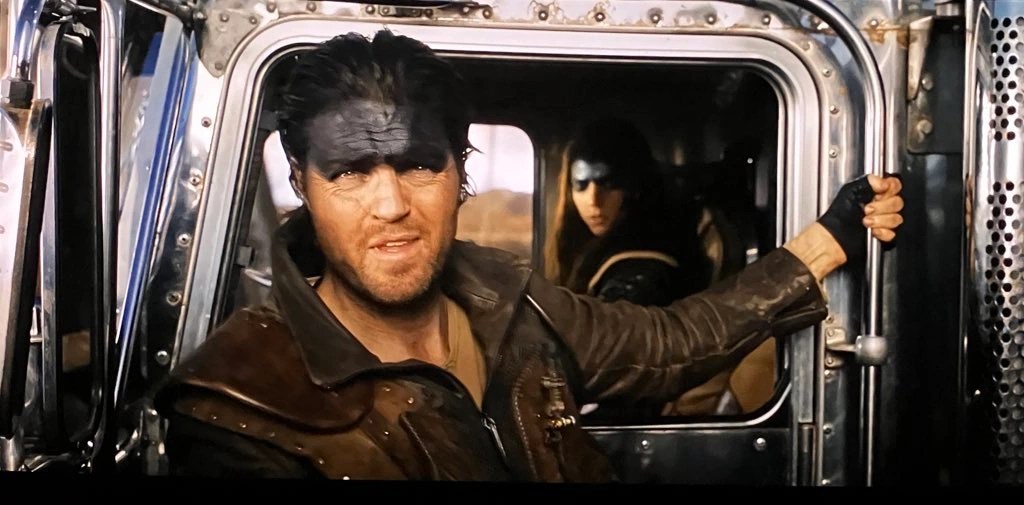


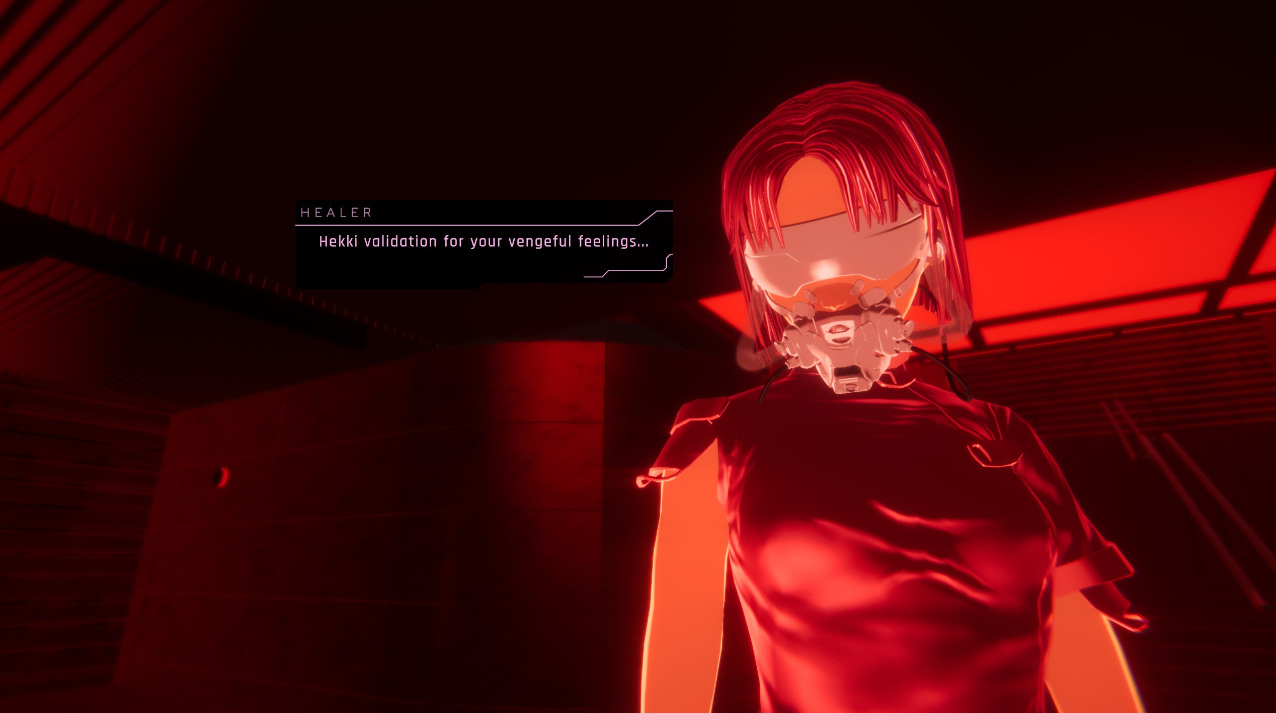

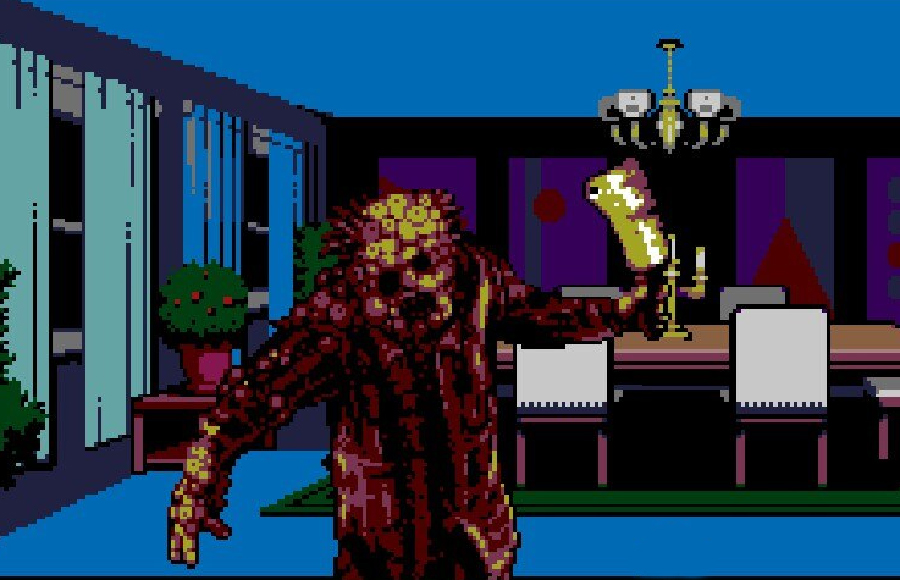

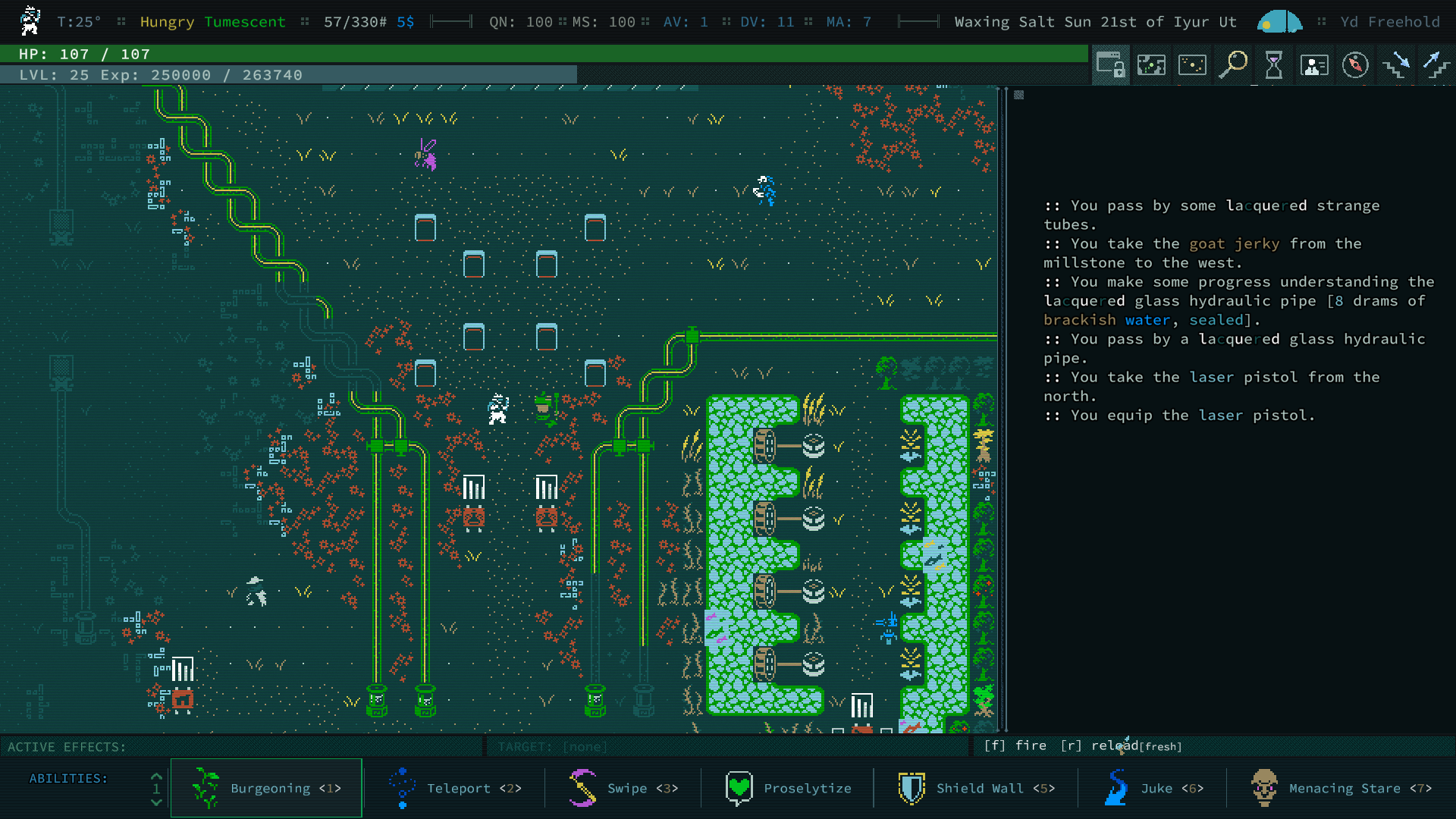
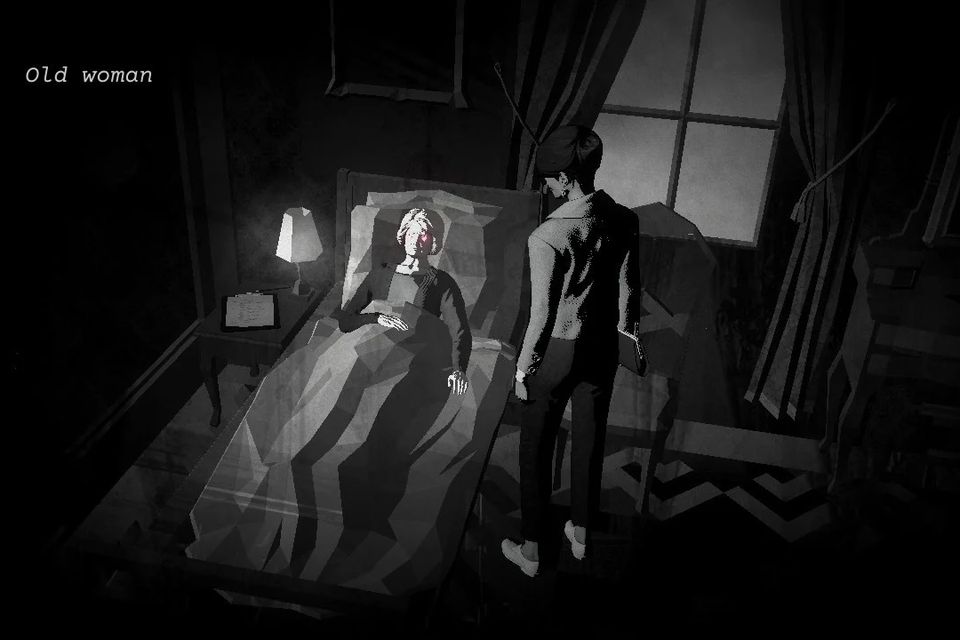
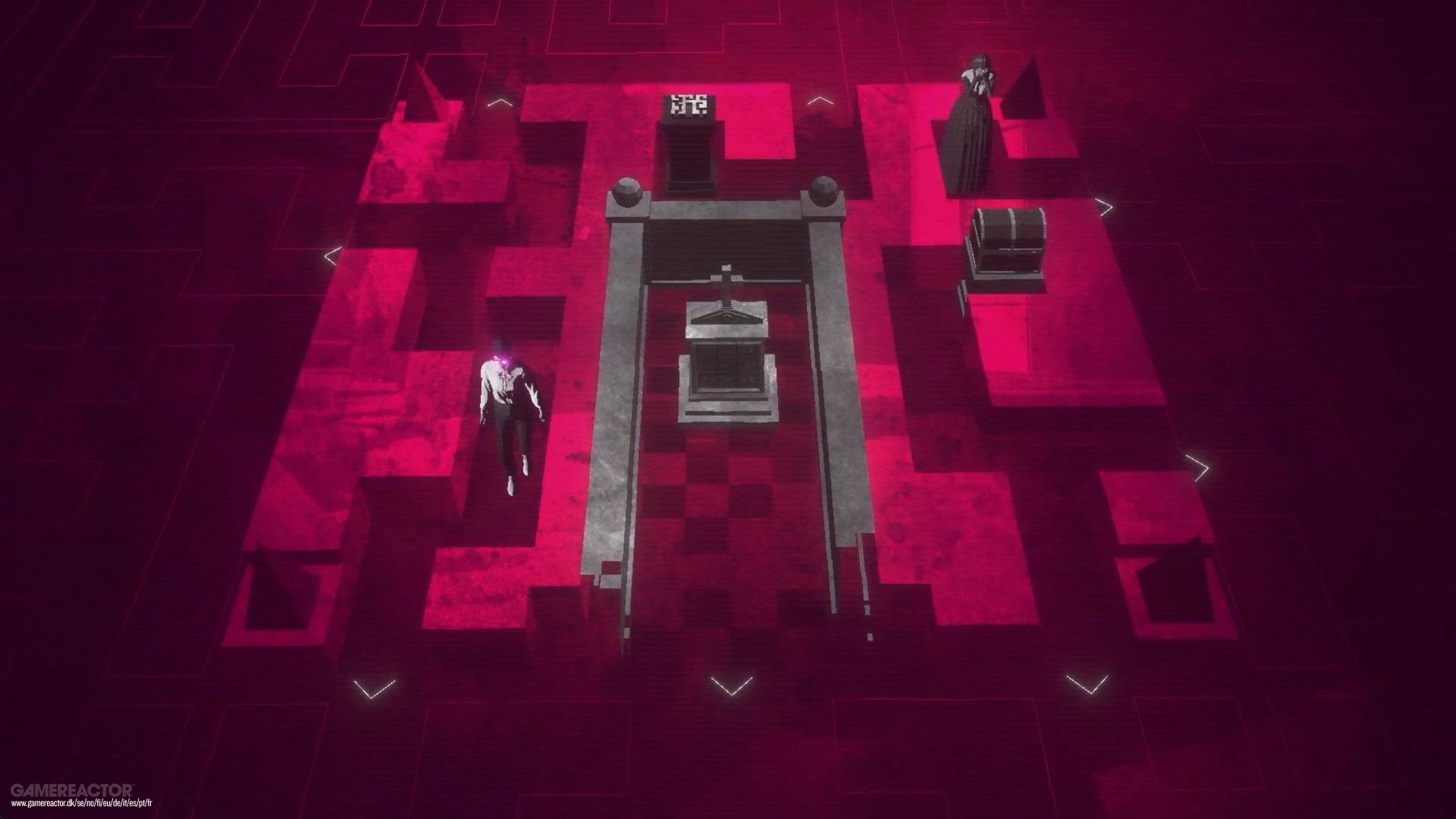
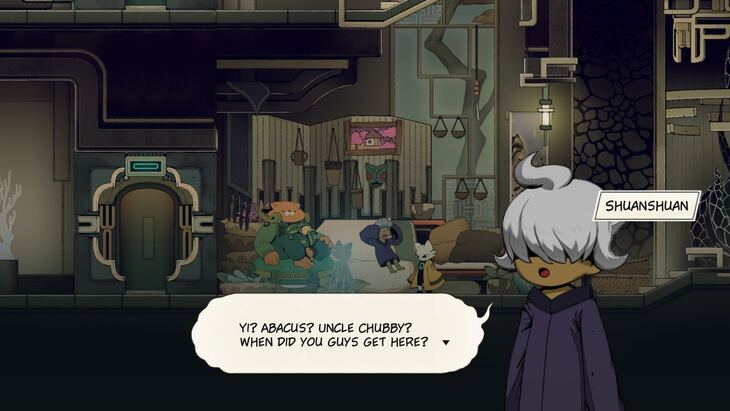
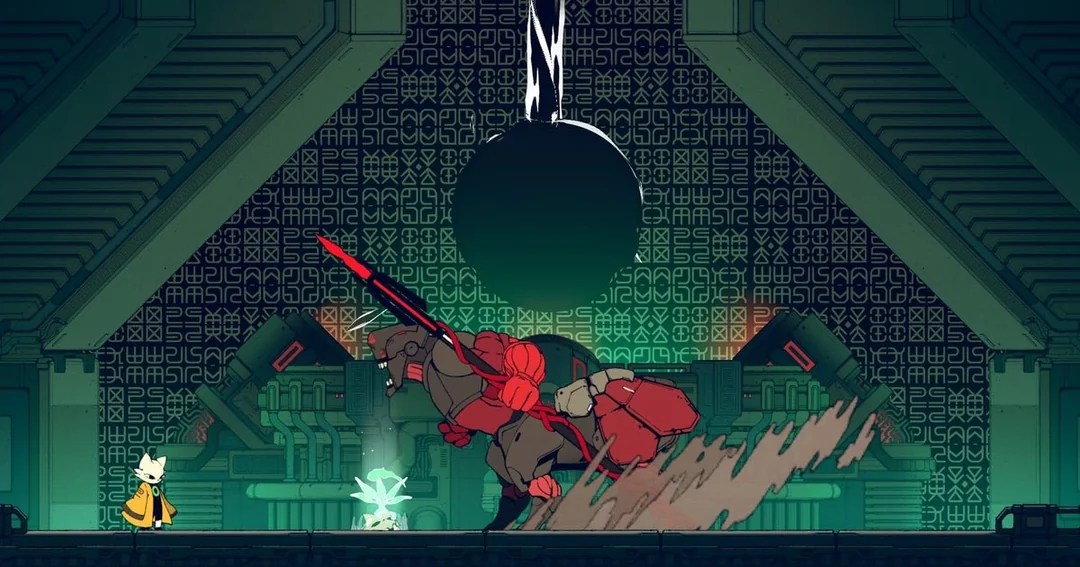

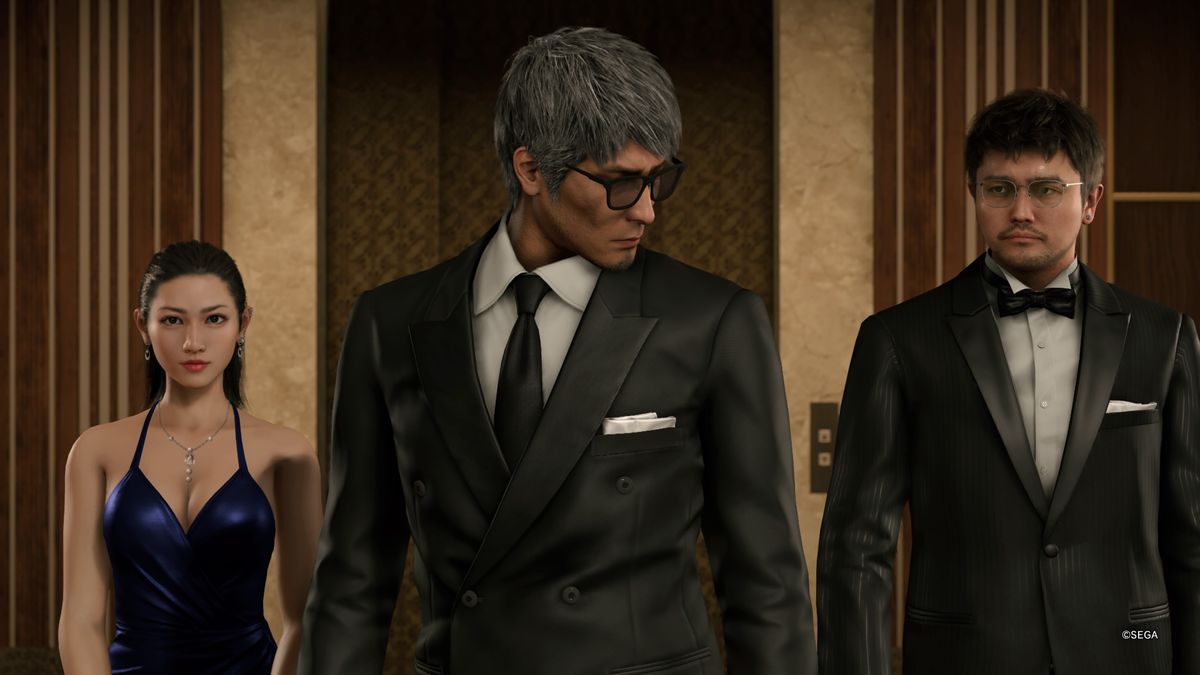



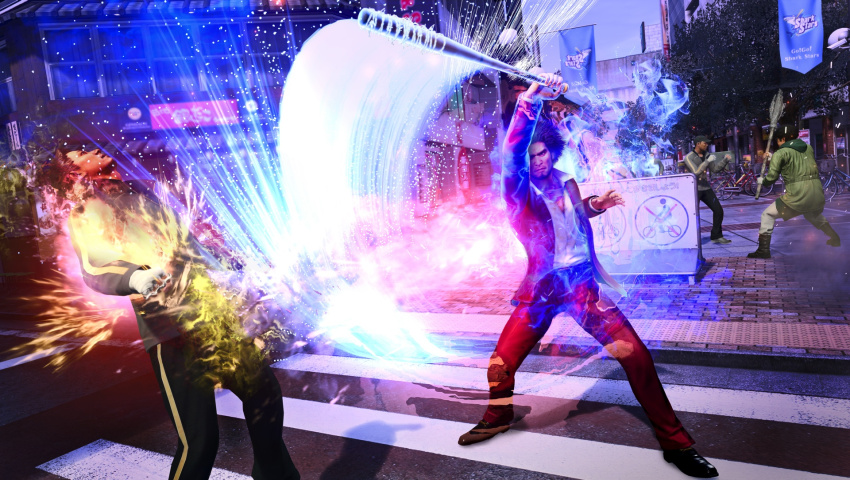

 All My Friends