2025 changed my relationship to film culture, hopefully for good. I’ve started my Horizon Line newsletter, which means I’m now writing something people read every week. Thank you to everyone who’s decided to follow along! I am interested in finding a way to expand that weekly writing to include more criticism throughout the year, especially at a time when it feels like we’re peeling a little further away from endless franchises and more toward storytellers. While everything else is insane, and the film industry itself seems to be consolidating, there are as much now as ever too many more movies to see.
I’ve been expanding my top “ten” of the year every year to match the calendar year, and when I first did so in 2015, it was fifteen films I truly loved. In the past few years, the list has grown longer but has also included some films I merely think are “pretty good.” This year, I feel quite strongly about my top twenty films, which is probably the most I’ve ever hit that are Fully Great, and my top ten are movies I really love and have to order somewhat arbitrarily. The five that start this list would probably have landed around 16-20 on last year’s list, as well.
I’ve joined many fellow film nerds in keeping my own “what if I gave out the Oscars” spreadsheets over the years, and rarely have I had to cut even honorable mentions that might have won in a previous year. No commitment to doing this every year, but I’m going to memorialize nominations and wins as they stand today in this piece, though I’m not going to do a round-up of everybody who wasn’t in these 25 movies. FYI – I do acting nominations as three ungendered categories – Lead, Featured, and Supporting. Hopefully, that middle category should capture all the “edge cases” Oscar voters love to debate all the time.
A “see you later” to 28 Years Later, A Poet, A Traveler’s Needs, After the Hunt, Afternoons of Solitude, Blue Sun Palace, Boys Go to Jupiter, Castration Movie, Cover-Up, Endless Cookie, Familiar Touch, Hedda, Hot Milk, It Was Just An Accident, Lurker, Misericordia, Mr. Scorsese, My Father’s Shadow, One of Them Days, Pavements, Pillion, Predator: Badlands, Scorigami, Seven Veils, Sirat, Souleymane’s Story, Sound of Falling, Splitsville, The Chronology of Water. The Long Walk. The Plague, Twinless, and Two Strangers Trying Not to Kill Each Other.
25. Bugonia
Dir. Yorgos Lanthimos
Nom: Aidan Delbis, Featured Acting
Peacock, VOD
Of this year’s “we are all on different political internets and they are making us crazy” movies, Bugonia was the one that most maintained its eye on drama and thrills in its billionaire abduction story. Teddy (Jesse Plemons) kidnaps pharmaceutical billionaire Michelle (Emma Stone) under the presumption she’s an alien invader undermining mankind’s development in this remake of the Korean film Save The Green Planet. I am not convinced there is a lot more going on past the surface level ties between Teddy’s conspiracies and real world hyper-online radicalization, but it’s just such a pleasure to watch Teddy and Michelle duke it out. Will Tracy’s screenplay instead focuses on character study and verbal maneuvering, and it ends up a lot more fun to watch than the versions more focused on “How We Live Now” (like Tracy’s own screenplay for The Menu, co-written with A Big Bold Beautiful Journey writer Seith Reiss.) It’s frankly wild that I don’t have room to nominate Plemons and Stone, who are given two of the best showcases of their entire careers. Instead, the runaway performance is Aidan Delbis as autistic cousin Don, whose loneliness and conflict about the kidnapping are anchored and subdued in Delbis’s work.
24. Being John Smith
Dir. John Smith
Award: Best Documentary, Best Short Film
MUBI
Thank god this great film is finally on Mubi, because I’ve wanted to shout its praises for almost a year since seeing it at the Wisconsin Film Festival. The short summary of Being John Smith is that museum film artist John Smith reflex on his life, career, and the frustration with being named John Smith in a world full of John Smiths with his droll sense of humor. But Smith injects this funny, mundane, existential pain with commentary on more serious pain, both personal and political, and he finds a way to situate his conflict about this film with some of the smartest editing in any film this year. Because this is a short, and one I know is quite underseen, I won’t go too long on how he sets up his argument, but it’s some of the most effective self-effacement I’ve seen in film.
23. Universal Language
Dir. Matthew Rankin
Nom: Louisa Schabas – Production Design
Kanopy, VOD
I saw Universal Language as a UW Cinematheque premiere the very day after I published my Top 24 of 2024, so while the film was submitted as part of last year’s Oscars as the Canadian entry for Best International Film, I am counting it as a 2025 release in Madison, WI. Two young girls find a wad of cash frozen under the ice – meanwhile, a middle aged man leaves a bureaucracy to visit his estranged mother. The above clip represents well the film’s primary mode, a sweet, comedic mixture of films like Where is the Friend’s House? and the dollhouse camera work of Wes Anderson, creating an absurd community of endearing characters. But this film’s greatest strengths are in the most sentimental scenes, scenes which often break this clip’s medium wide and wide shots and intimate the viewer in moments of nostalgia, friendship, and grief. It slightly broke my heart to cut the film’s score from my nominations, as I do think it’s one of the year’s best, a collaboration between santur player Amir Amiri and indie rocker Christophe Lemarche-Ledoux which invokes musical vocabulary both containing the Persian classical and Canadian experimental.
22. Nouvelle Vague
Dir. Richard Linklater
Netflix
Richard Linklater is too sentimental to capture the anarchic anger of a Jean-Luc Godard film, and the latter would likely have despised this fictionalized making-of story about Godard’s debut, Breathless. Thankfully, Godard and I have very different taste, and I’m able to appreciate Nouvelle Vague using Godard as an example of an exhausting if inspirational artist, proof that “just trusting the lack of a plan” still leaves people bruised, proof that great artistic choices can come from pushback. It’s a hangout movie, and a very sweet one. What Linklater does impossibly well is assemble an incredible cast for the French New Wave, some of whom are not even professional actors, to create a coherent and deep bench of emotionally intelligent, sarcastic, melancholy people who love art so much they adopt disaffection to believe it can grow. Marbeck as Godard, in particular, is such a thoughtful and engaging performance – this little snake ends up earning both sympathy and contempt without ever becoming a chore to watch. The aesthetics lean a little too often into pastiche of images and rhythms taken from early New Wave films, but the real magic trick is finding this cast.
21. Caught Stealing
Dir. Darren Aronofsky
Netflix, VOD
I don’t necessarily blame people for holding a beloved actress’s early exit in this crime caper as an unforgivable sin. But, I’m telling you, Austin Butler in Caught Stealing is likely the single best performer of addiction in Aronofsky’s running history with the subject. Butler is so capable of playing the wins, the refusal of the call, as pathetic losses – lingering too long at the mention of a drink, the disposal of the alcohol as a manic episode rather than a moral stand. It probably helps that Hank’s alcoholism is a side story to getting caught in a “who stole the cookies” fiasco, one where Bad Bunny and Vincent D’Onofrio get to be looming, terrible heavies, one where most of the action scenes refrain from going huge until we’re ready to explode. This is not a flawless film, and I wish Mathieu Libatique’s cinematography were a little more geared toward interesting images rather than fluid motion, but as far as scum-bum New York crime movies go, I’d watch this one again anytime.
20. Materialists
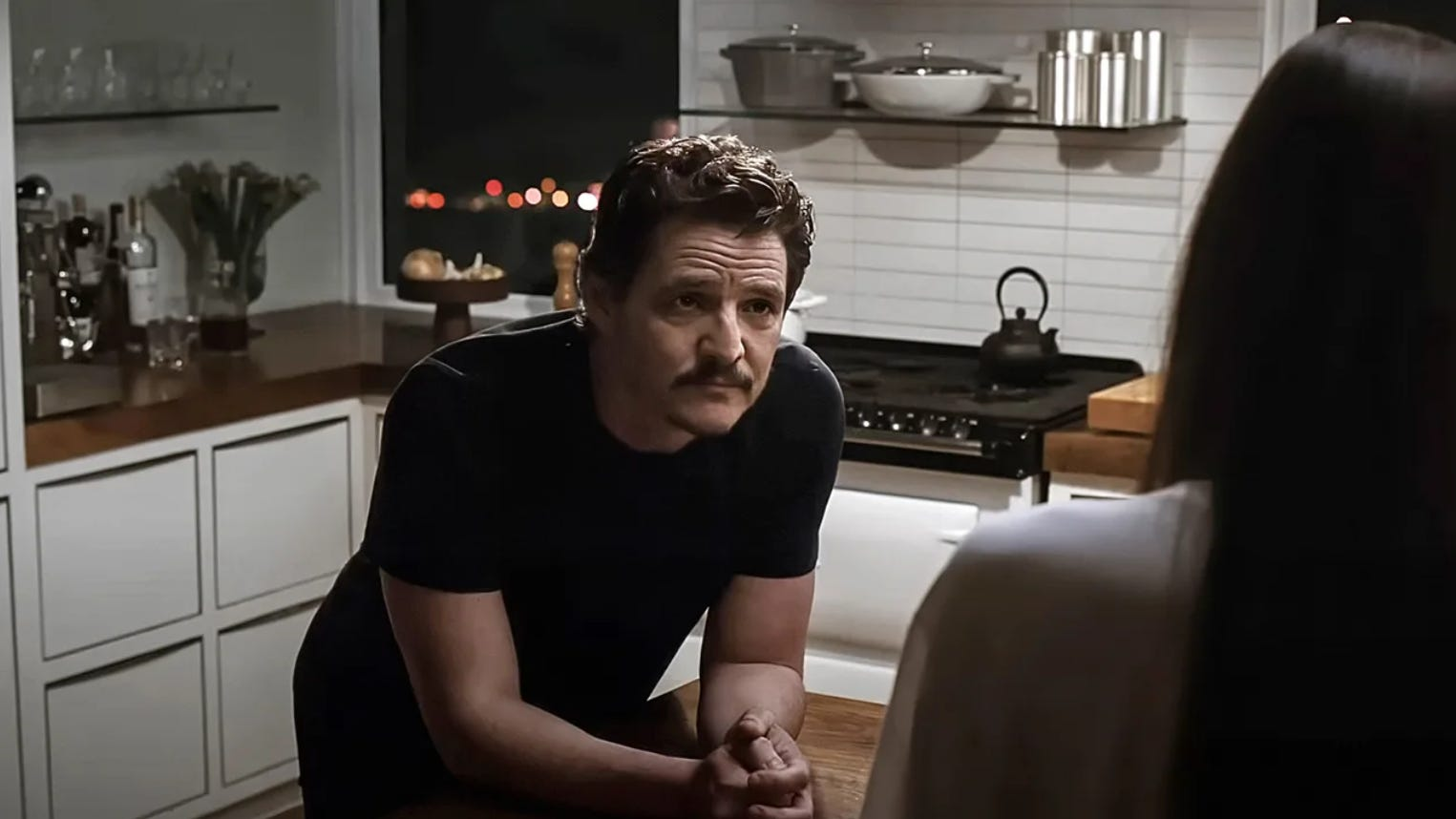
The kitchen scene, which will not embed.
Dir. Celine Song
HBO Max, VOD
The single worst element in any film on this list is the sexual assault subplot in Materialists, in which Dakota Johnson’s Lucy, a professional matchmaker, sets up one of her clients (Zoe Winters, who is quite good in this movie!) on a blind date gone very wrong. The subplot is an insipid failure which treats the middle-aged Lucy like a 20-year-old who never considered these things could happen in the real world. The film is inspired by Song’s own experiences as a matchmaker for six months in her 20s. I think transposing this storyline onto a 35-year-old Dakota Johnson just creates an almost absurd disconnect from reality, and a scene where she tries to dress incognito to stalk the victim and apologize is so ridiculous it earns whatever mockery the film has received.
But – I say, knowing how people feel about this film – I still found this to be a triumph otherwise. It’s not so much that the love triangle is particularly sexy or one I root for especially hard, either. The emotional range of this film is so much more compelling to me than the locked-down smoulder of Past Lives, and while I complain about her age in relation to the above subplot, I think Johnson is uncommonly great in the movie. She is a great match for Song’s rhythm for dialogue, which is at its best when a character is either saying something insipid they believe is profound or when that false thesis crashes down around them. The above clip is my favorite scene in the movie, and I think it works so well as a moment of two people who have imprisoned themselves in therapy-speak and had not previously confronted emotional reality’s mess. Johnson’s doing this rhythm where Pascal says something incredibly vulnerable, really for the first time in their relationship, and she has this micro-expression before the real processing begins – it’s so moving to me.
19. Weapons
Dir. Zach Cregger
Nom: James Peerson, Felipe Messeder – Sound
HBO Max, VOD
“Last night at 2:17 AM, every child from Mrs. Gandy’s class woke up, got out of bed, went downstairs, opened the front door, walked into the dark …and they never came back.” – This is a perfect tagline, and if you still haven’t seen Weapons, that’s all you need!
I haven’t seen Frank Darabont’s The Mist, so take the hyperbole with a grain of salt, but even if this isn’t “based on the novel by Stephen King,” Weapons is the best Stephen King movie since, I dunno, at least Misery? A rip-roaring good time, so funny, so gross, with some genuine scares mixed in. That clip above is one of the most disturbing monster make-up jobs I’ve seen in a long time, and I’m so glad Benedict Wong is so good in this movie. Everyone’s so good in this movie – in my opinion, the best performance is Cary Christopher as Alex, the only student in Mrs. Gandy’s class who didn’t disappear into the night. The ensemble, chaptered nature of the film I think mostly works, though unfortunately Ehrenreich’s chapter as Paul teaches us the least about our setting or our characters. Cregger’s mastered his gags, though, and the ending is one of the most satisfying of the year.
On Madigan – I struggle a little with the way horror fans bemoan their treatment at awards shows, constantly declaring that any perceived snub is a genre bias despite having nominees at the table. It’s not like beloved sci-fi performances, like Amy Adams in Arrival or Tommy Lee Jones in Ad Astra, are constantly getting nominated, let alone winning. You don’t see a public panic attack about hating sci-fi every year resulting in a chaotic push for Elizabeth Olsen to get nominated for The Assessment. Madigan remains great as Aunt Gladys in Weapons – she’s such a surprise, and she gets to play three very different in-character “performances” as well. However, if Madigan does win Best Supporting Actress this Sunday, Bill Skarsgard and Lily-Rose Depp should get to pick an Oscar voter and pelt them with water balloons or something. Madigan is my fifth in this year’s five, but she will still be one of the best winners in the category this century if she wins – they chose a great five!
18. Caught by the Tides
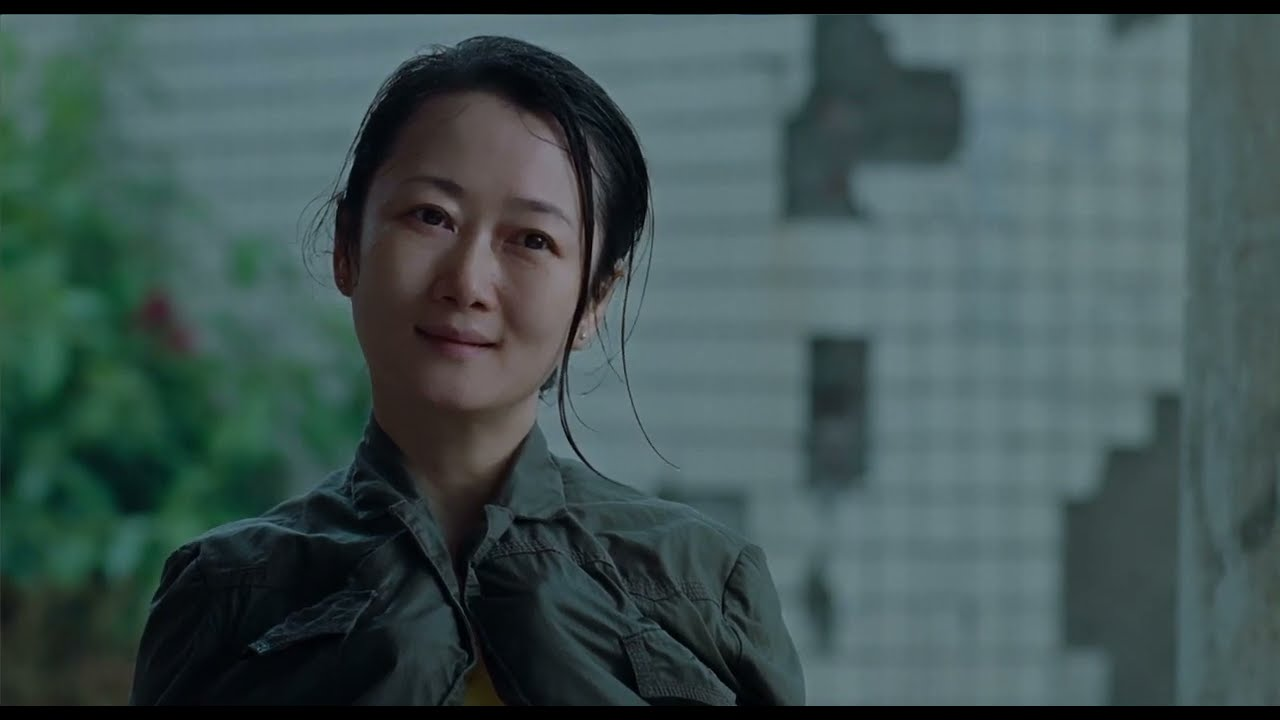
Meeting in the Rain, which will not embed.
Dir. Jia Zhangke
Nom: Jia Zhangke – Best Director, Li Xudong, Matthieu Laclau, & Yang Chao – Best Editing
Criterion Channel
When the university film program started again this semester, the first three films I saw were Nirvanna The Band The Show The Movie (which, by the way, I’m counting for 2026,) Yi Yi, and Resurrection. I gave each 5 stars. Caught by the Tides shares DNA with all three??
Caught by the Tides re-edits outtakes, b-roll, and home movies into a compelling, linear narrative. Much of the footage is recontextualized work from the films Unknown Pleasures, Still Life, and Ash is Purest White. It relies on decades of collaboration behind and in front of the camera, allowing us to see time pass and formal technique to evolve. No, it doesn’t ever have the same “genuinely, how the fuck did they do this” level of actors speaking across time as Nirvanna, but it is no less a magic trick to see actors age over 22 years.
Unlike Richard Linklater’s more famous Boyhood, it does so without really making “aging” the central plot of the film. We see a romance at the film’s start and watch it flame out – four years later, out of concern for safety, one of our leads (Zhao Tao, Jia Zhangke’s longstanding lead actor, who can say so much with so little) seeks the other without response. This ends up being a film about how sudden endings can be and how it feels to not speak up, and that passage of time allows the absences to be jarring and painful. Yi Yi’s central plot is about grieving a coma, about running out of things to say when someone cannot respond, and its two most developed subplots are about lovers who could not say the things they needed to say to one another.
Yi Yi released in the year 2000 – this turn of the century is the same handoff between Resurrection and Caught by the Tides, with one pop culture handoff that makes the exchange shocking. Resurrection looks back at a century of Chinese politics and cinema, and Caught by the Tides picks up exactly where that story leaves off and progresses into the modern day. Perhaps unsurprisingly, the younger, more existential Bi Gan, looking back at the 20th century, ends up taking a very different approach to the older, more openly political Jia and his frustrations with modern life. But that friction ends up making the conversation between these two films even more fruitful, not less.
If I read back what I wrote here, I ask myself, “why isn’t this even higher?” The easy answer is maybe the least satisfying – I haven’t seen Still Life or Ash is Purest White, among many other Jia films, so I was less equipped to ask “how on earth did he do this?,” to engage with all the recontextualized footage. But, on a first viewing, I also just found myself more emotionally adrift in this film’s quiet second chapter, one which seems arguably the richest in social commentary but the lightest on dramatic narrative. Among the films on this list, this is one of two I can most see myself reading back and saying, “you left that way too low.”
17. No Other Choice
Dir. Park Chan-Wook
Nom: Park Chan-Wook, et. al – Adapted Screenplay
VOD
An out of work paper foreman decides to eliminate the competition by any means necessary in Park Chan-Wook’s very Park Chan-Wook crime thriller, one that leans more into his later comedic sensibilities rather than the arch grimness of the Vengeance Trilogy that made his name. The first critical review I saw of the film was Adam Nayman’s, in which he declared it all of Park’s trademark perfection for an underwhelming thesis – suffice it to say, I surprised myself by almost having the opposite reaction.
It’s not that trademark Park brilliance isn’t here – the above clip is up there with all his best fights, an insane stacking of gag on gag, the choreography absurd and yet natural. There are some gorgeous and memorable images, delightful and surprising transitions, and the use of architecture to communicate class and character here is really something else. But when I contrast it to his fireworks factories like Thirst, The Handmaiden, and Decision to Leave, I actually think Park largely reigns himself in with No Other Choice, instead focusing on character and theme.
This is a pretty devastatingly cynical film about the way the working class has been set up to eat itself alive. The investors and executives only show up briefly, politely, mandating decorum in the face of inhumanity – they escape notice to leave Lee Byung-Hun’s Yoo Man-su casting his eye on those who have exactly what he wants and not what he ought to dream toward. It’s also one that casts a surprising amount of texture and humanity on all its characters, one that extends its judgment and sympathy in ways that go for laughs and promote thought after the fact. There are so many small details in this story that reward pulling them apart, but perhaps the most impressive detail is the way the Yoo family’s arcs play out without ever drawing fine points onto character turns.
16. Hamnet
Dir. Chloe Zhao
Nom: Jessie Buckley – Lead Acting, Paul Mescal – Featured Acting, Chloe Zhao, Maggie O’Farrell – Adapted Screenplay
Peacock, VOD
One of the big fights about Hamnet is whether or not it’s “about Shakespeare.” Hamnet dramatizes the courtship of Anne/Agnes Hathaway and Shakespeare and the young death of their son Hamnet, culminating in the writing and performance of Hamlet. Hamnet is portrayed as a would-be actor, excited by learning swordplay, wanting to follow his father in that world rather than the simultaneously more grounded and more mystical world of Agnes, a woods witch and homemaker. When Hamnet dies, the text elides several years (and multiple plays) to connect the death of Hamnet and the staging of Hamlet, and when Agnes attends the performance, she finds it at first offensive and then very moving. The actor playing Hamlet is styled to evoke Hamnet’s appearance – in real life, the two are played by brothers Noah and Jacobi Jupe – and Will plays the ghost of Hamlet’s father.
It’s about the relationship between Shakespeare’s life and Hamlet in the way Titanic is about a cruise ship that sank. It’s obviously relevant, but I don’t think Cameron is trying to change how people historically interpret that event, and I don’t think Zhao is pretending having Hamnet in mind will help you read Hamlet. Zhao is using the death of Hamnet and writing of Hamlet to study how great works of art can abstractly be informed by the author’s nonverbal motivations, i.e. “Hamlet is not Hamnet or Shakespeare, Hamlet is the ideal role young swordfighter/actor Hamnet could have played.” It’s basically an expansion on The Fabelmans thesis, saying “this also applies to the works where you don’t literally recreate the trauma,” whereas it can be hard not to watch Spielberg movies and see where he’s recreating elements of the trauma in-fiction.
But, to be honest, this reading is not really what I love about Hamnet. What I found most compelling was not Hamnet’s death, but Agnes and Will’s life. Buckley and Mescal are so wonderful in their happy and sedate moments in the early run of the film. In real life, I’d find Buckley’s near-constant soothsaying a little enervating, but it clearly enraptures Will, who sees life in such a different way. While I do think the final scene at the Globe is excellent, it’s the early hours of these characters falling in love and teaching their children that I found to be the movie’s real magic trick. (Though the snottiest, screamingest, saddest scenes of medical trauma, childbirth and death are certainly showstoppers in their own right.)
15. Highest 2 Lowest
Dir. Spike Lee
Nom: Denzel Washington – Lead Acting, William Alan Fox – Adapted Screenplay, “Trunks” and “Both Eyes Closed” for Best Original Song
Apple TV+
One of three films I’ve already written about this year – yes, the other two are obviously still coming – and I dug deep into the Highest 2 Lowest’s second half in that piece, a reading I still very much stand by. I didn’t so much talk about the film’s first half, which has been the more divisive portion. Denzel’s David King responds to the king’s ransom that defines this remake of High & Low with one of my very favorite performances of the year, charismatic, funny, sullen, and betraying his own best interest like only our greatest talent can. But, aside from Jeffrey Wright as assistant Paul Christopher, the performances are decidedly less surefooted. It’s a combination of writing, direction, and performance that creates an affected, very TV tone in the supporting cast, and poor Aubrey Joseph as David’s son Trey gets some of the hammiest lines of the year not contained in Guillermo del Toro’s Frankenstein screenplay. Watching David try to decide whether or not to do business or compromise his morals is compelling because it’s Denzel Washington, but I can’t help but wish he had more to work with in the early going.
This film’s slow introduction is a lot less deftly handled than High & Low – if anything, I might argue the ransom negotiation portion of High & Low is its highlight, and it’s the second half that becomes a more familiar (brilliant) police investigation film. But, when it’s time to set up the handoff, a ride into the city during the Puerto Rican Day Parade goes off like crazy. It creates a rocket launch effect when the film kicks into its second gear, and then from James Brown’s “The Payback” forward, this is as exciting a film as Spike Lee has ever made. The back half also digs deeper into the financial implications of the ransom than Kurosawa’s film, and I think it deftly identifies the push and pull between heroism and pragmatism.
14. Sentimental Value
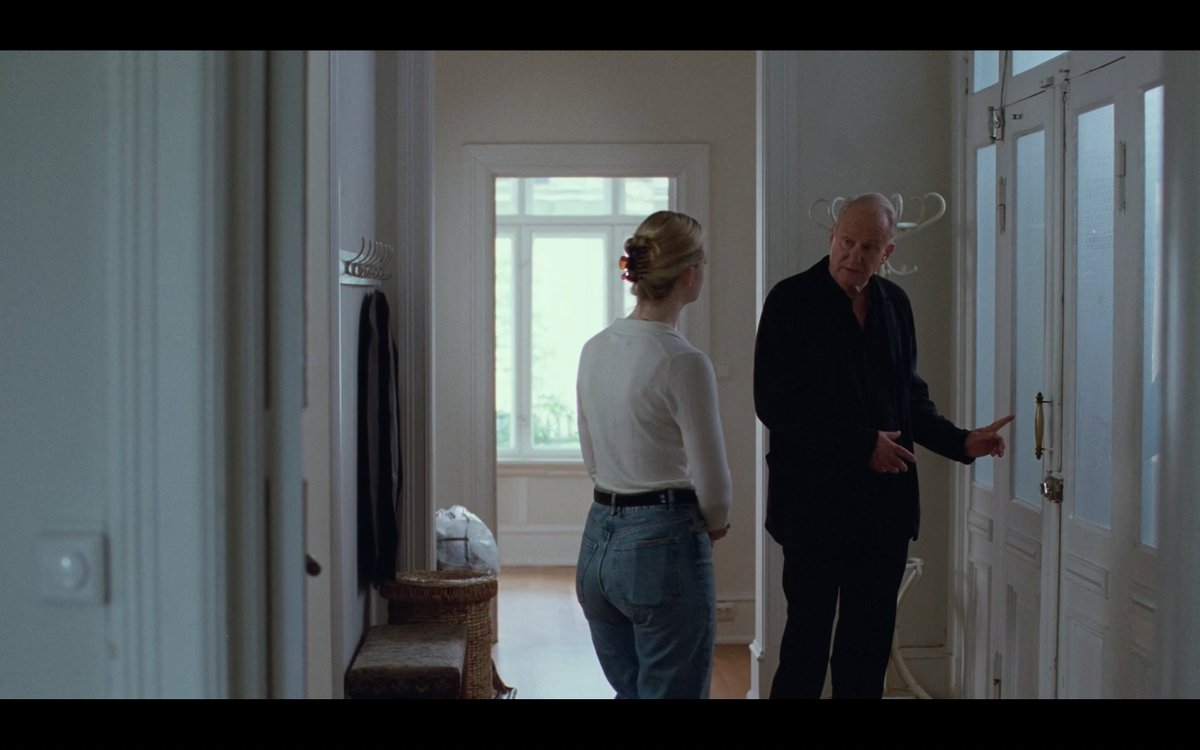
Gustav Explains the Scene to Rachel, which will not embed.
Dir. Joachim Trier
Nom: Elle Fanning, Supporting Acting
VOD
An honorable mention in many, many categories, including all the other nominated Oscar performances, international feature, screenplay, and editing – yes, somehow it’s Fanning that broke through as my favorite performance. The story of Gustav Borg (Stellan Skarsgard) attempting to reconcile with his daughters and make a film he envisions as the ideal lead role for his actress daughter Nora (Renate Reinsve) is given fewer of the surreal flourishes of director Joachim Trier’s The Worst Person in the World. That’s not to say none – there’s a wonderful introduction narrated by the family home itself, and the film’s worst moment involving a face-melting technique. But I would still probably argue the film is more cohesive and consistently great than his previous hit – all four of the primary storylines in Sentimental Value get strong emotional weight, and the way they interweave is so wonderfully constructive.
We’re given few concrete details of family history in the scenes between Gustav and Nora – rather, that texture makes itself clearer in the scenes with Nora’s sister Agnes (Inga Ibsdotter Lilleaas) and American actress Rachel Kemp (Elle Fanning,) who is cast in the role originally intended for Nora. Rachel is cast as a fictionalized version of Gustav’s mother, who she’s repeatedly told not to ask about because “it’s not really about her.” Fanning plays Kemp with a real earnestness, not quite emotionally intelligent enough to surpass Gustav’s criticisms but deeply invested in trying to connect to what she perceives will be a great project. Their last scene together is well realized, feeling emotionally vulnerable without crashing into melodrama. I find Rachel Kemp a hard role to play, one given every opportunity to be played as too naive or too abrasive, a movie where the wrong choices would have made her villainous, but I feel so much empathy for her being pulled into this battle she’s not being let inside.
13. By the Stream
Dir. Hong Sang-soo
Nom: International Feature
Not available at home – yet.
A university holds an annual theater festival where other arts departments are asked to perform a short play. Unfortunately, the textile arts department’s student director turns out to be sleeping with all three of the girls in his class – the textile lecturer, Jeonim (Kim Min-Hee,) asks her famous actor uncle Chu Sieon (Kwon Hae-hyo) to step in. Hong’s film plays out in generally light conversations, probing at vulnerability indirectly, as these characters seek new ways to trust one another. I think the translation of its dialogue might be somewhat miscalibrated, as the film sometimes takes on this intense tension that the stakes are quite severe. By the Stream never places its characters in danger, more staying in the lane of awkward, painful, cringe-inducing exchanges between its intellectuals finding common ground.
Every time a character has an emotional breakthrough in this film, it’s a remarkable, profound, and unique feeling of sadness. Well, except in one case, where it’s precisely that the sadness is so cliche that it becomes the new focus of the complaint. I’m not familiar with most of these actors, but I’m thrilled several are recurring in Hong’s next film, What Does That Nature Say to You, which is playing in this year’s Wisconsin Film Festival. This is about the gap between how we talk about someone and how they actually live, and the repression that leads to in conversation. I can’t recommend this to someone who hasn’t passed Ozu 101, but if you’re into slow, tender conversations on screen like I am, I think you’ll probably go gaga for this too.
12. Blue Moon
Dir. Richard Linklater
Nom: Ethan Hawke – Lead Acting, Andrew Scott – Supporting Acting
Netflix, VOD
This very stage play style film, in which songwriter Lorenz Hart (Ethan Hawke) mourns the night his writing partner Richard Rodgers (Andrew Scott) debuts “Oklahoma!” with Rodgers’ now much-more-famous writing partner Oscar Hammerstein III (Simon Delaney,) reflects its origins as a first screenplay by novelist Robert Kaplow. It is full of gorgeously written, crackling dialogue, layered with great jokes, maddening awkwardness, and deeply felt sadness. It is also convinced it should allow Hart to inspire E.B. White (in a great performance by Patrick Kennedy) to write Stuart Little six years after White had written most of Stuart Little in real life.
Blue Moon is a film that occasionally gets far too precious with its content, but it absolutely nails its delivery. There is an endless tide of gorgeous monologues, and then whip-crack snappy dialogue to interrupt them. Hawke and Scott are absolutely fantastic here, and their work together is emotionally complicated and deftly written. There’s an extended ten or fifteen minute scene with Margaret Qualley in a coat closet that reminds me why I still hold such high hopes for her as an actress. But this is Hawke’s show, really, and it’s electric work. Also, I love hearing the versions of the Lorenz and Hart songs in this movie! What a good vibe!
11. One Battle After Another
Dir. Paul Thomas Anderson
Award: Benicio Del Toro – Supporting Acting/Supporting Actor, Paul Thomas Anderson – Adapted Screenplay
Nom: Chase Infiniti – Lead Acting, Teyana Taylor – Supporting Acting, Colleen Atwood – Costume Design, Christopher Scarabosio et. al. – Best Sound, Cassandra Kulukundis – Best Casting, Brian Machleit – Best Stunt Design
HBO Max, VOD
The first minute of the above clip – which inspired the title of my previous piece on One Battle After Another, “Dirty Work” – is, in my mind, the single greatest act of filmmaking all year. I cannot watch it without crying. I can’t really hear “Dirty Work” anymore without crying. This is the most inspirational, loving work in Anderson’s career. In just eight words – “Heian nidan./You’re not breathing. Again./Heian nidan.” – Infiniti and Del Toro communicate absolutely everything we need to know to fall in love with these characters. The quiet warmth on Del Toro’s face and in his delivery is our introduction to maybe this year’s single greatest character, Sensei Sergio, an inspirational mystic figure whose short mantras have become a part of my own meditation. The way the camera breathes with Infiniti and moves with her throughout the demonstration is hypnotic. A director I have called “The Master” more than once has done it again.
If I focus on only the parts of One Battle After Another which I love, which have had their praises sung many places, I might easily rank this in my top 5. But I’m largely still struggling with the very Pynchonian first act, in which Perfidia Beverly Hills (Teyana Taylor, who is incredible) and Steven Lockjaw (Sean Penn, who is good?) are in a fully blaxploitation sex-fetish version of The Gonzo that feels a lot more in tune with Inherent Vice’s hypersexual fantasia than the remainder of One Battle After Another. The thing is, I vastly prefer the Gonzo Hypersex of Inherent Vice and this first act to what comes after in concept – but it just never goes anywhere in that latter film! It feels at best like a repressed memory of Lockjaw’s, but his character (in writing or performance or both) lacks the continuity to really make me feel that weight. It just feels like a gap between two different versions of the screenplay, one more overtly comedic and insane (where Martin Short might play the craziest cartoon dentist of all time) and one more explicit political thriller.
But, again, if I praise what I think is great in this film, I can keep my eyes on the fact that it’s great. I love just about everything Sergio and Bob get up to in their storyline. I love Chase Infiniti as Willa, a really impressive performance when you’re acting against veterans like DiCaprio, Penn, and Regina Hall before pulling off your own action movie climax solo. I love the needledrops. The bit where Bob falls off the roof is one of the funniest stunts of the year. My least favorite Paul Thomas Anderson movie since Magnolia is still a great movie.
10. Dreams
Dir. Dag Johan Hauerland
Nom: Anne Marit Jacobsen – Featured Acting, Dag Johan Hauerland – Original Screenplay, International Feature
Criterion Channel, VOD
Dreams is the second of two Norwegian dramas in which a writer pens a confessional manuscript and the family members reading it in a pivotal scene. Where Sentimental Value explores all the roadblocks to getting family to read it in the first place, Dreams uses the reading of the manuscript as its central premise. The decision isn’t whether to accept its author, the teenage Johanne (Ella Overbye,) for perceived slights. Rather, its concern is whether what she’s documented – an emotional, romantic affair with her teacher – is strictly true and should be investigated, and, more importantly, is it so well-written that it should be published as a novel?
I find his film’s messy, emotionally complicated positivity so compelling. In a time where it feels like American art often struggles to look at complicated people with warmth rather than disdain, this movie manages to maintain a careful tonal balance. Anne Marit-Jacobsen as Johanne’s grandmother Karin maybe best carries that balance. She is worried about her granddaughter, but is more surprised by the emotions her manuscript stirs in her, and she plays a balance between nurturing and honoring her own feelings in a way that is funny, illuminating, and pretty special.
9. The Mastermind
Dir. Kelly Reichardt
Nom: Kelly Reichardt – Best Editing, Rob Mazurek – Original Score
MUBI
I honestly can’t believe I don’t have room for Josh O’Connor in Best Lead Acting. This guy has become a remarkable leading man so quickly, and is capable of delivering across so many films, that I’m basically writing the seat card in advance. And he is wonderful in Kelly Reichardt’s The Mastermind, a film about a small-town art heist that catches more heat than O’Connor’s James Mooney expected. But it’s a deliberately understated role, one that relies on his natural charm and amps up his talent for insincerity without fully deploying him as a movie star, allowing Mooney himself to be a little dull.
Where this movie soars is in its control of pace and tension. There are undeniably moments where the film slows to a crawl. A scene where O’Connor is in a barn stowing something away is so belabored in its process that it starts to feel like The Wages of Fear, where one very small motion is going to make something spill horribly wrong. The film still feels thrilling, and it honestly flies through its second and third acts. That owes to Reichardt’s confidence as an editor, knowing just when to slow down and when to ramp up, and it owes to Rob Mazurek’s gorgeous jazz score for the film, filling those slower moments in ways that hardly feel quiet.
The Mastermind is a movie about the complacent frustrations of the 70s, about beautiful sweaters and gauzy photography. It’s a movie about how under capitalism, falling out of the conservative status quo is a spiral into misery – a modern movie. And it’s a movie about how sometimes others don’t understand your master plan and then the fuckups outside your control destroy everyone’s lives – a movie about filmmaking. We’re fully at the point in the list where all these films only have room to grow even larger in my heart.
8. The Secret Agent
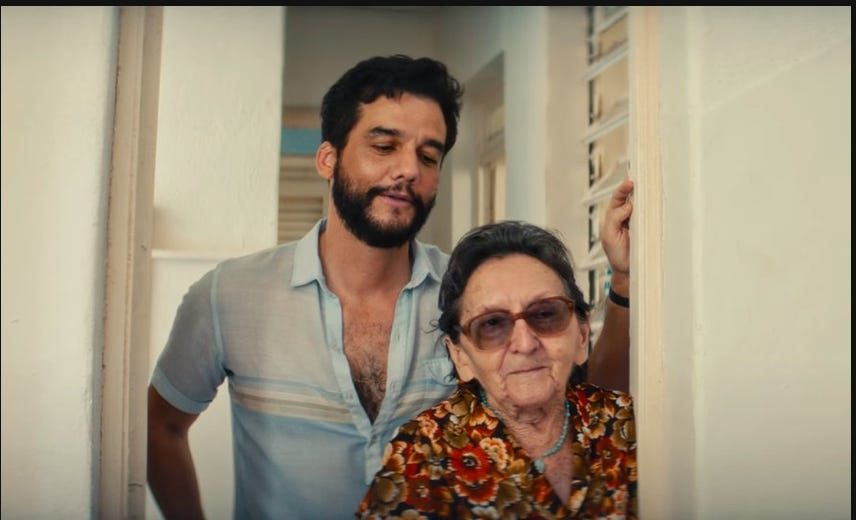
Marcelo Meets Dona Sebastiana, which will not embed.
Dir. Kleber Mendonca Filho
Award: Eduardo Serrano, Matheus Farias – Editing
Nom : Wagner Moura – Lead Acting, Tania Maria – Supporting Acting, International Feature Film, Rita Azevedo – Costume Design, Thales Junqueira – Production Design, Gabriel Domingues – Casting
Hulu, VOD
I saw The Secret Agent on New Year’s Day and I’m already ready to watch it again, even with its near three-hour runtime. This film’s pacing and plotting seems to be throwing some people, and I don’t blame them – it’s certainly deliberate, sometimes intentionally slow (as in the clip above) as it focuses on uneasy kindness rather than the film’s darker stakes. The Secret Agent follows Marcelo, living under the name Armando, as he becomes a refugee attempting to escape Brazil’s oppressive regime. It’s at least a full hour into the film that we learn why he’s running, who he’s running from, and what kind of man he really is.
But we know from watching him already that he is a kind, if reserved man, one living with grief and fear. Moura plays Marcelo with a guarded affability, for much of the film hypervigilant to his own disclosures, and when he does later loosen up, it’s a thrilling scene to watch. Meanwhile, he’s surrounded by characters who are more emotionally open, whether it’s his host Dona Sebastiana (Tania Maria, who is such a great energy for the film) or his family or his found community. He’s positioned opposite two hitmen and corrupt police officers, who talk around crimes involving a decaying severed leg and a missing student.
It’s a film with a massive, novelistic scope, one where several threads are left not fully explored simply to add texture to the film’s central mystery. I think, as a result, the fact that it’s able to maintain its narrative across several intertwining plotlines (and, eventually, timelines) while maintaining a tense and yet warm tone is the greatest editing achievement of the year. It’s so dense with great stuff that I may someday choose to expand on this piece, to dig into this great final appearance of Udo Kier, or the way the film intermingles nostalgia and terror into its story in “a time of great mischief,” or the way the film’s finale breaks my heart.
7. Die My Love
Dir. Lynne Ramsay
Award: Jennifer Lawrence – Lead Acting/Lead Actress, Seamus McGarvey – Best Cinematography
Nom: Robert Pattinson – Featured Acting, Nick Nolte – Supporting Acting, Sissy Spacek – Supporting Acting, Lynne Ramsay – Best Director, Lynne Ramsay et. al – Best Adapted Screenplay
MUBI, VOD
Post-partum depression gone terribly wrong, while Die My Love sold itself on the mania and fighting between Grace (Jennifer Lawrence) and Jackson (Robert Pattinson,) I would push that it’s just as great at the funny, sexy, joyful moments, too. Left alone with her baby while Jackson works as a trucker and cheats, Grace is bored out of her mind. She does a lot of dancing and day drinking and mess making. There’s a scene with a children’s song that made me giggle. There’s another where she reads an Amelia Earhart children’s book that made me cackle.
That’s ultimately what made me fall in love with this movie – never letting up on the insane depiction of socialized “motherhood” but also celebrating moments of absurdity and escape. I think Ramsay identifies that the central premise of “isn’t it insane how we treat and talk to women who are not doing well at this most pivotal point in childhood development” is familiar enough to anyone in her audience that she can focus instead on all the details and diversions. That includes fantastic supporting performances for Grace’s family – Nolte, in particular, is so affecting as a man at the end of his faculties. I still haven’t caught up with Marielle Heller’s Nightbitch adaptation, but I suspect this might be the better staging of the novel’s energy.
I also think Jennifer Lawrence gives the performance of the year as Grace. Yes, there are scenes where she’s asked to go big, though never quite as over-the-top as Darren Aronofsky’s mother!. And, yeah, there’s a lot of prowling and dancing. But I’m at least equally delighted with her more deadpan exhaustion, her drunk bliss, her holier-than-thou condescension. Also, credit to Ramsay and McGarvey – the way they photograph Lawrence is the best a movie star has looked in a movie since Pattinson himself starred in The Lighthouse. I found this film, despite its intense sadness and profound anger, to be gorgeous, funny, and, yes, fun.
6. The Testament of Ann Lee
Dir. Mona Fastvold
Award: Celia Rowlson-Hall – Best Stunt Design
Nom: Amanda Seyfried – Lead Acting, Mona Fastvold – Best Director, Malgorzata Karpiuk – Costume Design, Anna Torjek et. al – Makeup & Hairstyling, Daniel Blumberg – Original Score, “The Testament of Ann Lee” for Best Original Song, Sam Bader – Production Design
VOD
Seyfried is so outrageously good in this movie – her and Lawrence are about as close to a tie in my heart as it gets. The Testament of Ann Lee is a historical musical telling the foundations of The Shakers as a gospel (miracles included!) with new arrangements by Yuck’s Daniel Blumberg. I have been jokingly calling the film “what white people mean when they say Sinners would be better without the vampires,” which is obviously a joke reductive to both films. But I think they share plenty, as well, films heavily concerned with folk musical traditions, the violence America inflicts on those who dare to dream of independence within America’s white Protestant hegemony, and the power of community despite that violence.
This is also a beautiful film, and the dancing is so engaging. I could have watched it for another hour. It’s an impressive feat to pull off, because I find myself very much empathetic with all of Ann Lee’s pain while also finding her ultimate tenet, the absolute celibacy of man in the goal to reunite with God, to be the foundation of a death cult. I understand absolutely why she would come to the conclusions she does, but I mostly find myself sad she does not have more modern resources to the way we discuss womanhood, sexuality and asexuality, and grief. But that sadness, for me, is never overwhelmed by the movement, the community, the music.
What Seyfried’s capable of doing in this that is so electric is marrying the zealotry and the individuality. In every scene, you can see both why her companions are obsessed with her and also why her husband is so frustrated that the woman he loves (possessively, wrongly) has removed herself from his side. There are great scenes away from Seyfried, too – Lewis Pullman gets some great scenes as a traveling proselytizer, and there’s a delightful scene where a party of explorers find the land that will be their home. I do understand why this movie lost some people, but it certainly held me.
5. Sinners
Dir. Ryan Coogler
Award: Miles Caton – Best Featured Acting, Ken Diaz et. al – Best Makeup & Hairstyling, Ludwig Goransson – Best Original Score, “Travelin’” – Best Original Song, Andrew Bock et. al – Best Sound, Francine Maisler – Best Casting
Nom: Michael B. Jordan – Lead Acting, Wunmi Mosaku – Supporting Acting, Ryan Coogler – Best Director, Ryan Coogler – Original Screenplay, Autumn Durald Arkapaw – Cinematography, Ruth. E Carter – Costume Design, “I Lied To You” – Best Original Song, Andy Gill – Stunt Design
HBO Max, VOD
A film that, at this point, I hope needs no introduction. Sinners has held on for almost a year now as the people’s choice for Best Picture, and I would love to see it win on Sunday – though, I have to admit, I think it’s rather unlikely against One Battle After Another. The season has gone on long enough that prognosticators are openly overturning their predictions on personal desire and “what would be a better narrative for Hollywood” rather than an assessment of the polls. And I get the desire to hope Sinners will pull out an upset. No film this year marries an equal volume of ideas with crowdpleasing thrills. The cast is full to bursting with great performances, both in acting and singing, and the way the film moves from its Howard Hawks-y set-up into its full blown Carpenter invasion act is a meaningful pleasure.
This is a film with three lead characters in Smoke, Stack, and Sammie “Preacher Boy” – the two twins played by a surprisingly controlled Michael B. Jordan. He differentiates them in physical posture and willingness to smile more than in voice or obvious tics – it’s that subtlety that calls to mind Jeremy Irons’s great work in Dead Ringers rather than Robert Pattinson’s much sillier (still fun!) work in Mickey17 this year. But my favorite discovery of the year is this first-ever performance from Miles Caton, who had a brief stint as a teen singer and has yet to release an album. His voice, of course, is one of the movie’s magic tricks, and it makes Stack shout with joy when he first hears it (in the film’s best blues song, “Travelin,’” which I still can hardly believe is not a traditional!) But it’s the sensitivity and frustration with which he plays his youth and his excitement at a world of “sin” that makes me wish, as much as I love Delroy Lindo, that Caton was up for that award on Sunday.
I’m so happy Wunmi Mosaku made it after all – her performance as Annie is so captivating, hat wonderful sort of “taking control of the movie with rationality” that makes for so many great supporting wins. And she’s amazing in that introductory scene with Smoke, which is so sad but also so loving. While I wouldn’t prefer they be nominated than Lindo or Mosaku, shout outs to the great work from Hailee Steinfeld and Jack O’Connell as well, bringing to life characters that should be easy to write off and making them funny, sexy, and still meeting their emotional complexity. Though maybe the real credit there is to Coogler and his team for writing great roles.
The music is, ultimately, my most beloved part of the film, and I was so driven by the non-performance scenes and the way they maintain their instrumental blues. When the camera pans up to the roof ablaze in “I Lied To You,” for me, that’s where the truly ecstatic takes hold. Since his debut Fruitvale Station, Coogler has been capable of quiet magic in the way he chooses to frame and block. Maybe no moment hits that as cleanly as the aspect ratio shift at the barn door, when I realized just how horrific the scene was about to get. It’s that expert management of tone that sets Coogler as my ideal winner for Sunday’s Oscars – but I’m setting myself up to only hope it wins, like, six, lol.
4. Cloud
Dir. Kiyoshi Kurosawa
Nom: International Feature, Shinji Watanabe – Sound, Tatsuko Koike – Stunt Design
Criterion Channel, VOD
I don’t think I had more fun at a film than Kiyoshi Kurosawa’s story of an online reseller scalping product at such a volume that it seems the entire world decides he must be destroyed. Cloud is a tech thriller that really captures the way being online can mentally dissociate action from emotional processing, we watch as “Ratel” (Masaki Suda) watches his sales page of marked up goods goes from 0% sold to sold out with an almost shark-like lust. Suda’s great at playing the superficiality and emotional simplicity of this guy, and when he asks in a violent encounter, “Am I really so bad?,” you realize he’s never really considered it before.
He’s surrounded by a really fun cast, too. Kotone Furukawa plays his girlfriend, seemingly really naive about the way he makes his money, openly dreaming about having lots of money and the comforts that come with it – but when he fails to be as present and the money stalls, we immediately take her side because he’s a disaster. Then there’s his assistant, Sano, who at first appears to be a gentle doofus and eventually reveals himself to be something a lot more complicated. Between his allies and his growing opposition, Ratel’s world quickly becomes a paranoid nightmare.
Like Ari Aster’s Eddington, this online paranoia parable explodes into action in the back third, and it is thrilling to watch. Allegiances get fried, glass gets shattered, guns go off. The gunfights in this film’s back half are both believably hard-scrabble for the characters involved and also incredibly well choreographed and shot. Where I’d kind of expected this to be Kurosawa riffing on Fargo, it spills more into the dark Coens vibes of Barton Fink and No Country for Old Men. It’s an interesting film, because while certainly less ambitious than the films I have directly below it on the list and maybe lacking any one specific exceptional quality, the entire package is just so deeply satisfying that, try as I might, I could not bring myself to place it any lower.
3. Marty Supreme
Dir. Josh Safdie
Nom: Timothee Chalamet – Lead Acting/Lead Actor, Gwyneth Paltrow – Supporting Acting/Supporting Actress, Josh Safdie – Original Screenplay, Darius Khondji – Cinematography, Ronald Bronstein, Josh Safdie – Editing, Daniel Lopatin – Original Score, Jennifer Venditti – Casting
VOD
I laughed so hard my head hurt. In terms of sheer entertainment value, Marty Supreme would go to #1 on this list. The story of Marty Mauser ratfucking literally every person he comes into contact with, often to his own detriment because his monomaniacal egomania is so ridiculously out of tune with reality, is a movie that instantly swept me away. Marty Supreme stays more fun than the previous Safdies films Uncut Gems and Good Time by warping every character in the film towards Marty’s immoral center, shaking up the timeline, and dialing up the insanity. It’s not as painful to watch him be a piece of shit to Kevin O’Leary’s Milton Rockwell because Rockwell is a self-proclaimed monster. We have some more sympathy for Rachel (Odessa A’zion) and Kay (Gwyneth Paltrow,) but they’re still both terrible decision engines of their own making.
I still don’t know who to root for on Sunday in Lead Actor, as I think all five performances nominated at the Oscars are genuinely great. But I’ll be thrilled if Marty Supreme is the role Chalamet can win for, as it’s truly electric work. The unstoppable locomotive Marty Mauser is such a nasty rat of a man, and watching him barrel past any attempt at reason or accountability is just electric. The way this movie never stops moving is the Safdie signature, but this finds new explosive (pun acknowledged) heights for the viral movement throughout this film’s world.
Perhaps most impressively, the ping pong in this movie is, like, delightful? It never goes quite as expressionistic as Challengers, but the intensity of the matches and the arcs of the play are as close as anyone’s come. The film’s diversion into circus acts does a great job highlighting the way this sport is unquestionably silly and yet also so athletically demanding. The film’s subtheme about the way those who celebrate performance find themselves adrift in a world of capital is complicated by how we feel about Marty as a person, but Paltrow is able to fill Kay with an earnest sadness no other actor could have captured.
“But what about the rest of it?” It is certainly hard for me to argue Marty Supreme is as thematically dense or ambitious as some other films on this list. The intense disagreement people have about how to read the film’s ending is evidence there is something to plumb here. I’m of the opinion that Marty has let something new into his life, and that alone is some growth for him. Complicated feelings about what that growth means, and whether it has to be a radical change in his character or just one step in the right direction – there is a lot of allegorical stuff you can attach to that with Marty’s identification with being an embodiment of American exceptionalism, and then also the ways that ties into Marty’s blase discussion of Jewish identity. Incrementalism likely cannot save us, but I will still take my wins where I can get them.
2. The Phoenician Scheme
Dir. Wes Anderson
Award: Wes Anderson – Best Original Screenplay, Milena Canonero – Best Costume Design, Adam Stockhausen – Production Design
Nom: Mia Threapleton – Featured Acting, Michael Cera – Featured Acting, Bruce Delbonnel – Cinematography, Heike Murker – Make-up & Hairstyling, Douglas Aibel, et. al – Casting
VOD
For a long, long time after my piece this past June, The Phoenician Scheme remained my #1 film of the year. I went long on that film’s triumphs in a way that dodged spoilers back then, so if you still haven’t caught up with it, click above or scroll on. Since it was released, I’ve seen a Benicio Del Toro performance I loved even more in Sensei Sergio, though cutting Zsa Zsa Korda in lead was a painful choice for me. I have not seen a film I thought looked better – hell, I’m not sure Wes has ever made a film that actually looked better, its blocking and control of color (or lack thereof) as powerful as anything he’s ever done.
First, the gag reel. That first explosion had me scream in the theater. The above clip, the basketball gambit, is the most joyful use of Tom Hanks in a decade. Yet another brilliant dual role is Michael Cera as entomologist and secret agent Bjorn, with his transformation into the secret agent one of the year’s funniest and most impressive physical acting choices. But he’s also so funny already as the tutor, so many insane line deliveries, that the change is magic. In the scene where Liesl (Mia Threapleton) is reunited with her Mother Superior, the way the light dims to highlight only Mother Superior and Liesl is both a great character choice and a deeply funny sight gag. “Myself, I feel very safe” and “Help yourself to a hand grenade” are two lines I have been repeating in that very Fantastic Mr. Fox way. There are lots of Fox-y gags, little shrugs and looks that recapture elements of one of his most beloved, least echoed films.
I’ve also rewatched and fallen back in love with Rushmore, a film which shares this film’s ending with a desire for a new normal. It’s that ending which has, against many worthy films, held The Phoenician Scheme in such high esteem for me. Because, yes, like many Wes Anderson films, this is a gorgeous, funny, brilliantly acted film. But the profound comes in the way Zsa Zsa and Liesl are able to change one another and abandon lives of depressed ideology (capitalism and puritanism, which are it turns out serving neither of them) to pursue a simpler, kinder life.
In the final scene, where Zsa Zsa and Liesl run a cute, small family restaurant, count the day’s cash, and play cards together, the new environment is given the same lush attention to detail as the opening credits with Zsa Zsa in his bath. I have a real sense that this new life will carry on past a moment in time, rather than Anderson’s usual talent being a kiss-off final joke where the characters reconcile or a reflection back on a moment in time now gone. While Wes has long proven himself as a great fantasist, I love that he now pursues a more mundane, achievable joy. I think it’s a perfect coda for the film’s fantastical redemption of the soul, one which takes on faith a Judeo Christian afterlife to truly understand these characters. If God is not dead, then we are not beyond salvation, and facing Zsa Zsa Korda’s redemption is a story I understand some could not attend.
1. Resurrection
Dir. Bi Gan
Award: Bi Gan- Best Director, International Feature
Nom: Jackson Yee – Lead Acting/Lead Actor, Guo Mucheng – Supporting Acting, Bi Gan – Original Screenplay, Dong Jinsong – Cinematography, Xue Bai, Bi Gan – Editing, [not credited online] – Makeup & Hairstyling, M83 – Original Score, Liu Qiang, Tu Nan – Production Design, Strilen Liu, et. al – Visual Effects
Coming to Criterion Channel 3/24, VOD
In a distant future, humanity has stopped dreaming and has achieved immortality – the dreamers are considered enemies of the state to be studied and eliminated. The dreams, as portrayed here, are through the technology of cinema. We follow an agent of the state called a “Big Other” (Shu Qi) to one of these “Deleriants,” who we see first as a silent film monster akin to Nosferatu’s Count Orlok. Resurrection takes the form of an anthology across 20th century China, capturing elements of both film and cultural history across that time.’
Our Deliriant, played by Jackson Yee, is a chameleonic figure who places himself in incredibly realized stories each centered on our senses. My favorites are the last two, centered on a con artist who uses “smell” to achieve a relationship with a wonderful child (Guo Mucheng, in the single best child performance of the year) and New Year’s Y2K. I’ve read the Y2K sequence is emblematic of Bi Gan’s signature technique, extreme long takes. This is my first Bi Gan film and I’ll be honest, I didn’t even notice beyond being enamored with the way the camera moved. Many find this film slow – I find it rich and delicious.
The majority of writing about Resurrection is focused on its invocation of cinema. Film critics, myself included, are especially attuned to reading the ways films are about films because film critics generally only pursue the vocation because they adore the hobby. They are uniquely predisposed to love when film is about itself because they’re especially equipped to talk about it – and, sometimes, they will distort The English language writing about this film is also less likely to be familiar with its very intentional invocation of Buddhist samsara or its understanding of Chinese political history as depicted across different time periods. I won’t profess to be a scholar of either – I’ll keep an eye out for someone who can dig into it. But while this film uses cinema history as a model to structure itself, it is about much more.
What we’re seeing is also a pretty blatant dissolution of first transcendentalism in the Big Other seeing the beauty of the dream attachment and feeling empathy for the Deleriant. Then, nationalism, where espionage agents all realize they’re in it for themselves and their art. Then the death drive of spiritualism, the decision that accepting your sin is also suicide. Then self-oriented profiteer capitalism, which ends up dividing two good friends due to a momentary lapse of selfishness. And then a rejection of the nihilism that all invites, a screaming delight at falling in love and choosing the pain of life over immortality. In the final chapter, two people can share a fart, and in doing so discover why life is worth living.
That’s not to say this film isn’t speaking to cinematic history, of course, and I think the ending where it understands that these dreams all work as ways to communicate a hundred years of life in three hours is beautiful. I just find myself very enamored with this, as a study of the joy and the suffering in life as well as a study of the world’s forces. I think pulling off the joy of the individual stories, the overall gambit pulling off so many different milieu, and doing so with such beauty makes it hard to imagine a more deserving film as the best of the year.
 All My Friends