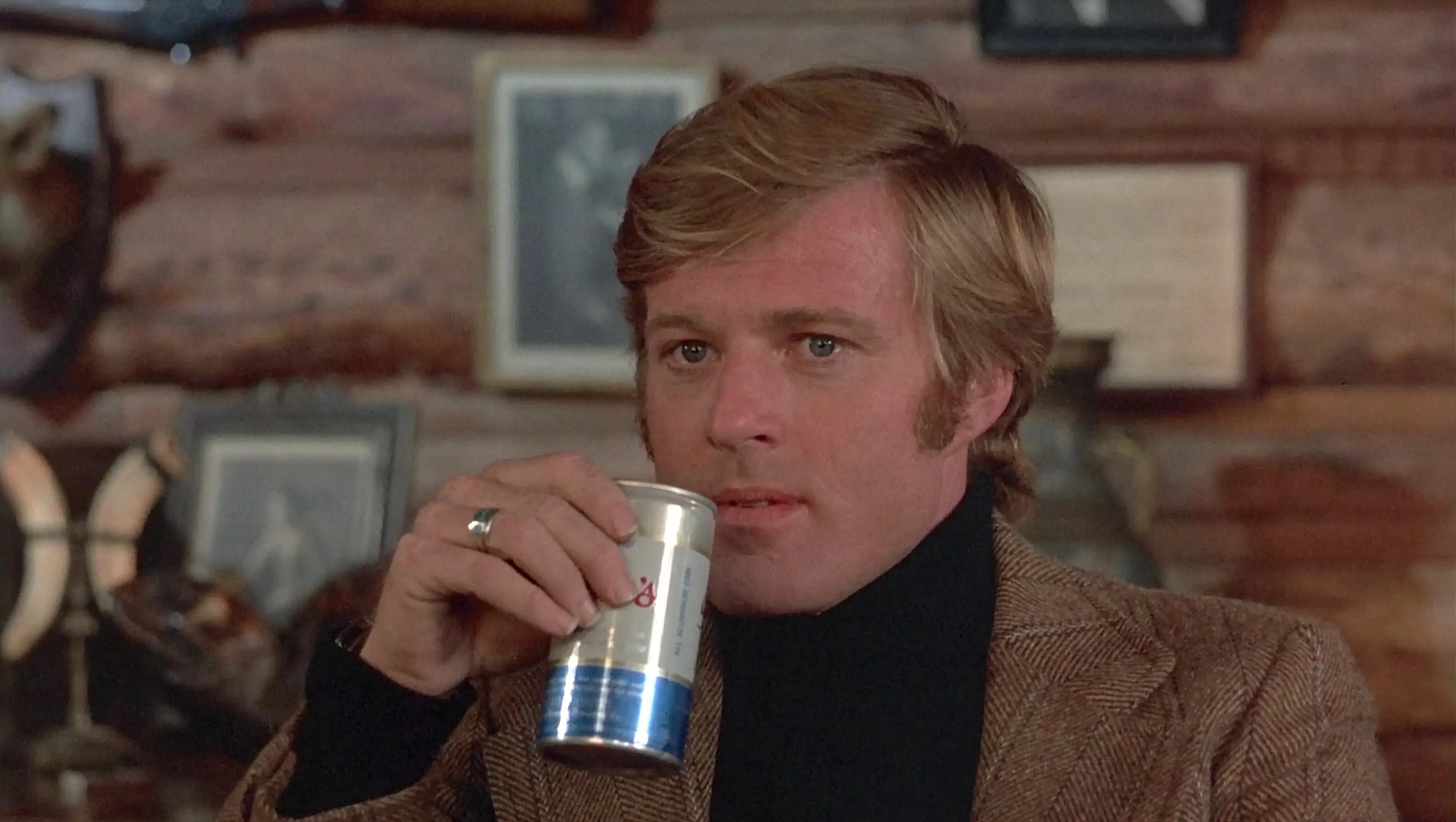
I’m nowhere near a Robert Redford completionist. Of his acting credits, I’ve seen thirteen – of the films he directed, only Quiz Show, a very good movie. My favorite is handily All The President’s Men, which he grants an intense control. Films ripped from the headlines often work in melodramatic performances that emphasize just how important, how monumental this story is, that it couldn’t possibly wait to be told, that This Is Not Normal. Redford is the antithesis of that approach – not that his Woodward doesn’t seem invested in uncovering the Watergate scandal, but in that he handles it thoughtfully, professionally, like it’s surgery.
The Candidate is probably my other favorite performance, especially poignant in this modern moment where our best and brightest Democratic nominees are effectively unsupported by their party establishment unless they’re willing to “moderate” their messaging. Redford is the ideal actor for the role – he simultaneously is charismatic and sincere enough to make the more poignant lefty political messaging feel earned and also beautiful and aloof enough to sell that he’s comfortable losing, his skin not really in the game until it is, that he hasn’t really thought through what will happen if he wins. And, though I have less to say about them, I love his Newman collaborations, The Sting and Butch Cassidy and the Sundance Kid.
Sundance, the film festival, is Redford’s ultimate legacy, and his ultimate contribution to film art. Redford’s Wildwood Enterprises founded the Utah/US Film Festival that would become Sundance in 1978, and his stewardship resulted in the largest annual film festival in America to this day. By the 90s, it had become the definitive home for independent cinema in the United States. Then, its discoveries included Richard Linklater, Steven Soderbergh, Quentin Tarantino, Paul Thomas Anderson, Jim Jarmusch – to this day, they include Lee Isaac Chung, Jane Schoenbrun, Bo Burnham, Boots Riley, Eliza Hittman, and The Daniels. At a time when Hollywood was getting bigger, glossier, and more blockbuster-oriented, Redford was instrumental in creating a new lane for emerging filmmakers, smaller budgets, more human stakes.
You can count the number of times Redford cashed in across his career on one hand. His filmography, both behind and in front of the camera, is close to the ideal for a movie star of his caliber, with more paranoia thrillers, sports movies, historical epics, westerns, and oddball dramas than almost any actor of his generation. Even towards the end, he continued to make Real Choices, like the harrowing ocean survival film All Is Lost or the romantic nostalgia of The Old Man and the Gun. Redford is representative of the ideal of American cinema, everything it can do and every way someone passionate can contribute. I pray we see another as good as him soon.
 All My Friends