The Best Games of 2024

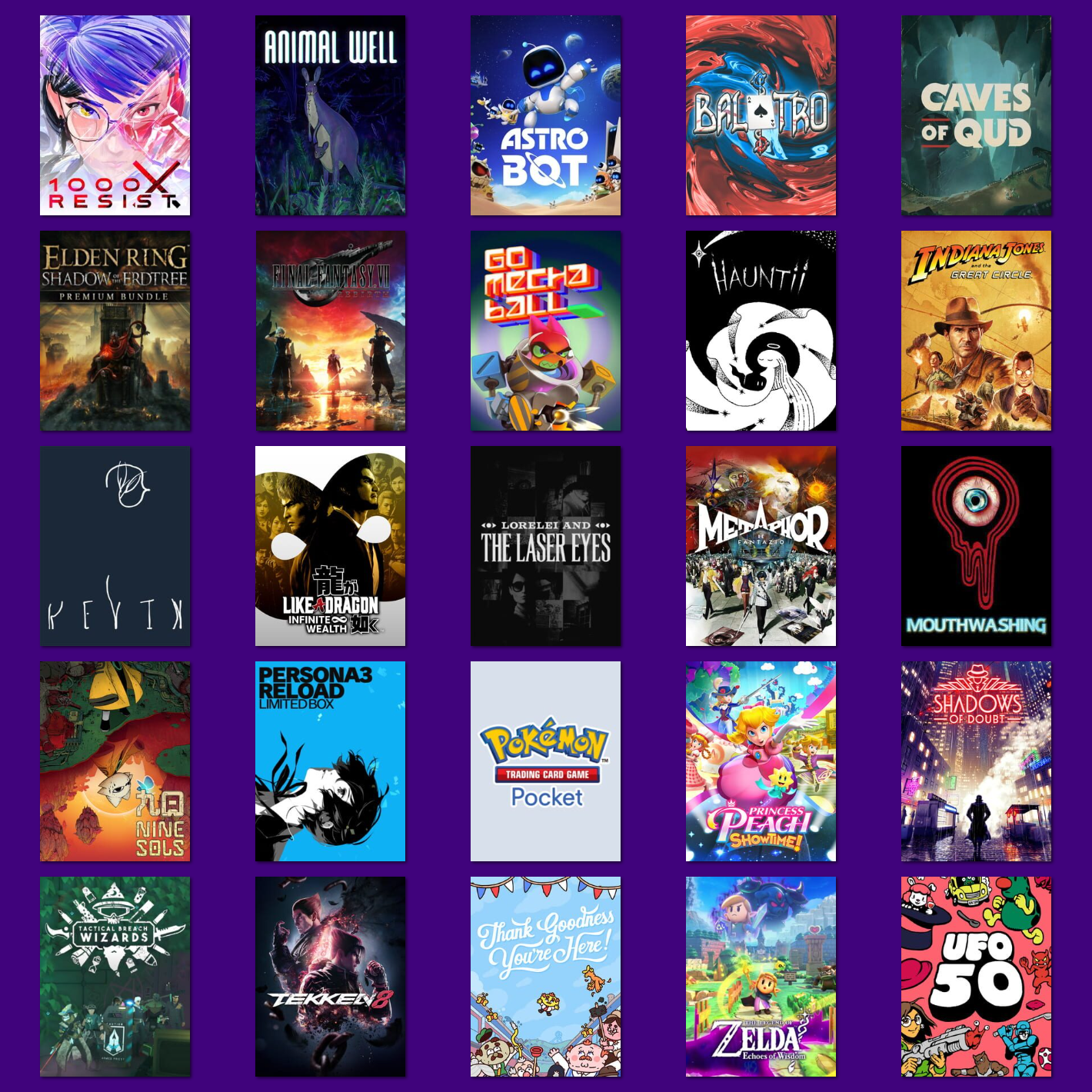
25 games, not all of which I played!

Hi, gang!

I’m doing a Game of the Year write-up again!

It’s been four years since my last one, but I just feel like getting writing. I already had done drafts for a bunch of these games, but I figured, what the hell, lemme just get these out now. Unlike in 2020, I don’t have them combined into themes. I’ll be doing twelve write-ups in total, one per day, through February 1. I’ll tell you now, the top 3 of this list are interchangeable, and all of the games I wrote up are very much worth your time, so don’t fret too much about placement please.

It’s a weird, transitional year for games, but I also fully admit I delayed on a bunch of games that are extremely up my alley. A hearty “play you later” to Final Fantasy VII Rebirth, Elden Ring: Shadow of the Erdtree, Metaphor Re:Fantazio, Alan Wake II: Night Springs, Arco, CLICKOLDING, Crow Country, Cryptmaster, Dead Rising Deluxe Remaster, Dragon’s Dogma 2, Duck Detective: The Secret Salami, Fate/stay Night, Indika, Infinity Nikki, Kunitsu-Gami: Path of the Goddess, Nightmare Kart, Open Roads, Penny’s Big Breakaway, Satisfactory, Shadows of Doubt, Silent Hill Short Message, Slitterhead, Splatoon 3 Side Order, Stalker 2: Heart of Chornobyl, The Rise of the Golden Idol, Thrasher, and Unicorn Overlord.
Hauntii.

SOME BULLETPOINT GAMES I LIKED AND WANTED TO SAY SOMETHING ABOUT

  • Go Mecha Ball: The first new game I played in 2024, it’s a roguelike where you play as a mech that can turn into a ball. It feels really good! The mechanics and animations are really high quality, too. I did not end up digging that deep into this game, but I’m surprised it’s gone so completely unremarked upon.
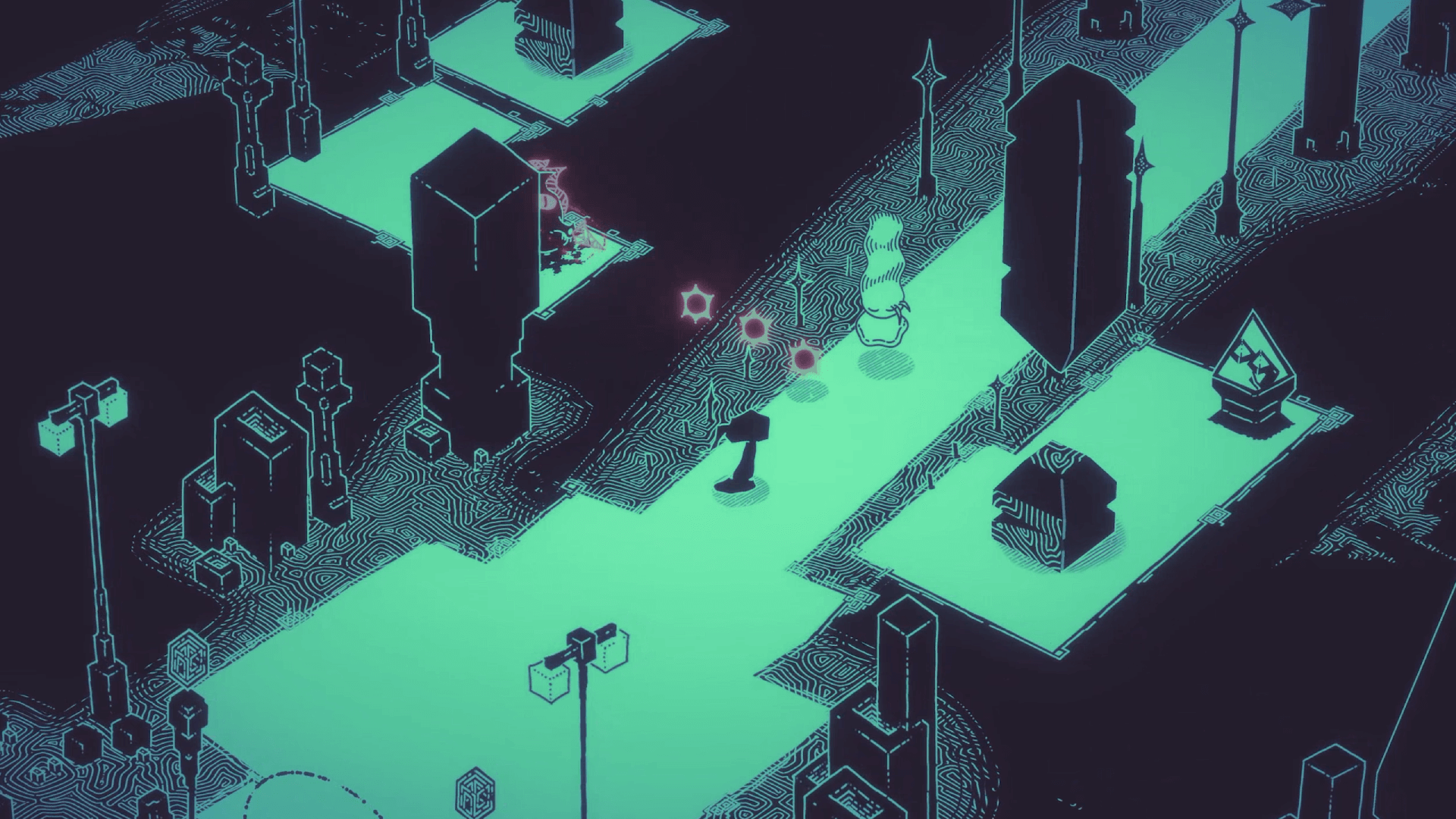
  • Hauntii: This game’s art style really is the best thing going for it. An adventure game with a sweet tone, I have a hard time believing I’ll go back to it, but I was immediately charmed by the look.
  • Home Safety Hotline: I actually can’t stress enough how impressed I am with the user interface and the quality of everything that’s in Home Safety Hotline, a game where you assist customers with problems they’re having in their home that quickly veer into the supernatural. The voice performances of some of these customers, especially if you fail to address their problems and they call back, are some of the best in any independent game. I honestly think if this had some sort of remixed/endless/community content function, it would easily be on this list, as I find the core gameplay loop and the basic diagnostic project so entertaining. As it is, I found it just a little short.
  • The Legend of Zelda: Echoes of Wisdom: This game is really cute! We finally get to play as Zelda, and it’s in a full-blown 2D style Zelda! I played the first dungeon and a half before getting distracted and playing other games. I think this game will be looked back on as quite underrated, and I keep meaning to go back and play more.
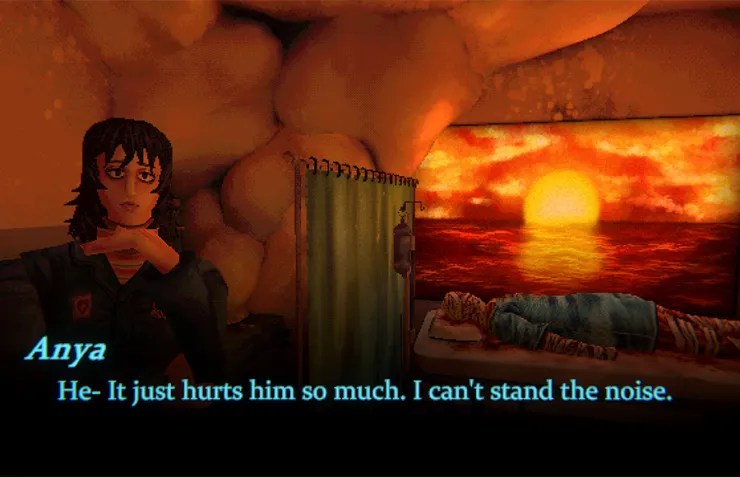
  • Mouthwashing: Mouthwashing tells the story of a space trucker delivery gone wrong, with the crew of five getting cabin fever and finding out that the circumstances of their crash are worse than they seem. I really like the things this game does with perspective and jump cuts – at times, it is using filmic editing techniques in real time gameplay to poignant effect. I also think, in terms of story, that it’s a worthwhile, adult game with literary story concerns, and its characterization is strong for such a short few hours. I just also think it’s more in the camp of “the best sci-fi story in this monthly magazine” than “one of the best stories of the year.” Look forward to seeing their next project!
  • Persona 3 Reload: I’m farther than I’ve ever gotten in any version of Persona 3, but I’m still too early to really write up what makes Persona 3 great outside of “it’s a Persona game.” I’ll probably circle back to this one, but I think they’ve made a lot of smart quality of life improvements that make Persona 3 a lot more approachable. I maybe prefer the rigid weirdness of the PS2 game, and I definitely prefer the original game’s soundtrack, which has been re-recorded for Reload with almost universally weaker vocals. Look forward to catching up with Metaphor sometime, too!
Mouthwashing.
  • Pokemon TCG Pocket: I want to give props to simplifying the Pokemon Trading Card Game, and I want to give props to the fact that just by logging in every day and playing through the single-player content I’ve managed to collect the vast majority of the cards in the game so far. I get happy whenever I see a Pokemon card from my childhood – some of the new art is really good, too! I wish the game balance was at all fun for multiplayer, but anyone playing this can tell you immediately about the three decks that only got stronger with the new expansion. Still, fulfilling my ever-present Fartstone needs.
  • Princess Peach: Showtime!: The second of Nintendo’s princess game experiments of 2024, I think this is a really admirable sampler platter for game mechanics and design. Peach participates in a number of stage shows inspired by different genres, and each show plays differently enough to keep things fresh. If someone said “I want to get into video games but I don’t know where to start,” this is a pretty good entry point, and based on their favorite of these shows, you could make recommendations for what to play next. Probably a lot more fun if you’re relatively new to video games than if you’ve been a gamer for decades.
  • Shadows of Doubt: This procedural indie mystery game, where you play a private detective and collect clues and evidence to find murder suspects for cold cases, is a fascinating work of design. It unfortunately just runs like crap on my computer and every streamer I’ve ever seen try to play it is a combination of impatient and incompetent. Can’t wait to have a device where I can play this myself!
  • Tekken 8: I played like two hours of the campaign and a little online play when I borrowed this from the library and it rocks, dude. I love fighting games but haven’t ever really invested time into Tekken game. In a world where I got to play way more of this, I can imagine it being toward the top of my list.
  • Thank Goodness You’re Here!: Maybe wish I’d played this myself rather than watch a bunch of someone streaming it, because the jokes are the appeal of this game! Thank Goodness You’re Here! is basically a “touch everything for a laugh” game, sort of comparable to Untitled Goose Game, except with pretty gorgeous hand animated cartooning and a hundred times more British. There’s a running joke about your weird little gremlin going down a poor guy’s chimney that really took me out.
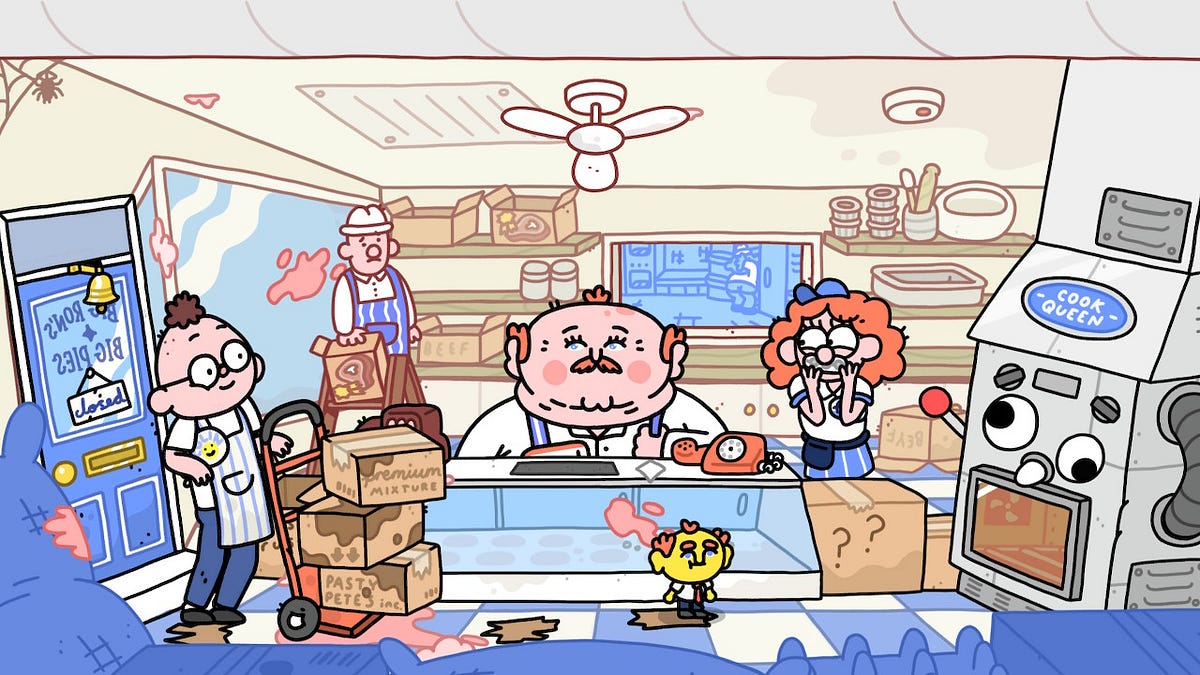
Thank Goodness You’re Here!

AND THEN, MY LIST:

#12: Kevin (1997-2077)
#11: Indiana Jones and the Great Circle
#10: Astro Bot
#9: Animal Well
#8: Tactical Breach Wizards
#7: Like a Dragon: Infinite Wealth
#6: Nine Sols
#5: Lorelei and the Laser Eyes
#4: Caves of Qud

#1a: Balatro
#1b: UFO 50
#1c: 1000xResist
KEVIN (1997-2077)

Kevin Du
2024
PC

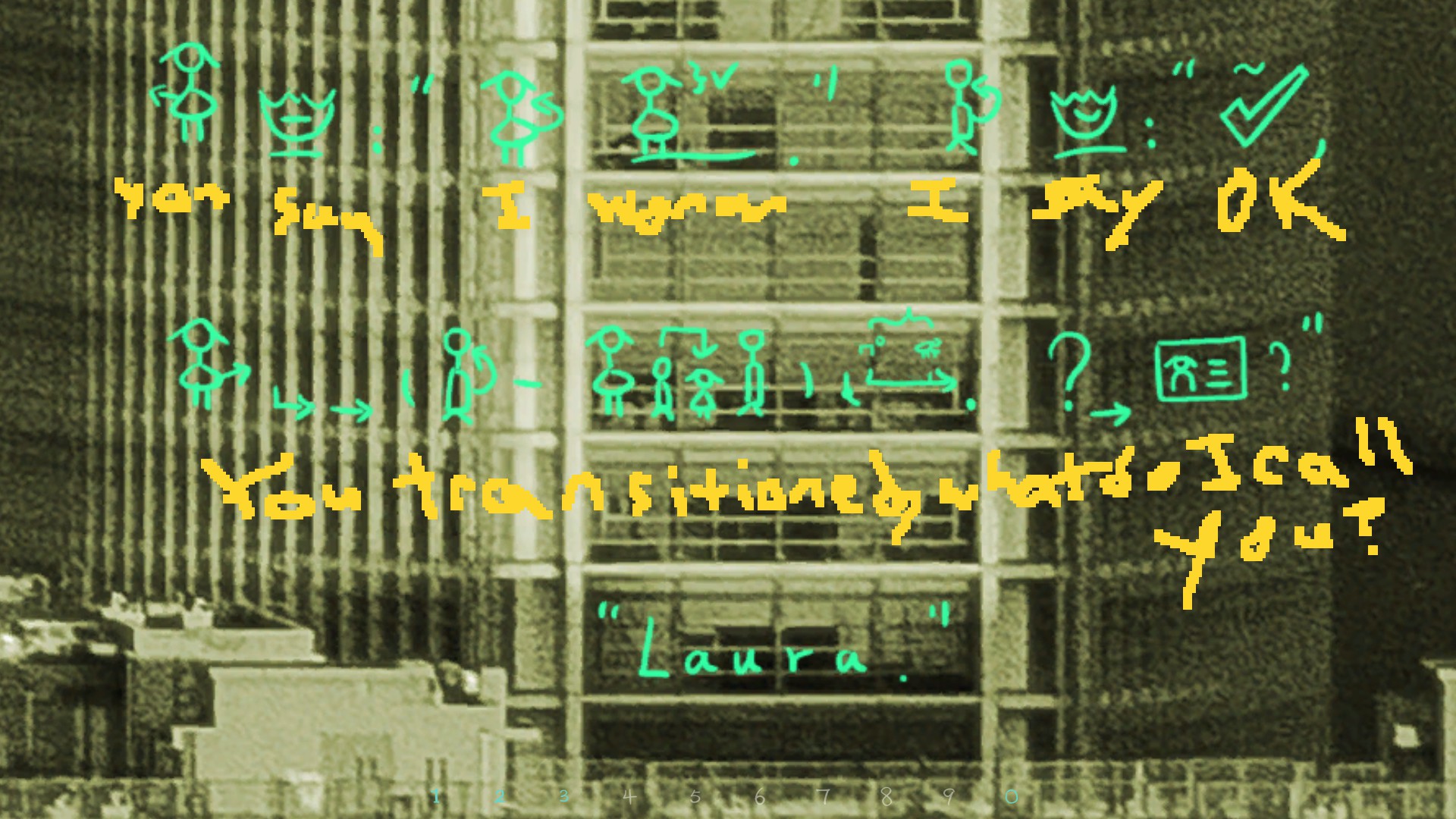
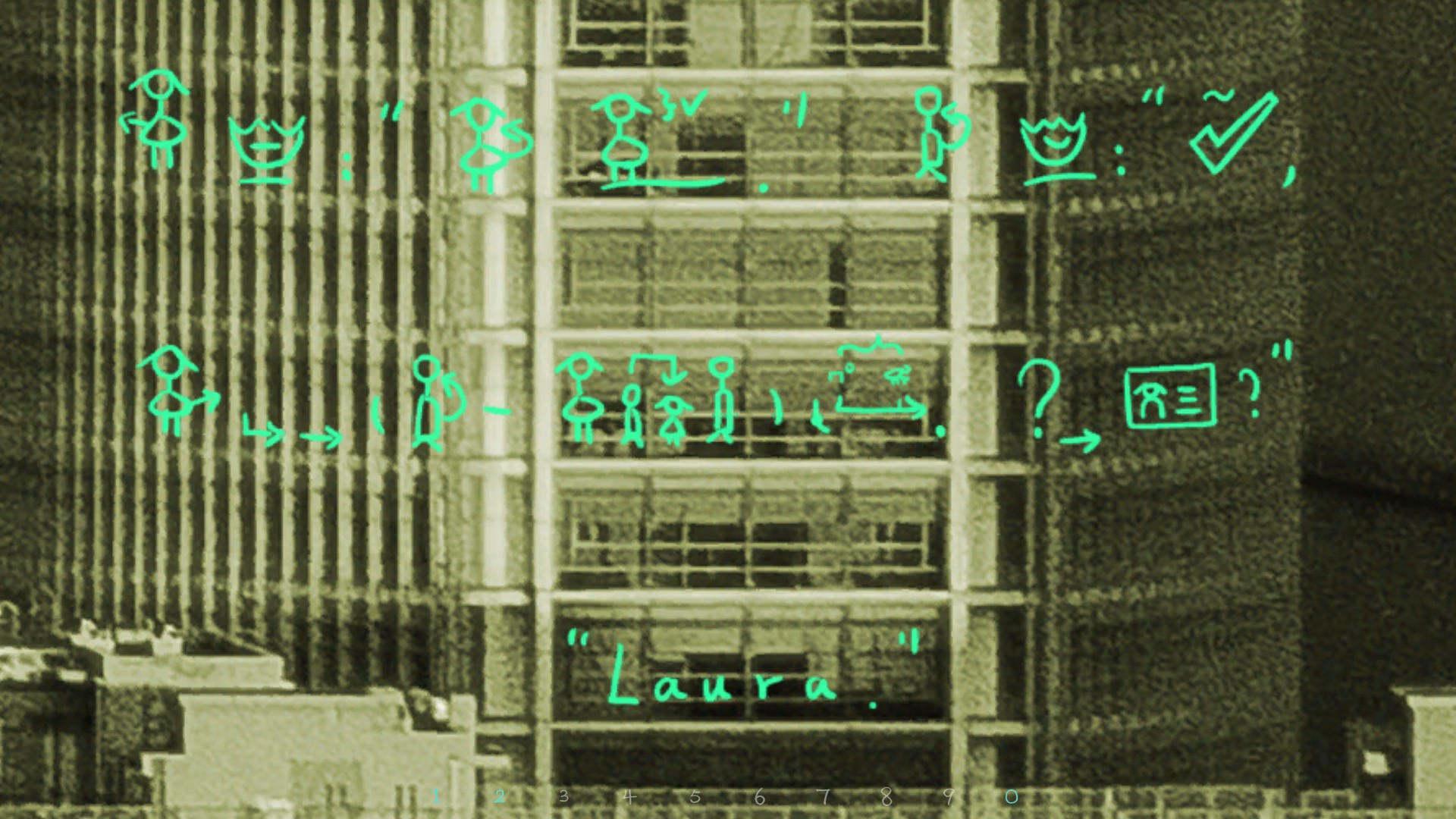
A friend messaged me to ask about an IGF finalist they’d not heard about prior – nominated for the Nuovo Award, Kevin (1997-2077) released to the public on February 2 and otherwise dropped off the face of the earth. We were both intrigued by the premise – a translation cipher game which lacks the clean, concrete solution logic of games like Chants of Sennaar. However, it was impossible to gauge the game’s difficulty or quality from the outside, so we waited for a review or stream – to no avail. Apart from one gamedeveloper.com interview and some non-English streams on YouTube, this game remains almost entirely uncovered in public visibility.

I bit the bullet and decided to investigate, the game’s low price point and unique presentation pulling me in. My first experience was overwhelming – I am not good at language learning, so I bounced off some of the syntax rules Kevin lays forward in the early part of the game. Furthermore, the game offers no advice in the way of navigation, simply offering you a map without boundaries to scroll for ciphers. This is not a game for those who demand a ten minute hook – your first real experience needs to be with a preparation to embed.

An untranslated story in Kevin (1997-2077.)

The play experience is relatively simple. Using the arrow keys or your mouse, you can scroll the “map” (in early areas, literally topographical maps – in others, photographs in collage) for written short stories or letters, always in pictographic cipher. You are given a pencil (which you can change to many colors and erase) to write your annotated translation. There are occasionally small markers of spots named “friends” you can open which combine a new visual collage element and more letters. Over time, you get a sense of the “story” told in some of these letters, and eventually the story of developer Kevin Du and the people in his life.

The game offers what amounts to an introductory workbook (including short love stories, a story about a dog bite, and more standard “i you they/he she them” grammatical lessons,) and it also offers the ability to create fast travel points and return to that opening lesson at any time. After a brief attempt to translate the early lessons, I scrolled over to the broader map and decided to learn what exactly we’re translating. At first blush, most of these stories are about encounters with fellow academics, coworkers, or potential romantic interests. Even before completing the “tutorial,” it’s possible to get the gist that Kevin’s telling a story about an awkward encounter getting coffee with an old girlfriend, or a boss asking about his vacation.

In both the Steam page and the gamedeveloper.com interview, Kevin Du expresses that he is sharing deeply intimate, sometimes uncomfortable feelings and stories in this game, but he wants to see the players put in the work if they’re going to try to understand him. The mechanics also embody this hedgehog’s dilemma – unlike other cipher games, there is no automatic translation possible. Like in English, symbols change meaning depending on context – “feel” and “body” share a symbol. In addition, your ability to zoom in and out is limited to very specific areas, meaning it can be difficult to see an entire story at once. You don’t have an in-game scratch pad, either, so any ideas you want to carry between stories have to be written in a real-life notebook.

My attempt to translate the above story. How do you think I did?

However, the experience this game most evokes for me is Yume Nikki. At first, the lack of direction and inscrutability seems openly hostile, defying the player to just go ahead and close the game rather than engage any further. But adopting a more patient perspective, choosing to simply enjoy being in the game’s space rather than automatically assume control of the situation, and picking up little bits as you see patterns creates a sense of melancholy connection. Unlike Yume Nikki, someone who masters this language is going to have a relatively concrete idea of each of these stories’ meanings, and this game is expressly a memoir, so its final interpretation is not likely to shock the player. But from the sheer density of the game (the Steam page cites “200+ friends to meet,” but there’s also loads of text just on the overworld) it will take months if not years to beat.

I will almost certainly not be the player who ends up solving Kevin (1997-2077.) I very nearly flunked out of Latin 2, and didn’t fare much better in Spanish 3. I still plan to poke my head in every so often and see if I can grasp at a new story. I am confident in saying this game’s design is brilliant and sound – right now, it is beyond me to advocate for its quality as a work of memoir literature. From this year’s games, I’m not sure I can point to a game throwing down the gauntlet more openly. Indie loving game academics like myself have clamored for a text this dense, literary, and open to player rejection. I worry gamers only want language learning games if they have the dopamine rush of Duolingo.

R.I.P. David Lynch

David Lynch (1946-2025.)

Lynch was not a filmmaker first. He’d gone to the Pennsylvania Academy of the Fine Arts as a painter, and only began filmmaking out of a desire to see his paintings move. His first “films,” Six Figures Getting Sick and The Alphabet, are mixed media exhibitions that, even after the rest of his strange and wonderful career, come across more as museum pieces than cinema. Six Figures Getting Sick, notably, was originally presented on a sculpture “screen,” complete with plaster heads bubbling out of it. Working contemporary to Warhol and the evolution of video art, Lynch diverted from that path with the AFI funded The Grandmother, which signalled many of his anxieties, thematic concerns, and stylistic flourishes from the very start.

But my favorite of these early shorts is actually The Amputee, a two minute film (with two different takes, on two different filmstocks) in which an older woman writes an opaque letter about a convoluted series of relationships. It’s a very simple, one shot film, where the titular amputee is played by Catherine Coulson, better known as Twin Peaks’s Log Lady. Coulson was working behind the scenes on Eraserhead when they decided to shoot The Amputee as a film test – she’d been brought on board with her husband Jack Nance, though they divorced before Eraserhead debuted. This short, to me, is emblematic of the way Lynch works with fellow artists, takes these little diversions, and discovers something magical. While Eraserhead is this moral shock, this exorcism of Lynch’s demons around city life and the family unit, it’s The Amputee that paints the way forward as an empathetic look at the frustrations of internal life and the gaps between people.

Lynch described himself as an absent husband and father, saying himself in Room to Dream that “film would still come first.” The safest way to stay in Lynch’s life was to be an artistic collaborator first and a friend or lover second. His loyalty to Coulson and Nance was lifelong – perhaps the most profound moment of David Lynch’s final mainstream work, Twin Peaks: The Return, is Coulson as The Log Lady, eulogizing herself. Her words come to me regularly, reminding me “about death – that it’s just change, not an end,” words that I’ll be thinking about for many days to come. Kyle MacLachlan, Laura Dern, Naomi Watts, Grace Zabriskie, Sherilyn Fenn, they all joined Lynch’s repertory family. Jack Fisk, Angelo Badalamenti, and Mary Sweeney, among many others, were collaborators over several decades. When he became largely homebound with his emphysema, sometimes the greatest collaborator was his own family.

“What Is David Working On Today? 5/5/22,” in which David shares the barn he made to teach “Farm” during COVID isolation.

One of the greatest things about David Lynch was that, so long as the art was not “taken away from him,” he did not consider any of his artistic endeavors unworthy of love and attention. When David Lynch fell in love with Flash animation, he made Dumbland, which is not some intellectual exercise but is just as puerile and funny as anything on ebaumsworld or Newgrounds. When David Lynch made a barn for his daughter, he shared it with the world. When David Lynch did daily weather reports, he did it with pride, and when he had to stop, he did so apologetically because he knew they brought people joy. Some people voiced frustration with David highlighting an announcement only for it to be more experimental music with Chrystabell – but it’s his love for all this creation that made him the man who never thought twice about taking the personal path.

I don’t want to catalog what the films and Twin Peaks mean to me right now – I’d like to give them all the space they deserve, each a treasure worthy of being unpacked on its own, each not painting the full picture of who this man is to me. I named my newsletter The Horizon Line after his final on-screen appearance as John Ford in Steven Spielberg’s The Fabelmans. As I shared in my Blue Velvet piece, Lynch’s work is at the heart of so many of the relationships I have in my life. He is at the fundament of my worldview and identity, my belief in a person’s ability to grow, my belief that the inexplicable can also be human. Like many, every time he made a public statement or new work of any kind, I was happy to hear his voice again. I’ll miss him so dearly.