Suspicious Developments
2024
PC
At some point, I will wax on about XCOM 2, one of the great rickety video games, a tactical sci-fi strategy game so dense with cool stuff I put up with it crashing on me every couple hours. In the XCOM games, you command Earth’s united forces against alien invasion – in the second, you play as the rebellion twenty years after losing the first war. This is done on the battlefield with a small group of elite soldiers, choosing who moves where and shoots what alien, and also on the home front, allocating funds to build your own base and weaponry while researching weaknesses that might allow you to beat the technologically advanced alien menace.
Firaxis’s reboot XCOM: Enemy Unknown and its sequel, XCOM 2, introduced a degree of emergent storytelling and simulation-based variance to the strategy genre that has been the envy of many other developers. They made one with mobsters, Empire of Sin. They made one with Gears of War, Gears Tactics. They made one with Mario and Rayman’s Raving Rabbids – actually, they made two.
When it came time for Firaxis to release their own sequel to XCOM 2, they started with XCOM: Chimera Squad, which marked a dramatic change in tone and gameplay from the previous two games. Rather than commanding Earth’s army against alien invasion, you play an “elite peacekeeper” special ops cop squad keeping a city from descending into gang/cult warfare. Your squad is a scripted collection of characters, all unique and many having special powers, as opposed to randomly generated soldiers, and their relationships are developed in writing rather than a meter. And the scale of battles largely changed from city blocks wide open warfare into an emphasis on door breaches of smaller rooms, placing the focus on maneuvering quickly without getting outflanked.
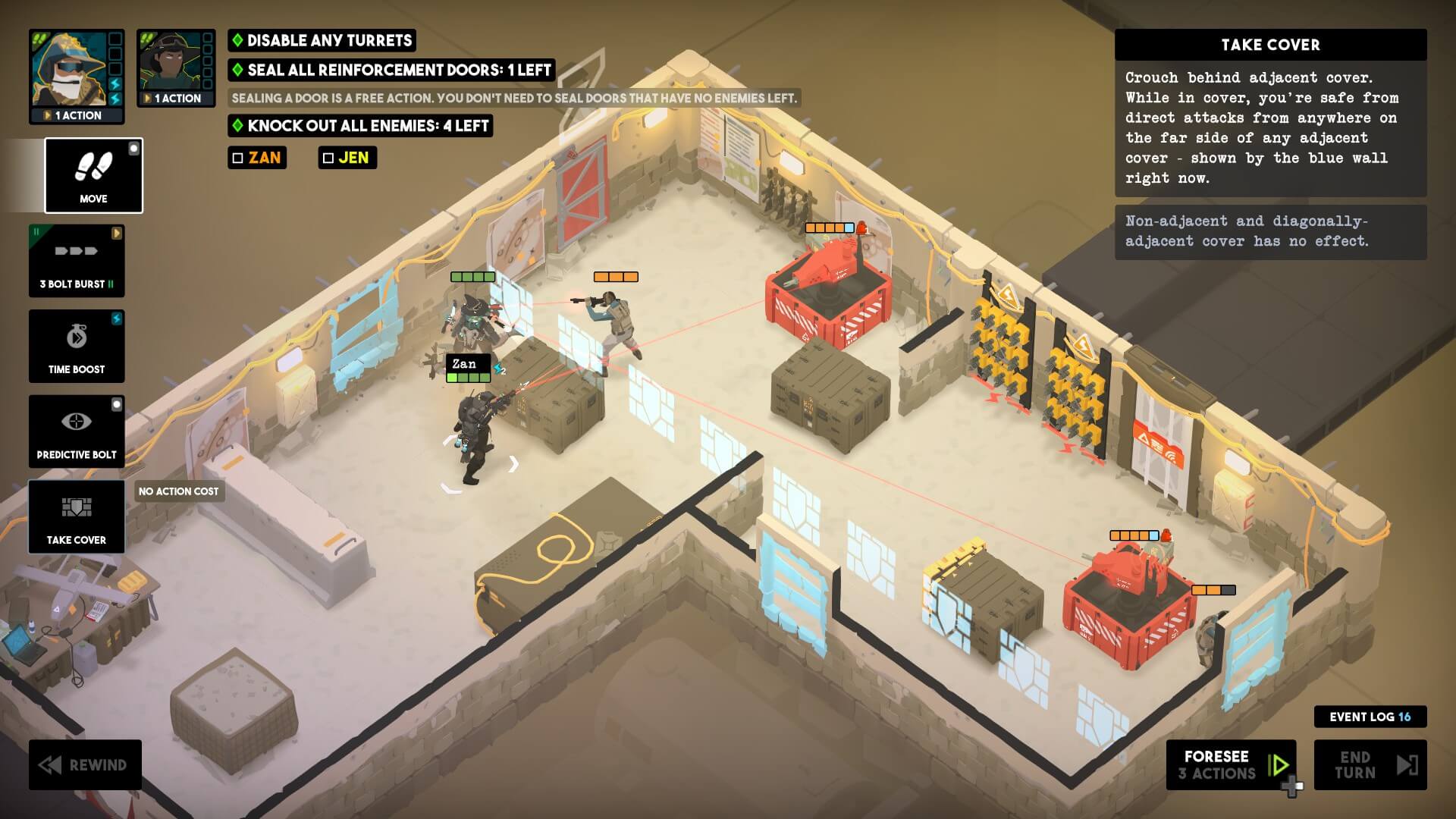
I give all this history because Tom Francis, the director of Tactical Breach Wizards and ex-PC Gamer editor, cited frustrations with XCOM 2 as the primary inspiration for Tactical Breach Wizards. His game about wizards doing vigilante wetwork and stopping a villainous revenant is fantastical, but also uses XCOM’s military gameplay as a springboard. He wanted smaller-scale combat, an emphasis on characters with individual special powers, and settled on a theme of door breaches as a way to get there. He had no idea Firaxis was headed in the same direction, and when their game was announced and released, he took that as an opportunity to use Chimera Squad as a dry run and see what worked.
The thing is, on the surface, Tactical Breach Wizards deceptively feels very much like an XCOM game. Your units move on a similar grid, they take cover against walls and obstructing surfaces, they poke out to shoot, and they develop their abilities between missions. But Francis has made several changes to the formula beyond those that seem similar to Chimera Squad. For one, soldiers never miss in Tactical Breach Wizards – where XCOM was sometimes about gambling that this was “the best move you can make in a bad situation,” Tactical Breach Wizards always gives you the grace of seeing how the move was supposed to play out. For another, Tactical Breach Wizards adds a rewind button, allowing the player to undo their entire turn before letting the enemy take theirs. It even offers you a magical preview of your opponent’s turn, making sure you’re comfortable with the result of your actions before locking in your choices and presenting you with your next set of actions.
XCOM is a game structured for you to have a chance to lose the war – hell, XCOM 2’s plot takes that as the base premise. In Tactical Breach Wizards, there is an optimal move where your characters can clean up everything in two turns, not ever take a shot, and use their special abilities in a way that gives them the energy to do it again in the next room. Tactical Breach Wizards also drops the meta-strategy layer, settling for a simple “level up your units between battles” system rather than conceiving of a grand campaign. You can get extra experience points by completing sub-objectives, like using a special ability to take out three opponents at once or blocking reinforcement doors quickly. Tactical Breach Wizards isn’t a war game – it’s closer to a series of chess puzzles, giving you the opportunity to improve your tactical mind without ever structuring itself around the player making it ten hours in and having to start over.
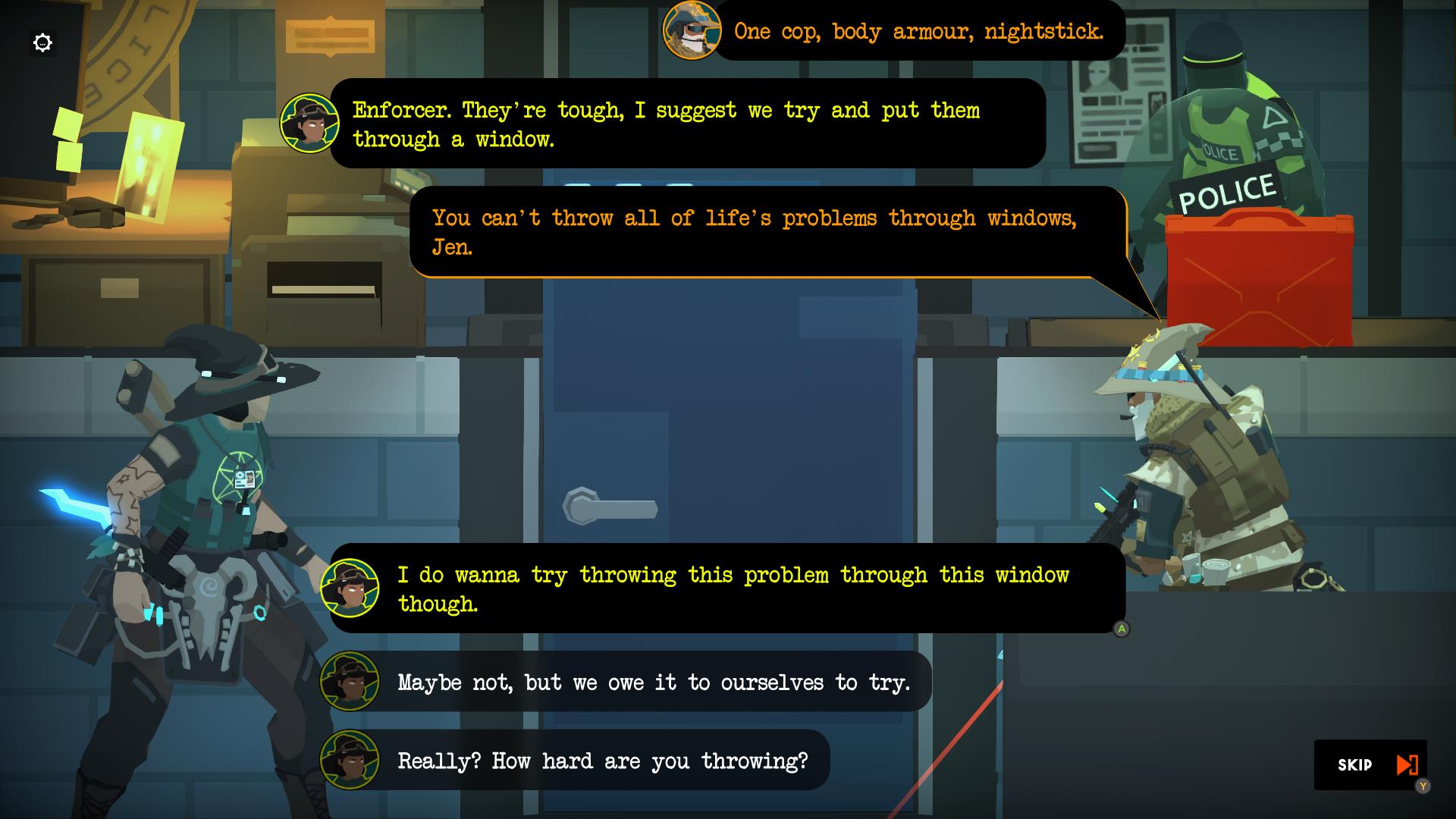
This fits perfectly with the game’s story, led by a collection of snarky mages who feel invincible and talk to one another like the X-Men. There’s Jen, the motormouth private detective whose power over electricity and speed with a broom makes her your most reliable offensive threat. There’s Zan, the smoking gun Gandalf who ends up being your anchor center, his first major ability being the ability to give allies more actions. The two of them are fighting Zan’s old commanding officer, Liv Kennedy, who Zan thought he’d lost in a mission gone wrong years before and has returned a revenant of violence and terror. But while they seem aware of the high stakes, they handle it all with one-liners and cool reserve, which helps them recruit more allies along the way.
It’s a writing tone some people have found…well, annoying. I like it pretty well, think it’s sometimes genuinely funny, and I think it’s pretty easy to zoom past even if you don’t. The most interesting thing narratively here is the choice to include dream missions, optional opportunities to improve your characters in less plot-forward scenarios. As the story continues, these begin to include anxiety dreams, where one of your player characters will consider their own character arc and motivations in ways that reflect the above-it-all comedic tone is a coping mechanism all these characters have adopted rather than the actual default state of the world.
I think, ultimately, what makes this game such a pleasure for me is Francis’s continued devotion to making games that offer incredibly precise perfection while allowing margin for error to still be entertaining. His first game, Gunpoint, is similarly built for laser focused execution and equally common flopping limply against a glass window. He continues to reuse the very satisfying window breaking noise from that game in Tactical Breach Wizards whenever you defenestrate your opponents. The game can swing from feeling like the odds against you are impossible to seeing the thread and feeling like you’re cheating because you’re so powerful. That’s one of the advantages of removing the dice and just letting the player do anything they set their mind to do.
 All My Friends