ZARDOZ

ZARDOZ
Dir. Jon Boorman
1974

Above is the trailer I made for the 1974 film Zardoz when we at WUD Film screened it about a decade ago. If you’ve never seen it, that’s my pitch. I really haven’t felt a need to adjust it. If that sounds fun, please watch Zardoz before reading any more.

If you’d like to know why I think Zardoz is, quietly, one of the best, most intellectually provocative science fiction films of all time before watching, go ahead and keep reading. (I also just bought a brand new book on Zardoz, Anthony Galluzzo’s Against the Vortex: Zardoz and Degrowth Utopias in the Seventies and Today, so I may be writing about Zardoz again soon.)

Every time I’m reunited with Zed, Consuela, May and Friend, I find myself thinking two conflicting thoughts:

1. This really isn’t that abnormal for New Wave science fiction or post-Tolkien fantasy fiction, its concerns of sex, godliness, immortality, colonialism and the dangers of both capitalism and collectivism, post-humanism, and embrace of pseudosciences and philosophy. A man believed to be born of relatively low status is actually the chosen one who will destroy the evil empire – he makes allies within the enemy, becomes a powerful superman, and ultimately conquers.

2. This is pretty wild in terms of presentation, formally adventurous, but also just thrilling and unique in its tone and performance – nothing is quite like Zardoz. Everything along this hero’s journey takes place in ways that are extremely unexpected, and the film’s conclusion is a shockingly ambivalent revenge play bordello of blood. 

I think that balance is struck in Boorman’s comfort with a tale “most satirical,” as Arthur puts it in the intro. Oh, yes, it all “takes itself so seriously,” except for the whole “he draws on his own mustache and beard and flies around in a stone head because he was inspired by a children’s book” thing. It’s “playing itself straight” and also has an extended soapy titties “how do boners work” gag.
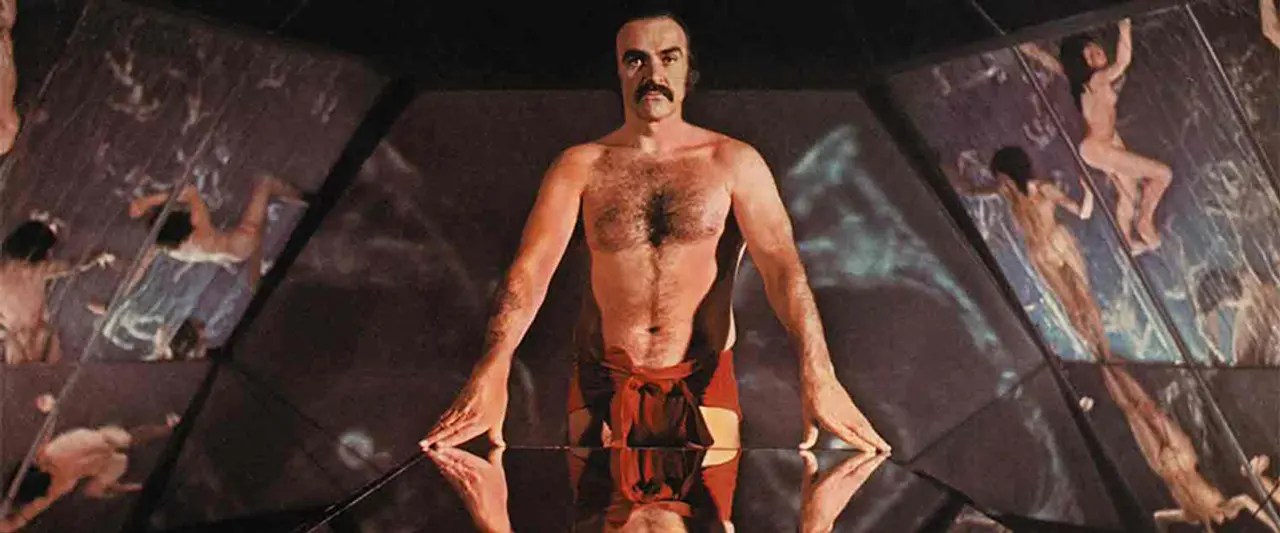
Zed in the Tabernacle.

All these things work within the same general framework because Boorman knows that life is silly, technology is silly, and therefore embraces just how absurd things would get with the boredom of eternal life. Friend being our first anchor into Eternal society is key for that reason – he gives us the frame with which to watch the rest of the movie, one Zed himself has been hunting for because Eternal society is the only thing he could not possibly learn about in all his reading.

The more I pull at any given question in the film, there’s character logic and thematic reasoning to back it up. The fixation on boners is a great gag because Eternal society went to space and abandoned sleep to try to answer The Big Questions about God, love, emotion, and happiness, and now they’re so cowed they spend their days meaninglessly meditating at second level and trying to figure out boners for the tenth time. The stuff about the dangers of collectivism also stems from the origin of the Vortex – founded by capitalists who taught their children to harden their hearts to suffering, usurped by those heartless children who watched the founders realize the error of their ways, then turned back outward into the world to create an oligarchy. This place bred and led itself into oblivion.
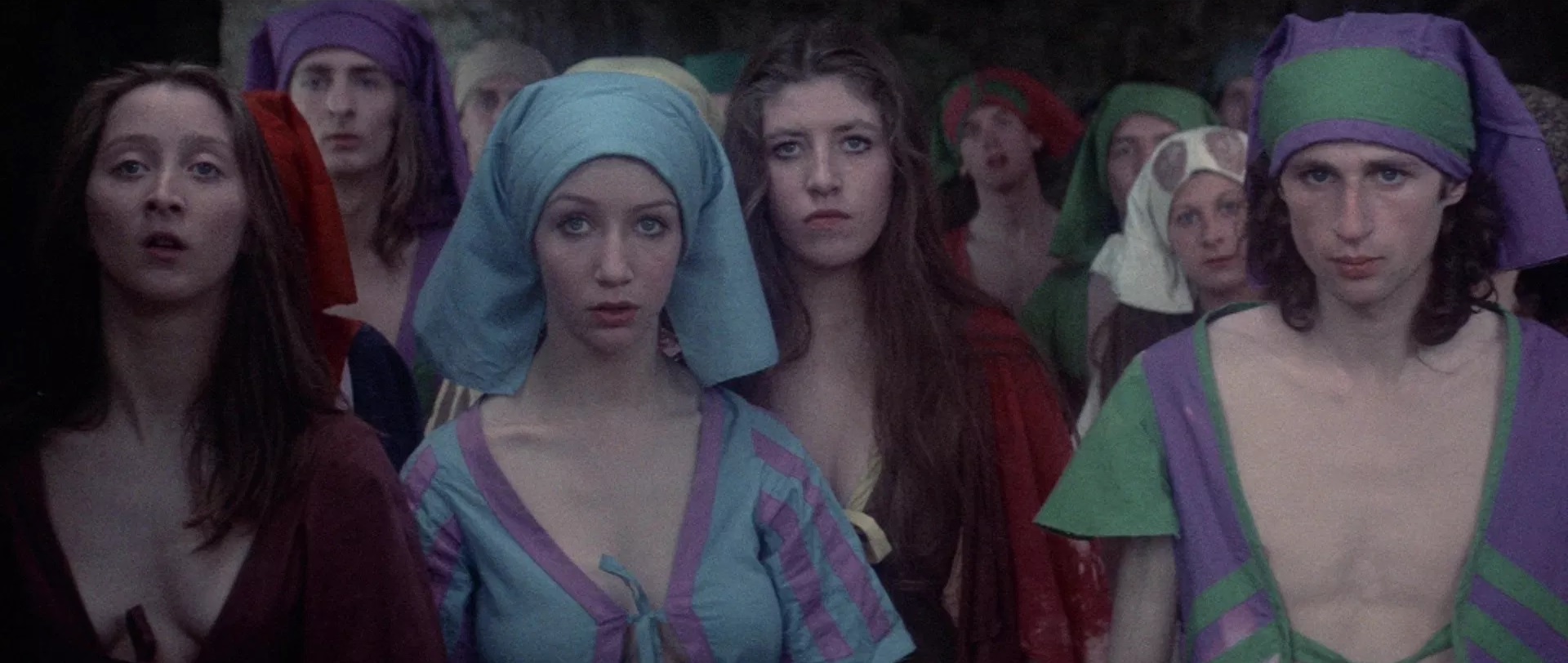
The Apathetics, who have lived too long and lost to psychic warfare.

The pacing of the film rewards multiple viewings. There’s an extended almost-wordless sequence of Zed first exploring the Vortex’s mills – this is enjoyable because Connery is very funny being scared by jack-in-the-boxes and projected videos, but it’s even more fun when you know what The Vortex is and how it’s giving away the sham much earlier than the rest of the film. Friend takes a while to figure out, but on rewatches, he instantly pops, his arc already in motion at the start of the film. Watching Consuela’s arc over the film, from total monotone (“you’re hurting me.”) to more and more emotional outbursts, it’s a great performance. Connery and Rampling both really are great in this – they’re asked to do some impossible scenes and they sell them.

And, yeah, it’s a fuckin riot of silly stuff, too. Any of the mirror falling, jumping around, fantastical editing, psychic violence and the video trial of Satan, the entire reveal of the book sequence – this stuff is, I assume, meant to be laughed at. There’s a lot of funny stuff in this movie! I think most people, even if they’re not capable of getting on its wavelength thematically, can enjoy its pretty solid pacing for memorable scenes, its wonderful aesthetics, its sheer volume of small breasts, and its laugh out loud absurdity. I tend to sell it on that absurdity, knowing many will not come along to celebrate what is, in my book, one of the great works of cinematic science fiction.

But those who do – welcome to paradise.

BOTTLE ROCKET – UW CINEMATHEQUE

The short film version of Bottle Rocket, available in higher quality on the Bottle Rocket Criterion disc.

BOTTLE ROCKET
Dir. Wes Anderson
1996

These notes originally ran to supplement UW Cinematheque’s screening of Bottle Rocket on July 25, 2014.

Though Wes Anderson is best known for the diorama-and -dollhouse-like sets of The Royal Tenenbaums and The Life Aquatic with Steve Zissou, and the almost literal dioramas and dollhouses of the stop-motion film Fantastic Mr. Fox, viewers will see the intricacy of production design and specificity of detail pared down in Anderson’s first feature film, Bottle Rocket. The story of bumbling would-be bandits who happen to be would-be brothers grants us a naïve and vulnerable look at the filmmaker’s relationship to his home territory and fellow dreamers.

Bottle Rocket marks the feature debut of screenwriter/actor Owen Wilson, who co-wrote the script with Anderson. The two lived in a small home and shared two beds with the other two Wilson brothers, Luke and Andrew (also debuting as protagonist Anthony and John “Future Man” Mapplethorpe, respectively).  Anderson and Wilson would write three films together, culminating with The Royal Tenenbaums. They stopped writing together as Wilson became in higher demand as an actor, and Anderson’s films took a somber turn, beginning with his meditation on irrelevancy with The Life Aquatic (co-written by Noah Baumbach.)

Not until The Life Aquatic would an Anderson film be as sun-drenched as Bottle Rocket. Few films look as warm in their depictions of summer without saturating their oranges and blues; Bottle Rocket instead highlights its yellows, from Dignan’s jumpsuits to the bedsheets of the motel. Few turn of the century filmmakers captured yellows and warmth with the same enthusiasm as Anderson and his go-to cinematographer Robert Yeoman.

Though Bottle Rocket’s visual style is less meticulously staged than its successors, the production design is outstanding. The trademark Anderson handwritten insert – Dignan’s seventy-five year plan – utilizes multiple colors of markers not to reflect Dignan’s inability to plan the heist quickly, but rather his highly capable organization (note that only headers and prefaces appear in blue, whereas actual “plans” appear in red). However, don’t mistake that organization for capability; Dignan’s plans remain vague, often suggesting simple ideas like “odds” as keys to living successfully. Consider that the scenes at the Mapplethorpes’ house were filmed in Frank Lloyd Wright’s John Gillen Residence, a home designed by an architect out of time for a Texan geophysicist.

Though laughs permeate all of Anderson’s films, Bottle Rocket is consistently funny. The majority of the staff deliver these lines casually and conversationally, making the absurd seem normal, nondescript. None relish the opportunity more than James Caan, who chews his way through a rejection of Anthony and a total shutdown of Future Man in his first ten minutes on screen as Mr. Henry. Given a short amount of time in the film, Caan chooses to make the most of what he’s given.

I claim the true star, of surprise to no one who has seen the film, is Owen Wilson’s Dignan, the excitable obsessive and one of Anderson’s iconic characters. Hungry for adventure, he wants to live on the edges of normal life, an outlaw with a heart of gold. He rejects the simple, the casual, the conversational, always “calling his gang” with a birdcall or launching into another layer of his scheme, alienating himself to the point of ignoring his friends’ happiness. But, unlike the self-destructive Max Fischer of Rushmore, Dignan refuses to advance without his companions. Though he storms off angrily, one request from Bob to be on the team is enough to make Dignan declare his one ultimatum; the slightest hint of interest from Anthony is enough to make Wilson flash a beautiful smile. Without the combination of Wilson’s belief in the character’s beauty and his failings, both in the writing and the acting, Bottle Rocket could not exist in its current form.

The film performs a balancing act. It is about the naïveté, adventurous spirit, and social ignorance of Dignan and his love for friends and brothers. Simultaneously it carries the “Born to Run” spirit of living in a town too small for one’s dreams. Each viewing, I have come away feeling differently about its core, though Dignan runs away with my affection each and every time.

The final heist is as ridiculous as an amateur heist could be. It is truly amazing that Bottle Rocket and Fargo were both released in the first months of 1996 and that one film could not have directly inspired the other. How else could the absurd misconduct of Dignan and Steve Buscemi’s Carl Showalter reflect the same ridiculous misunderstanding of the importance of masks and the value of awareness? But where Fargo damns its kidnappers, facing the darkest elements of their psyche, Bottle Rocket absolves them. Dignan/Wilson’s last lines in the film foreshadow the fall from innocence Anderson and Wilson would explore in their next, more well-regarded film, Rushmore.

SPELUNKY

SPELUNKY
Mossmouth
2012

As much as I believe in the infinite potential of video games, the emotional range and experimental play I’ve seen in the medium, I will betray all those values for the belief in running around as a funny little guy. For the past decade, I’ve pretty faithfully answered “What’s your favorite video game?” with the HD version of Spelunky. The first time I played the shareware version of Spelunky was the night before the HD version dropped in 2012 – I played until sunrise, when the HD game released, bought it, and then played for another two hours before falling asleep. It was the Fourth of July.

In Spelunky, you play as a little explorer who runs and jumps sort of like Mario. You explore short levels and collect useful items (like extra bombs, spiky boots, a jetpack!) and treasure while dodging creatures and traps. It’s all very Indiana Jones, complete with your primary weapon being a whip, and fighting off snakes and spiders feeds later into yetis and man-eating plants. Every time you play, the levels are randomly generated using the best random level generation algorithm I’ve ever seen. They combine small, familiar handcrafted elements with enough care that every game feels unique and yet still thoughtful and intentional with each experience.

The randomness is partly so rewarding because the game is so damn hard. To beat a standard game of Spelunky, you only need to complete sixteen levels, each with a loose time limit of two minutes and thirty seconds before an unkillable lethal ghost will chase you out of them. For your first hundred plays, you might not make it out of the first four-level zone, the caves. It’s not that Spelunky is unfair – once you learn the game’s rules, you can almost always tell when you’re at risk of taking a hit. But the margin for error is just so slim, with only four hearts of health and (without a lot of game knowledge) the inability to gain more than one heart back per level. You will blow yourself up, jump into arrow traps, walk into bats, throw a pot under your feet and run into the snake inside it expecting gold.

One of the funniest things about Spelunky is a good death. You have so much direct control of your character in Spelunky, and so deaths always feel like something you’ve done. The game’s physics engine has such clear rules that you’ll find yourself shot by an arrow, bounced around the level by its momentum, falling into a pond with piranhas and being eaten alive. The game keeps a camera on your corpse even on the Game Over screen summarizing your run, fully aware that a good death only motivates the player more. This same spirit is at the heart of the love for games like Dark Souls and Elden Ring. Rather than being frustrated at the end of a good run, you simply have to laugh.

I have to admit that for my favorite game of all time, I think it’s pretty ugly. The game’s visual language is incredibly legible, with pretty instant recognition of every creature or trap the game throws at you. But it’s a hodgepodge of adventure movie pastiche, with giant scorpions and a big evil Anubis and thoughtless visual references to tiki, Hinduism, and tribal cultures. I love Spelunky – Spelunky could be better. I still appreciate that it’s colorful and easy to read, but I can imagine a version of this game that didn’t play in an intentionally retrograde milieu.

A dangerous moment in the Ice Caves, death likely on the horizon.

Retrograde doesn’t apply to all retro, though – the game’s soundtrack by Eirik Surhke is one of my all-time favorites. Its heavy use of the Yamaha DX7 creates a direct throughline to the Sega Genesis Yamaha YM2612 soundchip, iconic for its warm bouncy bass. However, using a proper DX7 gives the game a sonic clarity a lot of those high compression Genesis games lacked – it allows the game to sound like the best version of a contemporary to Streets of Rage or Sonic the Hedgehog. The compositions vary wildly between midtempo jazz, vibey synth soundscapes, and the intense prog anxiety of Jungle B. The fact that I still admire a lot of this music after so much playtime speaks to its generally high quality.

In 2020, Mossmouth released Spelunky 2, a lovingly made game I’ve never been able to connect to. Something about the game language and aesthetic went beyond my relationship to Spelunky. It feels to me like a game designed for speedrunners and challenge runners of the original game. I never became that player – even with all my time spent playing Spelunky, I still only eke out a win one in every three or four plays, and that’s satisfying enough for me. Part of my relationship with games will probably always be reaching the top 15% or so of the player population and never progressing to the point where I need to conquer the absolute peak of mastery to prove myself. I like the stage where I’m being resourceful, scrappy. The first Spelunky has kept me on my toes for over a decade. I hope that feeling never ends.

IN THE MOOD FOR LOVE

IN THE MOOD FOR LOVE
Dir. Wong Kar Wai
2000

It is a restless moment. 
She has kept her head lowered… to give him a chance to come closer. 
But he could not, for lack of courage. 
She turns and walks away.

Mise-en-scene is the human weapon in film. The term translates roughly to “what is put in the scene,” and it is meant as the ineffable summary of the image. It belongs only to those unique combinations of director, cinematographer, and production designer who can create an uncanny and unforgettable moment on screen. Many great moments of mise-en-scene are defined by literary context – the image summarizes a pivotal moment in plot, character development, or unpacking of metaphor. Images like the Binary Sunset in the original Star Wars, or Cameron staring at Seurat in Ferris Bueller’s Day Off, can create this intense feeling where the character’s psychology cannot be expressed more effectively through words. Others are defined by displaying the unusual, the elemental, as Kubrick, Trumbull and Unsworth took us Beyond the Infinite or Lynch and Deming and the team at BUF took us to the birth of JUDY and BOB in Twin Peaks: The Return.

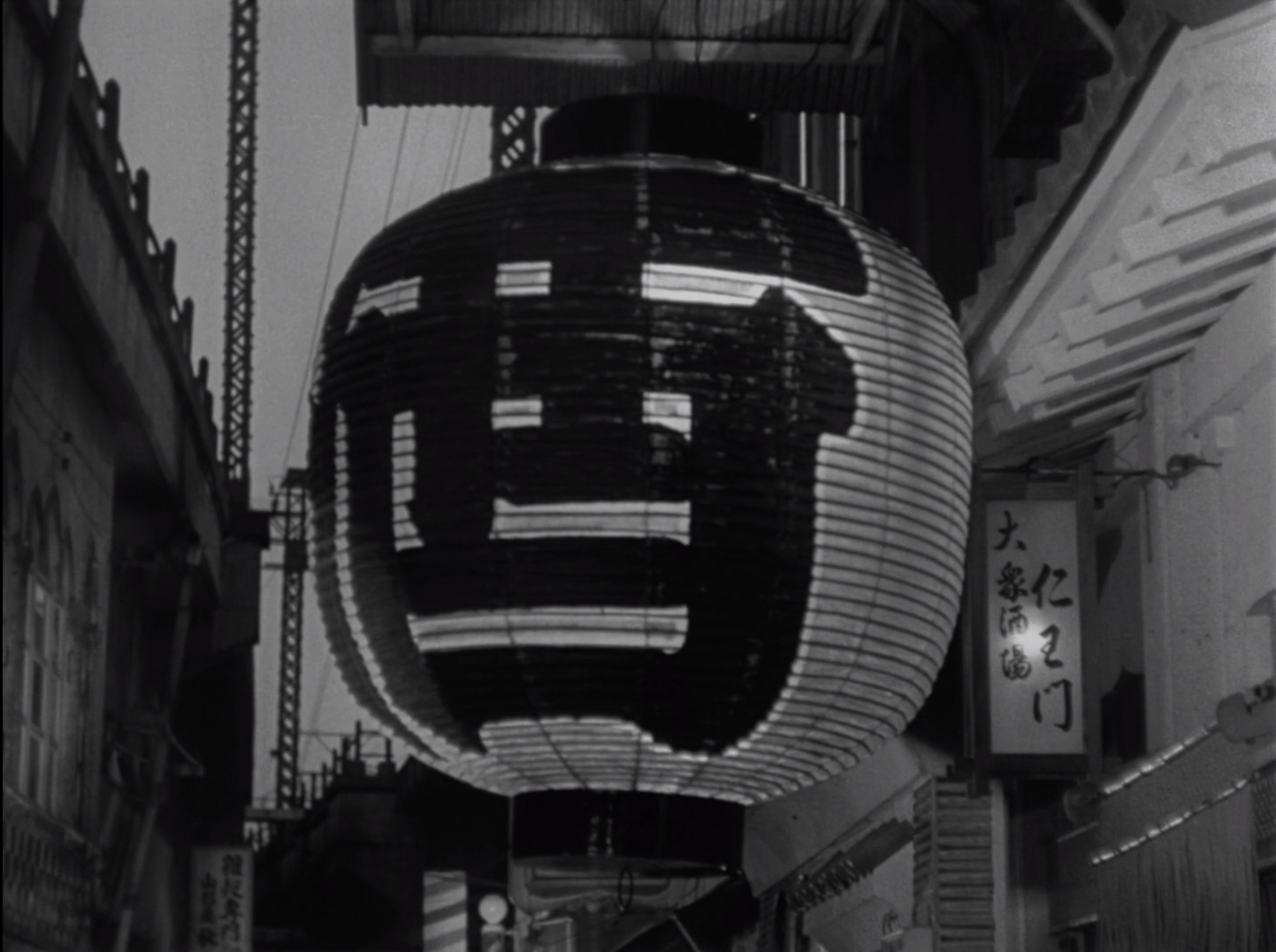
Tokyo Story, as described below.

It takes a different kind of mastery to make the mundane the center of an overpowering moment of mise-en-scene. In Yasujiro Ozu’s masterpiece Tokyo Story, there is a cut from a conversation between Chishu Ryu and Hisao Toake where they decide to go visit another old friend for drinks – the scene cuts to a hanging lantern sign which reads “Sake.” The first time I saw this cut, I burst into tears. The sign is framed center, as are most images in Ozu’s films with legendary cinematographer Yuharu Atsuta, and immense on screen, framed beautifully by the roof of a building on the other side of the street and the other signage for the bar and neighboring businesses. It’s not just the image itself, taken out of context (like I’ve done here, just so people know what I’m referencing) but the build of one hour of images framed with similar intelligence that made my heart explode.

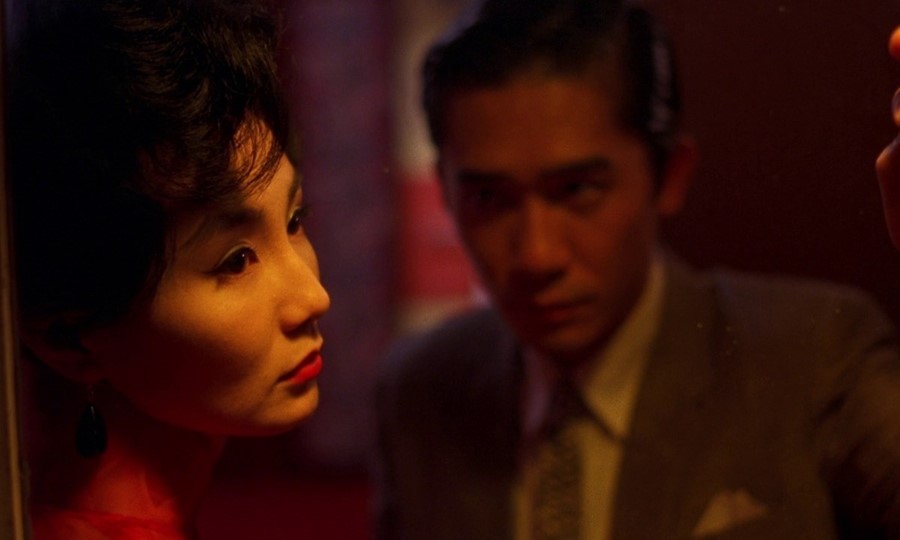
While all the other Wong Kar Wai films I’ve seen are beautifully shot and impossibly well-paced, none have the power In the Mood for Love has to create undeniable mundane images. The film is a sensual feast of antiromance, of not arriving at the pivotal moment, of prolonged longing and years of yearning. These images are deeply lived in by Maggie Cheung and Tony Leung, giving all-time great performances as people desperately trying to decide whether or not to give in to desire. There are small etiquettes that feel less like historical put-ons and more like smart observations of how these characters behave. The way the two actors control their posture, their leaning into one another and apart, their gaze and their expressions – I’d be hard pressed to say that better acting exists.

For those who haven’t and may not see it, In the Mood for Love tells the story of two neighbors whose spouses enter an affair shortly after their move-in dates. The cheating spouses’ faces are never seen – we’re left with seeing Leung and Cheung as they try not to consummate their own love. Each cut back to stairwell into the noodle shop where they start encountering one another is a cut to the heart. The scenes of the two of them standing in an alley smoking while waiting for torrential downpour to cease are excruciating. Cigarette smoke has never looked better than in this film, its slow-motion arcs ascending into shapes that seem impossible.

Chow Mo-Wan leans in slightly – Su Li-zhen looks away.

Moments of beauty are anchored by the cinematography of longtime Wong collaborator Christopher Doyle, who granted Wong’s previous films a kinetic, experimental free-form (very 90s) and longtime Hou Hsiao-Hsien collaborator Mark Lee Ping-bing (Flowers of Shanghai, Millennium Mambo, The Assassin,) who gives this film his signature stillness and grace. They are soundtracked by the reused titular theme of the 90s film Yumeji, now almost certainly better known as the theme used in In the Mood for Love. These elements combine into an intoxicating aesthetic experience, one that despite its melancholy I never wanted to end. When the film does finally reach its conclusion, it is a wrenching goodbye.

Of all the films I’ve chosen to write about this month, In the Mood for Love is the most acclaimed. In the 2022 Sight & Sound polls for the greatest films of all time, it placed 5th with critics and 9th with directors (tying with Bergman’s Persona and Kiarostami’s Close-Up.) I exited my screening this past September, having not seen the film in a decade, accepting that I’d now adopted In the Mood for Love. My relationship with this film is still young. I won’t let it go another decade before rewatching again.

He remembers those vanished years.
As though looking through a dusty window pane, the past is something he could see, but not touch.
And everything he sees is blurred and indistinct.

MACK THE KNIFE – ELLA IN BERLIN

MACK THE KNIFE: ELLA IN BERLIN
Ella Fitzgerald
1960

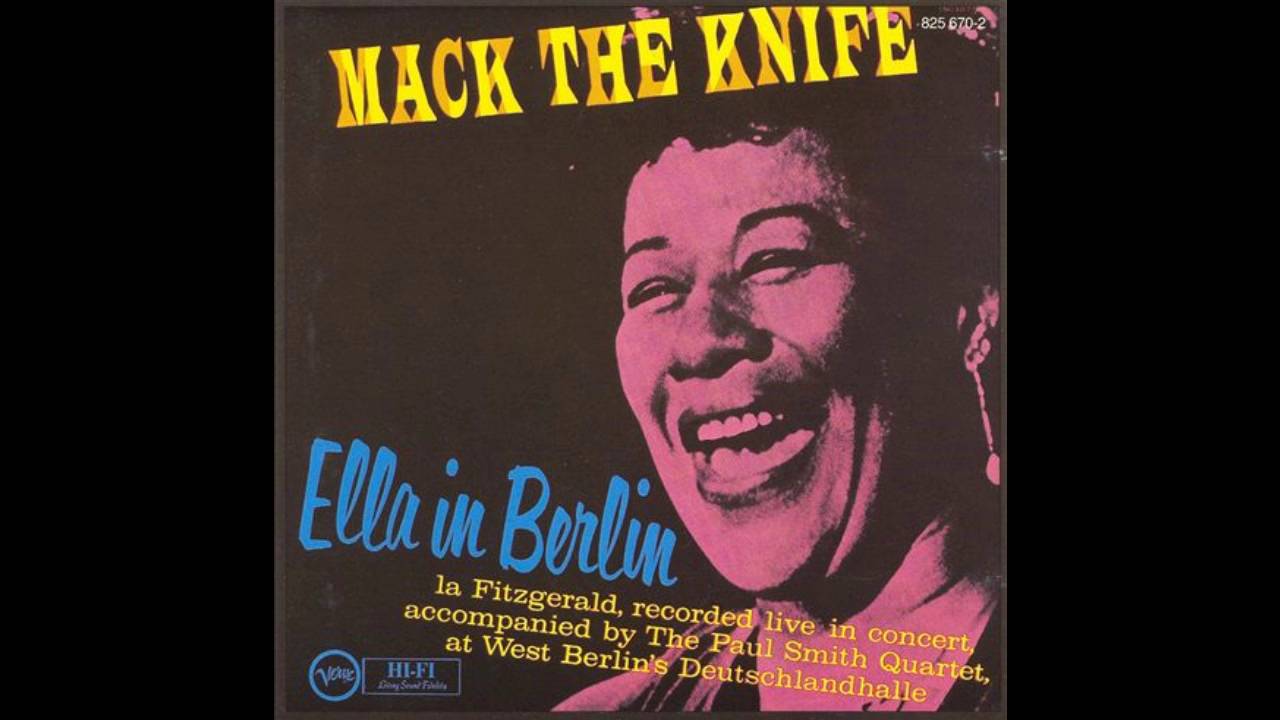
I was not aware this album had a reputation when I snagged it out of the discount bin at Strictly Discs – I liked the idea of having some Ella on vinyl and it was cheap. I knew “Mack the Knife,” “Summertime,” “Too Darn Hot,” “How High The Moon.” I still have the $7.99 sticker on my record sleeve. I’d really only listened to the Cole Porter and George Gershwin songbook albums, and while I thought Ella was an undeniable singer, I can’t pretend I really knew her well.

The first side of this album fit into my prior understanding of Ella. It’s largely midtempo, with “The Lady is a Tramp” kicking into higher gear in the second half. There’s some humor, especially on “Lorelei” and “The Lady is a Tramp,” songs that get to show her bright, fun side. The ballad “The Man I Love” is gorgeous, plaintive, intense. “Summertime” is a song she’s always owned, but here she’s able to give it a more playful heat than her classic recording with Louis Armstrong, the full string and brass section giving it a little too much ornamentation. Her Berlin rendition is more seductive, deeper until it’s higher, and the Paul Smith Quartet is light on their feet in adding improvised little flourishes rather than full breaks.

It’s side two that set my brain on fire, though. From the very beginning of “Too Darn Hot,” games with the audience start happening. She’s playing with the tempo and tone to have the kind of fun she’d never be allowed in the studio with a full orchestration. By the time she hits the first “Kinsey Report,” the band’s hot and they’re not interested in buttoning up again, hitting the interludes between songs with games that make her laugh. She starts growling, moaning, joking. They deliver the last song Ella knows on the set, “Lorelei,” with a relatively straight face, but it’s still hotter than the first side.

This album is most recognized for the next recording, the titular “Mack the Knife.” Ella opens the song by admitting she’s never sung it before and doesn’t really know the words. She changes the first line and never gets perfectly back on track. You can hear her laugh on “Sunday morning.” But then you hit “Oh, what’s the next chorus?” and she doesn’t ever even try to come back. It’s delightful to hear her simultaneously not know the song, make up something that fits the meter, and make it sound absolutely gorgeous. She jokes, “Oh, and now Ella! And her fella! We’re making a wreck! What a wreck! Of Mack the Knife!” before hitting an unbelievable scat sequence. She’s turned the song into a cat toy, batting it around and always keeping the joke on the ridiculousness of knowing the music this damn well and not having the words.

But, honestly, that doesn’t hold a candle to what she does next to “How High The Moon.” She actually jokes that the words may be wrong, but she gets through all of them before the band kicks into hyperdrive. I’d never heard scatting like she does on “How High The Moon.” The band follows her into entirely different songs (“Tisket-A-Tasket,” “Heat Wave,” , including the part where she effectively just starts buzzing. I didn’t know at the time that this was just what her version of “How High The Moon” had sounded like for a decade, had been recorded that way before, down to “the words may be wrong” – I’m as goggle-eyed as the audience even now. I’m not going to pretend that I’m an expert on scat or jazz more broadly – what I know is I heard this and I felt it was the most perfect recording of music I’ve heard then or since. Music is where you find it, and, for me, the iconic Ella live album will always be the one I happened to pluck from the discount bin.

KEY TRACKS: “Summertime,” “Too Darn Hot,” “Mack the Knife,” “How High The Moon”
CATALOG CHOICE: Ella Fitzgerald Live at Mr. Kelly’s, Ella Fitzgerald Sings the Cole Porter Songbook
NEXT STOP: Nuff Said!, Nina Simone
AFTER THAT: Odetta Sings Dylan

SIGNALIS

SIGNALIS
Rose-engine Games
2021
All Platforms

In Signalis, you play as Elster, a Replika android searching for her Gestalt coworker Ariane to fulfill a promise made during their working relationship. Elster arrives at a largely derelict mining facility on the planet Rotfront, where she quickly discovers that a horrific illness is corrupting and consuming the surviving Replika workers. Intermittent visions of half-remembered horrors haunt the Replika whose consciousness remains – however, Elster remains stalwart, sworn to her purpose.

These themes play out with a presentation that evokes Neon Genesis Evangelion, Shaft’s anime adaptation of Monogatari, Yoko Taro’s NieR, John Carpenter’s Apocalypse Trilogy (and a little bit of The Fog, too), and Silent Hill. There are occasionally pulsing mounds of flesh. Real world art such as Arnold Bocklin’s Isle of the Dead, or literature like Robert William Chambers’ The King in Yellow and H.P. Lovecraft’s The Festival, is thoughtfully inserted into surrealistic montage. There’s a brief high school AU where one character tries to go to the library with their friend.

And yet the dominant influence on this game is pretty undeniable – this is, at its heart, a classic Resident Evil game, with tank controls swapped for pretty strong third person avatar play. The combat, puzzles, and exploration in this game are simply top notch. The puzzles never become too obscure to solve but require a little clever lateral thinking. There’s always the tension of wanting one more inventory slot as you realize you need to carry Owl and Hummingbird keys AND some health toward an objective. The guns get just the right amount of ammo to cycle through them as you play, and your weaker guns never “stop doing enough damage,” making it exciting to plan your loadout as you head into unknown territory. I found it hugely fun throughout, a great modernization of a classic genre, which I honestly had not expected from a horror game with this quality of art and narrative.

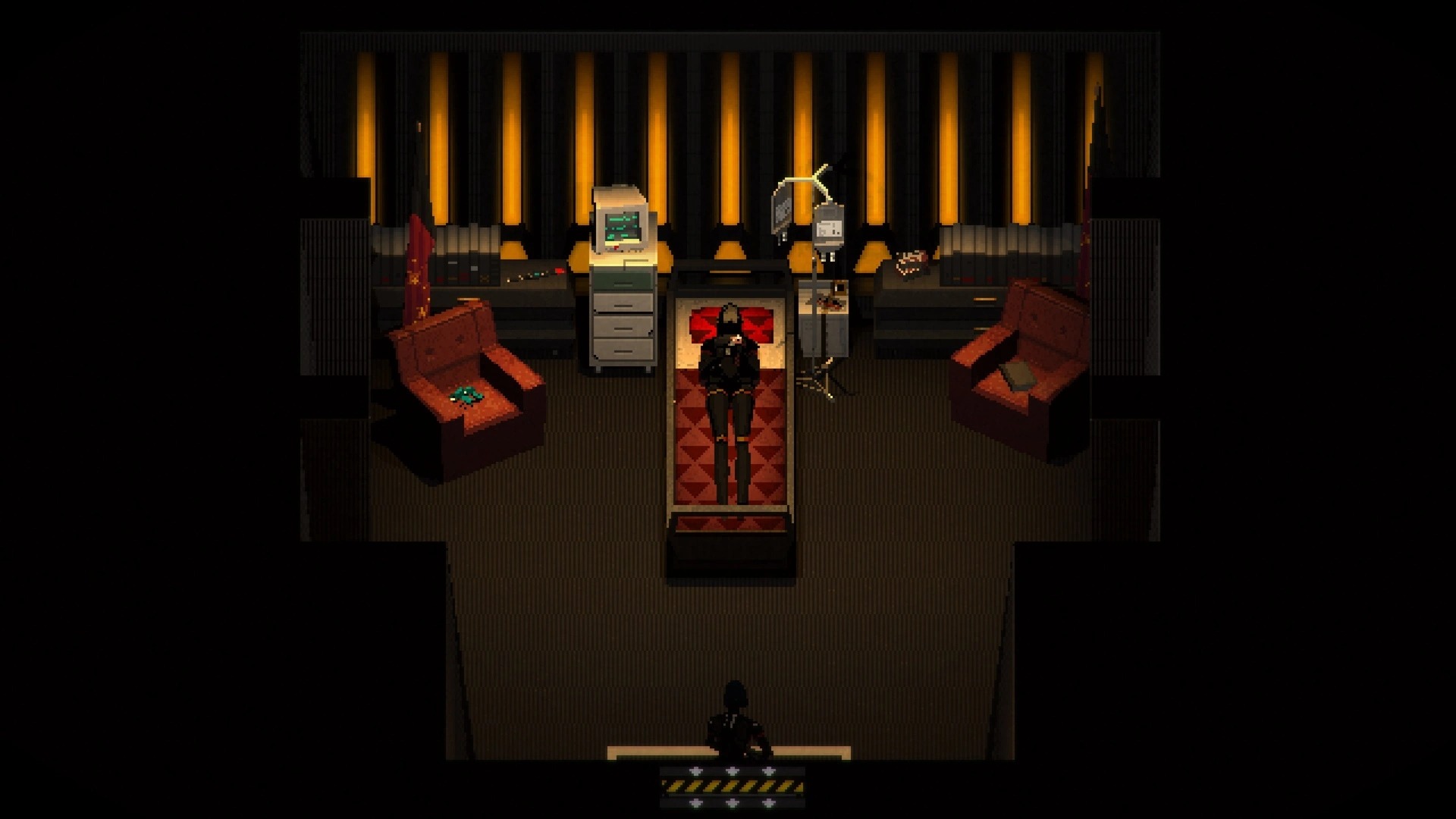
Elster looks on at a comatose commander.

What elevates Signalis, though, is the discovery of its plot, its horrors, its unspoken sadness. To borrow a comparison made in the pretty excellent piece by Elijah Gonzales in Paste, “I can’t help but compare it against something like the influential psychological horror film Jacob’s Ladder, which is excellent until its dunderheaded final minute provides an overly straightforward answer that undermines the complicated web of ideas that came before. By contrast, Signalis manages the difficult task of using multiple conclusions to amplify its main ideas while leaving ample room for interpretation, its unanswered questions and evocative answers buzzing in my mind long after the credits rolled.”

Because I like some game critics who love horror games, I end up seeing a lot of horror game Let’s Plays. It’s a genre that occasionally seems stale and like everything has been done. Signalis points toward a way forward into the new. This is a very considerate game that pokes at systemic cruelty, personal joy, and how terror can distort our vision of reality. Using cinematic techniques and misdirection, Signalis is capable of making the player second-guess what they’re seeing, and not in the silly Eternal Darkness “memory card corrupted” way. What elevates Signalis is the respect with which it treats its audience and the intelligence of its narrative. 

ANTI

ANTI
Rihanna
2016

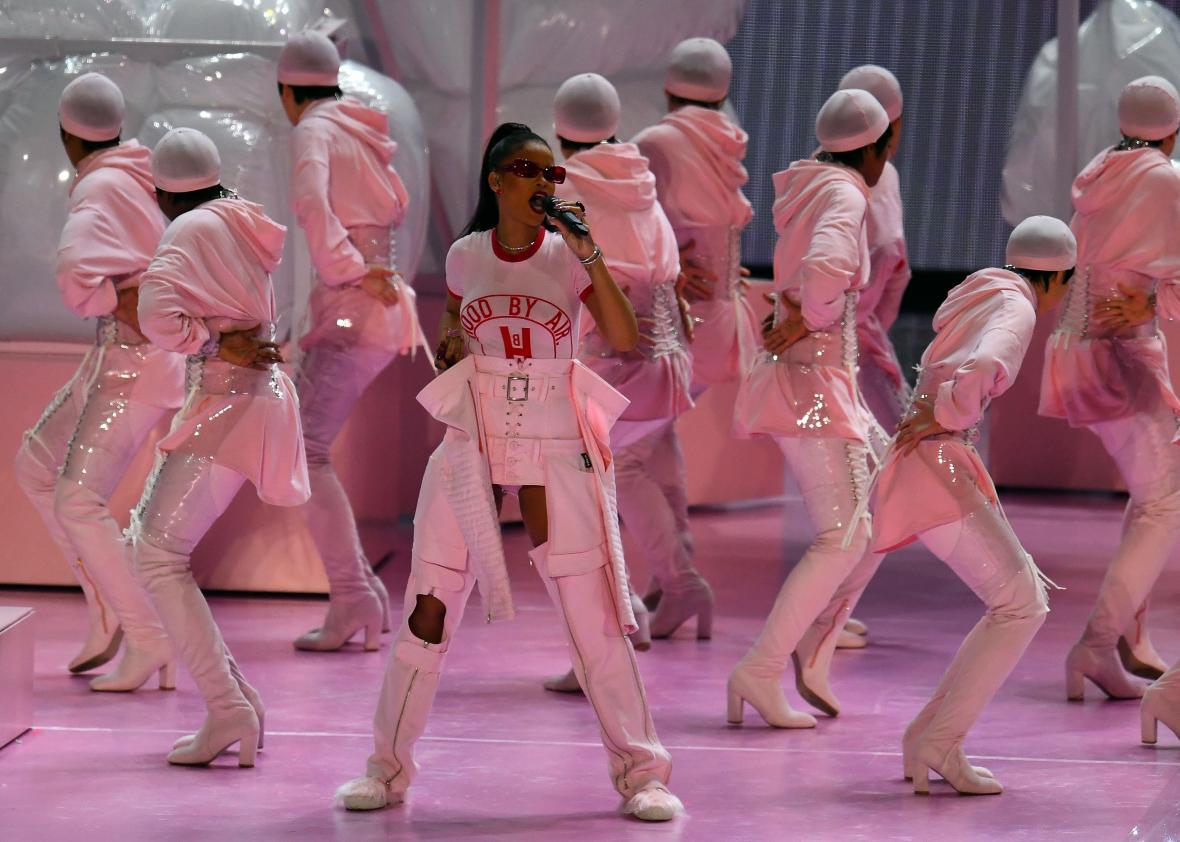
2016 is both the year the Rihanna superculture goes supernova and the last time she released new music. Riding the success of a cancelled 2015 album and Anti, Rihanna appears on Drake’s Views, Kanye’s The Life of Pablo, Future’s Hndrxx, Kendrick’s DAMN, and launches the Fenty Beauty company – that last one marks her transition from musician into billionaire (derogatory.)  She’s released three total songs since the official launch in 2018, two of them for the Black Panther: Wakanda Forever soundtrack and performed the Super Bowl Halftime Show and at the Oscars. That’s the only music she’s performed in that time – no surprise appearances, no concerts, no festivals.

I note all this because the supposed conceit behind Anti was to release an album she could perform as she aged out of her 20s. She looked back at songs from the start of her career as America’s Aphrodite and felt they had been burned out, that she wanted songs that would be “timeless,” an idea she modeled after “FourFiveSeconds” with Paul McCartney. That self-awareness and intention indicate an artist working to manage her own career, taking creative control, refusing to just go through the motions. I think in touring Anti, it’s possible she found that it wasn’t the form of the music itself that burned her out.

There are genres Rihanna’s never attempted before or since on Anti. Most of the album still reflects her current general sound, shaped by PartyNextDoor, Kanye collaborators Jeff Bhasker and James Fauntleroy, and trap producers like Hit-Boi, Boy-1da, and Mustard. But there’s also the Tame Impala cover of “Same Ol’ Mistakes,” the doo-wop love song “Love On The Brain,” the sliding dub of “Consideration.” While there is a clear decision to get off autopilot, this album does sound like “Bitch Better Have My Money” and “American Oxygen,” the singles from the first version of her eighth album.

Rihanna at the 2016 VMAs, winning the Video Vanguard award.

Some of these experiments work better than others. The ballad “Never Ending” gives her acoustic backing and positions her as a more mid-00s singer-songwriter, a song that uses strong harmonies to place her voice in a unique setting. It’s a more natural use of her voice than “Love On The Brain,” which sounds better in isolation than any placement next to proper doo-wop. But it’s also a bit of a facade – while Rihanna is credited as a writer on every song except “Same Ol’ Mistakes,” once you see the credits, you recognize “Never Ending” as a Dido song adjusted for Rihanna’s voice. It’s still lovely, and it’s a thoughtful way she could take a post-pop career.

This album wouldn’t be here without the Rihanna fastball pop, though. The first eight tracks (and bonus track “Sex With Me”) are as great as anything she’s done. “Needed Me” takes a chopped up Mustard beat and trades in venomous relationship control. There’s a killer quality to a lot of Anti, an understanding that Rihanna can convincingly take the dominant role in every relationship she describes. It’s maybe never more fun than in “Desperado,” a song which wields a nasty bass line under what actually might be one of the more “meet me in the middle” heartbreak songs on the album. Even a mealy-mouthed Drake verse can’t spoil “Work,” the album’s massive single, where Rihanna lets the vocalization hit the album’s most playful.

It feels so funny to be writing this and separating the names Drake, Mustard, Kendrick, Kanye, and Rihanna without drawing a battle map. Mustard had spent four years going through a contentious divorce and producing a couple songs a year before producing “Not Like Us.” When Rihanna was still making music, these men were all on top of the world. They were collaborating, and their collaborators were all collaborating behind the scenes, too. I know there are a million reasons 2016 feels a world away, but remember when the corniest thing about Drake was his interactions with Rihanna and Nicki Minaj? When Kanye’s big controversy was the dumbass “Famous” video? Knowing what we know now, maybe Rihanna didn’t just get burned out by the music itself. 

KEY TRACKS: “Kiss It Better,” “Desperado,” “Needed Me,” “Sex With Me”
CATALOG CHOICE: Good Girl Gone Bad, “Rude Boy”
NEXT STOP: Ctrl, SZA
AFTER THAT: Take Me Apart, Kelela

ONLY LOVERS LEFT ALIVE

ONLY LOVERS LEFT ALIVE
Dir. Jim Jarmusch
2013

Core dividing lines on the reception of Only Lovers Left Alive come down to one question – are the immortal vampire artists Adam and Eve, portrayed as burned out gen-X rock idols by Tom Hiddleston and Tilda Swinton, the coolest icons of hipster culture ever or semi-pretentious dorks? Division on that answer sets up so much of where a viewer’s sympathies lie, whether or not you think their lives are suffocatingly tedious or eternally romantic. I was originally set up by film critics to believe they were meant to be as cool as Jim Jarmusch himself, and in watching I realized too many of the film critics I read spent most of their free time reading Wikipedia pages about the Christopher Marlowe/William Shakespeare conspiracy and Rolling Stone magazine. To be clear, I actually think the film works either way – it’s just that it creates a huge split on how you choose to read the central characters.

According to Adam, the world is dying. The “zombies” (read: us) are polluting our spaces and our bodies, fighting over oil when we should be fighting over water, desecrating our architecture and dishonoring our scientists. All the vampires are experiencing some of the negative outflow, here – human blood itself is more full of toxins (well, toxins to vampires) and a bad batch can spell the end for these immortals. He’s taken on the persona of a reclusive rock star who doesn’t want any of his music being published, a droning noise rock played by Jarmusch’s own band SQÜRL. If you see Adam as the arbiter of cool, this dismay is cosmic in scope, an indictment of humanity – we have a living god, and we have failed him. If you see him as a self-pitying dweeb, you hear him say “I don’t have heroes” and it’s easier to notice when Eve finds his wall of fame with photos of Buster Keaton, Jimi Hendrix, William S. Burroughs, RZA.

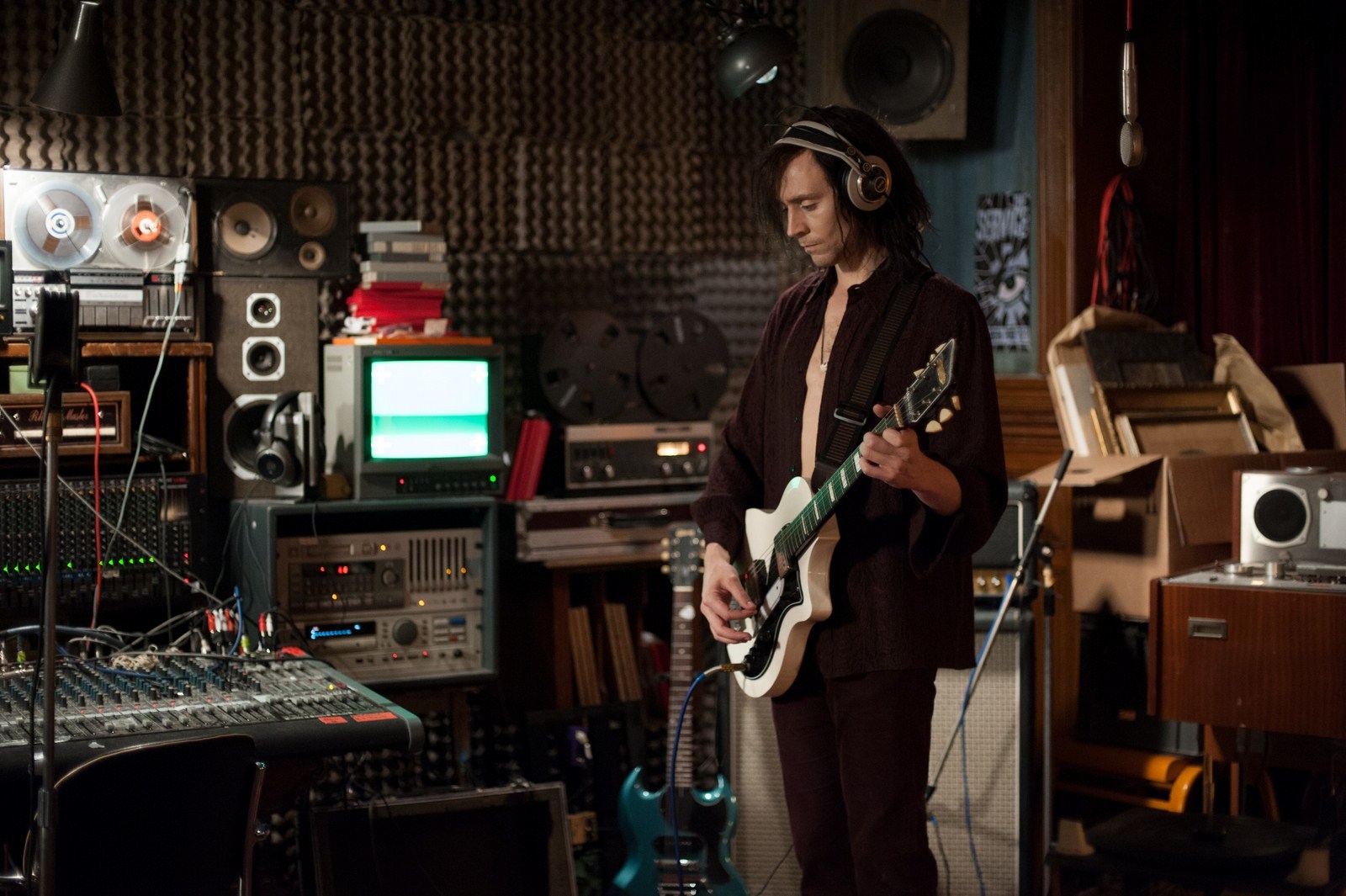
Adam, riffing on a level that is frickin sublime.

“I don’t have heroes.” Adam actually doesn’t have heroes. Heroes fight valiant adventures and die. He’s made art religion, and these are idols. The work got out there – they’re immortal. Gods. He knows as well as anyone that the world is still alive. And we see that reinvigoration happen late in the film when he sees a live performance and finds it admirable. Eve tells him about the singer and says, “She’s going to be very famous.” Adam says, “God, I hope not. She’s much too good for that.” Shut up, nerd!

But whether or not they’re performing some of the exhaustion, Adam and Eve live sad, tired lives. They’re married, and they love one another, but they also need years or more apart. They’ve built lives on different continents because they badly need their space. Adam is contemplating oblivion – Eve is a little more comfortable because of her friendship with Kit Marlowe (John Hurt, perfectly warm) but knows he’s starting to become less lucid. While they take joy in so many little things, so many familiarities, they despair in different resignations. Eve is certainly more upbeat, but Tilda plays her as a little too placid, a little too indifferent, and the moments of sincere disappointment bring out a volatility.

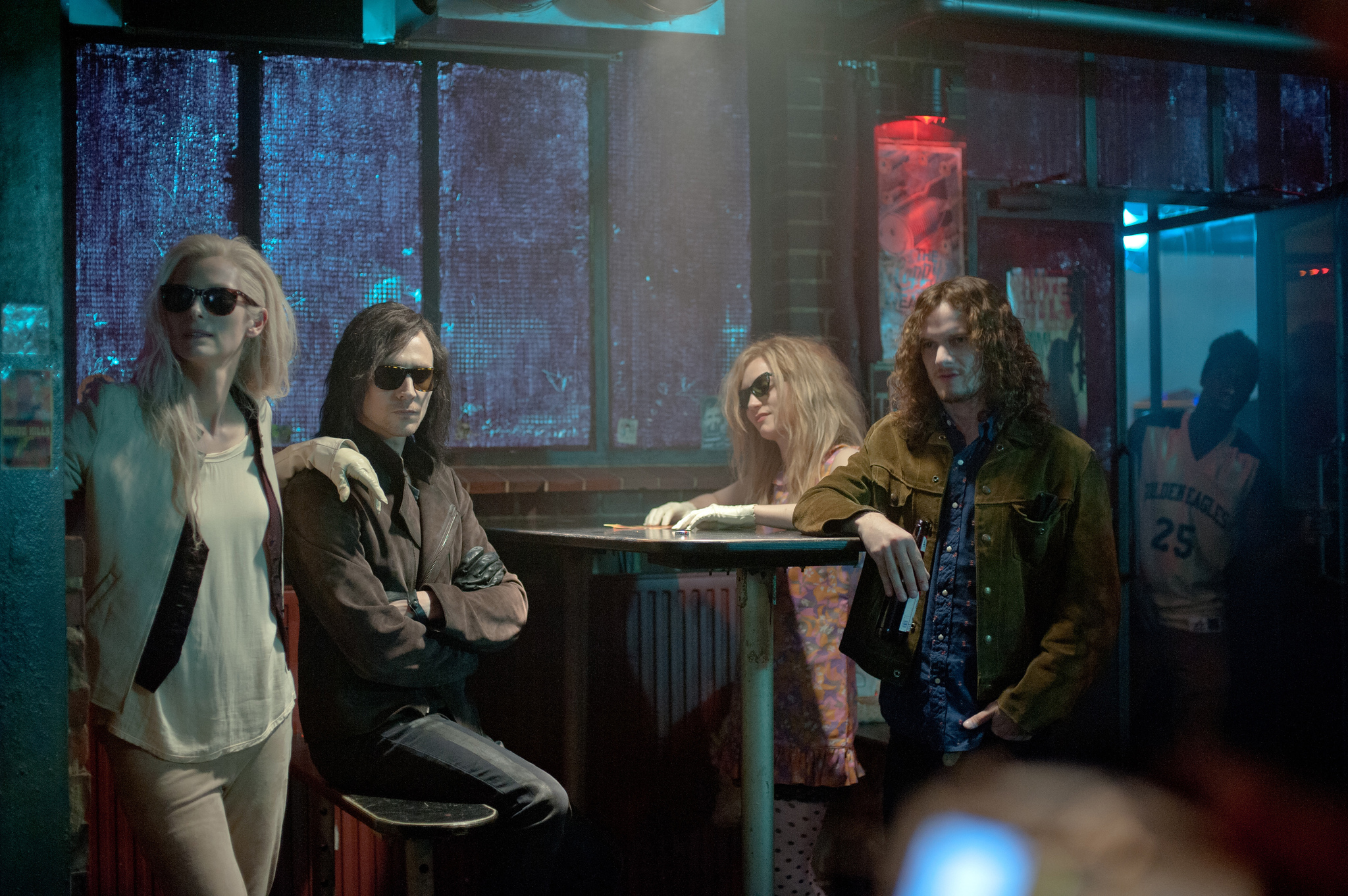
Eve, Adam, Ava, and Ian at the White Hills gig.

That sadness comes between so many little bouts of tastemaking, art celebration, and is surrounded by a very funny supporting cast. Anton Yelchin plays the sweet Renfield to Adam’s Dracula, a young rock fan named who seems to be a middleman for expensive goods. He’s deferential, naive, and overwhelmed to meet people he admires. Jeffrey Wright plays Adam’s supplier of “the good stuff,” and his big scene is so funny, played as a too-cool-for-school doctor and dealer. Wasikowska plays Eve’s sister Ava as a menacing socialite lush, and you immediately get why Adam is so loath to let her visit. The movie is funny, cute, and everyone is having a good time. It’s really only when Jozef van Wissem’s lute score takes focus that the tragedy will set back in.

Hipster cool is consistently identified as the core of Jim Jarmusch’s appeal beyond the independent cineaste landscape. He exports cool bands, cool actors, vibes, and haunted landscapes in urban settings. That Gen-X cool is also occasionally appropriative, performative, and insular. I think what makes Only Lovers Left Alive stand out among Jarmusch’s films is that it gives the audience space to both admire and laugh at the speed with which these hipster vampires can identify wood grain by its Latin name or cite the exact year of a release. That admiration and amusement doesn’t come at the expense of the film’s dramatic stakes, either, and it became a gateway to the slow cinema Jarmusch has often cited as an admiration.

HEARTHSTONE: HEROES OF WARCRAFT

Hearthstone: Heroes of WarCraft
Blizzard Entertainment
2014
PC, Mobile

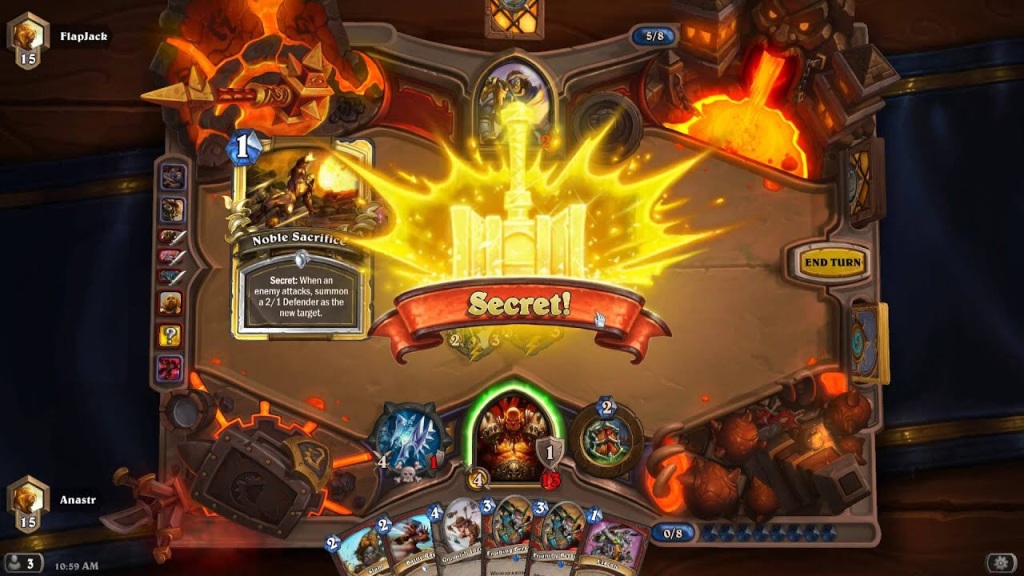
Of all the games I’m writing about this month, Hearthstone is the one I’m most embarrassed to have given so much of my time and energy. A quick-play, simplified rerun of Magic: The Gathering, Hearthstone is ugly, unbalanced, and largely based on lore I don’t care about at all. I loved WarCraft III when it came out, but I never made the jump to World of WarCraft, so the vast majority of card references are totally lost on me here.

The basic premise is very familiar to Magic players. You and your opponent have 30 card custom built decks of creatures, spells, and weapons. Each turn, you get energy in the form of mana to play cards that can attack your opponent’s creatures or their life total directly. Every turn, you get more mana, so you slowly ramp up from early jabs into colossal game-defining uppercuts until you or your opponent is defeated. The game is in building your deck to be as consistent at winning as possible and defend itself from your opponents’ strategies.

The thing it took me so many years to stop admiring about Hearthstone is its dedication to using the tactility of a collectible card game, which I’ve loved since the Pokemon TCG I grew up playing and collecting, and combining that with its digital format to do things that were completely impossible (or, at least, immensely inconvenient) in a tabletop card game. One of the simplest, “Discover,” gives you an opportunity to add one of three randomly generated cards to your hand. In real life, this would require both players having a semi-unlimited number of every printed card to function – digitally, you can just give someone the opportunity to use this card they might not own for a single game.

like cmon man this is so garish garrosh

There are mechanics that reward having only odd or even cost cards in your deck, mechanics that shuffle five random super-rare cards into your deck, mechanics that require players to only have one of each selected card in your deck (rather than the typical max of two) to get access to a special effect. These mechanics could maybe be achieved by registering with a judge before a given game or by owning a massive library of cards to play with, but they’d be onerous to track at best.

Hearthstone is at its best when it takes advantage of its digital format. Its single player adventures take advantage of asynchronous gameplay to create memorable puzzle-card gameplay. But, over five or so years, the number of mechanics forced a power creep and level of investment that made the game completely inaccessible to newcomers. I think many of its best mechanics have been lifted into other digital card games like Slay the Spire, Inscryption, and Balatro. The game’s last gasp for me was its Battlegrounds mode, a direct riff on the DOTA AutoChess mod that never quite offered anything on top of that formula other than “more money.” I haven’t played in years, and probably never will again, but I’ll always appreciate the excitement Hearthstone showed toward combining tabletop and digital card games and pushing that genre into a new era.

THE END OF EVANGELION

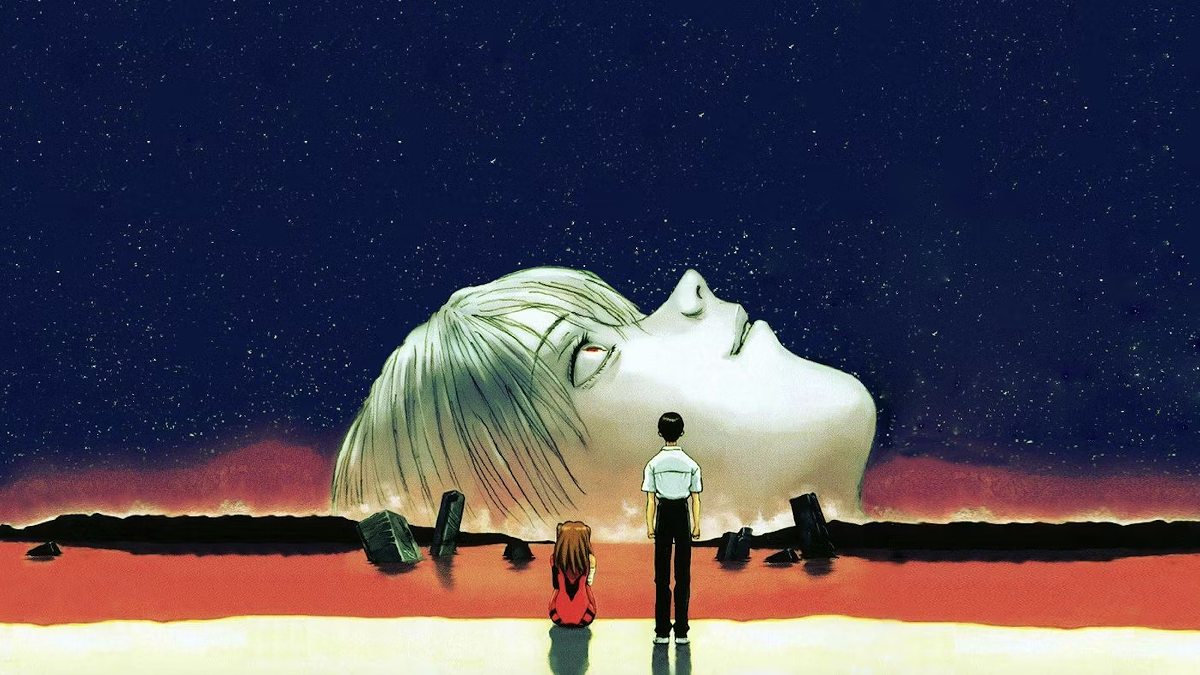
Together or separate?

THE END OF EVANGELION
Dir. Hideaki Anno
1997

Neon Genesis Evangelion is a mecha anime about the end of the world. Teenagers face the horrors of the apocalypse, alien kaiju known as “Angels,” in their armored Evangelion suits, which are themselves more alien than machine and less alien than it seems at first. The adults in the room, an orgnaization named NERV, serve as their scientists, armorers, tacticians, therapists, parents, and jailers. The teenagers sometimes can put on a brave face, but their egos are being destroyed. Like teenagers in real life, a lot of their hyperfixations are on sexual desire, the difficulties of connecting with other people, and social performance. There’s a lot of lingering on teen sexuality in this show, including some leering at womens’ and girls’ bodies – for some people, this is a bridge too far, and the repulsion overwhelms whatever points the show is trying to make.

Evangelion’s fourth episode is titled (in English) “Hedgehog’s Dilemma.” This central idea, borrowed from Arthur Schopenhauer, is the central thesis of our primary POV character, Shinji Ikari. In essence, the dilemma draws a parallel between mankind and hedgehogs on a cold winter’s day. The hedgehogs wish to bundle for warmth to survive the harsh weather, but their quills causes pain – so it is with mankind and emotional intimacy. We want to be close, want to let our guard down, but rejection is too painful, and those who are too willing to accept that emotional intimacy will take on other peoples’ burdens. Shinji has elected to wall himself off from all emotional intimacy after the indifferent, abusive treatment of his father, Gendou – also the commander of NERV – and therefore constantly finds himself unable to seek comfort from loved ones despite taking on the immense psychological strain of piloting the EVA. This question of emotional intimacy defines Shinji’s arc throughout Neon Genesis Evangelion, and reflections of the Hedgehog’s Dilemma play out in the arcs of many of its characters.

Together or separate?

The End of Evangelion exists as a theatrical sequel/alternate ending to the 26 episode anime Neon Genesis Evangelion. The original show ran out of money and its director, Hideaki Anno, ran out of mental health to guide the production. The myth goes that to fulfill the episode order with what little budget they had left and a network pissed off about the content in episode 24, they trekked forward with storyboard caliber sketches and cels drawn weeks prior for other episodes to create a last-minute ending, with The End of Evangelion representing “the true ending.” This ascribes the incredibly dense script of the final two episodes of the anime, filled with intense psychological and metaphysical dialogue about the nature of trauma and the relationships of every character in the show, to a hasty rewrite. That understanding also tends to ignore how this side of the show had grown over the back half of the series, and also that similar dialogue reappears in The End of Evangelion.

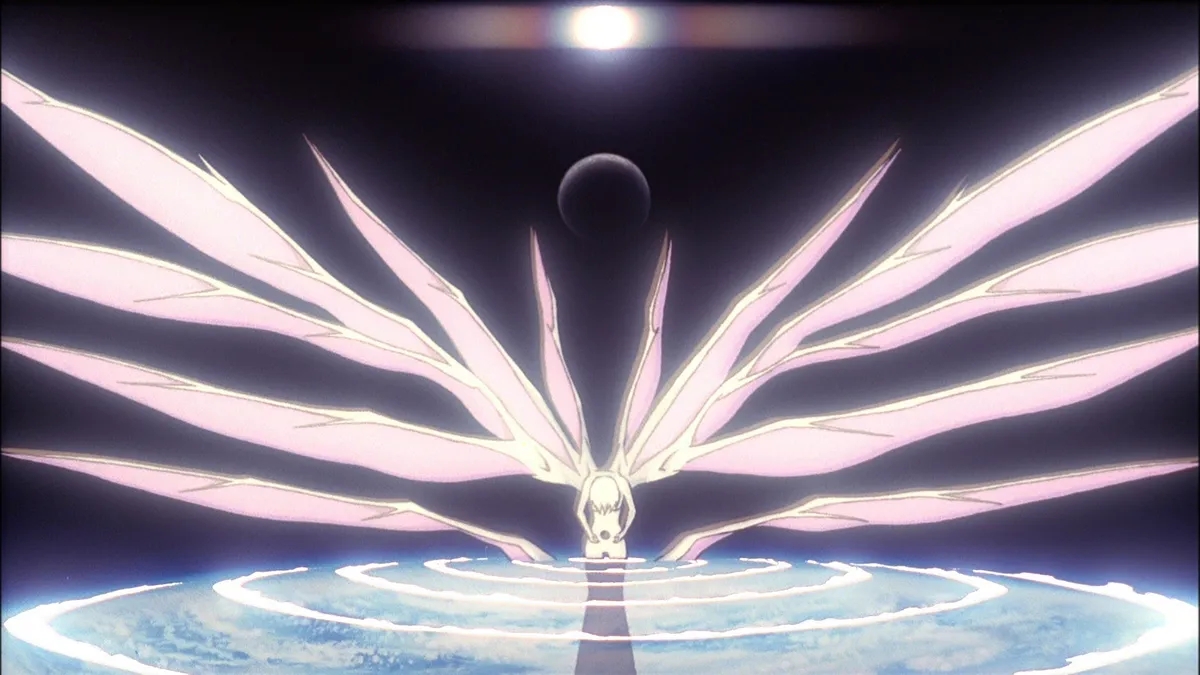
It’s unclear whether The End of Evangelion is an alternative ending to the final episodes of Neon Genesis Evangelion . Both endings feature the onset of the Human Instrumentality Project, a psychological melting pot that will return human consciousness to a single collective. In both endings, we see characters’ consciousnesses bleed into one another, sharing memories, being unable to hide away ugly thoughts, trying to win the final argument and reach consensus. One side argues Episode 25 and 26 depict in detail what’s happening internally, whereas End of Evangelion is more focused on the physical consequences of Human Instrumentality and the war to end all wars.

All these arguments about canonicity, about intent, get even more complicated when you factor in the Evangelion Rebuild project. Anno embarked on a remake of Neon Genesis Evangelion over the course of four films. But by the early scenes of the second film, Evangelion 2.0: You Can (Not) Advance, it became clear that the story was changing. Characters were suddenly arriving with altered names – their personalities didn’t line up, and not in a simple rewrite way – it eventually became clear these were new characters in old roles. By the third film, the plots had completely diverged, and the fourth film offers a new ending. Many Evangelion fans dislike the rebuilds and write them off entirely. In a literal sense, the rebuilds are the “true” ending in the sense that they conclude Anno’s emotional arc over thirty years of stewarding this series – he recently gave a statement that more Evangelion may be coming with his blessing, but he won’t be steering the ship.

Together or separate?

In The End of Evangelion, whatever sympathy the show maintained for Shinji is dissolved. Shinji is putrid. Shinji is capricious. Shinji is motivated primarily by sex or hate. Shinji is emotionally catatonic because he was forced to kill the only person who’s shown him seemingly unconditional kindness since the show began – Shinji lashes out by objectifying every person in his life, sexually or as collateral damage. Because Shinji is the pilot of the EVA Unit 01, Shinji is given the keys to the Human Instrumentality Project. Will mankind maintain its borders? Or will it all come tumbling down?

Shinji fails to make a clear decision. We see the borders between people collapse in the musical “Komm, Susser Tod” sequence, a song that sounds like a Sgt. Pepper’s era Beatles track. The juxtaposition of gore, horror, and joyous sounding pop (with apocalyptic lyrics) – it’s the Feel Bad Movie of All Time. The End of Evangelion is full of great anime action, really strong character writing, and the show’s signature score by Shiro Sagisu (whose “Decisive Battle” is so good that he’s just kept using it in future works. But I’m fully willing to hear out any argument that The End of Evangelion is overrated within the broad Neon Genesis Evangelion project on the behalf of the powerful and sad “Komm, Susser Tod” climax.

While some anime fans criticize elements of Evangelion having been done before, in series like Yoshiyuki Tomino’s Mobile Suit Gundam and Space Runaway Ideon, the next sequence innovates in its combination of live action, insert documents, and animation. This sequence combines metacommentary about human existence by the show’s cast, footage of live-action cosplayers and fans attending the preview event for the film itself, and disturbing letters and drawings Anno received after the completion of the Neon Genesis Evangelion series – as it concludes, we see that Shinji has still not made up his mind. The limbo as he flip-flops between options becomes an unbelievable nightmare.

Together or separate?